Classic Red Wine-Braised Shallots — Tender Steakhouse Side for Roast Beef
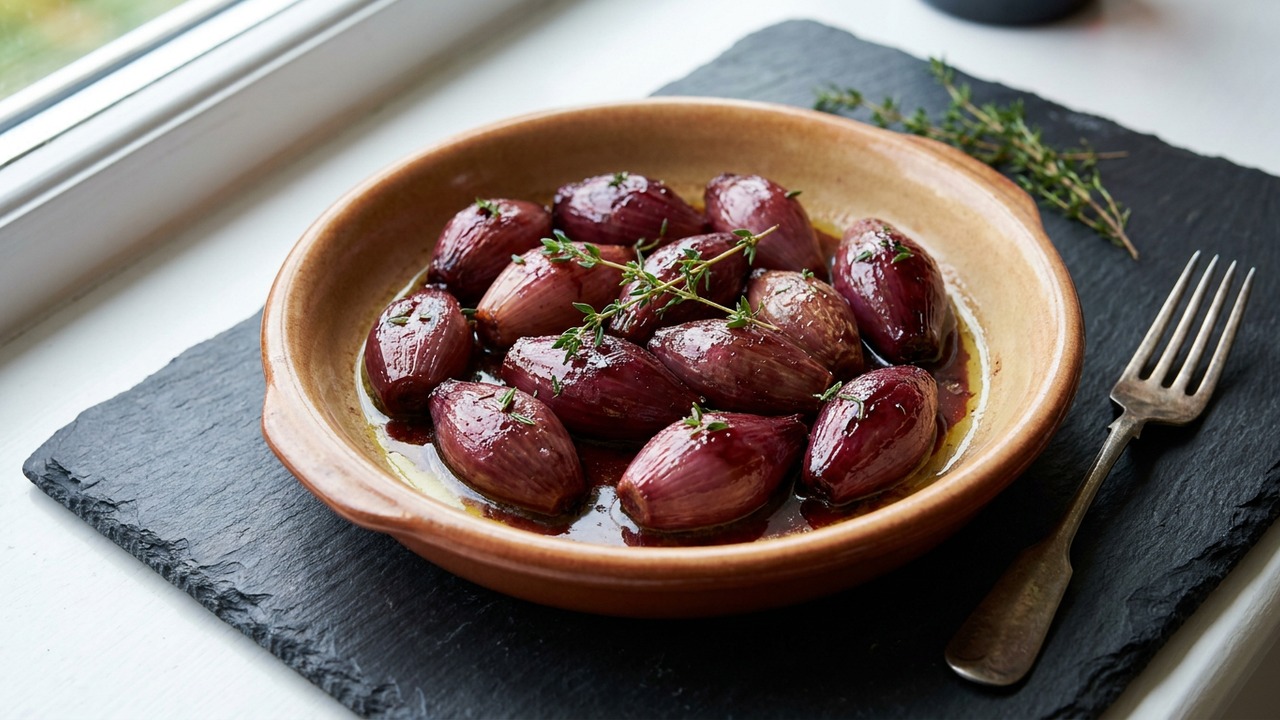
Glossy, caramelized shallots slowly braised in dry red wine, beef stock, fresh thyme and butter until melt-in-your-mouth tender. This classic steakhouse side brings savory-sweet depth to roast beef, prime rib, or pan-seared steaks.
Jake Woods's note
"Rich and elegant yet simple to make, these braised shallots are the perfect finishing companion for a roast or steak night. Expect tender, silky bulbs and a deeply flavored, spoonable sauce."
About This Recipe
Glossy, wine-bathed shallots are a classic steakhouse concession: small, elegant bulbs that turn lusciously sweet and satin-tender after a long, patient braise. In this version, a robust dry red wine and low-sodium beef stock build savory depth while a spoonful of brown sugar and a final pat of butter give the pan sauce a translucent, clingy glaze. The result is a side that reads both rustic and refined—sweet onion notes balanced by savory, beefy umami—perfect next to roast beef, prime rib, or a peppery pan-seared steak.
What makes this preparation sing is attention to three simple moves: thorough browning to create fond, a brief reduction of wine to concentrate its tannins without bitterness, and a gentle simmer so the shallots break down into melting layers rather than collapse into mush. Shallots, with their subtle garlic-onion character and fine texture, respond beautifully to this treatment; they keep shape but become spreadable and deeply flavored. If you want steakhouse polish at home with minimal fuss, this recipe is a reliable, elegant companion to roast meats and hearty winter vegetables.
Ingredients for Classic Red Wine-Braised Shallots — Tender Steakhouse Side for Roast Beef
- 1 lb small shallots (peeled)
- 3 tbsp unsalted butter
- 1 tbsp olive oil
- 1 cup dry red wine
- 1 cup beef stock (low-sodium preferred)
- 4 sprigs fresh thyme sprigs
- 1 tbsp light brown sugar
- 1 tsp kosher salt
- 1/2 tsp freshly ground black pepper
How to Make Classic Red Wine-Braised Shallots — Tender Steakhouse Side for Roast Beef
Step 1: Prep and season the shallots
Trim the root tips and tips off each shallot and peel them (leave the base intact so they hold together). Toss the peeled shallots with the kosher salt and freshly ground black pepper in a bowl so they’re evenly seasoned.For this step
- 1 lbsmall shallots (peeled)
- 1 tspkosher salt
- 1/2 tspfreshly ground black pepper
Step 2: Brown shallots in butter and oil
Heat a large heavy-bottomed skillet or 3-quart Dutch oven over medium-high heat. Add the olive oil and 2 tablespoons of the butter; when foaming subsides, add the shallots in a single layer. Sear, turning occasionally, until they develop a deep golden brown on most sides, about 6–8 minutes.For this step
- 1 tbspolive oil
Step 3: Add sugar to promote caramelization
Sprinkle the light brown sugar over the browned shallots and stir for about 1 minute so the sugar melts and helps glaze the shallots without burning. This step builds the savory-sweet base for the braise.For this step
- 1 tbsplight brown sugar
Step 4: Deglaze with red wine and add stock
Pour in the red wine to deglaze the pan, scraping up any browned bits from the bottom with a wooden spoon. Let the wine simmer and reduce by about half (3–4 minutes). Add the beef stock and the thyme sprigs, then bring the liquid to a gentle simmer.For this step
- 1 cupdry red wine
- 1 cupbeef stock (low-sodium preferred)
- 4 sprigsfresh thyme sprigs
Step 5: Slow-braise until tender
Reduce heat to low, partially cover the pan, and simmer gently until the shallots are very tender when pierced with a knife, about 20–25 minutes. Check once or twice and spoon cooking liquid over the shallots so they cook evenly.Step 6: Reduce to a glossy sauce and finish with butter
Uncover, increase the heat to medium-high and reduce the braising liquid until it becomes a glossy, syrupy glaze, about 6–10 minutes. Swirl in the remaining tablespoon of butter to enrich and shine the sauce, discard the thyme stems, taste and adjust seasoning, and serve hot alongside roast beef or steak.


- Trim the root tips and tips off each shallot and peel them (leave the base intact so they hold together). Toss the peeled shallots with the kosher salt and freshly ground black pepper in a bowl so they’re evenly seasoned.
- Heat a large heavy-bottomed skillet or 3-quart Dutch oven over medium-high heat. Add the olive oil and 2 tablespoons of the butter; when foaming subsides, add the shallots in a single layer. Sear, turning occasionally, until they develop a deep golden brown on most sides, about 6–8 minutes.
- Sprinkle the light brown sugar over the browned shallots and stir for about 1 minute so the sugar melts and helps glaze the shallots without burning. This step builds the savory-sweet base for the braise.
- Pour in the red wine to deglaze the pan, scraping up any browned bits from the bottom with a wooden spoon. Let the wine simmer and reduce by about half (3–4 minutes). Add the beef stock and the thyme sprigs, then bring the liquid to a gentle simmer.
- Reduce heat to low, partially cover the pan, and simmer gently until the shallots are very tender when pierced with a knife, about 20–25 minutes. Check once or twice and spoon cooking liquid over the shallots so they cook evenly.
- Uncover, increase the heat to medium-high and reduce the braising liquid until it becomes a glossy, syrupy glaze, about 6–10 minutes. Swirl in the remaining tablespoon of butter to enrich and shine the sauce, discard the thyme stems, taste and adjust seasoning, and serve hot alongside roast beef or steak.
Classic Red Wine-Braised Shallots — Tender Steakhouse Side for Roast Beef Tips
Keep the Shallot Base
Leave the root end intact when peeling so the layers stay together during searing and braising, giving neat presentation and even cooking.
Brown, Don’t Burn
Sear over medium-high heat until a deep golden color forms—adjust the heat if bits are darkening too quickly, because true caramelization is sweet, not bitter.
Control Wine Reduction
After adding wine, let it simmer until roughly half the volume so the alcohol cooks off and the flavor concentrates without overpowering the shallots.
Baste During Braise
Spoon the cooking liquid over the shallots once or twice during the simmer to promote uniform tenderness and flavor penetration.
Finish with Cold Butter
Swirling in cold butter off the heat at the end emulsifies the pan juices into a shiny, clinging glaze and tempers saltiness.
Classic Red Wine-Braised Shallots — Tender Steakhouse Side for Roast Beef Variations and Substitutions
Vegetarian Swap
Use a rich mushroom or vegetable stock in place of beef stock and add a teaspoon of soy sauce or miso paste to introduce the missing umami.
White Wine & Lemon
Substitute dry white wine and add a small squeeze of lemon at the end for a brighter, less tannic sauce that pairs well with chicken or pork.
Smoky Bacon Addition
Render 2–3 ounces of diced bacon or pancetta first, remove and brown the shallots in the fat, then return the bacon at the end for a smoky, savory accent.
Pearl Onion Alternative
Swap equal weight of peeled pearl or cipollini onions if shallots aren’t available; they braise similarly though the flavor is a touch more onion-forward.
How to Store and Make Classic Red Wine-Braised Shallots — Tender Steakhouse Side for Roast Beef Ahead
Store cooled shallots in an airtight container in the refrigerator for up to 4 days. Reheat gently in a skillet over low heat with a splash of beef stock or water to loosen the glaze, or microwave in short bursts stirring in between. You can freeze leftovers for up to 2 months though the texture will soften slightly after thawing.
What to Serve With Classic Red Wine-Braised Shallots — Tender Steakhouse Side for Roast Beef
Spoon the glossy shallots with their reduced sauce over slices of roast beef, prime rib, or a simply pan-seared strip steak, and serve alongside creamy mashed potatoes or buttered polenta to soak up the juices. For contrast, add a bright, sharp element like horseradish cream or a quick parsley-garlic gremolata, and pair with a full-bodied red—Cabernet Sauvignon or a mature Merlot works well.
Classic Red Wine-Braised Shallots — Tender Steakhouse Side for Roast Beef FAQs
What red wine should I use?
Choose a dry, medium- to full-bodied red such as Cabernet Sauvignon, Merlot, or a Grenache blend; avoid very tannic, young wines that can taste sharp when reduced and don't use cooking wine.
Can I skip the brown sugar?
Yes—brown sugar accelerates and deepens the glaze but you can omit it if you prefer a less sweet finish; extend the browning stage slightly to develop natural caramelization instead.
How do I know when they’re done?
Pierce the largest shallot with a paring knife—done shallots yield easily and feel soft through to the center without disintegrating, usually around 20–25 minutes of gentle simmering.
Why reduce the wine before adding stock?
Reducing the wine concentrates its flavor and cooks off alcohol, preventing a raw or harsh wine taste in the finished sauce while building a flavorful base for the braise.
Can I make this vegan?
Make it vegan by swapping the butter for a neutral oil or vegan butter alternative and using vegetable or mushroom stock; finish with a teaspoon of miso or soy sauce for extra savory depth.
Will larger shallots work?
Yes, but adjust cooking time: larger bulbs will take longer to become tender, so extend the braise and check doneness more frequently to avoid over-reducing the liquid.
About the author
Jake WoodsHello, I'm Jake. I started this recipe site with the idea that I hated recipe websites that overwhelm you with long stories and ads just to see plain content that's not helpful. My goal is to provide you with quality recipes, simple ideas and a fun cooking experience. There's lots of fun things to cook, and I think as you browse the site you'll find that TopShelf.Recipes is the place for quality recipes on the web.
See all recipes by Jake Woods →Ratings & Reviews
Did you make this recipe?
Be the first to share your experience.
Nutrition Facts
Per serving: about ½ cup
Nutrition values are estimated from USDA ingredient data and may vary based on preparation, brands, and portion sizes. Values are provided for informational purposes only.
Keep Reading
Guides & articles for this recipe
Guides
Regional Seasonal Crowd‑Pleasers: 36 Grilled & Campfire Favorites from Across the U.S.
A region-by-region guide to 36 seasonal grilled and campfire recipes Americans actually cook. Includes spring–summer–fall picks for four U.S. regions, plus grill/campfire adaptations, local-produce swaps, hosting shortcuts and quick scale-up formulas for gatherings.
Guides
Seasonal Favorites: 3 Popular Grill & Roast Recipes for Each Season
A practical, year-round grilling and roasting guide with three crowd-pleasing, outdoor-friendly recipes per season. Includes peak-produce shopping tips, quick ingredient swaps, and serving & pairing ideas to keep menus fresh and simple all year.

Guides
Trending Backyard Dinner Parties for 2026: 8 Outdoor Dining Formats, Ready‑Made Menus & Host Workflows
Discover the eight backyard dining formats taking off in 2026, with plug‑and‑play menu templates, grill timing and workflow checklists, decor shortcuts, and social‑media and sustainability tips. This practical guide turns your yard into a seamless, shareable dining experience—whether you're hosting a casual progressive grill or an intimate fireside chef demo.
More from Dinner
View all Dinner recipes →
Low-Carb Lettuce Wrapped Chipotle Lime Chicken Burger with Avocado

Coffee‑Chile Rubbed Flank Steak Tacos with Charred Pineapple Salsa

Chicken Marsala Pasta

Jamaican Jerk Chicken Marinade for Smoking or Grilling

Classic Bacon-Balsamic Brussels Sprouts — Crispy Roast Beef Side

Classic Celeriac Purée (Celery Root Purée) — Silky Steakhouse Side

Classic Steakhouse Beer-Battered Onion Rings

Stovetop Peach BBQ Chicken

Quick 20-Minute Butter Chicken
Ask me anything about this recipe — substitutions, scaling, techniques, timing.
Powered by AI · 6 questions per 5 minutes, 30 per day