Classic Yorkshire Puddings — Crispy-Edged Roast Beef Side
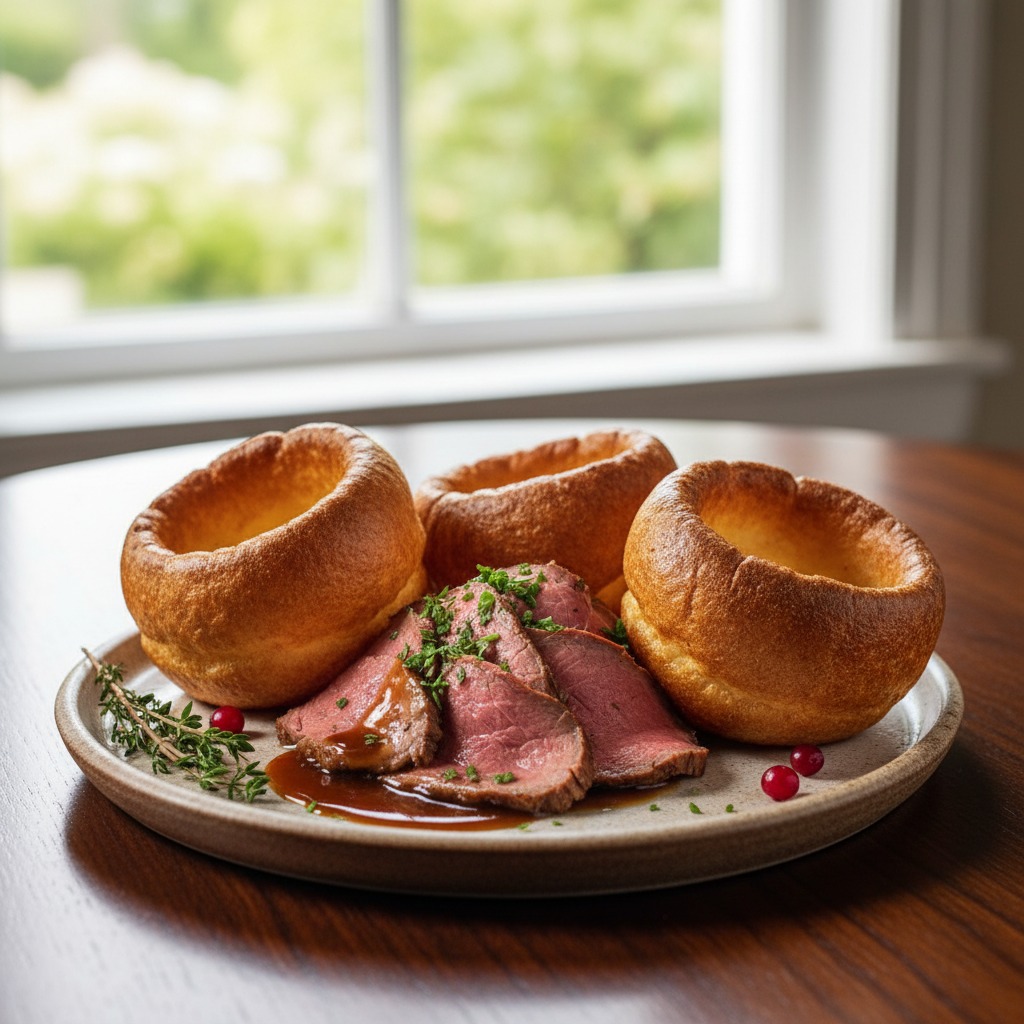
Light, airy Yorkshire puddings with ultra-crisp, deeply golden edges made using beef drippings or rendered beef fat. The perfect classic dinner side to soak up gravy and elevate roast beef, prime rib, or pot roast for a celebratory or Sunday roast meal.
Ingredient Spotlight
Beef drippings or rendered beef fat (clarified)
Beef drippings (rendered beef fat, often called tallow when clarified) are the fats and juices left after roasting or frying beef; they’re used for frying, roasting, and adding savory depth in many traditional cuisines (British/American, Eastern European, etc.). They have a rich, beefy aroma and deep umami flavor and a relatively high smoke point that crisps food well. You can get them from a butcher or meat counter, or render them at home from beef suet; substitutes include lard or duck fat for similar cooking properties, neutral vegetable oil for frying, or for beefy flavor mix butter or oil with a little concentrated beef stock or bouillon.
Jake Woods's note
"This recipe delivers reliably tall, hollow centers and super-crisp rims by combining a well-rested batter with a smoking-hot fat-in-tin technique. It shines alongside roast beef, prime rib, or pot roast and is designed to soak up every drop of gravy."
About This Recipe
Yorkshire puddings are the unsung architects of a perfect roast beef dinner: the thin, crisp wall of golden batter that frames a cottony, steam-filled interior and begs to be filled with gravy. This version leans into beef drippings or rendered beef fat to give the edges a darker, savory caramelization and the puddings an almost-meaty aroma that complements red meat better than neutral oils. The batter is deliberately thin—about the consistency of heavy cream—so it inflates quickly when it hits smoking-hot fat, creating the dramatic rise and lacy edges every Yorkshire purist chases.
What makes these reliably great is a few small, intentional choices: rest the batter to relax gluten and let starches hydrate, strain or briefly blend for an even texture, and always return the fat-filled tin to a blistering oven so the batter receives a sudden blast of heat. The technique rewards patience more than fancy ingredients, so this recipe is perfect for attentive home cooks who want a traditional, showy side for Sunday roast, holiday prime rib, or any meal where sauces and pan juices deserve a vessel. Make them the moment the roast comes out and watch guests fight over the first gravy-soaked bite.
Ingredients for Classic Yorkshire Puddings — Crispy-Edged Roast Beef Side
- 1 cup All-purpose (plain) flour
- 3 large Large eggs
- 1 cup Whole milk
- 1/4 cup Cold water
- 1 tsp Fine salt
- 3 tbsp Beef drippings or rendered beef fat (clarified)
How to Make Classic Yorkshire Puddings — Crispy-Edged Roast Beef Side
Step 1: Make a smooth batter
Whisk the flour and salt in a mixing bowl, then add the eggs and whisk until smooth. Gradually whisk in the milk and cold water until you have a thin, lump-free batter (it should be the consistency of heavy cream). For extra smoothness, pass the batter through a fine mesh sieve or blend briefly; this helps the puddings rise evenly.For this step
- 1 cupAll-purpose (plain) flour
- 3 largeLarge eggs
- 1 cupWhole milk
- 1/4 cupCold water
- 1 tspFine salt
Step 2: Rest the batter for lightness
Cover the bowl and let the batter rest at room temperature for 30–60 minutes; this relaxes the gluten and helps produce a more tender, airy interior. You can also refrigerate the batter up to 24 hours—if chilled, bring it back to room temperature for at least 30 minutes before baking so it responds quickly to the hot fat.Step 3: Preheat oven and heat the fat in the tin
Position a 12-hole standard muffin tin in the oven and preheat to 450°F (230°C) for at least 20 minutes so the oven and tin are thoroughly hot. Spoon roughly 1/4–1/2 teaspoon to 1 teaspoon of beef drippings (about 3 tbsp total across the tin) into each well, then return the tin to the oven for 5 minutes more until the fat is smoking hot and shimmering.For this step
- 3 tbspBeef drippings or rendered beef fat (clarified)
Step 4: Fill the wells and bake without opening
Working quickly, remove the hot tin and pour the batter into each well, filling about two-thirds full — the sudden heat will create the classic rise. Bake immediately on the middle rack for 20–25 minutes without opening the oven door (this prevents collapse) until the puddings are dramatically risen, deep golden and ultra-crisp at the edges. This recipe yields 12 puddings.Step 5: Serve hot with beef and gravy
Serve the puddings straight from the oven—one or two per person depending on appetite—paired with roast beef, prime rib or pot roast and ladled gravy. For maximum enjoyment, tear a pudding in half, spoon hot gravy inside, and use it to soak up the roast juices.Step 6: Make-ahead, reheating and storage tips
You can bake ahead and re-crisp puddings: cool fully, store in an airtight container in the fridge up to 2 days or freeze flat up to 1 month. Reheat in a 400°F (200°C) oven for 5–8 minutes (from refrigerated) or 8–12 minutes (from frozen) until hot and re-crisped; avoid microwaving as it softens the crisp edges.


- Whisk the flour and salt in a mixing bowl, then add the eggs and whisk until smooth. Gradually whisk in the milk and cold water until you have a thin, lump-free batter (it should be the consistency of heavy cream). For extra smoothness, pass the batter through a fine mesh sieve or blend briefly; this helps the puddings rise evenly.
- Cover the bowl and let the batter rest at room temperature for 30–60 minutes; this relaxes the gluten and helps produce a more tender, airy interior. You can also refrigerate the batter up to 24 hours—if chilled, bring it back to room temperature for at least 30 minutes before baking so it responds quickly to the hot fat.
- Position a 12-hole standard muffin tin in the oven and preheat to 450°F (230°C) for at least 20 minutes so the oven and tin are thoroughly hot. Spoon roughly 1/4–1/2 teaspoon to 1 teaspoon of beef drippings (about 3 tbsp total across the tin) into each well, then return the tin to the oven for 5 minutes more until the fat is smoking hot and shimmering.
- Working quickly, remove the hot tin and pour the batter into each well, filling about two-thirds full — the sudden heat will create the classic rise. Bake immediately on the middle rack for 20–25 minutes without opening the oven door (this prevents collapse) until the puddings are dramatically risen, deep golden and ultra-crisp at the edges. This recipe yields 12 puddings.
- Serve the puddings straight from the oven—one or two per person depending on appetite—paired with roast beef, prime rib or pot roast and ladled gravy. For maximum enjoyment, tear a pudding in half, spoon hot gravy inside, and use it to soak up the roast juices.
- You can bake ahead and re-crisp puddings: cool fully, store in an airtight container in the fridge up to 2 days or freeze flat up to 1 month. Reheat in a 400°F (200°C) oven for 5–8 minutes (from refrigerated) or 8–12 minutes (from frozen) until hot and re-crisped; avoid microwaving as it softens the crisp edges.
Classic Yorkshire Puddings — Crispy-Edged Roast Beef Side Tips
Bring batter to room
If you refrigerate the batter, bring it back to room temperature for at least 30 minutes so it reacts instantly to the hot fat and gives the best rise.
Get fat smoking-hot
Return the fat-filled tin to the oven until the fat is shimmering and just beginning to smoke; lukewarm fat will give limp, oily puddings instead of crisp-edged cups.
Sieve or blend batter
Straining or blitzing the batter removes lumps and incorporates air, which promotes an even, tall rise and a tender crumb inside.
Measure fat per well
Use roughly 1/4–1/2 teaspoon in each standard muffin well; too little won’t create enough steam lift, and too much makes greasy puddings.
Resist opening oven
Avoid opening the door during baking—temperature drops cause the cells to collapse and your proud rise to deflate.
Classic Yorkshire Puddings — Crispy-Edged Roast Beef Side Variations and Substitutions
Beef tallow or lard
Render and clarify tallow or use lard in place of drippings for the same savory depth and excellent browning if you don’t have fresh drippings.
Vegetarian/neutral oil
Use a high-heat neutral oil like refined sunflower or grapeseed oil for a vegetarian-friendly pudding; you’ll lose beefy aroma but keep great rise and crispness.
Beer-laced batter
Replace the cold water with an equal amount of a light, carbonated beer for a subtle malty note and a touch more lift from the bubbles.
Gluten-free swap
Use a 1:1 gluten-free flour blend that contains xanthan or psyllium to mimic structure; rest the batter a little longer to hydrate the alternative starches.
How to Store and Make Classic Yorkshire Puddings — Crispy-Edged Roast Beef Side Ahead
Cool puddings completely before storing to prevent steam from softening the crust. Keep in an airtight container in the refrigerator up to 48 hours or freeze flat for up to one month. To re-crisp, bake at 400°F (200°C) for 5–8 minutes from chilled or 8–12 minutes from frozen; avoid microwaving as it will turn the edges soggy.
What to Serve With Classic Yorkshire Puddings — Crispy-Edged Roast Beef Side
Serve immediately alongside roast beef or prime rib with plenty of hot gravy and a spoonful placed inside each pudding. Complement with roasted root vegetables, creamy mashed potatoes or creamed spinach, and pair with a bold red wine like Cabernet or a malty English ale to match the puddings' deep savory notes.
Classic Yorkshire Puddings — Crispy-Edged Roast Beef Side FAQs
Why didn’t my puddings rise?
The most common causes are insufficiently hot fat or a cold batter; both prevent the rapid steam expansion needed. Ensure the tin and fat are fully preheated and that the batter has come to room temperature before filling.
My puddings went soggy after sitting—what happened?
Steam trapped under a lid or in a container will soften the crisp edges; cool completely on a rack and re-crisp in a hot oven before serving to restore texture.
Can I use oil instead of beef drippings?
Yes—use a neutral high-heat oil for rise and crispness, though you’ll lose the caramelized beef flavor that drippings provide; tallow or lard are closer substitutes if you want richness without rendered pan juices.
How thin should the batter be?
Aim for the consistency of heavy cream: thin enough to pour easily but not watery, which helps create a delicate, steam-filled interior while still browning well at the edges.
Can I make the batter the night before?
Yes—resting in the fridge up to 24 hours improves flavor and convenience; bring the batter back to room temperature for at least 30 minutes before baking for the best rise.
Will a popover pan or Yorkshire tin change results?
A popover pan with taller wells will create taller, more dramatic puddings, while a large Yorkshire tin makes giant puddings; adjust the amount of fat and baking time accordingly and keep the oven temperature high for initial lift.
About the author
Jake WoodsHello, I'm Jake. I started this recipe site with the idea that I hated recipe websites that overwhelm you with long stories and ads just to see plain content that's not helpful. My goal is to provide you with quality recipes, simple ideas and a fun cooking experience. There's lots of fun things to cook, and I think as you browse the site you'll find that TopShelf.Recipes is the place for quality recipes on the web.
See all recipes by Jake Woods →Ratings & Reviews
Did you make this recipe?
Be the first to share your experience.
Nutrition Facts
Per serving: 1 pudding (55g)
Nutrition values are estimated from USDA ingredient data and may vary based on preparation, brands, and portion sizes. Values are provided for informational purposes only.
Keep Reading
Guides & articles for this recipe

Guides
Trending Backyard Dinner Parties for 2026: 8 Outdoor Dining Formats, Ready‑Made Menus & Host Workflows
Discover the eight backyard dining formats taking off in 2026, with plug‑and‑play menu templates, grill timing and workflow checklists, decor shortcuts, and social‑media and sustainability tips. This practical guide turns your yard into a seamless, shareable dining experience—whether you're hosting a casual progressive grill or an intimate fireside chef demo.

Guides
Trending Backyard Dinner Parties for 2026: 8 Outdoor Dining Formats, Plug‑and‑Play Menus & Host Workflows
Discover eight backyard dinner-party formats taking off in 2026, each with plug‑and‑play menu templates, step‑by‑step host workflows, grill timing tips, decor shortcuts, and social & sustainable ideas. Turn your yard into a memorable, stress‑free dining experience.

Healthy Eating
Gluten-Free Weeknight Grilling Plan
A 7-day gluten-free weeknight grilling plan with quick, family-friendly recipes, prep-ahead timelines, and a printable shopping list that spotlights late-summer produce and pantry staples. Includes clear cross-contamination safety tips and simple swaps to keep dinners fast and crowd-pleasing.
More from Dinner
View all Dinner recipes →
Classic Bacon Carbonara

Al Pastor Tacos

Jamaican Jerk Chicken Marinade for Smoking or Grilling

Air Fryer Chicken Sliders

Smoked Chicken Burger

Beer-Can Grilled Whole Chicken

Grilled Chicken with Chimichurri

Campfire‑Smoked Potato Salad with Mustard‑Bacon Vinaigrette — A Labor Day Grilling Side for Steak

30-Min Steak Grain Bowl with Chimichurri
Ask me anything about this recipe — substitutions, scaling, techniques, timing.
Powered by AI · 6 questions per 5 minutes, 30 per day