Heat reshapes food chemistry in three broad ways: thermal breakdown, physical loss, and chemical reaction. Water-soluble vitamins such as vitamin C and some B vitamins are particularly vulnerable to heat and oxidation; they degrade with sustained exposure and can leach into pan juices. Proteins unfold and bond through the Maillard reaction, producing the toasted aromas we crave, while fats respond by melting and, under very high heat or prolonged exposure, oxidizing into off-flavors and unhealthy breakdown products.
Smoke adds another layer of change because combustion produces particulate matter and polycyclic aromatic hydrocarbons (PAHs) while high-temperature reactions on muscle surfaces create heterocyclic amines (HCAs). Those compounds are formed when amino acids and creatine are exposed to very high, sustained temperatures; that matters when you over-char a steak or leave thin cuts directly over an open flame. Sensory cues are useful: a golden-brown crust with a nutty aroma usually signals desirable Maillard chemistry, while an acrid, lingering bitterness and flaky soot indicate excessive soot or PAH deposition.
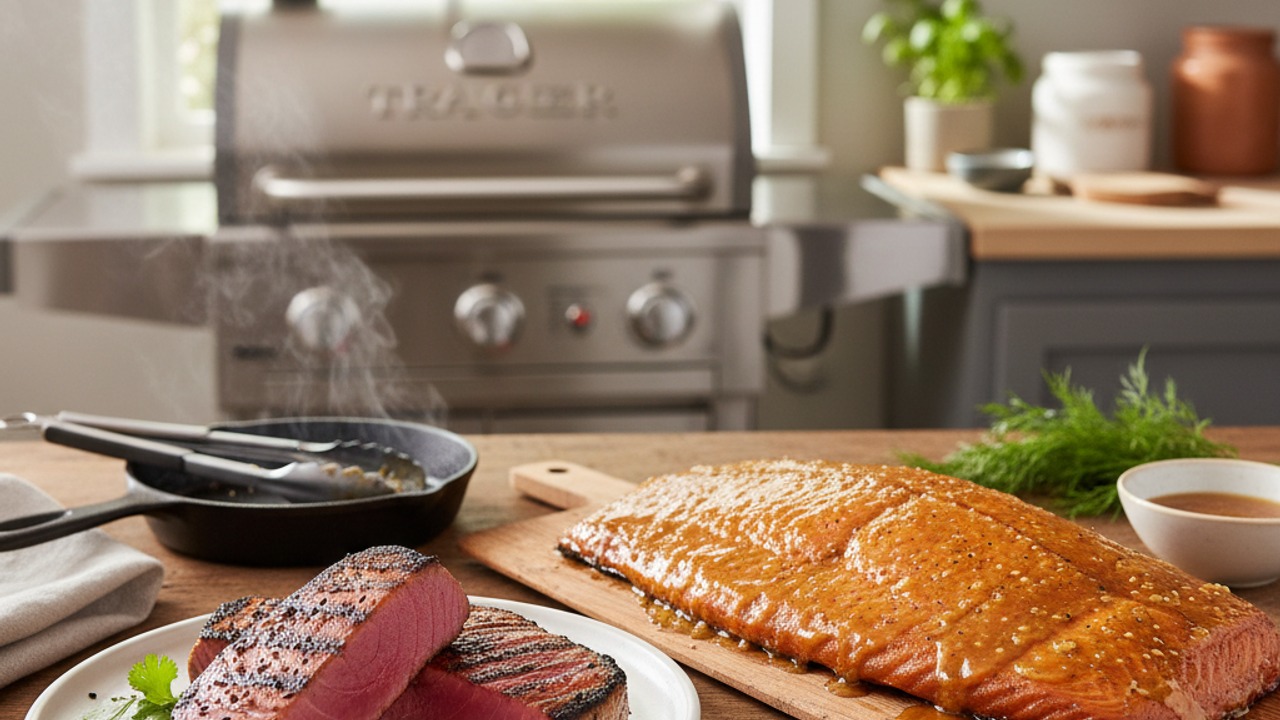
Knowing the mechanisms helps you choose the right approach for the ingredient. A quick, high-heat sear — as with the Seared Ahi Tuna Steaks — locks in texture and preserves heat-sensitive nutrients inside, whereas the gentler smoke of Traeger Smoked Salmon on a cedar plank extracts subtle aromatic compounds without necessarily destroying every vitamin. Miso Glazed Salmon Bowl-style finishes show how short, high-heat glazing can add flavor while keeping internal tenderness and many nutrients intact.