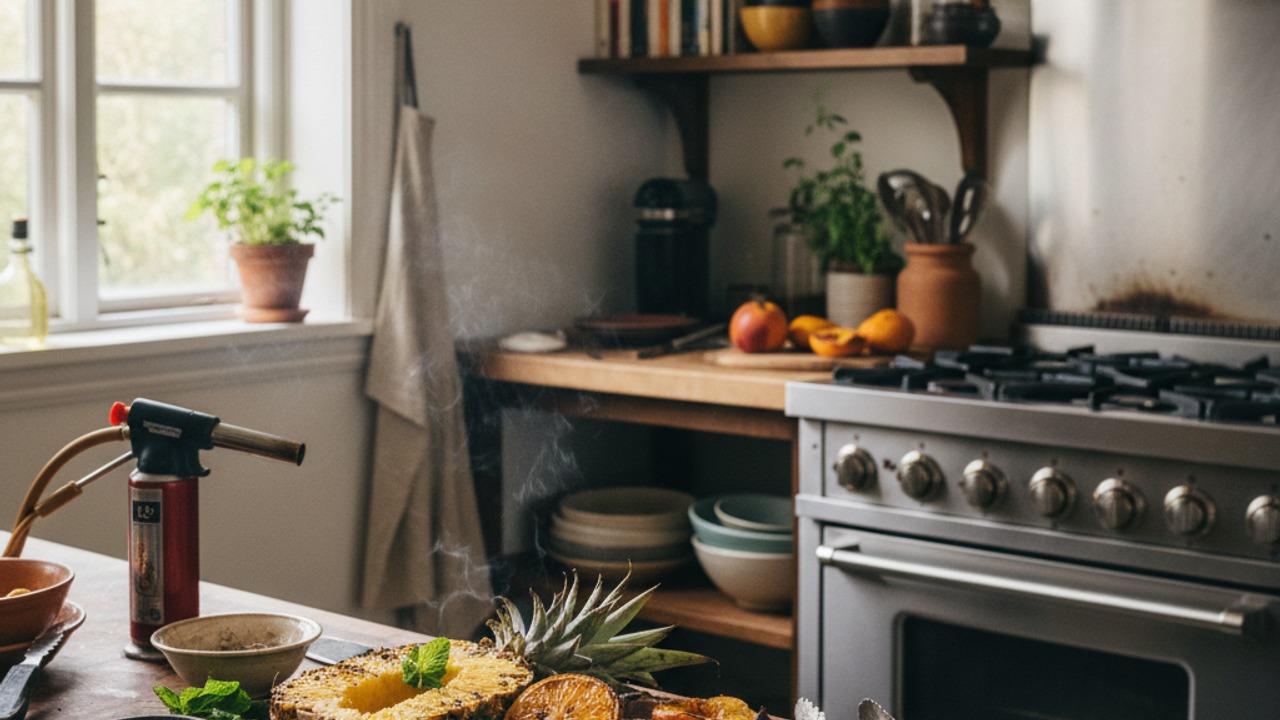
Fruit is mostly water and sugar in a cellular lattice; when surface heat drives off moisture and raises local temperature, the sugars concentrate and the exposed molecules brown, producing caramel and roasted aromatics. Simultaneously, cell walls break down so flesh softens and juices mingle with those new flavors. That combination—concentrated sweetness, smoky volatile aromatics, and tender texture—is why a grilled peach tastes deeper and more complex than a raw one.
Those same processes create trade-offs you must manage. Overdo the heat and you’ll generate bitter carbonization, or lose the fruit’s acid that provides balance. Different fruits behave differently because of structure: peaches and plums soften quickly and need gentler, shorter sears, while pineapple’s tough core tolerates higher heat and benefits from longer contact to develop deep caramel. Train your nose and eyes—look for even darkening without widespread black crust, a perfume of toasted sugar rather than ash, and a slight collapse at the stem side as reliable go/no-go cues.


