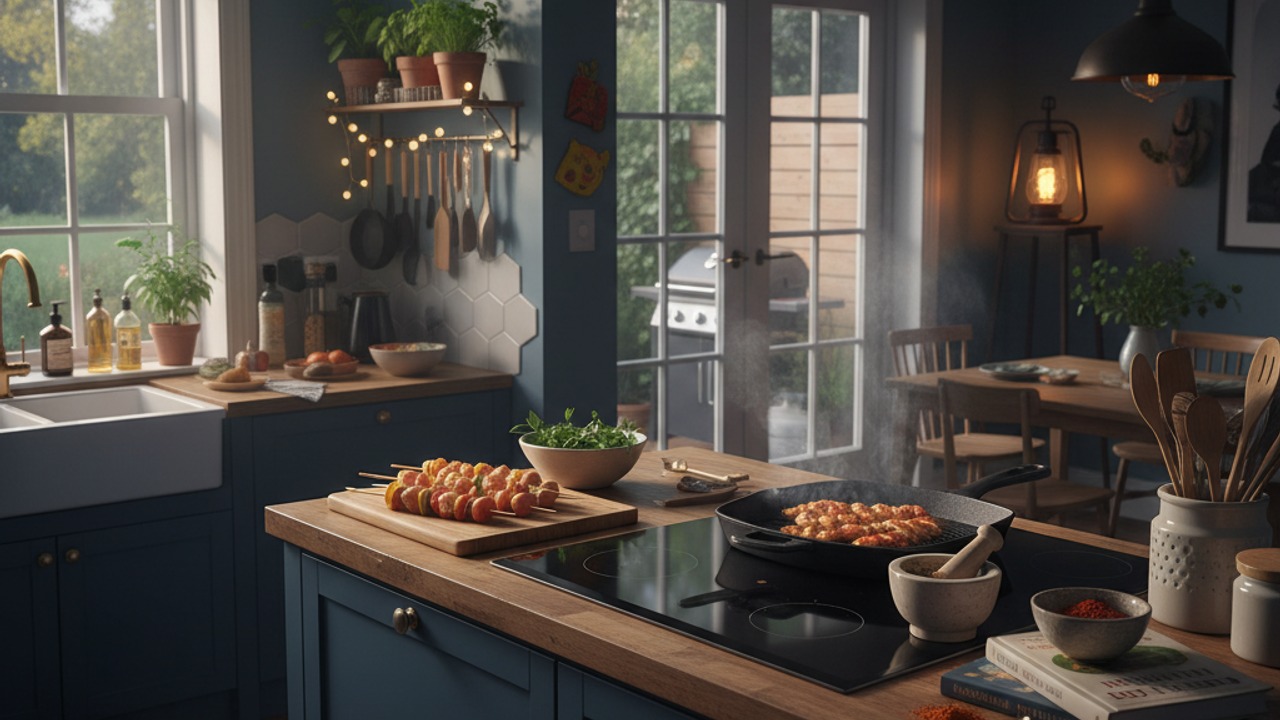
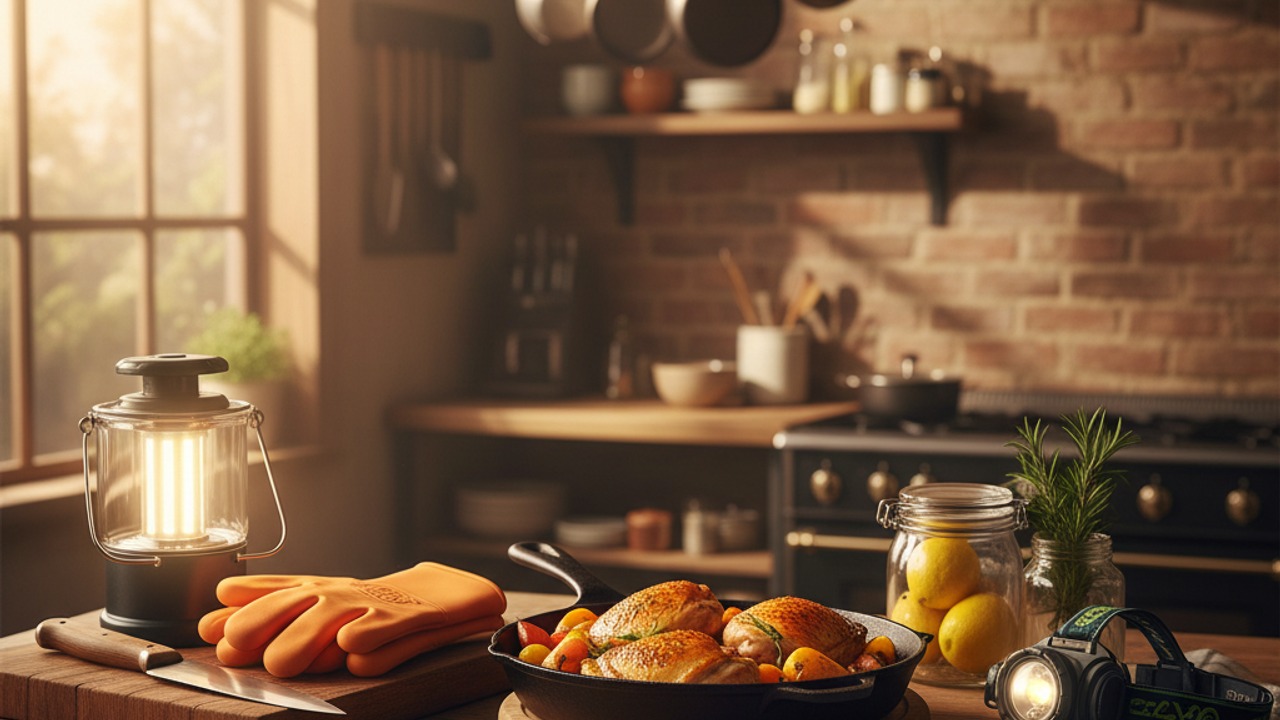
Good lighting removes guesswork. Use a dedicated grill-mounted light or a flexible gooseneck to brighten the cooking area, and place battery lanterns around prep stations to avoid shadows. String lights and a few stake-mounted warm LED fixtures create ambient glow for guest areas, while headlamps or clip-on task lights are invaluable for plating and finishing. Sketch a simple placement diagram: one task light over the grill, two lanterns at prep, and string lights over seating.
Match brightness to task. Aim for 200–400 lumens at the grill surface and 50–150 lumens for ambient zones. Bring fresh batteries or use rechargeable power banks rated for multi-hour runs. Keep a small toolkit with spare batteries, a headlamp, and a multi-outlet power strip for USB lights.
Safety gear is nonnegotiable. Have heat-resistant gloves, long-handled tools, a fire extinguisher rated for grease fires, and a basic first-aid kit within reach. Run a five-point quick safety checklist before lighting: clear flammables, check grill stability, confirm ventilation, test lights, and ensure the extinguisher is accessible.