Cast Iron Steak with Herb Butter
A simple, restaurant-quality cast-iron steak done at home — a hot skillet, a good sear, and a finishing herb butter make tender, flavorful steaks with minimal fuss. Ready in about 15 minutes, this method highlights the beef and delivers a glossy, garlicky finish.
About This Recipe
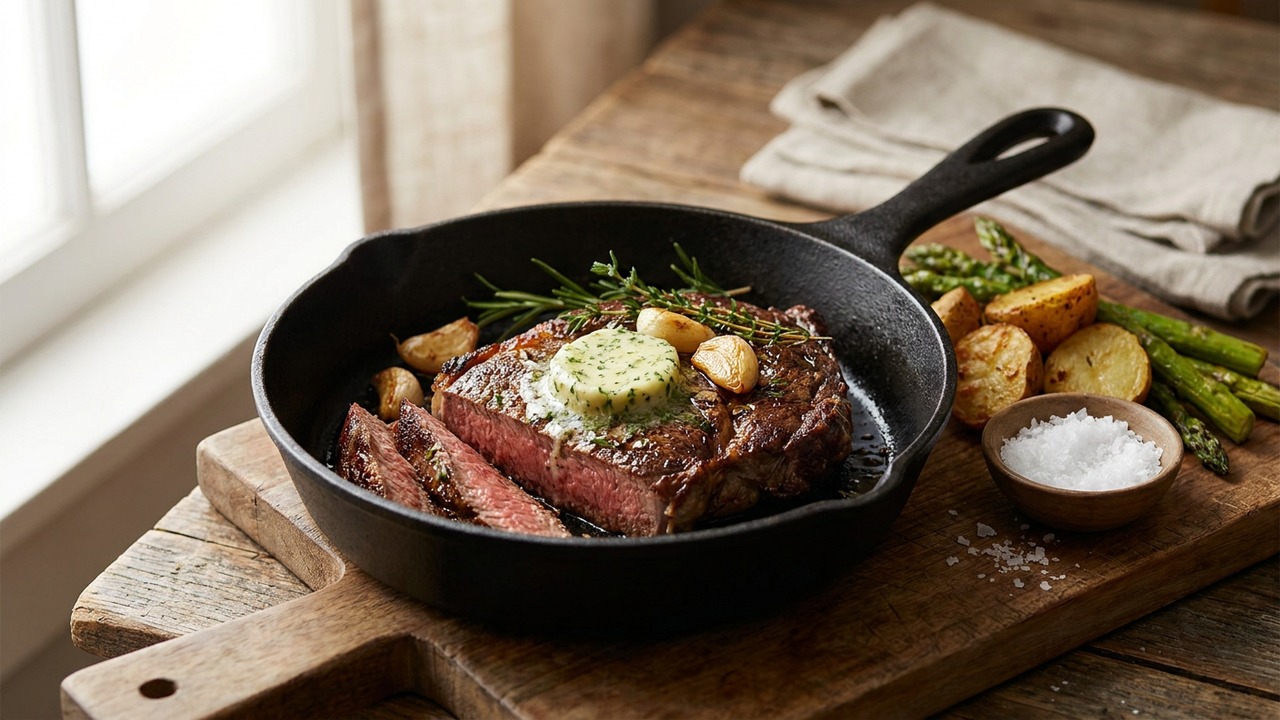
This cast-iron steak with herb butter is less about tricks and more about timing: a screaming-hot pan, an unmolested sear, and a few minutes of spooning flavorful butter over the meat. The result is a steak with a pronounced, caramelized crust and a glossy, garlicky finish from the compound butter—parsley brightens the richness while thyme and smashed garlic scent the basting butter so the beef tastes both savory and fresh. A squeeze of lemon at the end cuts through the fat and lifts the flavors without turning the steak acidic.
The method is forgiving and fast, designed for 1-inch ribeyes or strips but adaptable to thicker cuts with a little temperature awareness. It’s ideal for cooks who want restaurant-quality results at home without complicating the process: minimal ingredients, a single pan, and a simple herb butter that can be made ahead. The technique also highlights good beef—buy well-marbled steaks, dry them well, and respect the rest period—and rewards attention during the two-minute basting window where the butter picks up pan fond and transforms into glossy sauce.
Ingredients for Cast Iron Steak with Herb Butter
- 2 8-oz steaks Steaks (ribeye or strip)
- 1 1/2 teaspoons Kosher salt
- 1 teaspoon Freshly ground black pepper
- 1 tablespoon High smoke-point oil (vegetable, canola or grapeseed)
- 3 tablespoons Unsalted butter (divided)
- 2 cloves Garlic cloves (divided)
- 2 sprigs Fresh thyme sprigs
- 1 tablespoon Fresh parsley, chopped (for herb butter)
- 1 wedge Lemon wedge (optional, for serving)
How to Make Cast Iron Steak with Herb Butter
Step 1: Bring to room temperature and prep herb butter
Remove steaks from the fridge 20–30 minutes before cooking so they come closer to room temperature. Meanwhile, in a small bowl combine half the butter (about 1½ tbsp), chopped parsley, one minced garlic clove, a pinch of salt, and a few thyme leaves — mash together and set aside to soften. Reserve the remaining butter for basting.Step 2: Season steaks
Pat steaks dry with paper towels. Generously season both sides with kosher salt and freshly ground black pepper, pressing seasoning into the meat.Step 3: Preheat skillet and sear first side
Place a cast iron skillet over high heat and let it get very hot (2–3 minutes). Add the oil and swirl to coat. Carefully add the steaks and do not move them; sear until a deep brown crust forms, about 2–3 minutes for 1-inch steaks.Step 4: Flip, add aromatics and baste
Flip the steaks, add the remaining butter, the second smashed garlic clove, and the thyme sprigs to the pan. As the butter melts, tilt the pan and spoon the foaming butter over the steaks repeatedly for 1–2 minutes. Continue until an instant-read thermometer reads 125–130°F for medium-rare or 135°F for medium.Step 5: Rest and finish with herb butter
Transfer steaks to a cutting board and spoon any pan juices over them. Top each steak with a generous dollop of the prepared herb butter. Let rest for 5–7 minutes to allow juices to redistribute.Step 6: Slice and serve
Slice against the grain, finish with a squeeze of lemon if using, and serve immediately with any remaining pan juices poured over the slices.


- Remove steaks from the fridge 20–30 minutes before cooking so they come closer to room temperature. Meanwhile, in a small bowl combine half the butter (about 1½ tbsp), chopped parsley, one minced garlic clove, a pinch of salt, and a few thyme leaves — mash together and set aside to soften. Reserve the remaining butter for basting.
- Pat steaks dry with paper towels. Generously season both sides with kosher salt and freshly ground black pepper, pressing seasoning into the meat.
- Place a cast iron skillet over high heat and let it get very hot (2–3 minutes). Add the oil and swirl to coat. Carefully add the steaks and do not move them; sear until a deep brown crust forms, about 2–3 minutes for 1-inch steaks.
- Flip the steaks, add the remaining butter, the second smashed garlic clove, and the thyme sprigs to the pan. As the butter melts, tilt the pan and spoon the foaming butter over the steaks repeatedly for 1–2 minutes. Continue until an instant-read thermometer reads 125–130°F for medium-rare or 135°F for medium.
- Transfer steaks to a cutting board and spoon any pan juices over them. Top each steak with a generous dollop of the prepared herb butter. Let rest for 5–7 minutes to allow juices to redistribute.
- Slice against the grain, finish with a squeeze of lemon if using, and serve immediately with any remaining pan juices poured over the slices.
Cast Iron Steak with Herb Butter Tips
Dry and Season Thoroughly
Pat steaks bone- or paper-dry to ensure a deep Maillard crust, then press salt and pepper into the meat so seasoning adheres during the sear.
Let Pan Get Smoking
Heat cast iron until it just begins to smoke before adding oil; that short window produces a quick, non-sticking sear instead of steaming the surface.
Tilt and Spoon Basting
Tilt the pan and spoon the foaming butter over the steak continuously for 60–90 seconds to transfer aromatics and build a glossy finish.
Use an Instant-Read Thermometer
For reliable doneness, probe the thickest part: remove at 125–130°F for medium-rare and expect 3–5°F of carryover while resting.
Rest Before Slicing
Rest steaks 5–7 minutes under loose foil so juices redistribute; slicing too soon makes the plate-drip instead of a succulent slice.
Cast Iron Steak with Herb Butter Variations and Substitutions
Shallot-Red Wine Butter
Sauté a tablespoon of minced shallot, deglaze the pan with a splash of red wine, and fold into the herb butter for a savory, slightly acidic finish.
Chimichurri Finish
Swap the parsley butter for a bright chimichurri made with parsley, oregano, garlic, red wine vinegar, and olive oil for an Argentinian-inspired twist.
Garlic-Infused Oil Baste
For a dairy-free option, use extra-high-smoke oil infused briefly with smashed garlic and thyme and baste as the steaks cook.
Thicker Steak Reverse Sear
For 1.5–2 inch steaks, oven-roast at 275°F until 10–15°F under target temperature, then finish with the sear and butter-baste to avoid overcooking.
How to Store and Make Cast Iron Steak with Herb Butter Ahead
Store leftover sliced steak in an airtight container in the refrigerator for up to 3 days; tuck the herb butter into a separate small container to keep flavors bright. To reheat, warm gently in a low oven (250–275°F) or on a skillet over low heat, spooning reserved butter or pan juices over the slices to prevent drying.
What to Serve With Cast Iron Steak with Herb Butter
Serve with a simple side like roasted fingerling potatoes or a charred broccolini to mirror the steak’s smoky flavors and soak up pan juices. Pair with a bold red—Malbec or Cabernet—or a grippy California Zinfandel; for a lighter pairing, an oaked Chardonnay stands up to the buttered finish.
Cast Iron Steak with Herb Butter FAQs
Do I have to bring the steaks to room temperature?
Pulling steaks from the fridge 20–30 minutes ahead reduces cooking time disparity between exterior and center, giving a more even medium-rare and a better crust; but if you’re short on time, pat them very dry and adjust sear times slightly.
Why does the recipe use high-smoke oil and butter together?
High-smoke oil lets you heat the pan hot enough to sear without burning the fat; adding butter later gives flavor and browning compounds for the pan sauce without subjecting butter alone to high heat for long.
My butter browned too quickly—what went wrong?
If butter darkens or burns during basting, your pan was likely too hot or the butter added too early; lower the heat slightly and add butter once you’ve flipped, then baste while watching its color and aroma closely.
How should I adjust timings for thicker steaks?
For steaks thicker than 1 inch, consider an oven finish or a reverse-sear: cook low first to within 10–15°F of target, then sear 30–90 seconds per side and baste to finish.
Can I make the herb butter ahead?
Yes—compound butter keeps in the fridge for up to one week or frozen for several months; form into a log in plastic wrap for easy slicing and topping when the steaks come off the pan.
About the author
Jake WoodsHello, I'm Jake. I started this recipe site with the idea that I hated recipe websites that overwhelm you with long stories and ads just to see plain content that's not helpful. My goal is to provide you with quality recipes, simple ideas and a fun cooking experience. There's lots of fun things to cook, and I think as you browse the site you'll find that TopShelf.Recipes is the place for quality recipes on the web.
See all recipes by Jake Woods →Ratings & Reviews
Did you make this recipe?
Be the first to share your experience.
Nutrition Facts
Per serving: 1 serving
Nutrition values are estimated from USDA ingredient data and may vary based on preparation, brands, and portion sizes. Values are provided for informational purposes only.
Keep Reading
Guides & articles for this recipe

Recipe Roundup
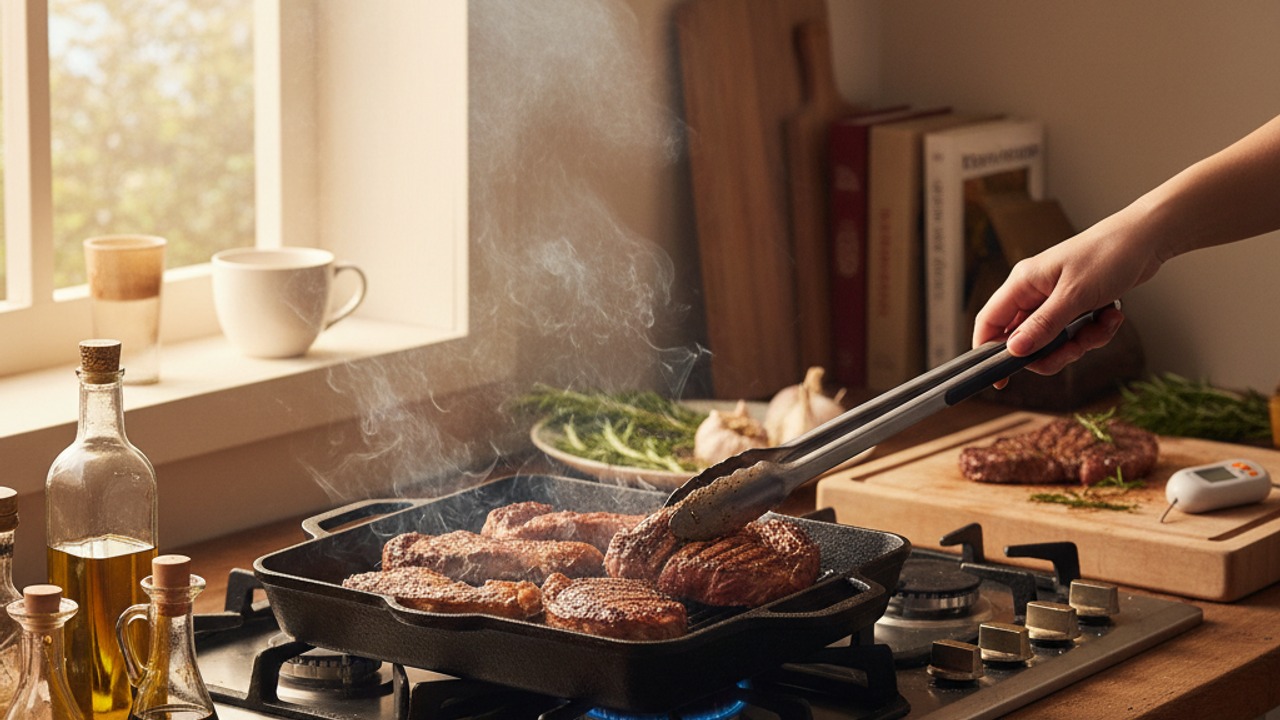
Early-Fall Grill Roundup: Apples & Squash
Transition summer cookouts into early fall with a roundup of grill recipes starring apples, winter squash, mushrooms, pears, and warm smoky flavors. Find mains, sides, veg-forward ideas, easy marinades, and practical tips for grilling when the air turns crisp.
Guides
Grill Science: Char Maillard and Smoke
A kitchen-to-backyard guide that explains the chemistry behind char, the Maillard reaction, caramelization, and smoke—and shows practical heat, fuel, and technique choices to build deeper grilled flavor. Includes simple experiments and recipe references so readers can reproduce richer results on steaks, vegetables, and fruit.
Guides
Grilling and Nutrition
An evidence-based guide that explains how grilling, charring, and smoking change vitamins, proteins, and fats and the health risks of over-charring. Practical strategies for home cooks on timing, temperature, marinades, fuel choice, and smart side pairings to maximize nutrients without losing bold grilled flavor.
More from Dinner
View all Dinner recipes →
Classic Bacon Carbonara

Al Pastor Tacos

Jamaican Jerk Chicken Marinade for Smoking or Grilling

Air Fryer Chicken Sliders

Smoked Chicken Burger

Beer-Can Grilled Whole Chicken

Grilled Chicken with Chimichurri

Campfire‑Smoked Potato Salad with Mustard‑Bacon Vinaigrette — A Labor Day Grilling Side for Steak

30-Min Steak Grain Bowl with Chimichurri
Ask me anything about this recipe — substitutions, scaling, techniques, timing.
Powered by AI · 6 questions per 5 minutes, 30 per day