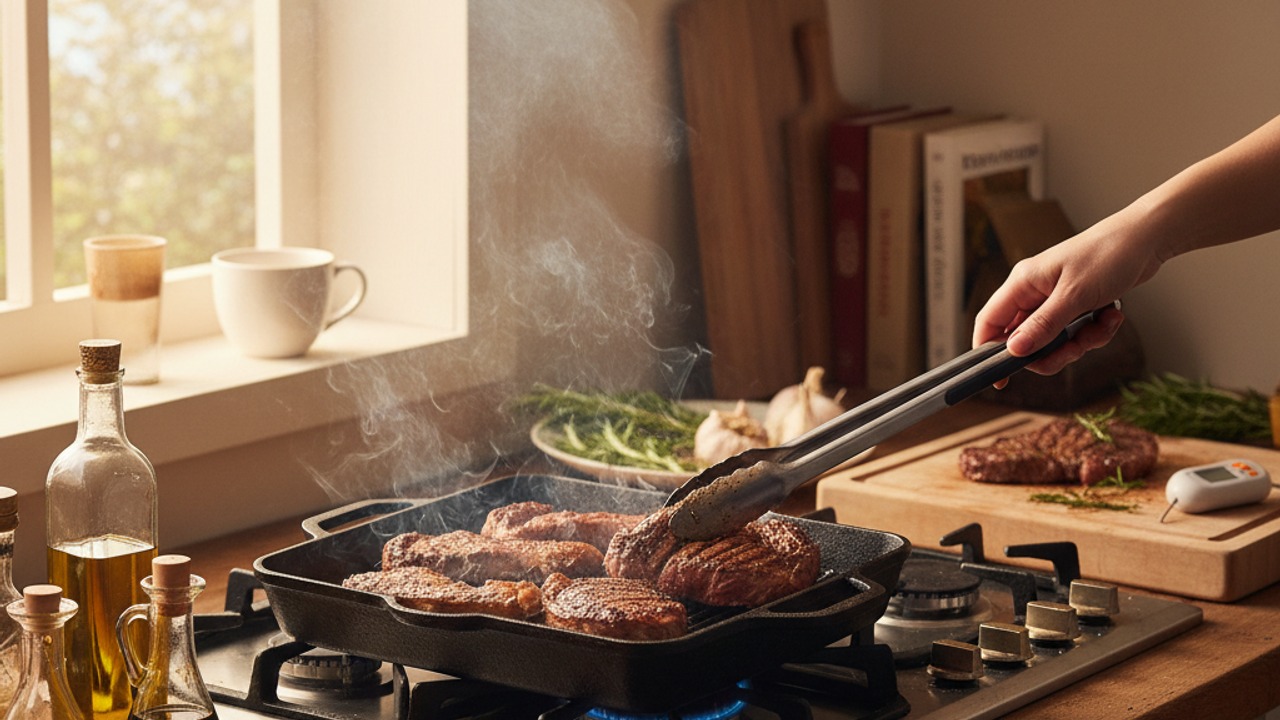

At the simplest level there are three surface reactions that deliver the flavor we chase on the grill: char as pyrolysis, the Maillard reaction, and caramelization. Pyrolysis is the partial thermal decomposition that produces smoky, bitter aromatic fragments when organic matter overtly chars; Maillard chemistry is the amino-acid–sugar reaction that yields savory melanoidins and that characteristic browned crust; caramelization is the thermal breakdown of sugars into sweeter, nutty compounds. Each of those pathways kicks in at different temperatures and under different moisture conditions, so they rarely act in isolation.
Because they depend on temperature, time, moisture, pH and available fat, you can bias a cook toward one outcome by changing just a few variables. High dry surface temperatures encourage Maillard crusts and fast caramelization but also increase the risk of bitter pyrolysis if sugar or fat burns; a wetter surface or acidic marinade delays browning because more energy is spent evaporating water. Recognizing these trade-offs helps explain why a long, gentle smoke builds interior depth while a hot sear creates immediate surface complexity.
Practically speaking, that means thinking of the grill as a set of knobs that tune chemistry: raise surface temperature and reduce surface moisture for a fast, savory crust; preserve moisture and lower heat when you want deeper smoke penetration and tender interiors. These choices inform everything from seasoning timing to resting and even how you trim fat, because fat both conducts heat and supports Maillard pathways.


