Low-and-Slow Smoked Beef Brisket with Bark and Burnt Ends
A classic low-and-slow smoked whole packer brisket with a deep, peppery bark and sticky, caramelized burnt ends. This step-by-step smoking tutorial covers trimming, seasoning, smoking, the Texas crutch, resting, and turning the point into show-stopping burnt ends.
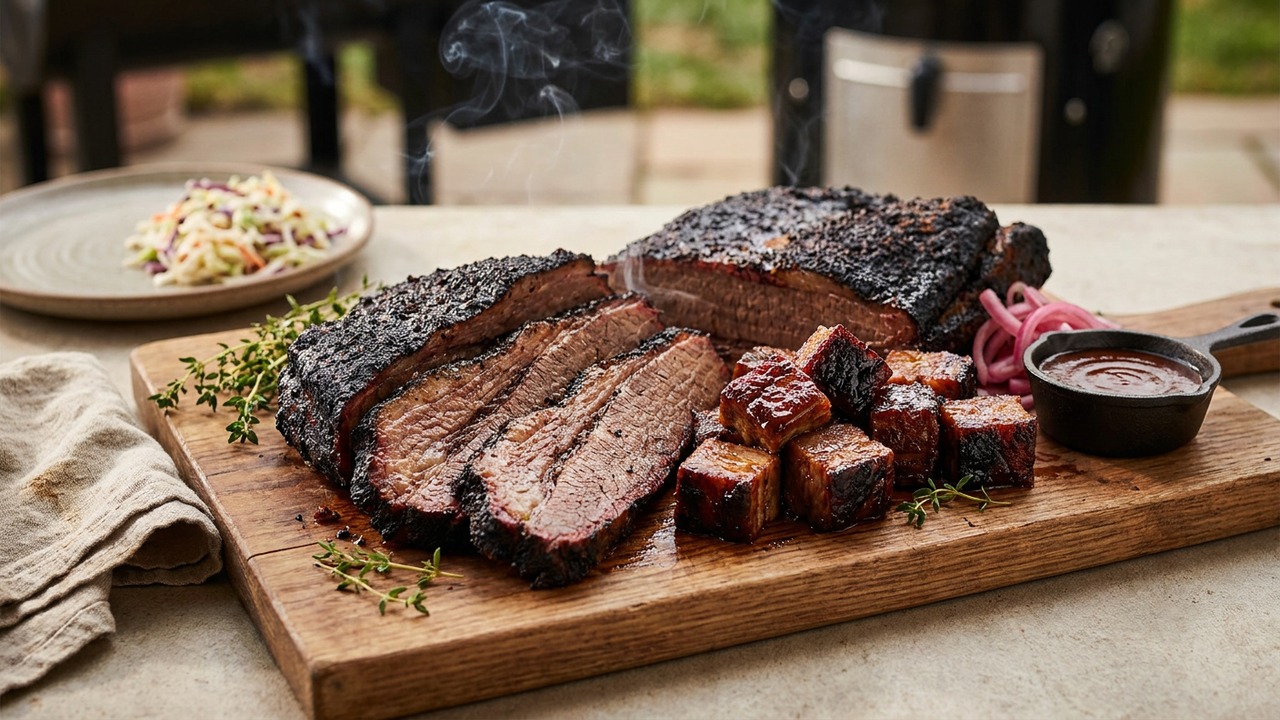
Ingredient Spotlight
Whole packer brisket (flat + point), trimmed to ~1/4" fat cap
A whole packer brisket is the full beef brisket containing both the lean 'flat' and the fattier 'point' muscle, the traditional cut for low-and-slow Texas-style barbecue. It has a very beefy, rich flavor and a significant fat cap that renders down during long smoking to keep the meat moist and form a flavorful bark. Ask a butcher for a 'whole brisket' or 'packer' at supermarkets or specialty meat shops; if unavailable, you can use just the brisket flat or, in a pinch for braising, a boneless chuck roast though the texture and fat content will differ.
Ingredient Spotlight
Hardwood chunks (oak, hickory or pecan)
Hardwood chunks are pieces of seasoned smoking wood used in charcoal or pellet grills and smokers to generate smoke and impart distinct flavors to the meat. Oak gives a medium, versatile smoke, hickory produces a stronger, slightly bacon-like smoke, and pecan is milder and slightly sweet/nutty. You can buy them at BBQ shops, garden centers, or online; substitutes include wood chips, pellets (in a smoker box), or a small amount of liquid smoke if you lack real wood.
Jake Woods's note
"This recipe celebrates classic low-and-slow BBQ: simple seasoning, patient smoke, and a little finishing magic for burnt ends. It’s perfect for weekend gatherings when you want a showpiece roast with deep flavor and beautiful bark."
About This Recipe
This brisket is built around contrast: a pepper-forward, deeply seasoned bark that gives way to a silky, melt-in-your-mouth interior, and a point transformed into gleaming, sticky burnt ends that steal the scene. The restrained rub—kosher salt, coarse black pepper and garlic—lets real beef flavor sing while the mustard binder and patient low-and-slow smoke coax a dark, resilient bark. Spritzing with beef broth keeps the exterior from arresting too early and adds a savory layer that complements the final braise in foil.
What makes this version work for ambitious home smokers is the choreography between smoke, wrap, and rest. Hitting 225°F for most of the smoke lets connective tissue dissolve slowly, while the Texas crutch speeds through the stubborn stall without sacrificing moisture. Resting wrapped in a cooler firms the bark and lets juices redistribute so slices cleanly hold together; then turning the point into burnt ends concentrates those flavors into caramelized, irresistible nuggets. This recipe is for someone who has a few hours and wants rewards worth the patience.
Ingredients for Low-and-Slow Smoked Beef Brisket with Bark and Burnt Ends
- 10 lb Whole packer brisket (flat + point), trimmed to ~1/4" fat cap
- 3/4 cup Kosher salt
- 3/4 cup Coarse black pepper (freshly cracked)
- 1/4 cup Yellow mustard (binder)
- 2 tbsp Garlic powder
- 5 chunks Hardwood chunks (oak, hickory or pecan)
- 2 cups Beef broth (for spritzing and foil)
- 4 tbsp Unsalted butter (for wrapping and finishing)
- 1/2 cup Brown sugar (for burnt ends)
- 1 cup Thick BBQ sauce (your favorite, for burnt ends finishing)
How to Make Low-and-Slow Smoked Beef Brisket with Bark and Burnt Ends
Step 1: Trim and season the brisket
Trim excess fat so the fat cap is about 1/4" thick and remove any silver skin; leave the point intact. Lightly coat the entire brisket with yellow mustard to act as a binder, then evenly apply a rub of kosher salt, coarse black pepper and garlic powder. Let the seasoned brisket rest at room temperature for 30–45 minutes while you prepare the smoker.For this step
- 10 lbWhole packer brisket (flat + point), trimmed to ~1/4" fat cap
- 3/4 cupKosher salt
- 3/4 cupCoarse black pepper (freshly cracked)
- 1/4 cupYellow mustard (binder)
- 2 tbspGarlic powder
Step 2: Prepare smoker and begin the long smoke
Preheat your smoker to a steady 225°F (107°C) and add hardwood chunks (oak, hickory or pecan) for smoke. Place the brisket on the smoker fat-side up (or down if your smoker’s heat comes from above) and smoke undisturbed, spritzing every 60–90 minutes with beef broth to maintain moisture and encourage a deep, even bark. Expect roughly 6–8 hours to hit the first target range (around 155–165°F internal), but monitor by temperature and bark development rather than time alone.For this step
- 5 chunksHardwood chunks (oak, hickory or pecan)
- 2 cupsBeef broth (for spritzing and foil)
Step 3: Wrap (Texas crutch) and finish to tenderness
When the brisket reaches the stall (commonly 155–165°F) and the bark is set, tightly wrap the brisket in heavy-duty foil with a few tablespoons of butter and 1/2 cup beef broth to braise slightly. Return the wrapped brisket to the smoker and continue cooking until the internal temperature reaches 200–205°F and a probe slides in like softened butter, typically another 3–5 hours depending on size.For this step
- 4 tbspUnsalted butter (for wrapping and finishing)
Step 4: Rest the brisket
Carefully remove the wrapped brisket and rest it in a cooler or insulated container for at least 1–2 hours; resting redistributes juices and firms the bark. Keep it wrapped during the rest; this allows internal temperature to equalize and results in juicier slices when you cut.Step 5: Make burnt ends from the point
Unwrap and separate the point from the flat. Cube the point into roughly 1" pieces, toss the cubes with brown sugar, BBQ sauce and a few small knobs of butter, then place in a foil pan. Return the pan to the smoker at 250–275°F and cook until the pieces are sticky, caramelized and deeply browned—about 45–75 minutes—stirring once or twice to evenly glaze and develop charred edges.For this step
- 1/2 cupBrown sugar (for burnt ends)
- 1 cupThick BBQ sauce (your favorite, for burnt ends finishing)
Step 6: Slice the flat and serve with burnt ends
Slice the flat across the grain into 1/4"–1/2" slices, trimming any excess fat as you go. Plate warm brisket slices alongside the sticky burnt ends, garnish with coarse cracked pepper if desired, and serve with extra BBQ sauce and pickles. Enjoy immediately—leftovers reheat well and make excellent sandwiches.


- Trim excess fat so the fat cap is about 1/4" thick and remove any silver skin; leave the point intact. Lightly coat the entire brisket with yellow mustard to act as a binder, then evenly apply a rub of kosher salt, coarse black pepper and garlic powder. Let the seasoned brisket rest at room temperature for 30–45 minutes while you prepare the smoker.
- Preheat your smoker to a steady 225°F (107°C) and add hardwood chunks (oak, hickory or pecan) for smoke. Place the brisket on the smoker fat-side up (or down if your smoker’s heat comes from above) and smoke undisturbed, spritzing every 60–90 minutes with beef broth to maintain moisture and encourage a deep, even bark. Expect roughly 6–8 hours to hit the first target range (around 155–165°F internal), but monitor by temperature and bark development rather than time alone.
- When the brisket reaches the stall (commonly 155–165°F) and the bark is set, tightly wrap the brisket in heavy-duty foil with a few tablespoons of butter and 1/2 cup beef broth to braise slightly. Return the wrapped brisket to the smoker and continue cooking until the internal temperature reaches 200–205°F and a probe slides in like softened butter, typically another 3–5 hours depending on size.
- Carefully remove the wrapped brisket and rest it in a cooler or insulated container for at least 1–2 hours; resting redistributes juices and firms the bark. Keep it wrapped during the rest; this allows internal temperature to equalize and results in juicier slices when you cut.
- Unwrap and separate the point from the flat. Cube the point into roughly 1" pieces, toss the cubes with brown sugar, BBQ sauce and a few small knobs of butter, then place in a foil pan. Return the pan to the smoker at 250–275°F and cook until the pieces are sticky, caramelized and deeply browned—about 45–75 minutes—stirring once or twice to evenly glaze and develop charred edges.
- Slice the flat across the grain into 1/4"–1/2" slices, trimming any excess fat as you go. Plate warm brisket slices alongside the sticky burnt ends, garnish with coarse cracked pepper if desired, and serve with extra BBQ sauce and pickles. Enjoy immediately—leftovers reheat well and make excellent sandwiches.
Low-and-Slow Smoked Beef Brisket with Bark and Burnt Ends Tips
Trim for Even Cooking
Trim the fat cap to about 1/4 inch and remove silver skin so smoke and heat penetrate evenly without greasy pockets.
Probe in Thickest Part
Insert your thermometer into the deepest part of the flat and later the point; the probe feeling is more reliable than time—look for 200–205°F and a probe that slides in like softened butter.
Use Broth for Spritzing
Beef broth adds savory umami while rehydrating the surface; spritz every 60–90 minutes, keeping the lid closed between mists to hold smoke.
Wrap Tight and Low
Seal the brisket tightly in heavy-duty foil with butter and a little broth to braise through the stall while preventing steam from softening the bark too much.
Rest Long and Wrapped
Rest the wrapped brisket in an insulated cooler for 1–2 hours to let juices redistribute and firm up the bark for cleaner slicing.
Low-and-Slow Smoked Beef Brisket with Bark and Burnt Ends Variations and Substitutions
Butcher Paper Finish
Swap foil for peach or unwaxed butcher paper at the stall to preserve more bark texture while still speeding the cook, though the internal finish may be slightly drier than foil.
Coffee-Pepper Rub
Add 2 tablespoons of finely ground espresso or instant coffee to the rub for earthy bitterness that complements the pepper and deepens the bark.
Lower-Sugar Burnt Ends
Replace brown sugar with a mix of molasses and a sugar substitute or use less sugar and longer glazing to get caramelization without as much sweetness.
Sous-Vide Hybrid
Cook the brisket sous-vide to 155–165°F for 24–36 hours, then cold-smoke or finish on a smoker to build bark and smoky flavor in a shorter active smoking window.
How to Store and Make Low-and-Slow Smoked Beef Brisket with Bark and Burnt Ends Ahead
Cool completely before refrigerating to avoid steam build-up; store sliced brisket and burnt ends in airtight containers for up to 4 days, or freeze for 2–3 months. Reheat gently wrapped in foil with a splash of beef broth at 275°F until warm to preserve moisture and soften the fat without drying the slices. Burnt ends reheat well and can be refreshed briefly in a hot oven or smoker to re-caramelize the glaze.
What to Serve With Low-and-Slow Smoked Beef Brisket with Bark and Burnt Ends
Serve slices on a warm platter next to a heap of sticky burnt ends, coarse-cracked pepper, and extra BBQ sauce on the side; pickles and pickled red onions cut the richness nicely. Classic southern sides like creamy potato salad, smoked baked beans, or tangy coleslaw pair well, and a slice of white bread or a soft roll is perfect for soaking up juices. For drinks, an amber ale or a fruit-forward Zinfandel balances the smoke and sweetness.
Low-and-Slow Smoked Beef Brisket with Bark and Burnt Ends FAQs
How do I know the brisket is truly done?
Target 200–205°F internal, but rely on probe feel—when a thin thermometer probe slides with almost no resistance like softened butter, the collagen has rendered and the meat is tender.
Can I skip the spritzing step?
You can, but spritzing with beef broth helps maintain surface moisture and promotes an even, glossy bark; if you skip it, the bark may set too hard or develop uneven smoke rings.
Why use mustard as a binder?
Mustard creates a sticky surface for the rub to adhere to and mostly burns off during the smoke, leaving flavor behind without imparting a mustard taste.
Is butcher paper better than foil for wrapping?
Butcher paper preserves more bark texture and allows some steam to escape, but foil braises the meat more and can produce juicier results—choose based on whether you prioritize bark or moistness.
My brisket hit the stall—should I always wrap?
Wrapping during the stall speeds cooking and prevents excessive moisture loss, which is especially helpful for home cooks on a timetable; if you prefer maximal smoke flavor and bark, you can skip wrapping but expect a longer cook and drier edges.
What if my point is small—can I still make burnt ends?
Yes; cube whatever point you have, glaze it well, and allow extra time to caramelize, or combine smaller pieces from multiple briskets to get the same decadent result.
About the author
Jake WoodsHello, I'm Jake. I started this recipe site with the idea that I hated recipe websites that overwhelm you with long stories and ads just to see plain content that's not helpful. My goal is to provide you with quality recipes, simple ideas and a fun cooking experience. There's lots of fun things to cook, and I think as you browse the site you'll find that TopShelf.Recipes is the place for quality recipes on the web.
See all recipes by Jake Woods →Ratings & Reviews
Did you make this recipe?
Be the first to share your experience.
Nutrition Facts
Per serving: 1 serving
Nutrition values are estimated from USDA ingredient data and may vary based on preparation, brands, and portion sizes. Values are provided for informational purposes only.
Keep Reading
Guides & articles for this recipe
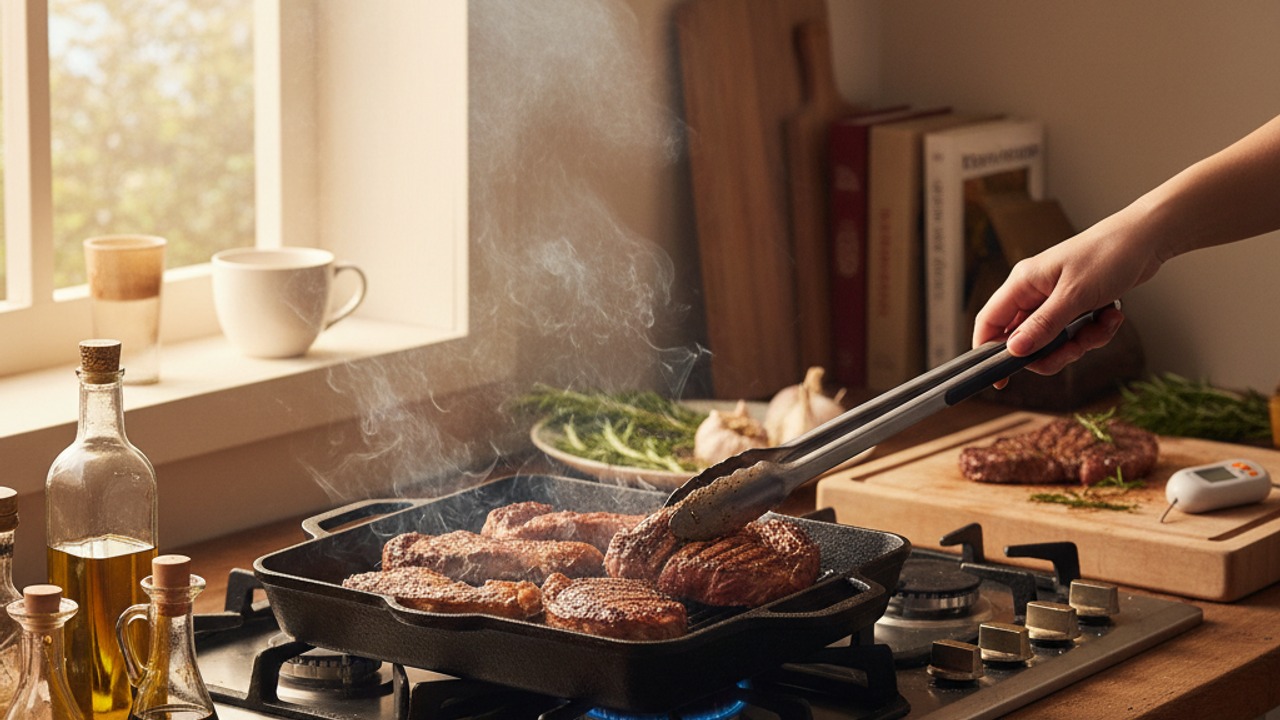
Guides
Grill Science: Char Maillard and Smoke
A kitchen-to-backyard guide that explains the chemistry behind char, the Maillard reaction, caramelization, and smoke—and shows practical heat, fuel, and technique choices to build deeper grilled flavor. Includes simple experiments and recipe references so readers can reproduce richer results on steaks, vegetables, and fruit.
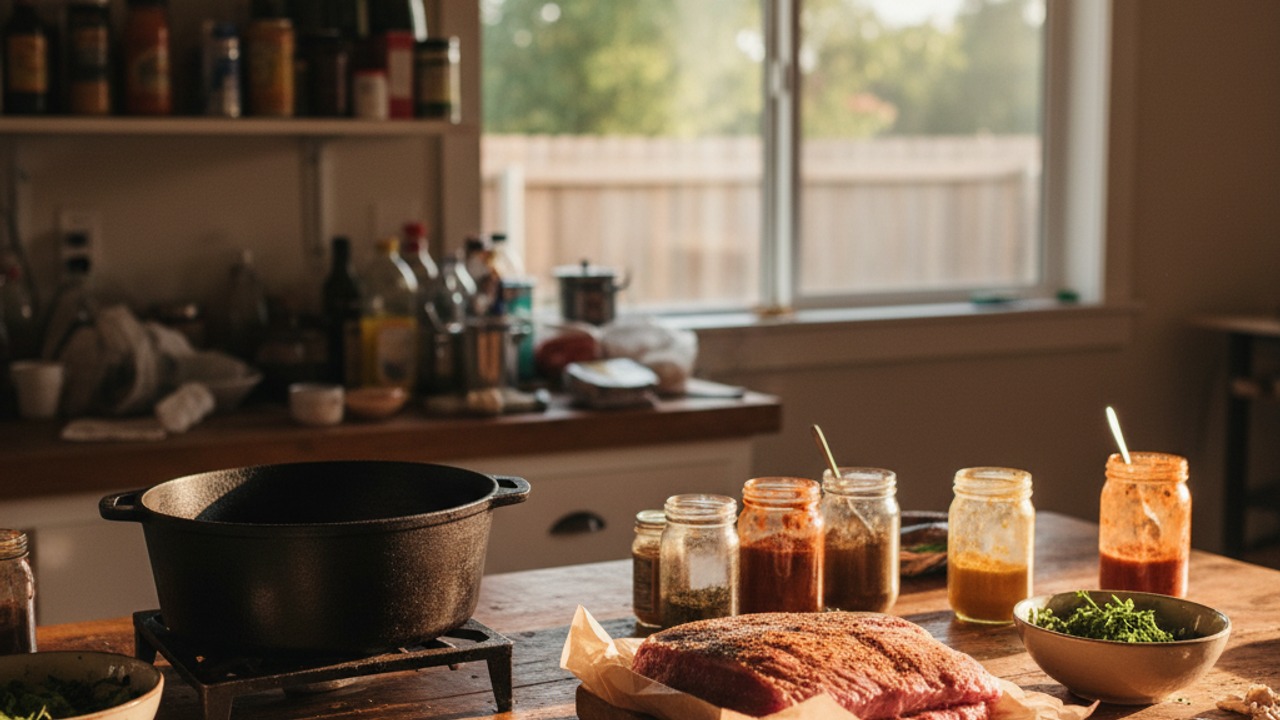
Guides
Labour Day Smoking Playbook
Seven ready-to-run smoke-first menus with exact start/hold/serve timelines so you can plan an overnight pit and a stress-free Labour Day spread. Includes make-ahead side pairings, cooler-transport tips, fuel and wood picks for late-summer weather, and safety + hold strategies so hosts can relax and enjoy the holiday.
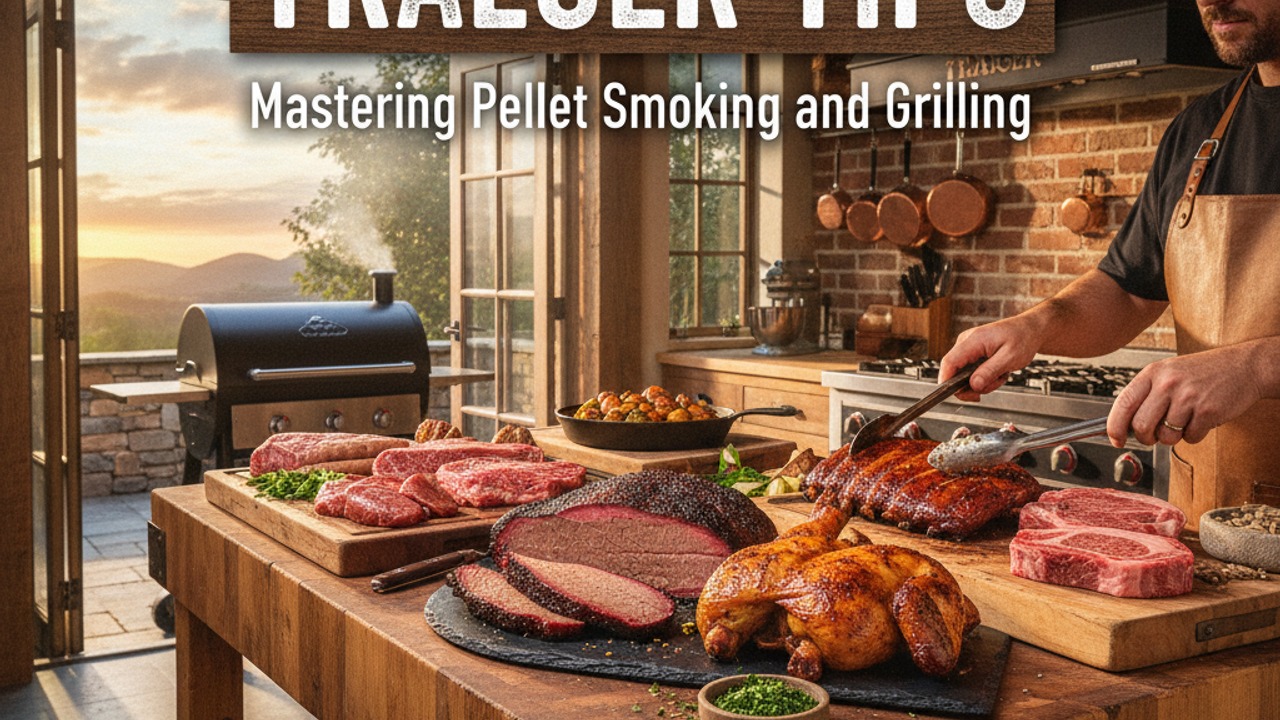
Tips & Techniques
Traeger Tips: Mastering Pellet Smoking and Grilling
Practical, hands-on Traeger tips for better smoke, cleaner maintenance, and consistently great results. Learn pellet selection, temperature control, maintenance routines, and cook-specific advice for spectacular brisket, ribs, poultry and more.
More from Smoking
View all Smoking recipes →
Smoked Chex Mix

Smoked Coffee-Chile Rubbed Pork Roast for Pellet or Offset Smokers

Smoked Pizza with Smoked Mozzarella

Smoked Pulled Pork Meal Prep

Eggs Benedict Pulled Pork

Smoked BBQ Beef Meatballs with Cherry Chipotle Glaze

Traeger Burnt Ends from Brisket Tips with Molasses Glaze

Campfire‑Smoked Potato Salad with Mustard‑Bacon Vinaigrette — A Labor Day Grilling Side for Steak

Smoked Chocolate Cake
Ask me anything about this recipe — substitutions, scaling, techniques, timing.
Powered by AI · 6 questions per 5 minutes, 30 per day