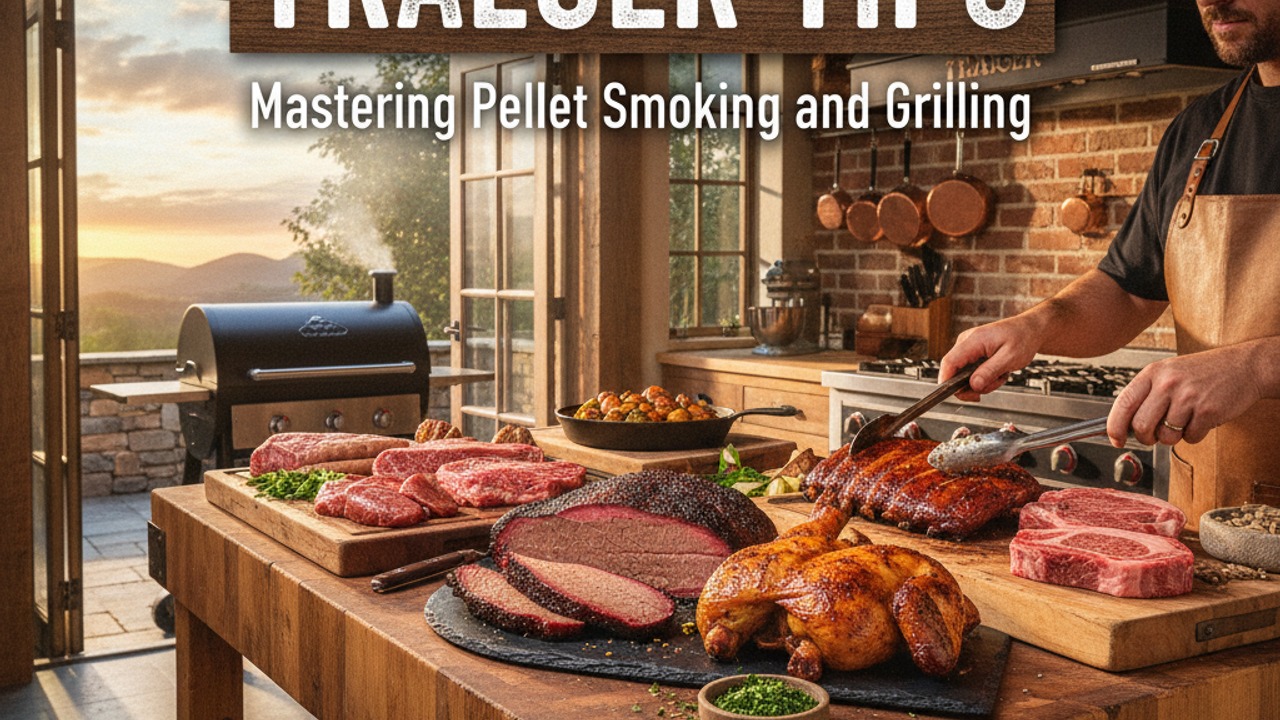
Traeger-style pellet grills make smoking and grilling approachable: they combine a wood-fired flavor with precise temperature control. But to get the best results you need to treat them like tools, not black boxes. These tips cover pellet choices, setup, maintenance, temperature tricks, and meat-specific strategies that will improve smoke, texture, and consistency.
Traeger Tips: Mastering Pellet Smoking and Grilling
Practical, hands-on Traeger tips for better smoke, cleaner maintenance, and consistently great results. Learn pellet selection, temperature control, maintenance routines, and cook-specific advice for spectacular brisket, ribs, poultry and more.
Why pellet grills like Traeger reward patience
Startup and setup: first things first
- Preheat properly: allow 10–20 minutes of preheat time at your target temperature. For true smoke flavor, use the Smoke setting (or 180–225°F) for 15–30 minutes first to get good wood combustion.
- Season new grills: run the grill at 400–450°F for 30–45 minutes with a drip pan in place to burn off factory coatings.
- Position food thoughtfully: pellet grills are indirect heat. Use a two-zone setup by creating a cool side (no direct pan under food) and a hot side (for finishing or faster cooks).
- Probe placement: use one probe for the meat (center, away from bone) and one for the grill ambient/oven temperature. Know the difference between grate temp and built-in probe temp; they can vary 10–25°F.
Pellets: the single biggest flavor and performance variable
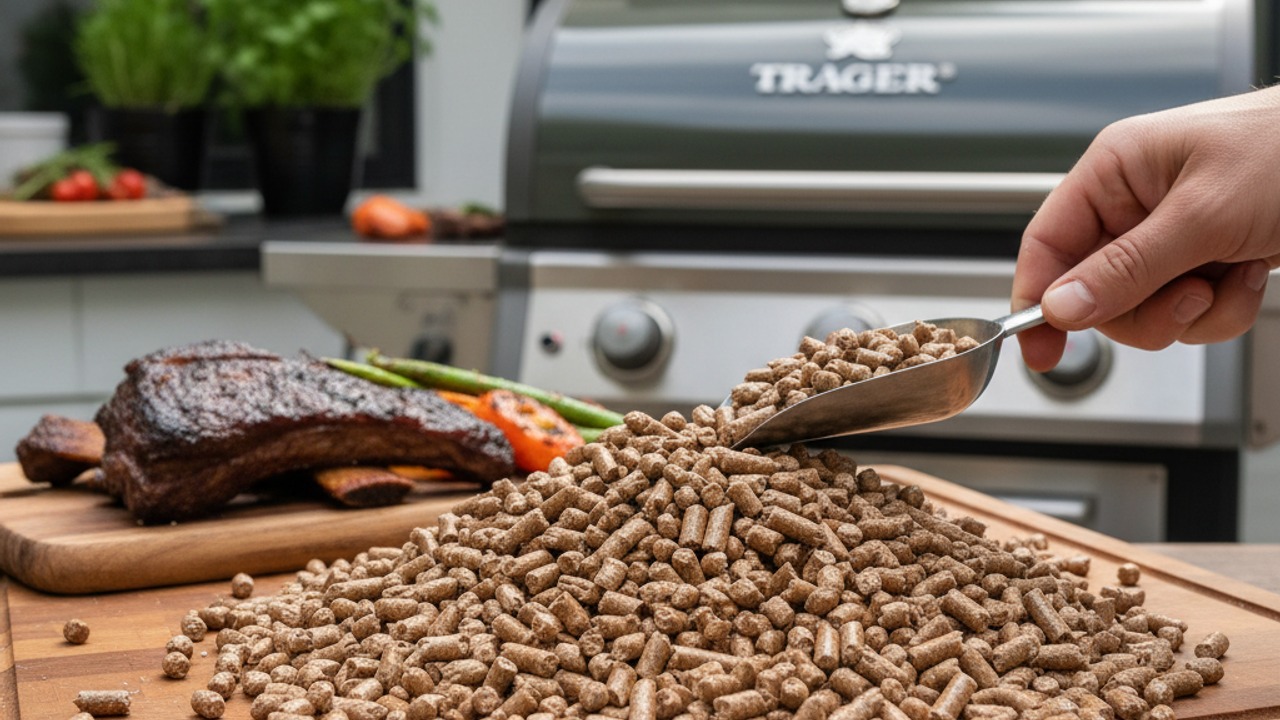
- Choose quality pellets: look for dense, low-ash, 100% hardwood pellets. Cheap pellets with fillers produce less smoke flavor and more ash that clogs the firepot.
- Pair wood to protein:
- Fruitwoods (apple, cherry): mild, fruity — pork, poultry, fish
- Pecan: mild, nutty — chicken, turkey, pork
- Hickory: strong, bacon-like — pork shoulder, ribs, beef
- Oak: versatile and steady — brisket, beef, lamb
- Mesquite: intense — use sparingly with beef
- Avoid mixing pellets in the hopper. To change wood types, empty the hopper and sweep the auger of remaining pellets to prevent flavor cross-over.
- Pellet storage: keep pellets dry in a sealed container. Pellets absorb moisture and will swell or crumble; humidity >10% reduces burn efficiency.
- Pellet consumption: approximate rates vary with temperature; expect ~0.5–1 lb/hr at low temps (225°F) and more at higher temps. The only reliable way to know is to track usage during your cooks.
Temperature control: low-and-slow vs. high-heat finishing
- Low & slow: cook between 200–260°F for classic smoking — brisket, pork shoulder, ribs. Use the Smoke mode early for more pronounced smoke ring.
- Hot & fast: cook at 350–400°F or higher for chicken, fish, or thinner cuts. You’ll get less traditional smoke but crispier skin and faster cooks.
- Reverse sear: cook the roast/brisket/pork to within 10–15°F of target internal temp at a low heat, then increase the grill (or sear in a screaming-hot cast iron pan) to finish and create a crust.
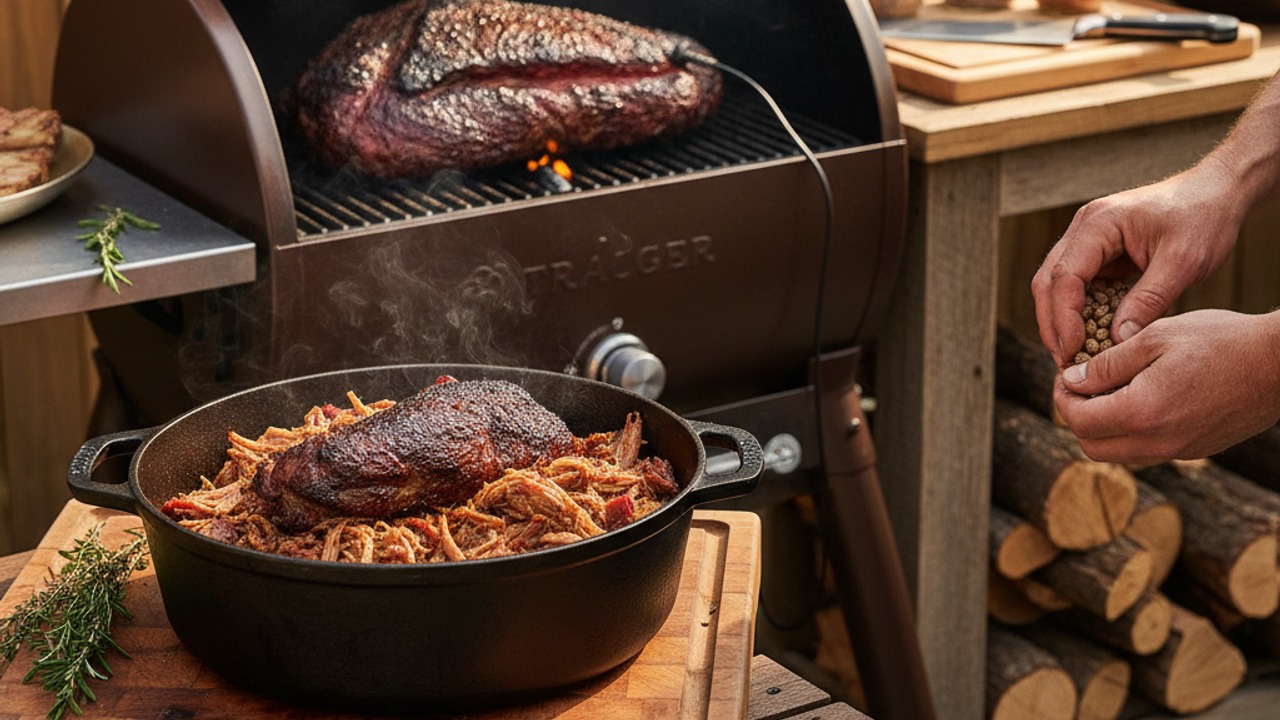
- Handling the stall: brisket and pork shoulder may stall around 150–170°F. Use the Texas crutch (wrap in foil or butcher paper) to push through the stall faster and retain moisture.
Getting more smoke flavor — without ruining the bark
- Start with the Smoke setting for first 1–2 hours (or until a light smoke builds). Too much thin, passive smoke can make meat bitter.
- Use quality, fresh pellets. Wet or poor pellets give greasy, acrid smoke.
- Avoid opening the lid frequently. Each opening dumps heat and smoke and prolongs the cook.
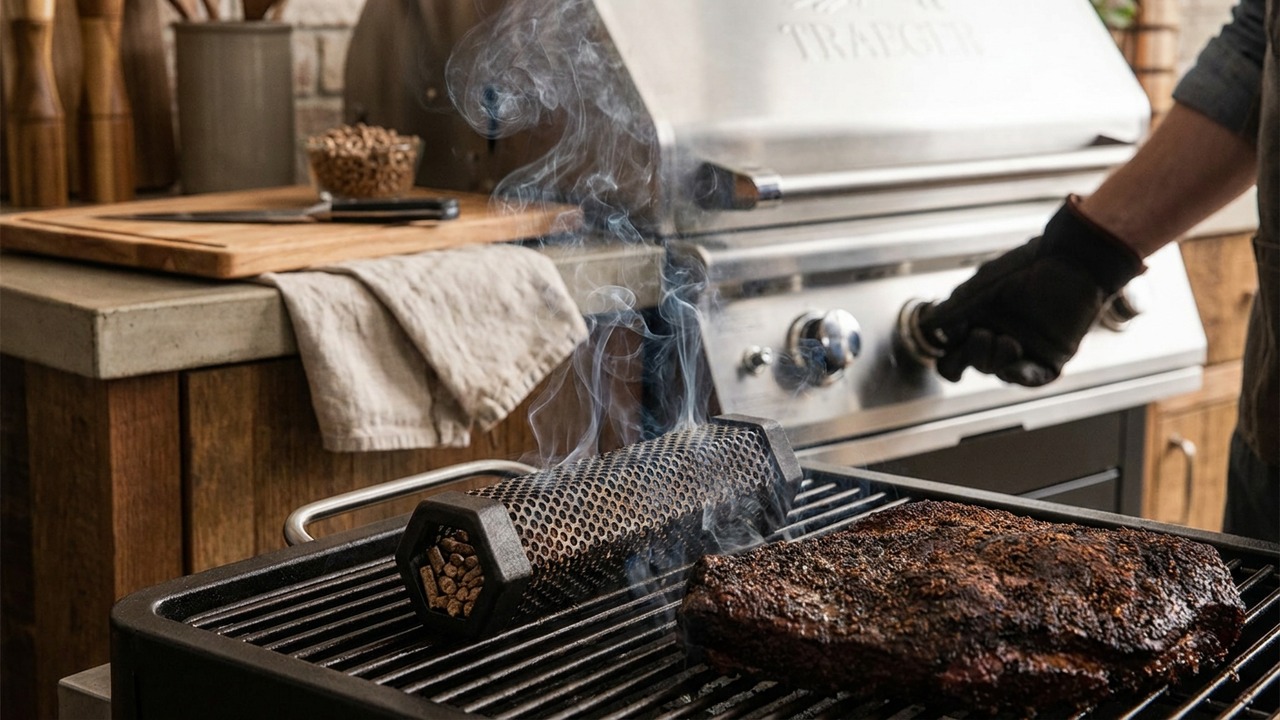
- For cold smoking (cheese, nuts): use a dedicated cold-smoke attachment or a smoke tube. Cold-smoking directly on a Traeger without modification can overheat the product.
Troubleshooting common problems
- Weak smoke or pellet smell: check for stale pellets, clean the firepot, and ensure the exhaust chimney isn’t blocked.
- Auger jams: unplug the grill, empty the hopper, remove pellets from the auger area, and clear any pellet dust. Regularly vacuum the hopper and firepot (after cool-down) to prevent jams.
- Temp swings: check gasket seals, door/lid fit, and ensure probe calibration. Firmware updates on WiFIRE-enabled models can also tune PID behavior.
- Excessive ash: vacuum the firepot and ash pan after every 3–5 cooks. Ash buildup inhibits airflow and can lead to smoldering.
Maintenance checklist (simple and recurring)
- After every cook: empty the grease bucket, wipe down grates, and check for pellet dust.
- Monthly (or every 10–15 cooks): clean the grease tray, scrape the inside, remove and vacuum the firepot/ash. Inspect auger and motor for debris.
- Annually: check seals and gaskets, replace worn parts, and consider a deep clean of interior surfaces.
- Use a shop vacuum for ash removal — make sure the grill is completely cooled.
Meat-specific advice
- Brisket: smoke at 225–250°F. Expect 1–1.25 hours per pound as a rough guideline. Target an internal temp of 195–205°F for a tender probe. Rest 45–90 minutes wrapped in a towel and cooler.
- Pork shoulder (Boston butt): smoke at 225–250°F. Pull at 195–205°F for shredding. Consider wrapping during the stall to speed the cook.
- Ribs: smoke at 225–250°F, 3-4-2 method (3 hrs unwrapped, 2 hrs wrapped, 1 hr unwrapped) is a classic approach — adjust timing by tenderness.
- Whole chicken: smoke at 325–350°F for crispy skin; final internal temp should be 165°F for the breast and 175–180°F for thigh meat.
- Fish: low smoke at 180–225°F or higher for quick cooks. Use lighter woods like alder, apple, or cherry.
Accessories and tech that pay off
- Leave-in probe thermometer: avoids guesswork. Always calibrate probes before important cooks using an ice bath (32°F) or boiling water test (212°F, adjusted for altitude).
- Drip pans: help with cleanup and prevent excessive smoke from dripping fat.
- Smoke tubes: add smoke when you want an extra burst without lowering the grill temp.
- Cast iron skillet or searing station: Traeger’s indirect heat needs help for true sears; a screaming-hot skillet gives you that crust.
Final checklist before you fire up
- Pellets: fresh and dry, correct flavor profile
- Hopper: sufficient level, no cross-contamination
- Probes: calibrated and correctly placed
- Drip pan & grease bucket: empty and in place
- Lid: clean and sealing well
With a little attention to pellets, airflow, and temperature strategy, your Traeger becomes an incredibly versatile tool — from low-and-slow brisket to hot seared steaks and everything in-between. Treat the grill with routine maintenance, respect the differences between ambient and grate temps, and use trusted pellets. The rest is practice: dial in a favorite protein once or twice and your results will consistently impress friends and family.
Comments
Leave a comment
No comments yet — be the first to share your thoughts.
Keep exploring