Reverse-Seared Grilled Ribeye with Garlic Herb Butter
A show-stopping reverse-seared ribeye grilled entirely on the barbecue and finished with a bright garlic-herb compound butter. Slow-cooking the steaks over indirect heat then searing hot produces an even pink center and a deeply caramelized crust.
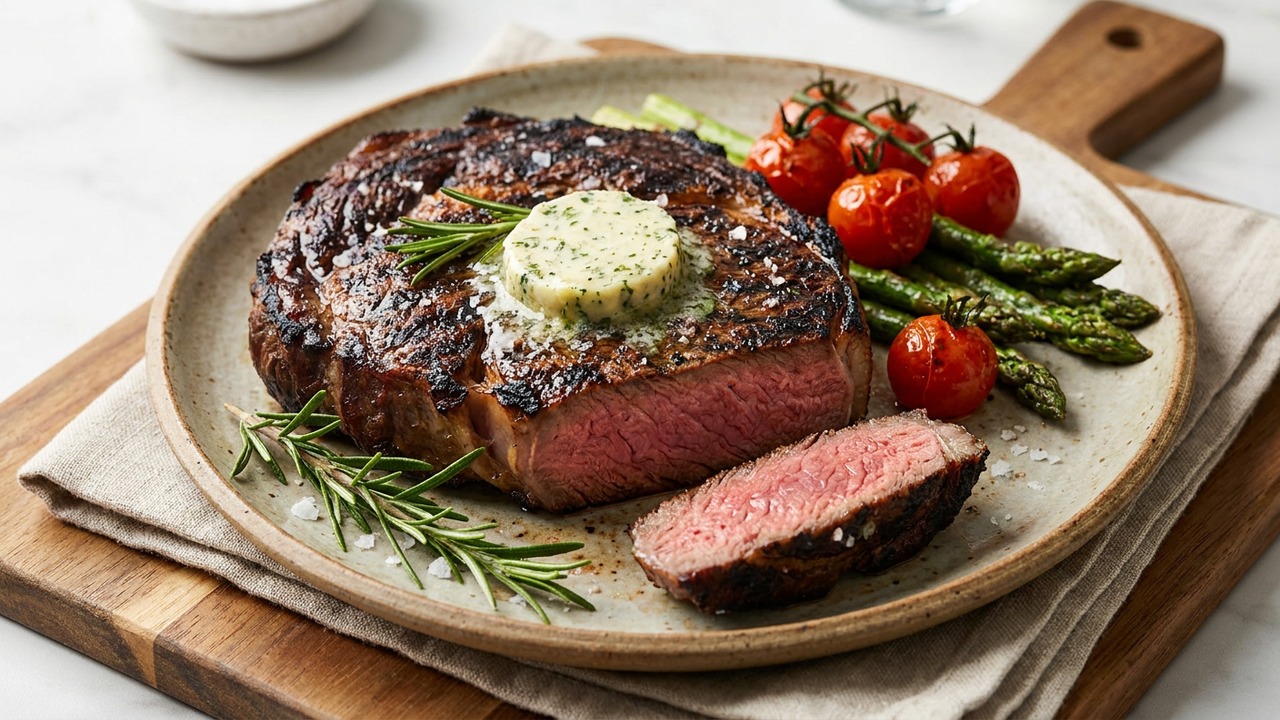
Jake Woods's note
"This all-grill reverse-sear method gives you oven-quality temperature control using only your barbecue and a finishing compound butter for an extra layer of flavor. It’s perfect for weekend dinners or backyard celebrations when you want reliably perfect steaks."
About This Recipe
There’s a quiet magic to the reverse-sear on the grill: by coaxing bone-in ribeyes up to temperature slowly over indirect heat, you turn what can be a lottery of overcooked edges and raw middles into steaks with an even rosy band of doneness from edge to bone. The long, gentle cook renders connective tissue without collapsing the steak, and the final blast of direct heat rewards you with the kind of deeply caramelized crust—Maillard reaction at its best—that makes a dinner feel celebratory. Finishing each steak with a bright garlic-herb butter adds immediate flavor lift and a glossy, savory sauce that melts into the crust and pools in the carved slices.
This version is meant for home grillers who want restaurant-level results without a sous-vide setup: bone-in ribeyes give extra flavor and a forgiving heat reservoir, kosher salt applied before cooking improves texture, and the compound butter offers a make-ahead advantage. It’s ideal for weekend dinners when timing matters—start the steaks while you tend sides—and for anyone who values a steak that’s evenly cooked, deeply flavored, and finished with an herbaceous, citrus-bright pop.
Ingredients for Reverse-Seared Grilled Ribeye with Garlic Herb Butter
- 4 steaks Bone-in ribeye steaks (about 10–12 oz / 280–340 g each)
- 2 tbsp Kosher salt
- 2 tsp Freshly ground black pepper
- 2 tbsp Olive oil (for brushing)
- 4 tbsp Unsalted butter (softened)
- 3 cloves Garlic cloves, minced
- 2 tbsp Fresh parsley, finely chopped
- 1 tbsp Fresh thyme leaves, chopped
- 1 tsp Lemon zest
How to Make Reverse-Seared Grilled Ribeye with Garlic Herb Butter
Step 1: Prep and season the steaks
Remove steaks from the refrigerator 30–45 minutes before grilling to bring them toward room temperature. Pat dry, brush both sides lightly with olive oil, and season generously with kosher salt and freshly ground black pepper, pressing the seasoning into the meat so it adheres.For this step
- 4 steaksBone-in ribeye steaks (about 10–12 oz / 280–340 g each)
- 2 tbspKosher salt
- 2 tspFreshly ground black pepper
- 2 tbspOlive oil (for brushing)
Step 2: Make the garlic-herb compound butter
In a small bowl, combine softened unsalted butter with minced garlic, chopped parsley, chopped thyme leaves, and lemon zest until smooth and homogeneous. Taste and adjust with a pinch of salt or more lemon zest if desired, then shape into a log on plastic wrap and chill briefly until firm enough to slice.For this step
- 4 tbspUnsalted butter (softened)
- 3 clovesGarlic cloves, minced
- 2 tbspFresh parsley, finely chopped
- 1 tbspFresh thyme leaves, chopped
- 1 tspLemon zest
Step 3: Set up grill and cook steaks indirect (low & slow)
Prepare the grill for two-zone cooking: medium-low heat over one side (indirect) and high heat over the other (direct). Place the steaks on the cool side, close the lid, and cook until the internal temperature is about 10–15°F (6–8°C) below your target (seek ~110°F/43°C for medium-rare finish), roughly 20–30 minutes depending on thickness; flip once halfway through.Step 4: Finish with a hot direct sear
Move the steaks to the direct-heat side and sear 1–2 minutes per side (plus a quick sear on the fat cap if present) until a deep crust forms and the internal temperature reaches your target (about 125–130°F/52–54°C for medium-rare). Use tongs—not a fork—to flip and avoid piercing the meat; a quick 10–20 second edge sear will crisp the exterior.Step 5: Rest, top with butter, and serve
Transfer steaks to a cutting board and rest 5–10 minutes to let juices redistribute. Top each steak with a slice of the garlic-herb butter so it melts over the hot meat, then slice against the grain and serve immediately with any accumulated juices spooned over.


- Remove steaks from the refrigerator 30–45 minutes before grilling to bring them toward room temperature. Pat dry, brush both sides lightly with olive oil, and season generously with kosher salt and freshly ground black pepper, pressing the seasoning into the meat so it adheres.
- In a small bowl, combine softened unsalted butter with minced garlic, chopped parsley, chopped thyme leaves, and lemon zest until smooth and homogeneous. Taste and adjust with a pinch of salt or more lemon zest if desired, then shape into a log on plastic wrap and chill briefly until firm enough to slice.
- Prepare the grill for two-zone cooking: medium-low heat over one side (indirect) and high heat over the other (direct). Place the steaks on the cool side, close the lid, and cook until the internal temperature is about 10–15°F (6–8°C) below your target (seek ~110°F/43°C for medium-rare finish), roughly 20–30 minutes depending on thickness; flip once halfway through.
- Move the steaks to the direct-heat side and sear 1–2 minutes per side (plus a quick sear on the fat cap if present) until a deep crust forms and the internal temperature reaches your target (about 125–130°F/52–54°C for medium-rare). Use tongs—not a fork—to flip and avoid piercing the meat; a quick 10–20 second edge sear will crisp the exterior.
- Transfer steaks to a cutting board and rest 5–10 minutes to let juices redistribute. Top each steak with a slice of the garlic-herb butter so it melts over the hot meat, then slice against the grain and serve immediately with any accumulated juices spooned over.
Reverse-Seared Grilled Ribeye with Garlic Herb Butter Tips
Bring to Room Temperature
Remove steaks 30–45 minutes before grilling so they warm slightly; cold centers require longer indirect time and can overcook during the sear.
Two-Zone Grill Setup
Create a clear indirect zone and a very hot direct zone so you can control the slow cook and then finish quickly without burning.
Use an Instant-Read Thermometer
Target about 10–15°F below final doneness during the indirect phase (≈110°F for medium-rare) to avoid overshooting during the sear.
Sear with High Heat
Move steaks to the hottest grate and sear 1–2 minutes per side to build crust quickly; leave tongs on hand to press the fat cap for a rendered finish.
Rest Before Slicing
Rest steaks 5–10 minutes to let juices redistribute, then slice against the grain and top with the butter to capture melted flavor.
Reverse-Seared Grilled Ribeye with Garlic Herb Butter Variations and Substitutions
Garlic-Parmesan Butter
Fold 2–3 tablespoons finely grated Parmesan into the compound butter for a nutty, salty finish that crisps slightly when melted on hot steak.
Chili-Lime Butter
Add 1 teaspoon smoked paprika and 1 tablespoon lime zest to the butter for a smoky, bright kick that pairs well with corn or black bean sides.
Dairy-Free Herb Spread
Swap the butter for an olive oil–based chimichurri or whipped avocado with garlic and herbs for a dairy-free, slightly tangy topping.
Smoked Ribeye Twist
Add a small chunk of smoking wood (hickory or oak) to the coals during the indirect phase to introduce a deeper smoke flavor without overpowering the butter.
How to Store and Make Reverse-Seared Grilled Ribeye with Garlic Herb Butter Ahead
Leftover sliced steak keeps well in an airtight container in the fridge for up to 3 days; store the compound butter separately to preserve its texture and brightness. Reheat gently in a 250°F oven until warmed through, then finish with a quick 30–60 second sear in a hot skillet or on the grill to recrisp the crust and refresh the flavor. You can freeze cooked steaks for 2–3 months, but thaw slowly in the fridge before reheating.
What to Serve With Reverse-Seared Grilled Ribeye with Garlic Herb Butter
Serve with bright, simple sides that stand up to the steak—charred asparagus, buttered smashed potatoes, or a lemony green salad cut through the richness. A pan of roasted mushrooms with thyme echoes the butter’s herb notes, and for drinks choose a full-bodied red like Cabernet Sauvignon or a robust Malbec, or a smoky American IPA for beer lovers. Slice at the table against the grain and spoon any resting juices and melting butter over the meat for dramatic plating.
Reverse-Seared Grilled Ribeye with Garlic Herb Butter FAQs
Can I use boneless ribeyes instead of bone-in?
Yes—boneless ribeyes cook a bit faster and are easier to slice, but the bone adds flavor and helps the steak stay juicy; adjust indirect time downward by a few minutes for boneless cuts.
How do I adjust for different thicknesses?
For steaks thicker than 1.5–2 inches, plan on a longer indirect phase to reach the 10–15°F undershoot; thinner steaks need less time and may only require a few minutes indirect before searing.
What are safe target internal temperatures?
For medium-rare, finish at about 125–130°F (52–54°C); medium is 135–140°F (57–60°C). Remember the temp rises a few degrees during resting, so remove steaks slightly early.
Why not salt right before searing?
Salting ahead lets the salt draw out then reabsorb moisture, seasoning the steak through and aiding crust formation; a last-minute salt will season the surface but won’t improve texture.
Can I reverse sear entirely on a gas grill or indoors?
Yes—on gas grills set up two zones, and indoors you can roast in a 250–275°F oven for the indirect phase and finish in a screaming-hot cast-iron pan under the broiler or on the stovetop for the sear.
About the author
Jake WoodsHello, I'm Jake. I started this recipe site with the idea that I hated recipe websites that overwhelm you with long stories and ads just to see plain content that's not helpful. My goal is to provide you with quality recipes, simple ideas and a fun cooking experience. There's lots of fun things to cook, and I think as you browse the site you'll find that TopShelf.Recipes is the place for quality recipes on the web.
See all recipes by Jake Woods →Ratings & Reviews
Did you make this recipe?
Be the first to share your experience.
Nutrition Facts
Per serving: 1 steak
Nutrition values are estimated from USDA ingredient data and may vary based on preparation, brands, and portion sizes. Values are provided for informational purposes only.
Keep Reading
Guides & articles for this recipe
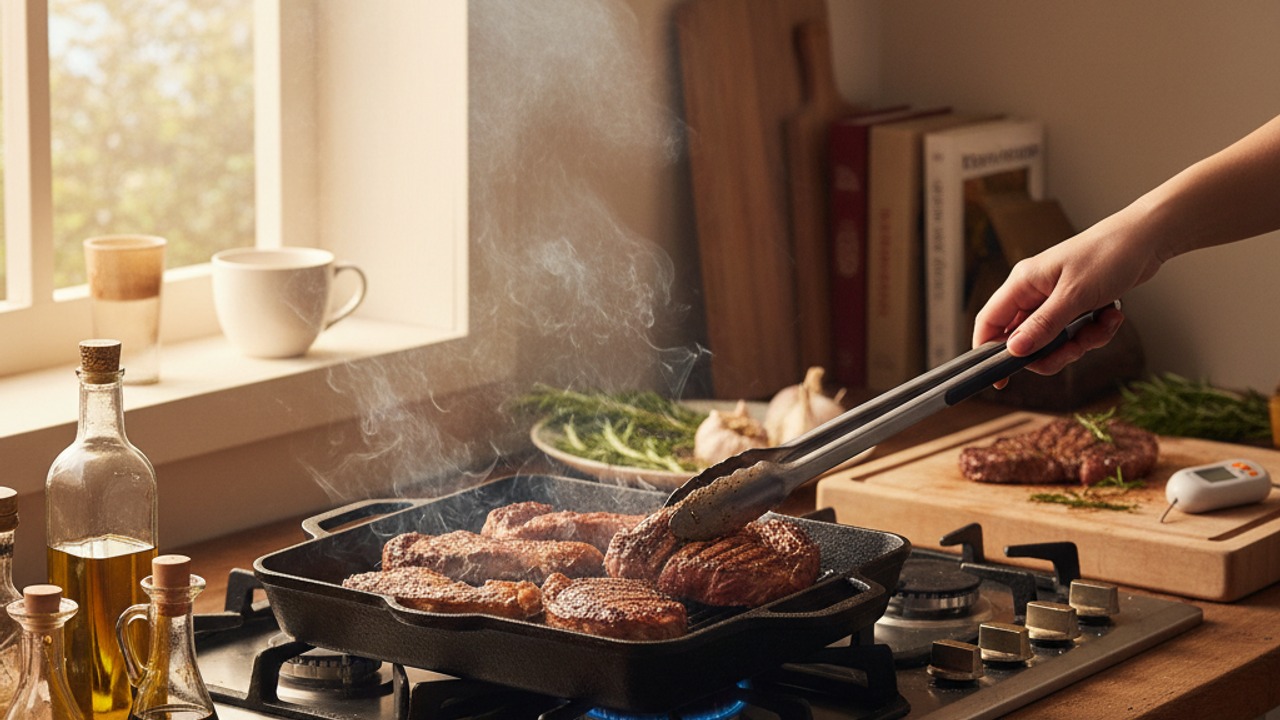
Guides
Grill Science: Char Maillard and Smoke
A kitchen-to-backyard guide that explains the chemistry behind char, the Maillard reaction, caramelization, and smoke—and shows practical heat, fuel, and technique choices to build deeper grilled flavor. Includes simple experiments and recipe references so readers can reproduce richer results on steaks, vegetables, and fruit.
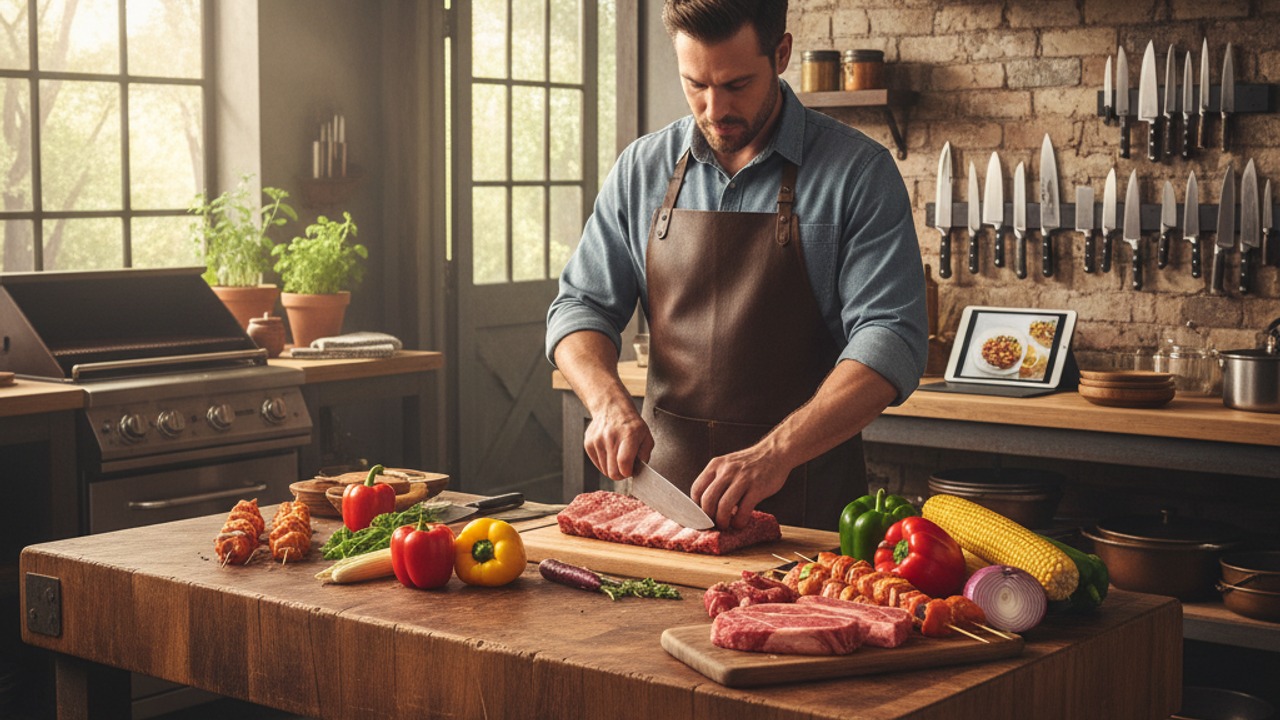
Guides
Essential Knife Skills for Grillmasters
A practical, step-by-step guide to the core knife techniques every outdoor cook should master. Learn blade choices, trimming and butterflying, vegetable prep, sharpening, and safe transport for confident grilling.
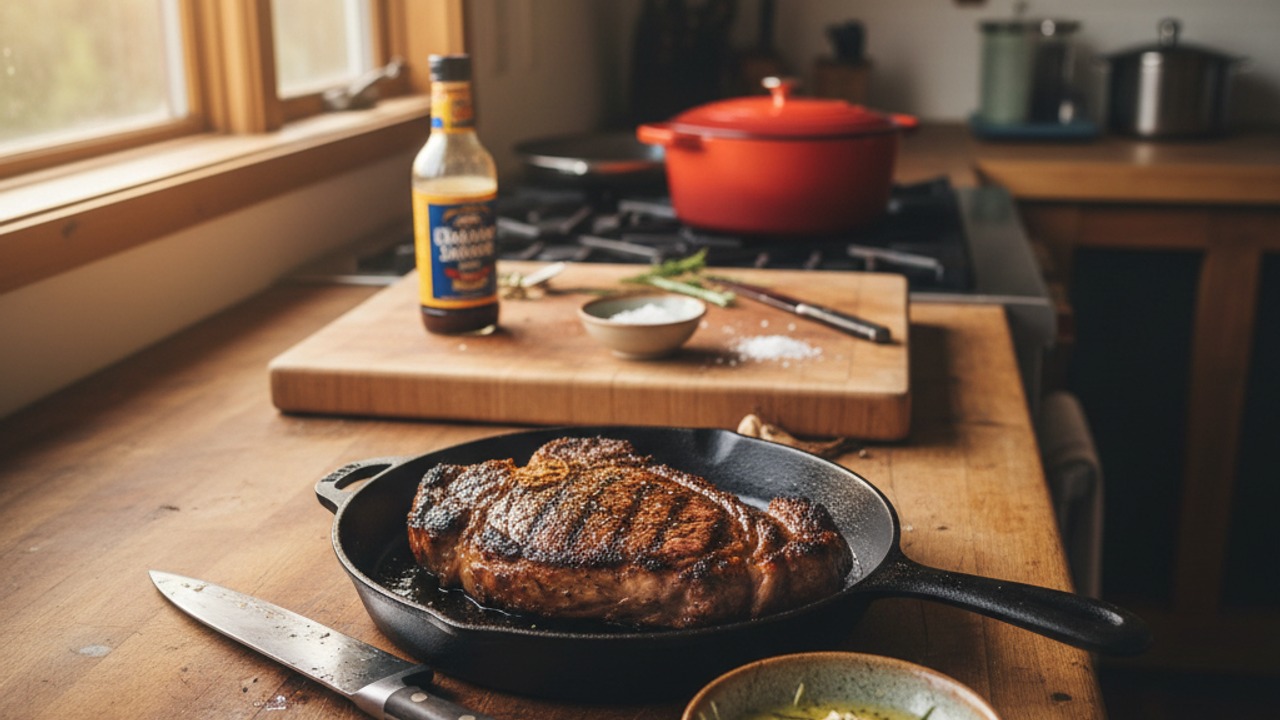
Guides
Trending Labor Day Steak Finishes
A practical late‑summer guide for hosts who want restaurant‑quality steaks over Labor Day weekend. Learn modern quick reverse‑sear and high‑heat sear approaches, five crowd‑pleasing compound butters and sauces, plus timing and scaling tactics to serve perfectly rested steaks to a crowd.
More from Grilling
View all Grilling recipes →
Tandoori Yogurt Marinated Grilled Chicken (Tandoori Style on the Grill)

Labor Day Grilled Lobster Rolls with Charred Scallion Brown Butter & Lemon‑Herb Aioli

Bulgogi Smash Burger

Campfire‑Smoked Potato Salad with Mustard‑Bacon Vinaigrette — A Labor Day Grilling Side for Steak

Hanger Steak with Shallot Sauce
Grilled Pineapple Upside-Down Cake

Spicy Grilled Shrimp Skewers with Garlic Lime Marinade

Honey Garlic Grilled Thin-Sliced Chicken Breasts

Coffee and Porcini Dry-Rub Steaks with RUB PRIME STEAK Finish
Ask me anything about this recipe — substitutions, scaling, techniques, timing.
Powered by AI · 6 questions per 5 minutes, 30 per day