Seared Ahi Tuna Steaks
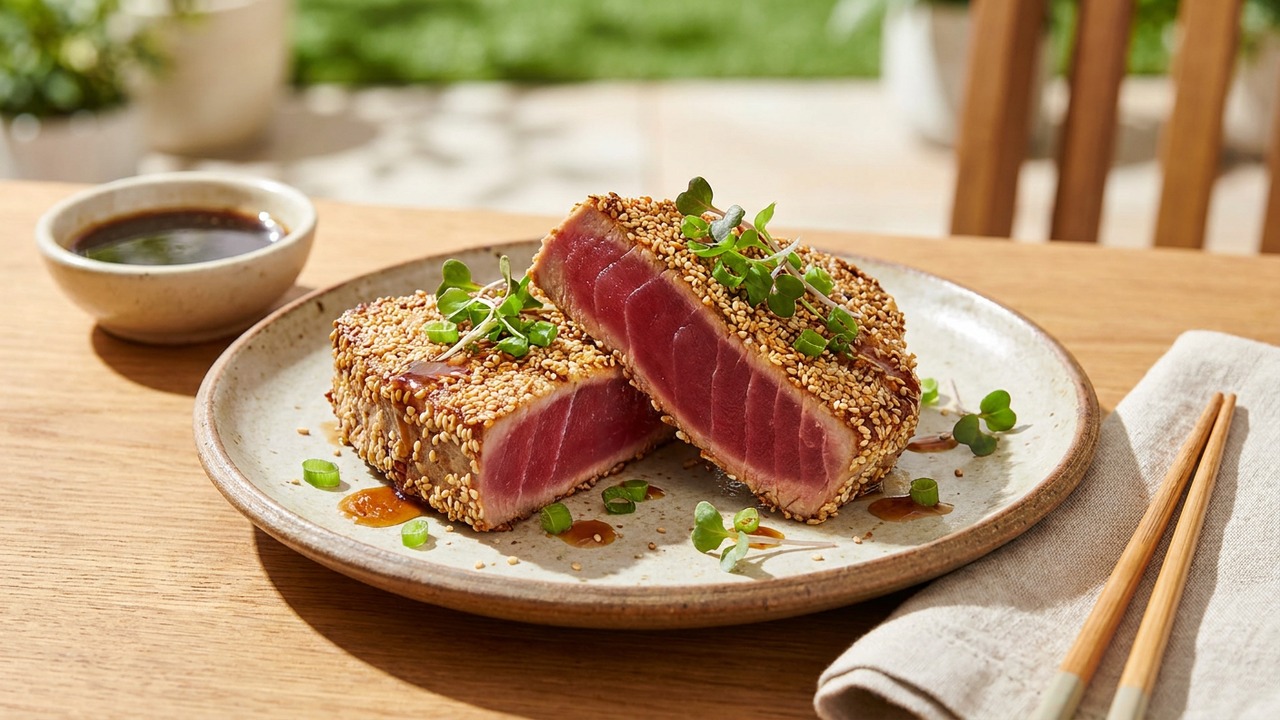
Quick, restaurant-style seared ahi tuna steaks with an Asian-inspired marinade and a toasted sesame crust. Perfect for summer grills or weeknight dinners when you want a show-stopping seafood main in under 30 minutes.
Ingredient Spotlight
Ahi (yellowfin) tuna steaks
Ahi is the Hawaiian name commonly used in the U.S. for yellowfin tuna; it’s a firm, meaty fish with a mild, clean flavor and is often sold as steaks or sushi/sashimi-grade slices. Its culinary use is rooted in Pacific island and Japanese cuisines where it’s enjoyed raw or seared rare. Look for "ahi" or "yellowfin" at fishmongers, seafood counters, or high-end groceries and ask for sushi-grade if you plan to eat it raw; good cooked substitutes are other tuna species (bigeye) or meaty fish like swordfish or salmon.
Ingredient Spotlight
Toasted sesame oil
Toasted sesame oil is made from toasted sesame seeds and has an intense, nutty aroma and flavor used as a finishing or flavoring oil in East Asian and Southeast Asian cooking. It’s typically added at the end of cooking or as a condiment rather than used for high-heat frying because of its strong aroma and low smoke point. Find it in the Asian foods aisle or grocery spice section; if you don’t have it, use a smaller amount of untoasted sesame oil (milder) or a few drops of toasted nut oil (peanut or walnut) as a substitute.
(paid link) — as an Amazon Associate we earn from qualifying purchases.
Ingredient Spotlight
Toasted sesame seeds
Toasted sesame seeds are sesame seeds that have been lightly browned to bring out a deeper, nuttier flavor and are common in East Asian, Middle Eastern, and Mediterranean cuisines as a garnish or ingredient. They add crunchy texture and toasty aroma to salads, rice, and fish dishes. Available in bulk, spice jars, or the Asian aisle of supermarkets; if unavailable, untoasted sesame seeds are an okay standby (toast them briefly in a dry pan) or use toasted chopped nuts for texture.
Jake Woods's note
"This recipe highlights the clean flavor and meaty texture of ahi tuna — seared on the outside and rare in the middle. It’s ideal for warm-weather grilling or a simple dinner when you want something impressive without fuss."
About This Recipe
This seared ahi tuna recipe is built around a simple idea: high heat, minimal handling, and a bold but balanced surface seasoning that gives you a restaurant-quality crust in minutes. A quick soy-sesame-lime marinade seasons the exterior without overwhelming the clean, meaty flavor of yellowfin, and a pressed sesame seed crust adds the nutty crunch that contrasts the cool, sashimi-like center. Because the tuna is cooked only briefly, the texture should be arrestingly tender at the core while the edges develop a crisp, toasty bite.
It’s the kind of dish that shines at a summer grill party or as a no-fuss weeknight centerpiece when you want something showy but fast. The timing and tiny details matter — patting the steaks dry, oiling the grates, and resting the fish before slicing make a noticeable difference — which is why this version emphasizes short marinade time and high sear temperatures. Serve it thinly sliced so every bite mixes the sesame crunch, bright lime, and savory soy, and you’ll see how small technique choices turn great tuna into something memorable.
Ingredients for Seared Ahi Tuna Steaks
- 4 6 oz (170 g) steaks Ahi (yellowfin) tuna steaks
- 1/4 cup Low-sodium soy sauce
- 2 tsp Toasted sesame oil
- 1 tbsp Fresh lime juice
- 1/2 tsp Freshly ground black pepper
- 2 tbsp Extra-virgin olive oil
- 1 tsp Kosher salt
- 2 tbsp Toasted sesame seeds
🛒 = paid link — as an Amazon Associate we earn from qualifying purchases.
How to Make Seared Ahi Tuna Steaks
Step 1: Make the marinade and marinate the tuna
Whisk together soy sauce, toasted sesame oil, fresh lime juice and freshly ground black pepper in a shallow dish. Add the tuna steaks, turning to coat, and let them marinate at room temperature for 10–15 minutes while you preheat the grill.For this step
- 4 6 oz (170 g) steaksAhi (yellowfin) tuna steaks
- 1/4 cupLow-sodium soy sauce
- 2 tspToasted sesame oil
- 1 tbspFresh lime juice
- 1/2 tspFreshly ground black pepper
Step 2: Prep the grill and the steaks
Preheat the grill to high (450–500°F / 230–260°C) and oil the grates well. Remove the steaks from the marinade, pat them dry with paper towels, brush both sides lightly with olive oil, press sesame seeds onto both faces, and season lightly with kosher salt just before grilling.For this step
- 2 tbspExtra-virgin olive oil
- 1 tspKosher salt
- 2 tbspToasted sesame seeds
Step 3: Sear the tuna on the grill
Place the steaks on the hottest part of the grill and sear 1½–2 minutes per side for rare, or 2–3 minutes per side for medium-rare; avoid overcooking to keep the center tender. You want a crisp, golden exterior and a pink center — use an instant-read thermometer if desired (115–120°F / 46–49°C for rare).Step 4: Rest and slice
Transfer the steaks to a cutting board and let them rest for 3–5 minutes to redistribute juices. Slice thinly against the grain into 1/4-inch slices and arrange on a platter; squeeze extra lime over the top if you like.Step 5: Serve and store
Serve immediately with soy sauce, wasabi or a simple salad and steamed rice or grilled vegetables. Leftovers can be refrigerated in an airtight container for up to 2 days and are excellent in salads or sandwiches.


- Whisk together soy sauce, toasted sesame oil, fresh lime juice and freshly ground black pepper in a shallow dish. Add the tuna steaks, turning to coat, and let them marinate at room temperature for 10–15 minutes while you preheat the grill.
- Preheat the grill to high (450–500°F / 230–260°C) and oil the grates well. Remove the steaks from the marinade, pat them dry with paper towels, brush both sides lightly with olive oil, press sesame seeds onto both faces, and season lightly with kosher salt just before grilling.
- Place the steaks on the hottest part of the grill and sear 1½–2 minutes per side for rare, or 2–3 minutes per side for medium-rare; avoid overcooking to keep the center tender. You want a crisp, golden exterior and a pink center — use an instant-read thermometer if desired (115–120°F / 46–49°C for rare).
- Transfer the steaks to a cutting board and let them rest for 3–5 minutes to redistribute juices. Slice thinly against the grain into 1/4-inch slices and arrange on a platter; squeeze extra lime over the top if you like.
- Serve immediately with soy sauce, wasabi or a simple salad and steamed rice or grilled vegetables. Leftovers can be refrigerated in an airtight container for up to 2 days and are excellent in salads or sandwiches.
Seared Ahi Tuna Steaks Tips
Pat Dry Thoroughly
Wipe the steaks completely dry before oiling and seeding; moisture prevents proper searing and makes the crust soggy.
High Heat, Short Time
Sear on the hottest part of the grill for 90–120 seconds per side for rare—high heat creates a thin crust while preserving a raw center.
Press Sesame Seeds Firmly
After brushing with oil, press the sesame seeds into both faces so they adhere during grilling and form an even, toasted crust.
Brief Marinade Only
Keep marinating to 10–15 minutes; longer exposure to soy and lime can overly salt or start to cure the surface of the tuna.
Rest, Then Slice Thin
Let steaks rest 3–5 minutes before slicing against the grain into 1/4-inch pieces to keep juices locked in and slices tender.
Seared Ahi Tuna Steaks Variations and Substitutions
Black-and-White Sesame Crust
Mix equal parts black and white toasted sesame seeds for visual contrast and a touch more toasty flavor without changing technique.
Gluten-Free Swap
Use tamari or coconut aminos in place of soy sauce for a gluten-free version with the same savory backbone.
Spicy Gochujang Glaze
Brush a thin layer of gochujang mixed with a little honey and soy on the steaks during the last 30 seconds of searing for a sweet-spicy finish.
Pan-Seared Alternative
If you don’t have a grill, use a screaming-hot cast-iron skillet and follow the same timing to get a comparable crust and rare center.
How to Store and Make Seared Ahi Tuna Steaks Ahead
Store leftover sliced or whole tuna in an airtight container in the refrigerator for up to 48 hours; keep slices separated with parchment to avoid smearing the crust. Reheat very briefly in a hot skillet (30–60 seconds per side) if you prefer it warm, or enjoy cold over a salad—avoid microwaving as it will quickly overcook and dry the fish.
What to Serve With Seared Ahi Tuna Steaks
Fan thin slices over a bed of chilled sesame-cucumber salad or warm jasmine rice with quick-pickled ginger and scallions. Pair with a bright ponzu or a citrusy soy dipping sauce, and serve alongside a crisp Sauvignon Blanc, dry Riesling, or a chilled light lager to cut the richness.
Seared Ahi Tuna Steaks FAQs
Can I use frozen tuna steaks?
Yes—thaw frozen sashimi-grade tuna completely in the refrigerator overnight, then pat dry before marinating and searing to get the best texture and sear.
How can I tell when the tuna is done?
Visually the center should remain pink; rare is about 115–120°F, medium-rare around 125°F. An instant-read thermometer is helpful, but short sear times and touch (firm but yielding) also work.
What if I prefer my tuna more well done?
Ahi is best enjoyed rare to medium-rare; if you must cook it longer, increase sear time in 30-second increments and monitor with a thermometer to avoid a dry, chalky interior.
Can I marinate the tuna overnight?
No—long marinating will over-salt and can begin to cure the surface; stick to 10–30 minutes maximum and refrigerate if you need to hold it longer.
Are sesame seeds necessary?
They’re not required, but they add crucial texture and nutty flavor; substitute crushed pistachios or panko for a different crunch if desired.
About the author
Jake WoodsHello, I'm Jake. I started this recipe site with the idea that I hated recipe websites that overwhelm you with long stories and ads just to see plain content that's not helpful. My goal is to provide you with quality recipes, simple ideas and a fun cooking experience. There's lots of fun things to cook, and I think as you browse the site you'll find that TopShelf.Recipes is the place for quality recipes on the web.
See all recipes by Jake Woods →Ratings & Reviews
Did you make this recipe?
Be the first to share your experience.
Nutrition Facts
Per serving: 1 steak
Nutrition values are estimated from USDA ingredient data and may vary based on preparation, brands, and portion sizes. Values are provided for informational purposes only.
Keep Reading
Guides & articles for this recipe
Guides
Grilling and Nutrition
An evidence-based guide that explains how grilling, charring, and smoking change vitamins, proteins, and fats and the health risks of over-charring. Practical strategies for home cooks on timing, temperature, marinades, fuel choice, and smart side pairings to maximize nutrients without losing bold grilled flavor.
Guides
Essential Knife Skills for Grillmasters
A practical, step-by-step guide to the core knife techniques every outdoor cook should master. Learn blade choices, trimming and butterflying, vegetable prep, sharpening, and safe transport for confident grilling.

Healthy Eating
Gluten-Free Weeknight Grilling Plan
A 7-day gluten-free weeknight grilling plan with quick, family-friendly recipes, prep-ahead timelines, and a printable shopping list that spotlights late-summer produce and pantry staples. Includes clear cross-contamination safety tips and simple swaps to keep dinners fast and crowd-pleasing.
More from Grilling
View all Grilling recipes →
Tandoori Yogurt Marinated Grilled Chicken (Tandoori Style on the Grill)

Labor Day Grilled Lobster Rolls with Charred Scallion Brown Butter & Lemon‑Herb Aioli

Bulgogi Smash Burger

Campfire‑Smoked Potato Salad with Mustard‑Bacon Vinaigrette — A Labor Day Grilling Side for Steak

Hanger Steak with Shallot Sauce
Grilled Pineapple Upside-Down Cake

Spicy Grilled Shrimp Skewers with Garlic Lime Marinade

Honey Garlic Grilled Thin-Sliced Chicken Breasts

Coffee and Porcini Dry-Rub Steaks with RUB PRIME STEAK Finish
Ask me anything about this recipe — substitutions, scaling, techniques, timing.
Powered by AI · 6 questions per 5 minutes, 30 per day