Healthy Eating

Gluten-Free Weeknight Grilling Plan

A 7-day gluten-free weeknight grilling plan with quick, family-friendly recipes, prep-ahead timelines, and a printable shopping list that spotlights late-summer produce and pantry staples. Includes clear cross-contamination safety tips and simple swaps to keep dinners fast and crowd-pleasing.

Editorially curated
Gluten-Free Weeknight Grilling Plan

Seven-Day Grilling Plan

Seven-Day Grilling Plan
Seven quick grill dinners you can prep ahead and finish in minutes.

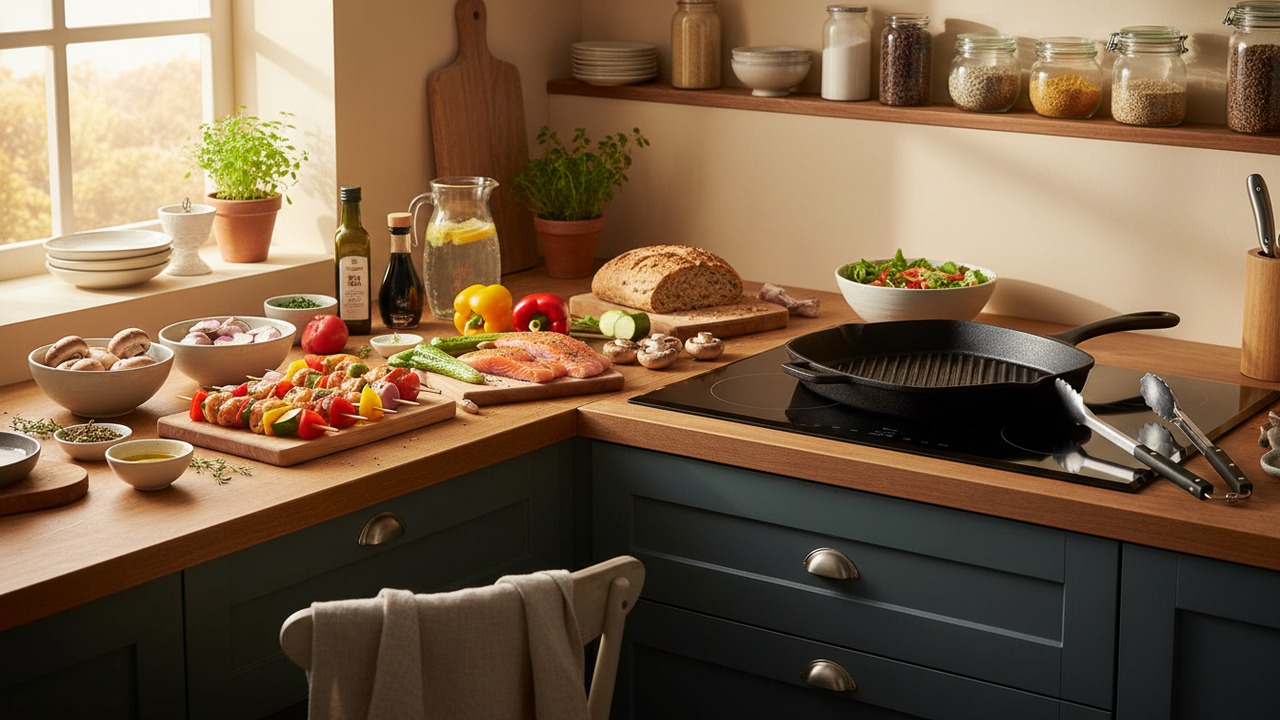
Here are seven distinct weeknight dinners with quick summaries, realistic total times, a targeted weeknight cook time (time from grill on to table), a one‑line kid‑friendly swap, and exactly which parts you can prep ahead. Day 1: Lemon‑herb chicken thighs with grilled corn and a quinoa salad — total time 35 minutes, weeknight cook time 20 minutes. Kid swap: use milder lemon salt only. Prep ahead: marinate 30–60 minutes (or overnight) and cook quinoa 20 minutes up to 24 hours ahead.

Day 2: Quick grilled salmon fillets, charred tomato salsa, and baby potatoes — total 30 minutes, cook time 12 minutes. Kid swap: plain buttered potatoes and lemon on the side. Prep ahead: make salsa 2–6 hours ahead; parboil potatoes 10 minutes same day and finish on grill.

Day 3: Pork tenderloin medallions, zucchini ribbons, and herbed rice — total 40 minutes, cook time 18 minutes. Day 4: Flank‑steak fajita bowls with peppers and cilantro rice — total 35, cook time 12. Day 5: Shrimp skewers, grilled peach salad, and cornmeal polenta cakes — total 25, cook time 8. Day 6: Portobello “burgers” with basil chimichurri and sweet potato wedges — total 30, cook time 15. Day 7: Chicken sausages with pepper hash and a simple green salad — total 25, cook time 10. For each midweek meal you can chop veg 30–60 minutes ahead, marinate proteins 3–24 hours depending on cut, and cook grains or potatoes the night before to reheat on the grill.

Quick Prep-Ahead Timelines

Split prep into three reliable windows: morning‑of, same‑day (3–6 hours), and overnight (8–24 hours). Morning‑of tasks are short: set a dressing or salsa on the counter to come to room temperature (10–20 minutes), make a quick vinaigrette that keeps in the fridge, or chop a handful of herbs. These tasks let you finish the dish in under 30 minutes because the grill time becomes the only active cooking left.

Same‑day prep is perfect for salsas, dressings and marinades—make them 3–6 hours ahead so flavors meld without the texture getting soggy. Most salsas and vinaigrettes hold well for 24–48 hours refrigerated; keep them in glass jars with lids. Proteins: safe marinade windows depend on acidity—citrus or vinegar‑forward marinades should be 30–120 minutes for delicate fish, 2–6 hours for chicken, and up to 24 hours for tougher cuts. Always refrigerate marinating proteins and discard used marinade unless boiled.

Overnight prep should be reserved for brined or heavily spiced proteins and fully cooked grains or roasted veg. Cooked rice, quinoa and polenta store 3–4 days refrigerated in covered containers; reheat on the grill in a cast‑iron skillet or loose foil. To keep grilled veg from getting limp, store them in shallow airtight containers with a paper towel to absorb condensation and rewarm briefly on the hot grate before serving.

Late-Summer Produce And Staples

Late-Summer Produce And Staples
Late‑summer produce plus pantry essentials that speed weeknight grilling.

Late summer gifts you produce that grill beautifully and don’t need a lot of fuss. Prioritize: corn — grill whole and shave kernels into salads; tomatoes — blister on the hot grate for a smoky salsa; zucchini — slice lengthwise and dress simply; peaches — char halves for salads or salsas; peppers — blister and peel for fajitas; basil — torn into chimichurri or tossed with warm grains. Each of these adds texture and seasonal sweetness that pairs with quick proteins.

Pantry staples to keep on hand for the week: good olive oil for dressings and finishing, tamari or labeled gluten‑free soy sauce for marinades, rice vinegar for quick pickles, gluten‑free broth to loosen sauces, smoked paprika for a quick savoury lift, and gluten‑free buns or tortillas so you can assemble handhelds fast. Each item shortens prep: a single bottle of tamari can make five different marinades; smoked paprika cuts the need for slow smoking.

Selection and storage matter. Buy corn with tight husks and store in the fridge wrapped in plastic; tomatoes taste best kept at room temp until very ripe; zucchini and peppers keep in the crisper for up to a week; peaches should ripen on the counter and then move to the fridge. A simple rotation—use the most delicate fruit early in the week—helps everything last through the seven nights.

Family-Friendly Swap Ideas

If weeknights are busy and your family leans picky, small swaps save time and keep dinners appealing. To cut cook time, pound or butterfly thick chicken breasts, slice pork into medallions, or use skewers for shrimp and small meat pieces so they cook in minutes. Quick proteins to prefer: shrimp, thin fish fillets, ground turkey patties, or chicken tenders—these hit safe internal temps fast and don’t demand long grilling.

To calm heat and add broad appeal, choose milder marinades (olive oil, lemon, garlic) or swap out chiles for fruit salsas—grilled peach or mango salsa brightens a plate without heat. Yogurt‑based sauces, tzatziki‑style with cucumber and lemon, work well as a kid‑friendly dip that still keeps dinner feeling fresh. Offer hot sauce or chopped chiles at the table for adults.

Convenience swaps that keep things gluten‑free: use pre‑cooked or microwaveable grains, pick a store rotisserie chicken to toss on the grill for a quick char, and buy certified gluten‑free buns or tortillas so assembly is instant. Keep a jar of a trusted gluten‑free marinade or barbecue sauce on hand for nights when you need to be out the door fast.

Cross-Contamination Safety Steps

Cross-Contamination Safety Steps
A practical detail from the cross-contamination safety steps section.

Preventing gluten cross‑contact is straightforward once you build repeatable habits into grill nights. Start with the grill: clean hot grates before cooking gluten‑free foods or reserve a clean section of grate. Use heavy foil as a barrier for buns or flatbreads if you can’t clean fully between cooks. Always handle gluten and gluten‑free items with separate utensils and plates—dedicate one set of tongs, spatula and a cutting board to gluten‑free prep.

In the kitchen and at the table, keep serving routines simple. Label containers in the fridge, use dedicated squeeze bottles for condiments that touch both kinds of food, and set out a second set of tongs for family self‑service. When storing leftovers, use clearly marked airtight containers and avoid stacking foods that might drip onto a gluten‑free dish.

Reading labels matters: pick tamari marked “gluten‑free” instead of plain soy sauce, avoid malt vinegar and most malt‑flavored items, and be wary of sauces listing “natural flavors” without clarification. Safe shortcuts include single‑ingredient or certified gluten‑free products (canned tomatoes, plain oils, vinegars labeled gluten‑free). When in doubt, contact the manufacturer or choose a different item—consistency beats clever hacks when someone’s health is at stake.

Printable Shopping List And Prep

The printable sheet is organized two ways: by day down the left column and by grocery section down the right, with checkboxes for each item and small note fields for quantities. For each day it flags the main protein, one grilled veg, and the starch so you can scan by meal. The grocery‑section column groups produce, pantry, refrigerated and frozen items so shopping stops feel efficient.

Suggested baseline quantities are included for a family of four: roughly 1¼–1½ pounds of protein per meal (shared across pieces), 3–4 ears of corn or 1½–2 pounds of produce for salads/sides, and 2 cups uncooked grains to make 4 servings. There’s a quick guidance line for scaling: add 25–50% for teenagers or crowds, cut quantities by half for two people, and list extras like snacks separately.

The list flags late‑summer items and pantry staples with small icons so you can prioritize fresh produce and check you have essentials like olive oil, tamari (gluten‑free), smoked paprika and GF buns. It also suggests packaged or prepped swaps—pre‑washed salad greens, microwavable rice pouches, gluten‑free rolls—and gives a short note for each about label reading and storage.

Comments

Leave a comment

0/2000

No comments yet — be the first to share your thoughts.

Keep exploring

More to read

All articles →