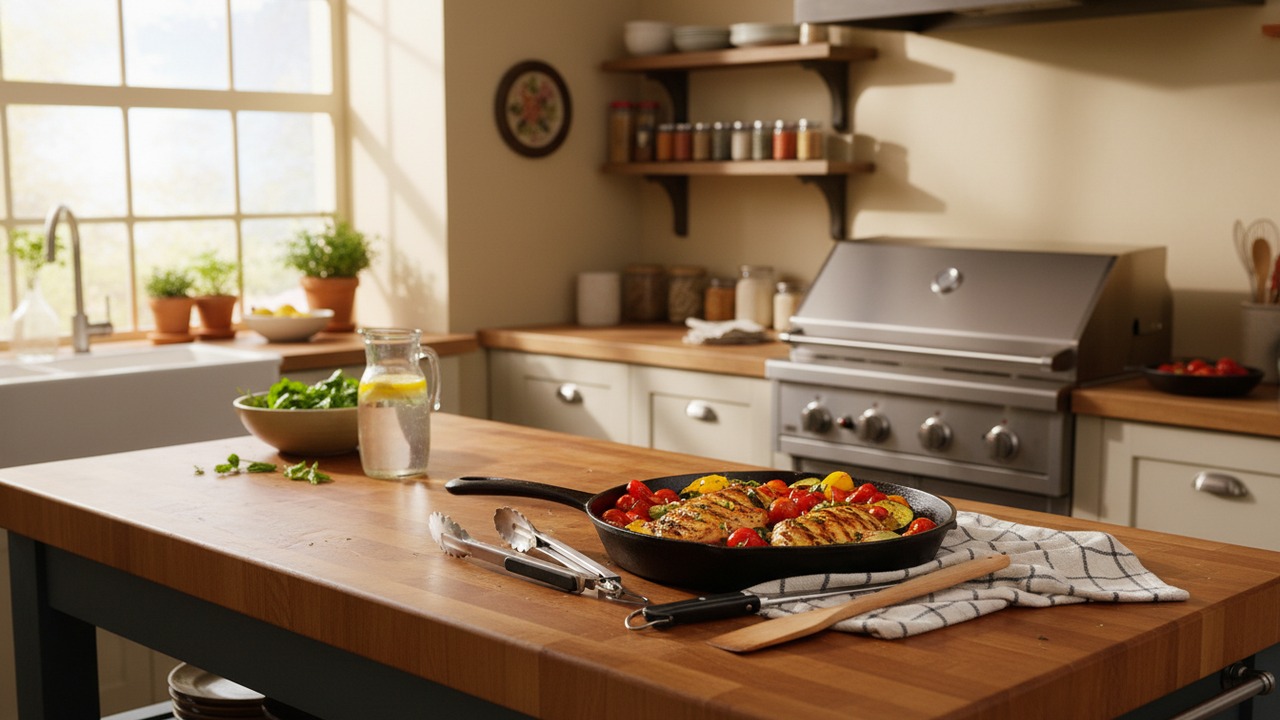
Healthy Eating

Healthy One-Skillet Meals for Grillers

Fast, nutritious one-skillet recipes you can cook on the stovetop or right on a grill. Focuses on lean proteins, whole grains, and seasonal vegetables with flavor-forward swaps, timing tips, meal-prep variations, portion guidance, and low-fat, high-fiber substitutions.

Editorially curated
Healthy One-Skillet Meals for Grillers

Lean Proteins That Hold Up

Lean Proteins That Hold Up
Sear first, finish gently to keep lean proteins juicy.

Some proteins simply take the heat of a skillet or an open grill better than others. Lean chicken breasts and thighs, turkey, pork tenderloin, firm fish like salmon or steelhead, shrimp, and tofu or tempeh are the dependable choices because they cook quickly and respond well to high heat. For skillet or direct-grill work, think in terms of thickness: thin shrimp or sliced pork medallions finish fast; whole chicken breasts and pork tenderloins need more time and a finish off indirect heat.

Moisture-preserving methods are short and practical: a 20–30 minute quick brine for chicken or pork, a citrus- or yogurt-based 30–60 minute marinade for tofu and turkey, or a fast sear-and-rest for fish. A heavy hot skillet or preheated grill gives a quick crust that locks juices; then move the protein to a cooler zone or lower pan heat to finish gently. Those steps keep Sticky Grilled Honey Garlic Chicken Thighs juicy and let the Cedar-Plank Salmon gain smoke without drying.

Sequencing is where dinners stop feeling like juggling. Start dense veg or par-cooked whole grains first, add pork or thicker chicken next, then finish with quick proteins and shrimp or tofu last so everything finishes together. Quick doneness checks—an instant-read thermometer (165°F for poultry, 145°F for pork and most fish) or a gentle press test for fish and tofu—prevent overcooking and keep meals tender.

Whole Grains Without Fuss

Whole grains add texture and fiber to a one-skillet dinner, and some are almost effortless. Quinoa and bulgur cook quickly and can be added directly to a skillet with roughly a 2:1 liquid-to-grain ratio (adjust slightly for bulgur). Denser grains—farro, barley, brown rice—benefit from par-cooking: simmer until partly tender, drain, then finish in the skillet with the protein so they soak up pan juices and char bits.

If you plan to finish grains in the pan, reduce the liquid you’d normally use for a full stovetop pot by about 25 percent; that makes for a slightly drier mix that crisps on contact. For recipes like Quinoa and Black Bean Salad or Edamame Quinoa Protein Salad, cook quinoa fully ahead if you want a chilled or loosely dressed bowl. For hot bowls—Honey Garlic Chicken Meal-Prep Bowls—add partially cooked quinoa to the skillet about 8–10 minutes before the protein is done so flavors marry without mushy grains.

Timing matters less when you think in layers: start par-cooked grains, add firm veg and proteins that need more time, and finish with delicate greens or quick-cooking items. This way you get distinct textures: fluffy grain, blistered veg, and properly cooked protein from one vessel.

Seasonal Vegetables And Pairings

Seasonal Vegetables And Pairings
Match veg density and cut size to cooking order.

Choose vegetables that match the season and the cooking surface. In spring, tender asparagus, snap peas, and young greens pair well with bright citrus finishes and quick sears; summer brings zucchini, cherry tomatoes, and corn that love high heat and charring; fall and winter invite sturdy roots, Brussels sprouts, and cabbage that benefit from slower caramelization or a brief steam-and-cover. Match the veg to your protein: citrusy fish likes summer tomatoes; rum-glazed pork pairs well with charred pineapple and sweet onion.

Cut size and density decide the order. Thick chunks of sweet potato or whole Brussels sprouts go in early; thin-sliced peppers, scallions, or mushrooms can be added late. If you’re grilling or using a skillet, give firm veg a head start with a covered step: a splash of water or broth and a tight lid softens interiors without burning exteriors, then remove the lid to caramelize. For mixed pans, stagger: firm veg, then proteins, then the softest items in the last few minutes.

Decide whether to char or sauté based on flavor goals. Char gives smoky bitter-sweet notes—great with the rustic salt and gremolata of Gluten-Free Cedar-Plank Salmon—while sautéing or steaming preserves sweetness and moisture for salads and shawarma bowls. A quick toss with finishing acid or herb relish brightens charred veg and balances richness.

Flavor Swaps And Weeknight Timing

Small swaps change a meal’s personality without extra work. Try an herb-citrus finish—lemon zest and chopped parsley—for brightening grilled fish; swap a smoky smoked-paprika glaze for a sugar-heavy barbecue sauce to keep depth without sweetness; use a yogurt-based sauce (nonfat or low-fat) instead of mayo for creaminess with less fat. A quick umami boost—anchovy paste, miso, or a splash of soy—adds savor without oil.

For weeknight rhythm, use timing templates. A 20–25 minute template works for quick skillet dinners: preheat skillet, start any par-cooked grain or firm veg, sear thin proteins (shrimp, sliced pork) 3–4 minutes per side, then add delicate veg and finish with a citrus-herb drizzle. The 30–40 minute template fits thicker chicken, pork tenderloin, or a grain-finish plan: start par-cooked grains or roast-to-pan veg, sear main protein and move to lower heat, finish with quick greens or sauce.

Preheating and parallel prep save minutes: get the skillet smoking slightly hot while chopping veg, measure liquids into a small cup, and whisk a quick sauce while the protein sears. For examples, One-Pan Mexican Rice and Black Beans with Fried Eggs uses the 30-minute template, while Kielbasa and Cabbage Skillet fits the shorter window and benefits from a fast smoked-paprika swap.

Meal-Prep And Batch Strategies

Meal-Prep And Batch Strategies
Cook grains and roast veg ahead; reheat with a splash for texture.

If you want one-skillet dinners to carry you through the week, choose components to cook ahead. Grains, roasted vegetables, and marinated proteins are the easiest: cook quinoa or brown rice for the week, roast a sheet of sweet potatoes and broccoli, and keep marinated chicken or tempeh in the fridge for 24–48 hours. The Sheet-Pan Honey Garlic Chicken Thighs with Roasted Broccoli and Sweet Potatoes is a good template: roast once, reheat portions in a skillet for texture.

Store components thoughtfully—grains in shallow airtight containers to cool quickly, roasted veg layered with a paper towel to absorb excess steam, and proteins wrapped loosely so air doesn’t compress them. For reheating, bring a skillet to medium, add a splash of stock or water, and rewarm components together briefly to revive crisp edges; a quick sear on the grill gives roast-char back to proteins and veg without overcooking.

For freezer-friendly one-skillet combos, freeze single-dish portions on a tray, then bag. Thaw in the fridge overnight if possible; if not, go straight from frozen to a hot skillet with a lid and a tablespoon of liquid—cover to steam through, then uncover to crisp. Label with cook dates and plan for a 10–15 minute skillet finish to restore texture.

Portion Guidance And Plate Building

Think plates in thirds and in simple visuals. A satisfying, fiber-forward plate often looks like half vegetables, one-quarter lean protein, and one-quarter whole grains. Visually: two cupped handfuls of vegetables, a palm-sized portion of cooked protein (about 3–4 ounces), and one cupped handful of cooked grain or starchy veg per serving. Those cues fit most adults and keep fiber high without measuring cups.

For children or smaller eaters, reduce the protein portion to a thumb-sized piece and trim grain to half a cupped handful, keeping the vegetable portion roughly the same. Active adults or athletes can increase grain and protein to two cupped handfuls and two palm-sized protein portions. When scaling a skillet, use the pan’s surface area as a proxy: a 10–12 inch skillet comfortably feeds two; a 12–14 inch skillet feeds 3–4 depending on thickness of protein.

To estimate servings from a single skillet batch, weigh or note bulk yields after cooking: roughly 3/4 to 1 cup cooked grains per person, 3–4 ounces cooked protein, and 1–2 cups cooked vegetables. If your skillet yields about 12 cups total mixed, plan for three hearty 4-cup servings. These checks keep plate-building efficient and ensure fiber-forward meals that satisfy.

Low-Fat High-Fiber Swaps

Low-Fat High-Fiber Swaps
Legume swaps and acid lift keep flavor with less fat.

You can cut fat and boost fiber without losing the pan-sizzling pleasure. Swap part of the ground meat for canned or cooked beans or lentils in tacos and skillet bowls; a 50/50 blend keeps texture and cuts saturated fat. Replace refined pasta or white rice with whole-grain pasta, brown rice, or quinoa—these increase fiber and hold up well when finished in the skillet.

Technique tweaks matter: use acid (vinegar, lime, lemon) and umami (soy, miso, tomato paste) to make dishes taste rich with less oil. Char and quick caramelization deliver perceived fatiness—char pineapple for Grilled Pineapple and Rum-Glazed Pork Tenderloin, or finish salmon with a bright gremolata—to balance lean protein. Oil-sparing searing works too: heat the pan until nearly smoking, sear for color, then finish with a splash of broth or water and a lid.

Add fiber without extra cook time: stir canned beans or frozen peas into the last few minutes of a skillet, sprinkle chia or ground flax into dressings, or fold in shredded cabbage for crunch. Recipes like Citrus Pineapple Ground Pork Tacos can take a partial bean swap, and even crisping frozen fries in an air fryer is an oil-light way to get that textural contrast without excess fat.

Recipes in This Article

Quinoa and Black Bean Salad
Grilling

Quinoa and Black Bean Salad

A bright, protein-packed Quinoa and Black Bean Salad with charred red pepper and a zesty lime dressing. Easy to make ahead for barbecues, picnics, or a healthy weeknight side; serve chilled or at room temperature. Fresh cilantro adds a fragrant finish.

25m Easy0View Recipe
Grilled Pineapple and Rum-Glazed Pork Tenderloin
Grilling

Grilled Pineapple and Rum-Glazed Pork Tenderloin

Lean pork tenderloin gets a quick rum-sweetened glaze and charred pineapple for a bright sweet-savory main that’s perfect for the grill. Ready in about 35 minutes, this recipe delivers tropical flavor with minimal fuss—ideal for weeknight grilling or a casual weekend cookout.

35m Medium0View Recipe
How to Make Frozen French Fries Extra Crispy in the Air Fryer
Air Fryer

How to Make Frozen French Fries Extra Crispy in the Air Fryer

A foolproof method to turn store-bought frozen fries extra crispy in the air fryer with minimal fuss. Includes temperature, timing, and shaking tips so fries come out golden and crunchy every time.

23m Easy0View Recipe
One-Pan Mexican Rice and Black Beans with Fried Eggs (Vegetarian, 30 Minutes)
Stovetop

One-Pan Mexican Rice and Black Beans with Fried Eggs (Vegetarian, 30 Minutes)

A simple, budget-friendly one-pan meal: fluffy Mexican-style rice and black beans finished with sunny fried eggs. Ready in 30 minutes, this versatile stovetop skillet is great for weeknights and easily customized with toppings you already have.

30m Easy0View Recipe
Sheet-Pan Honey Garlic Chicken Thighs with Roasted Broccoli and Sweet Potatoes
Baking

Sheet-Pan Honey Garlic Chicken Thighs with Roasted Broccoli and Sweet Potatoes

A simple, one-pan weeknight dinner: juicy honey-garlic chicken thighs roasted alongside caramelized sweet potatoes and tender broccoli. Minimal prep and easy meal-prep friendly, with a quick pan glaze that gives the chicken sticky, savory-sweet flavor.

55m Easy0View Recipe
Sticky Grilled Honey Garlic Chicken Thighs with Charred Scallion Relish
Grilling

Sticky Grilled Honey Garlic Chicken Thighs with Charred Scallion Relish

Bone-in, skin-on chicken thighs are lacquered in a caramelized honey-garlic glaze and finished over high heat for deep char and sticky bite. A bright charred scallion relish cuts the sweetness and adds a crunchy, smoky counterpoint that keeps this firmly in the grill-focused lane.

50m Medium0View Recipe
Honey Garlic Chicken Meal-Prep Bowls with Quinoa, Broccoli and Sesame Drizzle
Salads

Honey Garlic Chicken Meal-Prep Bowls with Quinoa, Broccoli and Sesame Drizzle

Make-ahead honey garlic chicken meal-prep bowls with fluffy quinoa, tender broccoli and a bright sesame drizzle. These easy bowls pack well for lunches or dinners and reheat or eat cold for a fast, balanced meal any day of the week.

45m Easy0View Recipe
Rotisserie Chicken Shawarma Bowls with Quick Garlic Sauce
Salads

Rotisserie Chicken Shawarma Bowls with Quick Garlic Sauce

A fast, flavorful take on shawarma bowls using shredded rotisserie chicken and a creamy, tangy quick garlic sauce. Ready in about 25 minutes, these bowls layer warm spiced chicken, fluffy rice and fresh vegetables for an easy weeknight salad-style meal.

25m Easy0View Recipe
Kielbasa and Cabbage Skillet
Stovetop

Kielbasa and Cabbage Skillet

A cozy one-skillet dinner that pairs smoky kielbasa with tender, caramelized cabbage for a quick rustic meal. Ready in about 30 minutes, it’s perfect for weeknight comfort or a relaxed weekend staple.

30m Easy0View Recipe
Edamame Quinoa Protein Salad
Salads

Edamame Quinoa Protein Salad

A vibrant, protein-forward vegan salad that layers nutty quinoa, tender edamame and crisp pan-fried tofu for a filling meal-prep bowl. Bright sesame-ginger dressing and fresh vegetables keep it light, flavorful and ready to grab-and-go.

40m Easy0View Recipe
Stovetop

Citrus Pineapple Ground Pork Tacos with Quick Pickled Onions

Bright, weeknight-ready tacos that swap beef for juicy ground pork finished with caramelized pineapple and tangy quick pickled red onions. Fast to make on the stovetop and bursting with citrus, these tacos are a flavorful, crowd-pleasing alternative for taco night.

27m Easy0View Recipe
Gluten-Free Cedar-Plank Salmon with Gremolata
Grilling

Gluten-Free Cedar-Plank Salmon with Gremolata

A simple late-summer cedar-plank salmon recipe: a soaked cedar plank gives smoky char while a bright, dairy-free parsley gremolata lifts the rich fish. Includes gluten-free glaze options and make-ahead gremolata tips — perfect for an easy weeknight dinner or casual outdoor entertaining.

80m Easy0View Recipe

Comments

Leave a comment

0/2000

No comments yet — be the first to share your thoughts.

Keep exploring

More to read

All articles →