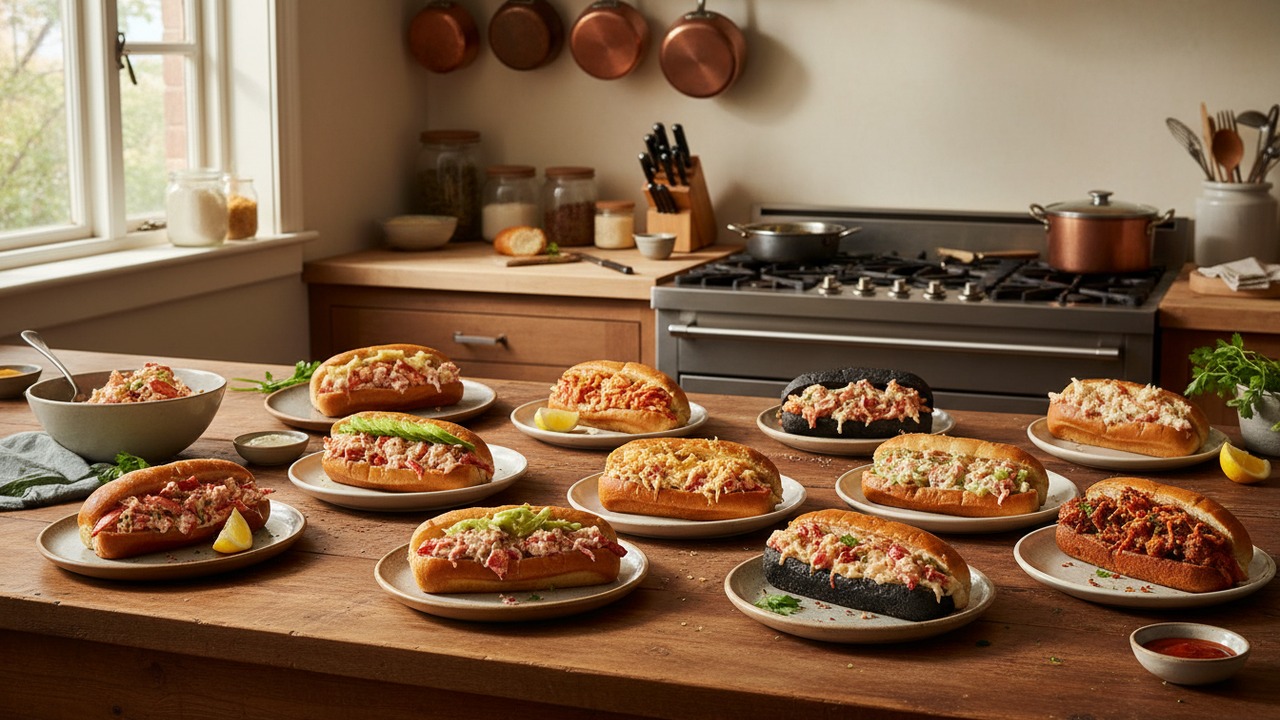

The clearest split in lobster‑roll land is Maine versus Connecticut, and the difference shows immediately in temperature, sauce, and bun. A Maine roll is chilled lobster meat tossed in a lightly seasoned mayo—clean, sweet, and with a little snap from celery or scallion. By contrast a Connecticut roll arrives with warm lobster bathed in clarified butter on a toasted, soft‑sided bun; it reads richer and the butter amplifies the meat’s natural sweetness.
Bun choice matters more than you might think. Split‑top (New England–style) rolls cradle meat and melted butter along the long seam so sauces collect without escaping; ordinary hot‑dog buns or hinged brioche can collapse or let juices run away. Toasting the interior gives a small barrier that keeps mayo from sogging while still offering a soft, yielding bite. If you want crispness, butter the cut sides and toast until they're pale gold.
Mix‑ins and garnishes change mouthfeel and temperature cues. Celery or finely diced fennel adds a woody crunch that cuts richness; chives or scallions lift with oniony brightness; a squeeze of lemon brightens the whole sandwich. Pickles or a little cornichon relish add vinegary pop and shorten the chew—handy if you’re making rolls for a crowd. For recipes to test the contrasts, try the Broiled Garlic Butter Lobster Tails and the Creamy Lobster Pasta for inspiration on warm versus cool treatments.


