Grilled Pineapple and Rum-Glazed Pork Tenderloin
Lean pork tenderloin gets a quick rum-sweetened glaze and charred pineapple for a bright sweet-savory main that’s perfect for the grill. Ready in about 35 minutes, this recipe delivers tropical flavor with minimal fuss—ideal for weeknight grilling or a casual weekend cookout.
About This Recipe
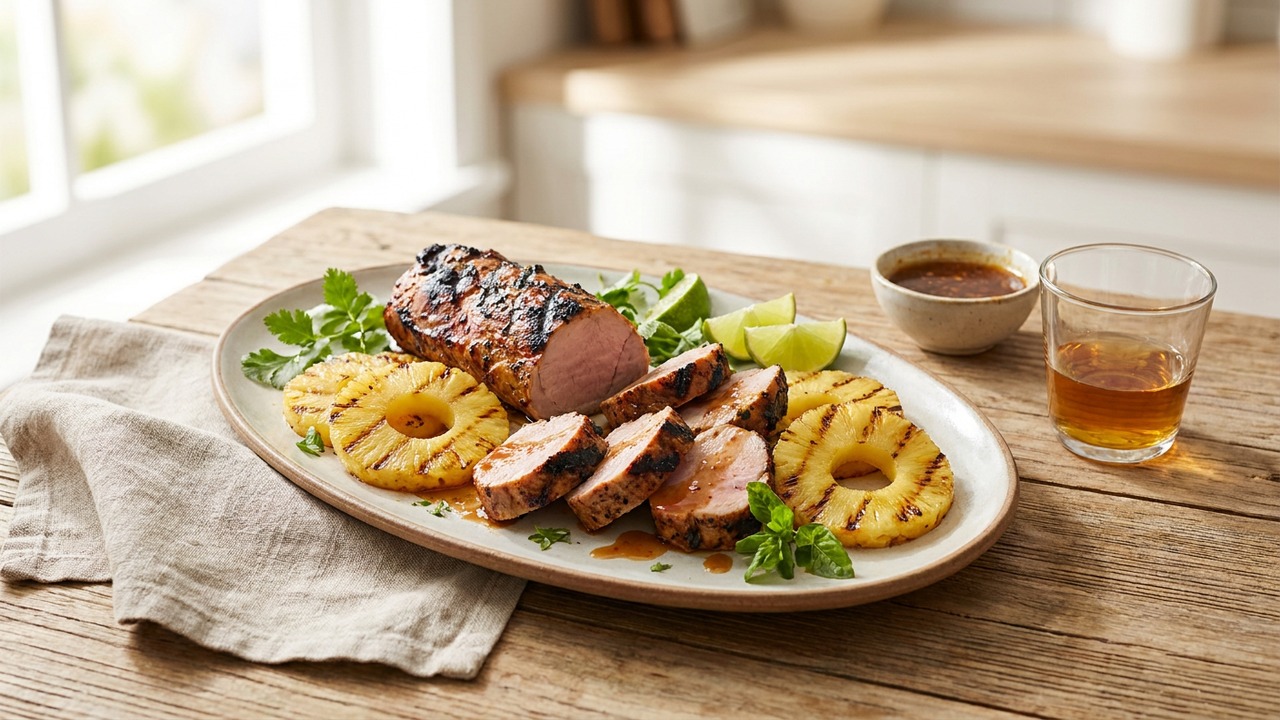
This grilled pineapple and rum-glazed pork tenderloin lives where bright tropical fruit meets straightforward weeknight grilling. The pork tenderloin’s naturally lean, tender profile benefits from a quick sear and a glossy, slightly sticky rum glaze that balances brown sugar’s molasses notes with lime’s sharpness and soy’s savory umami. Charred pineapple brings an acidic sweetness and caramelized texture that cuts through the meat’s richness, making every bite feel lively rather than heavy.
What makes this version work is restraint: the glaze is reduced just enough to cling and caramelize without becoming cloying, and the cooking method — short direct-heat sears followed by indirect finishing — ensures a browned exterior and a juicy interior. It’s a great dish for people who want something a little celebratory without a lot of fuss: under 40 minutes from prep to table, and forgiving for home grills. Bring a good instant-read thermometer, a hot grate for that first sear, and fresh pineapple for the best contrast in texture and flavor.
Ingredients for Grilled Pineapple and Rum-Glazed Pork Tenderloin
- 1 1/2 pounds pork tenderloin
- 2 cups fresh pineapple (cored and cut into rings or chunks)
- 1/4 cup dark rum
- 2 tbsp dark brown sugar (packed)
- 2 tbsp low-sodium soy sauce
- 1 tbsp honey
- 2 cloves garlic (minced)
- 2 tbsp extra-virgin olive oil
- 1 tsp kosher salt
- 2 tbsp fresh lime juice
How to Make Grilled Pineapple and Rum-Glazed Pork Tenderloin
Step 1: Trim and season the pork
Trim any silver skin and excess fat from the pork tenderloin and pat it dry with paper towels. Rub the tenderloin all over with the olive oil and sprinkle evenly with kosher salt; let it sit at room temperature for 10–15 minutes while you prepare the glaze and preheat the grill to medium-high.For this step
- 1 1/2 poundspork tenderloin
- 2 tbspextra-virgin olive oil
- 1 tspkosher salt
Step 2: Make the rum-pineapple glaze
Combine dark rum, brown sugar, soy sauce, honey, minced garlic, and fresh lime juice in a small saucepan. Bring to a gentle simmer over medium heat and cook, stirring occasionally, until the mixture reduces slightly and coats the back of a spoon (about 6–8 minutes); remove from heat and let cool slightly—the glaze will thicken as it cools.For this step
- 1/4 cupdark rum
- 2 tbspdark brown sugar (packed)
- 2 tbsplow-sodium soy sauce
- 1 tbsphoney
- 2 clovesgarlic (minced)
- 2 tbspfresh lime juice
Step 3: Char the pineapple
Brush the pineapple rings or chunks lightly with oil and place them on the hot grill over direct heat. Grill 2–3 minutes per side until caramelized and grill marks appear; transfer to a plate and keep warm while you cook the pork.For this step
- 2 cupsfresh pineapple (cored and cut into rings or chunks)
Step 4: Sear and finish the pork on the grill
Sear the seasoned tenderloin over direct heat 2–3 minutes per side to develop color, then move it to indirect heat. Brush the pork with the rum glaze, continue grilling over indirect heat, brushing every 2–3 minutes, until an instant-read thermometer inserted into the thickest part reads 145°F (about 10–15 more minutes depending on thickness).Step 5: Rest, slice and serve with pineapple
Transfer the pork to a cutting board and tent loosely with foil; rest 8–10 minutes to allow juices to redistribute. Slice into medallions, arrange with grilled pineapple, and brush with any remaining warm glaze before serving.


- Trim any silver skin and excess fat from the pork tenderloin and pat it dry with paper towels. Rub the tenderloin all over with the olive oil and sprinkle evenly with kosher salt; let it sit at room temperature for 10–15 minutes while you prepare the glaze and preheat the grill to medium-high.
- Combine dark rum, brown sugar, soy sauce, honey, minced garlic, and fresh lime juice in a small saucepan. Bring to a gentle simmer over medium heat and cook, stirring occasionally, until the mixture reduces slightly and coats the back of a spoon (about 6–8 minutes); remove from heat and let cool slightly—the glaze will thicken as it cools.
- Brush the pineapple rings or chunks lightly with oil and place them on the hot grill over direct heat. Grill 2–3 minutes per side until caramelized and grill marks appear; transfer to a plate and keep warm while you cook the pork.
- Sear the seasoned tenderloin over direct heat 2–3 minutes per side to develop color, then move it to indirect heat. Brush the pork with the rum glaze, continue grilling over indirect heat, brushing every 2–3 minutes, until an instant-read thermometer inserted into the thickest part reads 145°F (about 10–15 more minutes depending on thickness).
- Transfer the pork to a cutting board and tent loosely with foil; rest 8–10 minutes to allow juices to redistribute. Slice into medallions, arrange with grilled pineapple, and brush with any remaining warm glaze before serving.
Grilled Pineapple and Rum-Glazed Pork Tenderloin Tips
Bring to room temperature
Let the tenderloin sit 10–15 minutes after oiling and salting so it cooks more evenly and develops a better sear.
Watch the glaze
Because the glaze is high in sugar, apply it toward the end of cooking and brush in thin layers to avoid burning.
Cook to 145°F
Use an instant-read thermometer in the thickest part; remove at 140–142°F and tent to reach a safe 145°F with carryover.
Dry the pineapple well
Pat pineapple rings or chunks dry after coring so they caramelize quickly instead of steaming on the grill.
Even thickness matters
If your tenderloin tapers, fold or tie the thin end with butcher’s twine so the whole piece finishes at the same time.
Grilled Pineapple and Rum-Glazed Pork Tenderloin Variations and Substitutions
Non-alcoholic swap
Replace rum with equal parts pineapple juice plus a tablespoon of molasses or dark corn syrup and a splash of apple cider vinegar for depth.
Spicy-sweet glaze
Add 1–2 teaspoons of sriracha or a finely minced jalapeño to the glaze for heat that complements the fruitiness.
Gluten-free option
Use tamari or coconut aminos instead of soy sauce to keep the glaze gluten-free without losing savory balance.
Different protein
This glaze works well on bone-in pork chops or skin-on chicken thighs; adjust cooking times and use a probe thermometer for accuracy.
How to Store and Make Grilled Pineapple and Rum-Glazed Pork Tenderloin Ahead
Store leftover sliced pork and pineapple in airtight containers in the refrigerator for up to 3–4 days; keep the excess glaze separately to prevent the meat from becoming too sticky. Reheat gently in a 300°F oven or in a skillet over medium-low heat with a splash of chicken stock or water to restore moisture, then glaze briefly before serving.
What to Serve With Grilled Pineapple and Rum-Glazed Pork Tenderloin
Serve with coconut-lime rice or cilantro-lime quinoa and a lightly dressed green salad to offset the glaze’s sweetness; grilled corn or charred sugar snap peas also pair nicely. For drinks, try a classic daiquiri or a crisp, off-dry Riesling to match the pineapple’s acidity and the rum’s caramel notes.
Grilled Pineapple and Rum-Glazed Pork Tenderloin FAQs
Can I use pork loin instead of tenderloin?
Yes, but pork loin is thicker and less tender, so it will need longer, lower-heat cooking and careful monitoring to avoid drying out; consider butterflying it or finishing in a 350°F oven after searing.
Will the alcohol in the rum be a problem when grilling?
The glaze is simmered before using so most alcohol cooks off and the flavor becomes concentrated; if you’re concerned, substitute with pineapple juice plus a touch of molasses or vanilla.
How do I prevent the glaze from burning on the grill?
Move the pork to indirect heat before applying most of the glaze and reserve a small amount to brush at the very end; keep the grill at medium-high rather than searing-hot to lower burn risk.
Can I make the glaze ahead of time?
Absolutely — the glaze keeps in the refrigerator for up to 4 days and can be gently reheated before using; if refrigerated it may thicken, so thin with a little pineapple juice or water.
What if I don't have a thermometer?
While an instant-read thermometer is best, you can check doneness by feel: the tenderloin should be firm but springy; slice the thickest part to ensure there’s no pink running through if you’re unsure, though a thermometer is strongly recommended for accuracy.
About the author
Jake WoodsHello, I'm Jake. I started this recipe site with the idea that I hated recipe websites that overwhelm you with long stories and ads just to see plain content that's not helpful. My goal is to provide you with quality recipes, simple ideas and a fun cooking experience. There's lots of fun things to cook, and I think as you browse the site you'll find that TopShelf.Recipes is the place for quality recipes on the web.
See all recipes by Jake Woods →Ratings & Reviews
Did you make this recipe?
Be the first to share your experience.
Nutrition Facts
Per serving: 4 oz tenderloin
Nutrition values are estimated from USDA ingredient data and may vary based on preparation, brands, and portion sizes. Values are provided for informational purposes only.
Keep Reading
Guides & articles for this recipe

Recipes
DIY Edible Monster Eyes Candy
Make safe, fun edible monster eyes for cupcakes, cookies, and candy trays. Step-by-step recipes show baking-soda balls, chocolate and fondant eyes, wafer-print options, plus assembly, storage, and kid-friendly safety tips.

Healthy Eating
Healthy One-Skillet Meals for Grillers
Fast, nutritious one-skillet recipes you can cook on the stovetop or right on a grill. Focuses on lean proteins, whole grains, and seasonal vegetables with flavor-forward swaps, timing tips, meal-prep variations, portion guidance, and low-fat, high-fiber substitutions.

Recipe Roundup
Early-Fall Grill Roundup: Apples & Squash
Transition summer cookouts into early fall with a roundup of grill recipes starring apples, winter squash, mushrooms, pears, and warm smoky flavors. Find mains, sides, veg-forward ideas, easy marinades, and practical tips for grilling when the air turns crisp.
More from Grilling
View all Grilling recipes →
Tandoori Yogurt Marinated Grilled Chicken (Tandoori Style on the Grill)

Labor Day Grilled Lobster Rolls with Charred Scallion Brown Butter & Lemon‑Herb Aioli

Bulgogi Smash Burger

Campfire‑Smoked Potato Salad with Mustard‑Bacon Vinaigrette — A Labor Day Grilling Side for Steak

Hanger Steak with Shallot Sauce
Grilled Pineapple Upside-Down Cake

Spicy Grilled Shrimp Skewers with Garlic Lime Marinade

Honey Garlic Grilled Thin-Sliced Chicken Breasts

Coffee and Porcini Dry-Rub Steaks with RUB PRIME STEAK Finish
Ask me anything about this recipe — substitutions, scaling, techniques, timing.
Powered by AI · 6 questions per 5 minutes, 30 per day