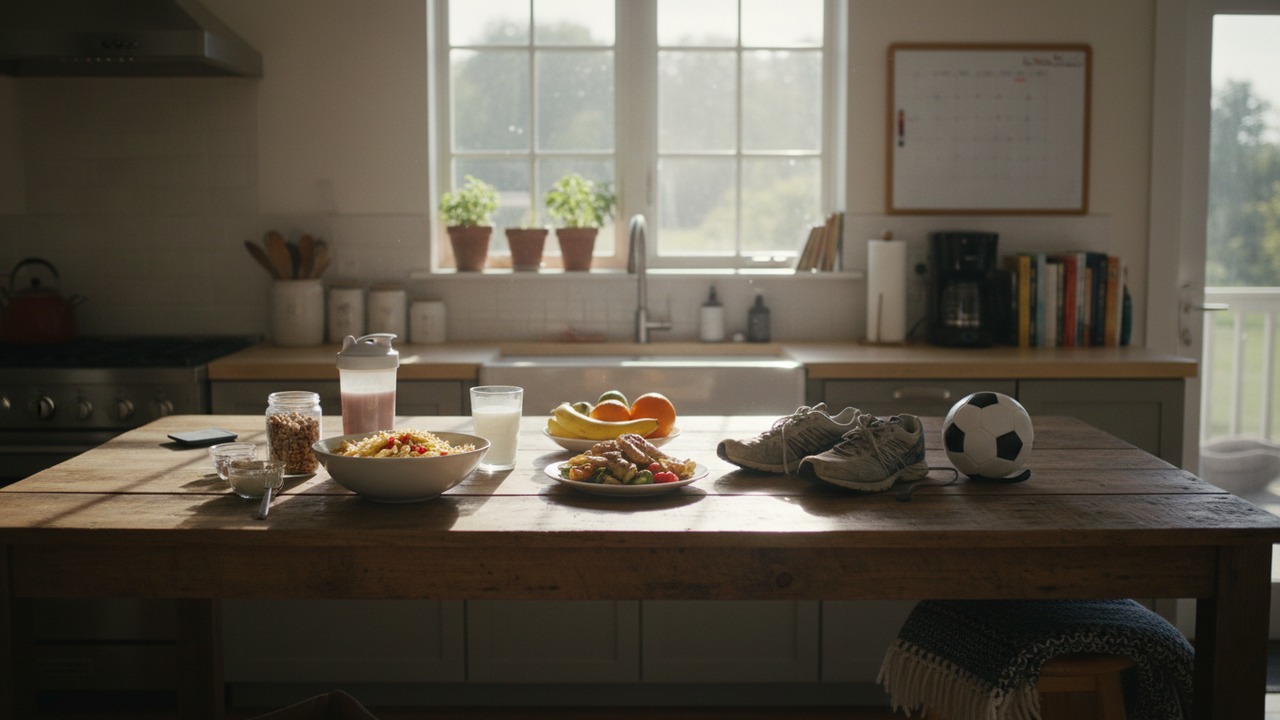

Food does four jobs for young athletes: it supplies immediate energy for practice and games, provides the building blocks for growth and stronger muscles, speeds repair after hard sessions, and keeps immune defenses from tipping into constant colds. You’ll notice the first most easily: a well-fueled child has steady effort, fewer mid-practice energy dumps, and better focus. If a kid is regularly cranky, dizzy, or excessively tired after light activity, that’s a practical cue to look at recent meals and snacks.
Macronutrients play familiar roles you can observe. Carbohydrates feel like quick energy — fruits, toast, rice — and are the easiest fix before long sessions. Protein shows up as better recovery and less post-exercise soreness: lean meat, yogurt, eggs, or beans after practice often shortens the next-day grogginess. Fats are slower-burning and help with satiety and tasting food kids will actually eat; a smear of nut butter or a little avocado does more than flavor food.
Portion thinking doesn’t need a calculator. A simple plate method works: about one palm-sized portion of protein at a meal, a cupped handful of carbohydrate (rice, pasta, potato), and a fist of vegetables or fruit. For snacks, pair a carbohydrate with a small protein—banana plus nut butter or cheese and crackers—to blunt crashes and help muscle repair without overdoing calories.


