Korean Gochujang Coleslaw with Sesame and Quick Pickled Scallions
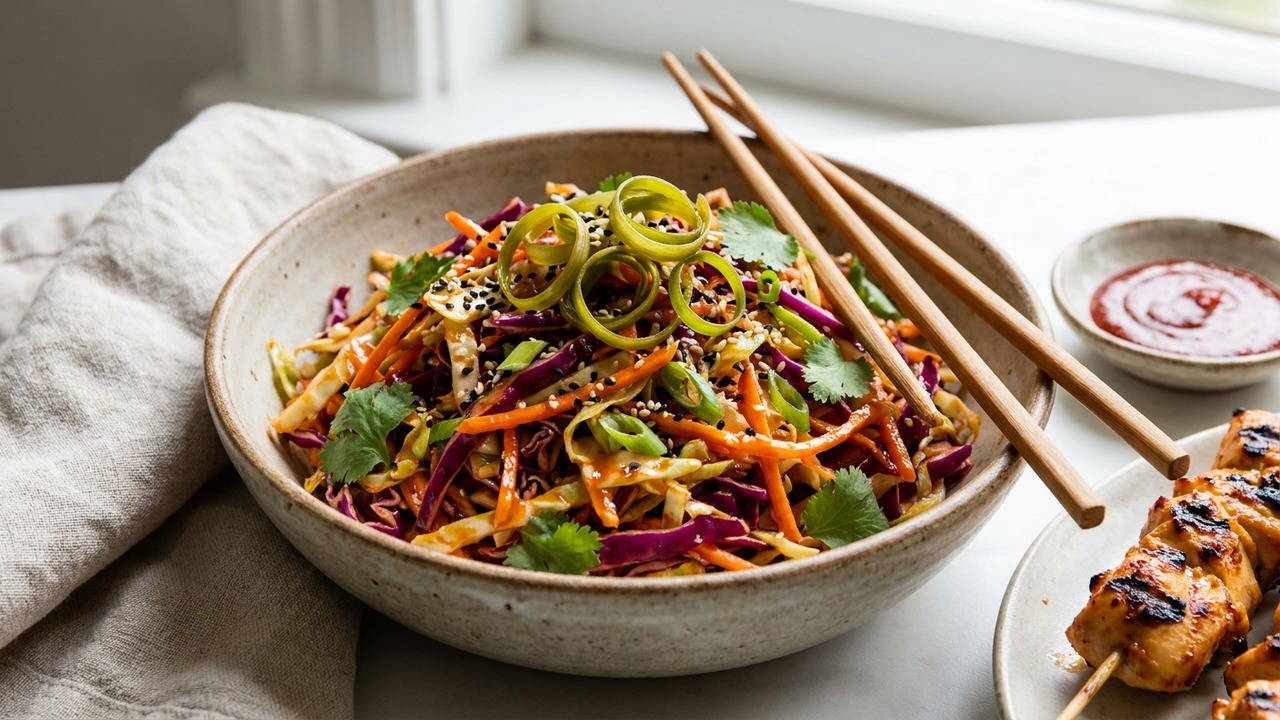
A crunchy, spicy-sweet coleslaw brightened with quick-pickled scallions and a creamy gochujang sesame dressing. It’s a vibrant, fusion side that pairs perfectly with grilled proteins or can stand alone as a spicy-sweet salad.
Ingredient Spotlight
Gochujang (Korean red chili paste)
Gochujang is a thick, fermented Korean paste made from red chili powder, glutinous rice, fermented soybeans and salt; it delivers a deep umami-sweet-spicy flavor with a slightly fermented aroma. It’s a staple in Korean cooking for sauces, marinades and dressings and adds both heat and savory sweetness. You can find it at Asian markets, many larger grocery stores in the international aisle, or online; to approximate it, mix miso (or doenjang) with a chili paste like sambal oelek or sriracha, a bit of sugar (or honey) and a splash of rice vinegar to mimic the sweet-fermented backbone.
Jake Woods's note
"This slaw is a crowd-pleaser for backyard grills and weeknight dinners — the quick-pickled scallions add bright acidity while the gochujang mayo delivers trending spicy-sweet flavor. Make it ahead by a few hours to let the flavors meld, or serve immediately for extra crunch."
About This Recipe
This Korean Gochujang Coleslaw is built to be loud in the best way: crunchy cabbage and carrot, a creamy gochujang dressing that’s spicy, savory, and slightly sweet, and quick-pickled scallions that cut through the richness with a bright vinegar snap. The mayonnaise tames the chili paste so the heat plays alongside toasted sesame oil and sesame seeds rather than overpowering the salad, while the red-and-green cabbage mix makes the bowl visually pop. It’s an unfussy side that’s especially good when you want a cooling-but-spicy counterpoint to charred meats, sticky ribs, or rich fried proteins.
What makes this version work is the choreography — a short rest for the shredded veg to relax into the dressing, and a brief pickle for the scallions so their onion bite becomes nuanced instead of sharp. Reserve a little pickling liquid to loosen the dressing if needed; it’s a small trick that prevents you from watering down the slaw. Make it a weeknight staple for grilled fish tacos, a crunchy topping for rice bowls and banh mi, or a quick, satisfying salad when you want texture and punch without fuss.
Ingredients for Korean Gochujang Coleslaw with Sesame and Quick Pickled Scallions
- 5 cups Green and red cabbage, thinly sliced (combined)
- 1 cup Carrot, shredded or julienned
- 6 count Scallions (green onions), trimmed and cut into 2–3 inch pieces
- 1/2 cup Rice vinegar
- 2 tbsp Granulated sugar
- 1 tsp Kosher salt
- 3 tbsp Gochujang (Korean red chili paste)
- 3 tbsp Mayonnaise
- 1 tbsp Toasted sesame oil
- 1 tbsp Toasted sesame seeds (for garnish)
How to Make Korean Gochujang Coleslaw with Sesame and Quick Pickled Scallions
Step 1: Prep the vegetables
Thinly slice the green and red cabbage and shred or julienne the carrot. Put the cabbage and carrot in a large mixing bowl and toss briefly to combine; set aside while you make the pickled scallions and dressing so the slaw softens slightly and layers flavors.For this step
- 5 cupsGreen and red cabbage, thinly sliced (combined)
- 1 cupCarrot, shredded or julienned
Step 2: Quick-pickle the scallions
Place the cut scallions in a heatproof jar or small bowl. Whisk the rice vinegar with sugar and kosher salt until dissolved, then pour over the scallions so they are submerged. Let sit at room temperature for 10 minutes (or refrigerate up to 2 hours) to quick-pickle and mellow their bite; reserve a tablespoon of pickle liquid to adjust the dressing if desired.For this step
- 6 countScallions (green onions), trimmed and cut into 2–3 inch pieces
- 1/2 cupRice vinegar
- 2 tbspGranulated sugar
- 1 tspKosher salt
Step 3: Make the gochujang sesame dressing
In a small bowl, whisk together gochujang, mayonnaise, and toasted sesame oil until smooth and creamy; taste and add up to 1 tablespoon reserved pickling liquid or a splash of rice vinegar to loosen and balance heat. Adjust salt if needed — remember the pickled scallions carry some saltiness too.For this step
- 3 tbspGochujang (Korean red chili paste)
- 3 tbspMayonnaise
- 1 tbspToasted sesame oil
Step 4: Toss the slaw
Pour the dressing over the cabbage and carrot and toss thoroughly to coat. Drain the pickled scallions (reserve a little pickling liquid if you like a looser dressing) and fold them into the slaw; taste and adjust seasoning with more salt, vinegar, or a pinch of sugar if desired.Step 5: Finish and serve
Transfer the slaw to a serving bowl and sprinkle with toasted sesame seeds. Let rest 5–15 minutes to allow flavors to meld, or serve immediately for maximum crunch — this slaw pairs especially well with grilled meats, fish tacos, or tofu.For this step
- 1 tbspToasted sesame seeds (for garnish)


- Thinly slice the green and red cabbage and shred or julienne the carrot. Put the cabbage and carrot in a large mixing bowl and toss briefly to combine; set aside while you make the pickled scallions and dressing so the slaw softens slightly and layers flavors.
- Place the cut scallions in a heatproof jar or small bowl. Whisk the rice vinegar with sugar and kosher salt until dissolved, then pour over the scallions so they are submerged. Let sit at room temperature for 10 minutes (or refrigerate up to 2 hours) to quick-pickle and mellow their bite; reserve a tablespoon of pickle liquid to adjust the dressing if desired.
- In a small bowl, whisk together gochujang, mayonnaise, and toasted sesame oil until smooth and creamy; taste and add up to 1 tablespoon reserved pickling liquid or a splash of rice vinegar to loosen and balance heat. Adjust salt if needed — remember the pickled scallions carry some saltiness too.
- Pour the dressing over the cabbage and carrot and toss thoroughly to coat. Drain the pickled scallions (reserve a little pickling liquid if you like a looser dressing) and fold them into the slaw; taste and adjust seasoning with more salt, vinegar, or a pinch of sugar if desired.
- Transfer the slaw to a serving bowl and sprinkle with toasted sesame seeds. Let rest 5–15 minutes to allow flavors to meld, or serve immediately for maximum crunch — this slaw pairs especially well with grilled meats, fish tacos, or tofu.
Korean Gochujang Coleslaw with Sesame and Quick Pickled Scallions Tips
Slice cabbage thinly
Use a sharp knife or mandoline to cut the cabbage very thin so the dressing clings and the slaw isn’t chewy; uneven pieces wilt at different rates.
Temper the gochujang
Whisk the gochujang with mayonnaise first to smooth out any lumps; a spoonful of the pickling liquid will loosen it without diluting flavor.
Quick-pickle precisely
Give scallions at least 10 minutes at room temperature to mellow but avoid over-pickling longer than 2 hours unless refrigerated to preserve their texture.
Toast seeds last
Gently toast sesame seeds in a dry skillet until fragrant just before serving to maximize aroma and crunch.
Rest for melded flavor
Let the dressed slaw sit 5–15 minutes so the cabbage softens slightly and the flavors marry, but serve sooner if you prefer maximum crunch.
Korean Gochujang Coleslaw with Sesame and Quick Pickled Scallions Variations and Substitutions
Vegan swap
Replace mayonnaise with equal parts vegan mayo or unsweetened silken tofu blended until creamy; add a teaspoon of neutral oil to mimic mouthfeel.
Peanut-sesame twist
Stir 1 tablespoon of creamy peanut butter into the dressing and add a squeeze of lime for an umami-rich, satay-like slaw that pairs well with grilled chicken.
Lower-sugar pickling
Use 1 tablespoon honey or maple syrup instead of granulated sugar for the scallion quick-pickle, or omit sugar entirely and pick for a few extra minutes to balance acidity.
Extra crunch additions
Fold in thin apple slices, jicama, or toasted chopped peanuts at the end for contrasting textures and a touch of sweetness.
How to Store and Make Korean Gochujang Coleslaw with Sesame and Quick Pickled Scallions Ahead
This slaw is best eaten the day it’s made for peak crunch; stored in an airtight container it will keep 1–2 days in the fridge but will soften as the cabbage releases water. For make-ahead, keep the dressing and quick-pickled scallions separate from the raw cabbage and carrot, then toss 10–15 minutes before serving. Reheating isn’t recommended — serve chilled or at room temperature.
What to Serve With Korean Gochujang Coleslaw with Sesame and Quick Pickled Scallions
Serve this slaw piled next to Korean-style grilled short ribs, spicy fried chicken, or fish tacos for a crunchy, cooling contrast; it also makes a lively topping for grain bowls or banh mi. Pair with a cold, crisp lager or a citrusy sparkling water to refresh the palate, and present it in a shallow bowl so the sesame seeds and scallions sit visibly on top.
Korean Gochujang Coleslaw with Sesame and Quick Pickled Scallions FAQs
How can I make the slaw less spicy?
Use less gochujang or swap half of it for mayonnaise; you can also add a teaspoon of honey to balance heat. Alternatively, use a milder chili paste or mix in extra shredded cabbage to dilute the heat.
Can I substitute rice vinegar with something else?
Apple cider vinegar or white wine vinegar can be used in a pinch, but they have a sharper edge — reduce the amount slightly and taste as you go to avoid overpowering the dressing.
Will the pickled scallions make the slaw soggy?
Drain the scallions well and reserve only a tablespoon of the pickling liquid for the dressing; fold them in just before serving to minimize extra moisture.
Can I use store-bought coleslaw mix?
Yes — store mixes save time, but add a handful of thinly sliced red cabbage or carrot matchsticks for color and texture if your mix is pale.
Is there a good substitute for mayonnaise?
Plain Greek yogurt, silken tofu, or a plant-based mayo work well to keep the dressing creamy; adjust acidity slightly since yogurts are tangier.
About the author
Jake WoodsHello, I'm Jake. I started this recipe site with the idea that I hated recipe websites that overwhelm you with long stories and ads just to see plain content that's not helpful. My goal is to provide you with quality recipes, simple ideas and a fun cooking experience. There's lots of fun things to cook, and I think as you browse the site you'll find that TopShelf.Recipes is the place for quality recipes on the web.
See all recipes by Jake Woods →Ratings & Reviews
Did you make this recipe?
Be the first to share your experience.
Nutrition Facts
Per serving: about 2¼ cups
Nutrition values are estimated from USDA ingredient data and may vary based on preparation, brands, and portion sizes. Values are provided for informational purposes only.
Keep Reading
Guides & articles for this recipe
Guides
Grilling and Nutrition
An evidence-based guide that explains how grilling, charring, and smoking change vitamins, proteins, and fats and the health risks of over-charring. Practical strategies for home cooks on timing, temperature, marinades, fuel choice, and smart side pairings to maximize nutrients without losing bold grilled flavor.

Healthy Eating
Gluten-Free Weeknight Grilling Plan
A 7-day gluten-free weeknight grilling plan with quick, family-friendly recipes, prep-ahead timelines, and a printable shopping list that spotlights late-summer produce and pantry staples. Includes clear cross-contamination safety tips and simple swaps to keep dinners fast and crowd-pleasing.

Healthy Eating
Low-Fat Grill Swaps for Big Flavor
A practical guide to trimming fat from grilled meals without losing juiciness or char. Learn yogurt- and citrus-based marinades, lean protein picks, searing and indirect-heat tricks, plus 5 quick low-fat marinades and a simple weeknight plan.
More from Salads
View all Salads recipes →
Strawberry Spinach Salad

Campfire‑Smoked Potato Salad with Mustard‑Bacon Vinaigrette — A Labor Day Grilling Side for Steak

Honey Garlic Chicken Thigh Meal-Prep Bowls with Farro, Greens, and Tahini Drizzle

Mango Avocado Tilapia Salad Bowl with Lime Vinaigrette

Miso Glazed Salmon Bowl

Chorizo Black Bean Salad

Classic Make-Ahead Creamy Potato Salad — Labor Day BBQ Side for Steak & Burgers

Classic Warm German Potato Salad with Bacon & Whole-Grain Mustard (Labor Day Steak Side)

Smoky Grilled Potato Salad with Crispy Bacon & Dijon Vinaigrette
Ask me anything about this recipe — substitutions, scaling, techniques, timing.
Powered by AI · 6 questions per 5 minutes, 30 per day