All Articles
Tips & Techniques

Global Heat Profiles Explained: Choosing Chiles and Peppers for Your Rubs

Learn how to match chile heat, flavor and origin to create balanced rubs for grilling. This guide breaks down Scoville heat, flavor fingerprints of popular chiles, practical prep techniques, and tested rub formulas you can use right away.

June 19, 2026Editorially curated
Global Heat Profiles Explained: Choosing Chiles and Peppers for Your Rubs

Why chiles matter in a rub

Chiles do two jobs in a rub: they add heat and they contribute flavor—smoky, fruity, earthy, or floral. Understanding that heat and flavor are often separate elements lets you craft rubs that enhance the protein or vegetable rather than overpower it. This guide explains the most useful global chiles, how their heat behaves, and practical ways to use them in rubs for grilling.

Heat basics: Scoville, capsaicin, and perception

  • Scoville Heat Units (SHU) measure capsaicin concentration: higher SHU = hotter mouthfeel.
  • Capsaicin is oil-soluble—fat and alcohol carry heat, while water does less.
  • Heat is perceived differently depending on concentration, contact time, and the eater’s sensitivity. Marinading or long smoking can mellow some heat; direct contact — like a dusting of powdered chile — delivers immediate heat.

Remember: heat can be layered. A mild chile used in larger quantity can be hotter overall than a tiny amount of a super-hot variety.

Common chiles and what they bring (flavor + heat)

Below are popular choices with typical SHU ranges and flavor notes. Variability happens with growing region and drying method.

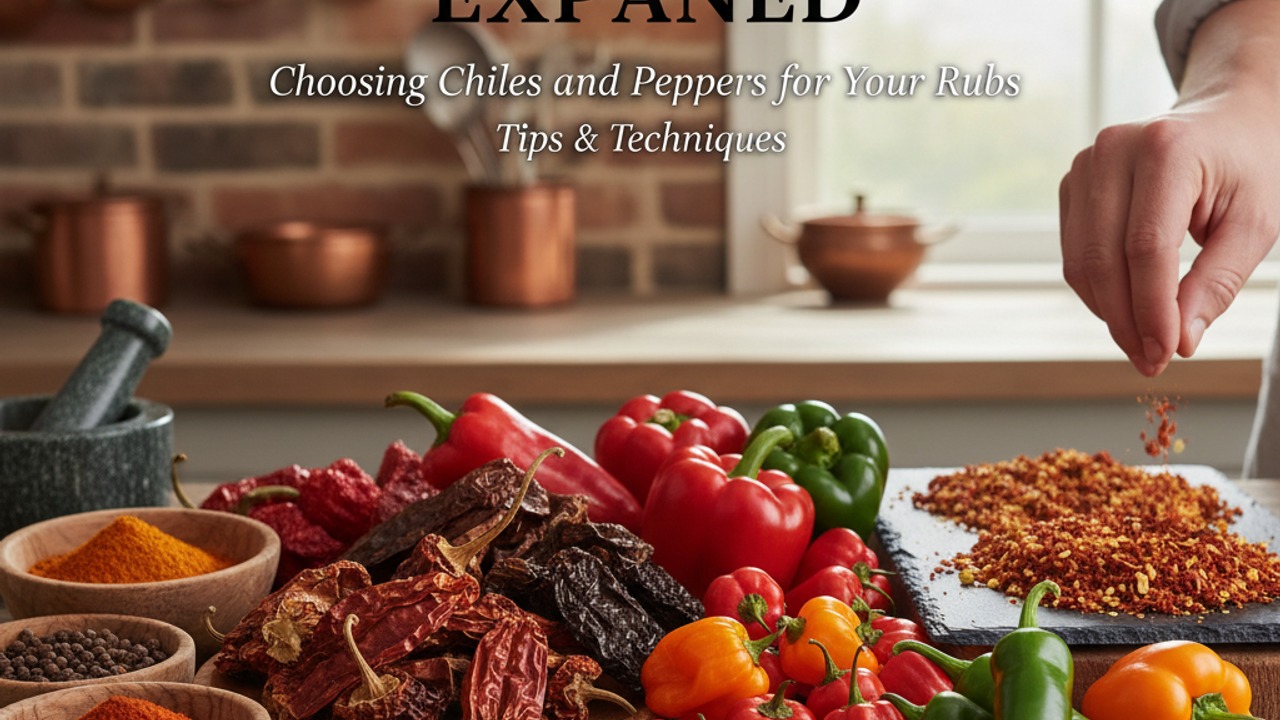
  • Poblano / Ancho (dried poblano): 1,000–2,000 SHU. Mild, rich, earthy and slightly sweet. Ancho is indispensable in Mexican-style rubs for depth without too much heat.
  • Pasilla: 1,000–2,500 SHU. Deep, raisin-like chocolate notes—great for dark rubs on beef/pork.
  • Guajillo: 2,500–5,000 SHU. Tangy, fruity and slightly smoky—works brilliantly for pork and poultry.
  • Chipotle (smoked, dried jalapeño): 2,500–8,000 SHU. Smoky with a moderate heat; an easy way to add smoke without smoking wood.
  • Jalapeño: 2,500–8,000 SHU. Fresh, grassy, and bright—good for salsas or quick wet rubs.
  • Serrano: 10,000–25,000 SHU. Brighter and sharper than jalapeño; use for more immediate heat.
  • Cayenne: 30,000–50,000 SHU. Neutral, straightforward heat—great as a measured heat booster.
  • Thai bird’s eye: 50,000–100,000 SHU. Fruity, sharp—best in blends for Southeast Asian-inspired rubs.
  • Habanero / Scotch bonnet: 100,000–350,000 SHU. Floral, fruity but intense—use sparingly in Caribbean rubs.
  • Aleppo / Urfa Biber: 500–2,500 SHU. Slightly tangy, raisiny, and mildly fruity—fantastic for Mediterranean-style rubs.
  • Gochugaru: 1,500–5,000 SHU. Korean red pepper flakes: smoky-sweet and flaky—ideal for coarse rubs and finishing.
  • Sichuan pepper: not a capsaicin chile; it’s a numbing citrusy spice—use sparingly as a complementary sensation, not for heat.

Form and treatment: fresh, dried, smoked, flake, powder

How you buy and treat chiles affects flavor:

  • Whole dried pods: toast gently to bloom oils, then grind for fresh depth.
  • Dried flakes (gochugaru, Aleppo): bring texture and a softer heat; they’re great for rubs meant to adhere.
  • Powdered chiles: consistent and easy to measure, but lose aroma faster—store well.
  • Smoked chiles (chipotle, smoked paprika): add instant smoke note without wood.
  • Fresh chiles: best for pastes or wet rubs; rehydrate dried chiles to coax out fruitiness.

Practical tip: toast whole or flake chiles in a dry skillet for 30–60 seconds until aromatic—don’t burn. Toasting unlocks volatile oils and deepens flavor.

Balancing heat in a rub: flavor partners

Heat without balance is just hot. Use these pairings:

  • Sweetness: brown sugar, maple, or honey powder to temper sharp chiles.
  • Acidity: citrus zest, vinegar powder, or sumac to lift and cut richness.
  • Umami: soy powder, mushroom powder, or anchovy powder for depth with beef/pork.
  • Smoke/salt: smoked salt or sotol for complexity; remember salt sharpens perception of heat.
  • Fat: butter or oil in a binder will carry flavor and soften extreme heat on the palate.

Practical rub formulas (per ~1/2 cup) — mild, medium, hot

Mild — Ancho & Paprika Rub

  • 3 tbsp ancho chile powder
  • 2 tbsp smoked paprika
  • 2 tbsp brown sugar
  • 1 tbsp kosher salt
  • 1 tsp garlic powder
  • 1/2 tsp black pepper

Use: Pork shoulder, chicken. Apply 1–2 hours before grilling or overnight for deeper flavor.

Medium — Chipotle-Cumin Rub

  • 2 tbsp chipotle powder
  • 2 tbsp ground cumin
  • 2 tbsp brown sugar
  • 1 tbsp kosher salt
  • 1 tsp onion powder
  • 1/2 tsp cayenne (optional for more kick)

Use: Brisket, flank steak, ribs. Make a paste with a little oil or mustard for a stickier bark.

Hot — Caribbean Jerk-Style Dry Rub

  • 1 tbsp habanero powder or 1/2–1 whole dried habanero rehydrated & minced (adjust to tolerance)
  • 2 tbsp allspice ground
  • 2 tbsp thyme
  • 2 tbsp brown sugar
  • 1 tbsp kosher salt
  • 1 tsp cinnamon
  • 1 tsp nutmeg

Use: Chicken, pork. If using fresh habanero, incorporate into a wet marinade instead of a dry rub to distribute heat evenly.

Adjust salt and sugar to taste, and remember you can always add heat later with cayenne or pepper flakes, but you can’t easily remove it.
Application and grilling tips

  • For dry rubs on large cuts: apply at least 2–4 hours ahead (overnight is ideal) to let flavors penetrate. For thin cuts, 15–30 minutes is often enough.
  • Binders: mustard, oil, or yogurt help rubs cling and promote even crust formation.
  • Sugar caution: rubs with lots of sugar will caramelize quickly; grill with indirect heat to avoid burning the crust before the interior cooks.
  • Smoking synergy: using a smoked chile (chipotle, smoked paprika) plus wood smoke can be redundant—use both carefully to avoid overpowering.
  • Finish with fresh elements: a squeeze of lime, chopped herbs, or a sprinkling of flaky salt brightens chiles and rounds the dish.

Storing and sourcing

  • Whole dried pods or flakes keep longest—store in airtight containers in a cool, dark place.
  • Ground chiles lose aroma faster; use within 6–12 months for best flavor.
  • Buy small batches or from ethnic markets for fresher, region-specific varieties (Hatch chiles, Aleppo, gochugaru).

Takeaway: think global, grill local

Chiles are more than heat—they’re cultural flavor carriers. By understanding each pepper’s heat profile and flavor fingerprint (and how drying, smoking, or toasting changes that), you can design rubs that reflect global trends—Mexican ancho-deepness, Korean gochugaru brightness, Caribbean habanero-fruitiness—while still matching the cut and cooking method. Start conservative with heat, build layers of flavor with sweet/acid/umami, and let the grill do the rest.

Try the recipes above, then experiment: swap ancho for pasilla, try gochugaru in a pork rub, or finish grilled fish with a whisper of Aleppo. Your rubs will get bolder, more balanced, and uniquely yours.

Comments

Leave a comment

0/2000

No comments yet — be the first to share your thoughts.

Keep exploring

More to read

All articles →