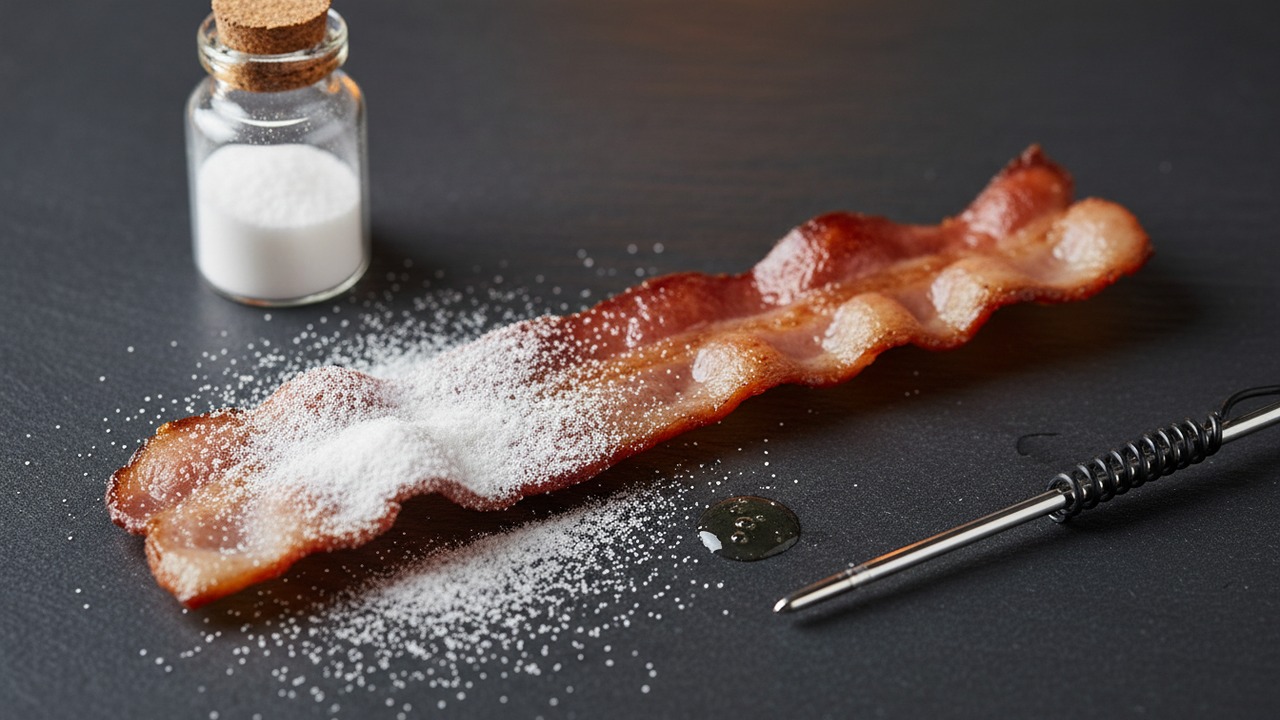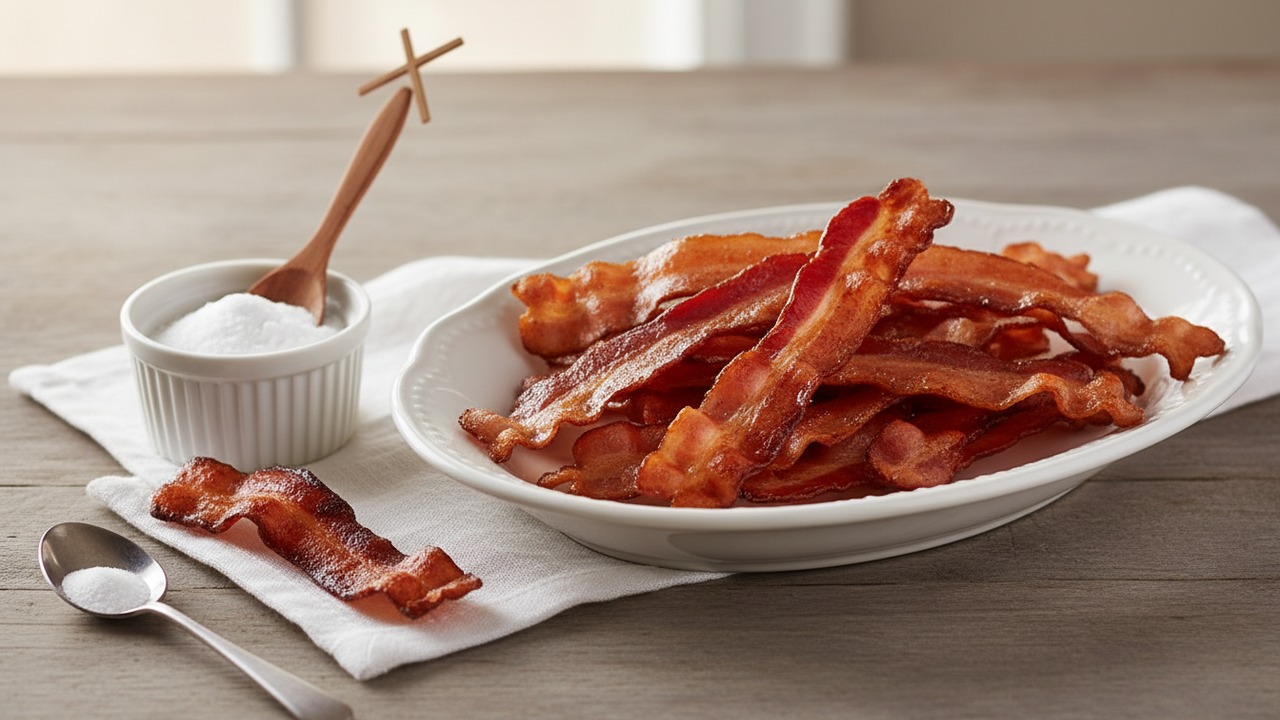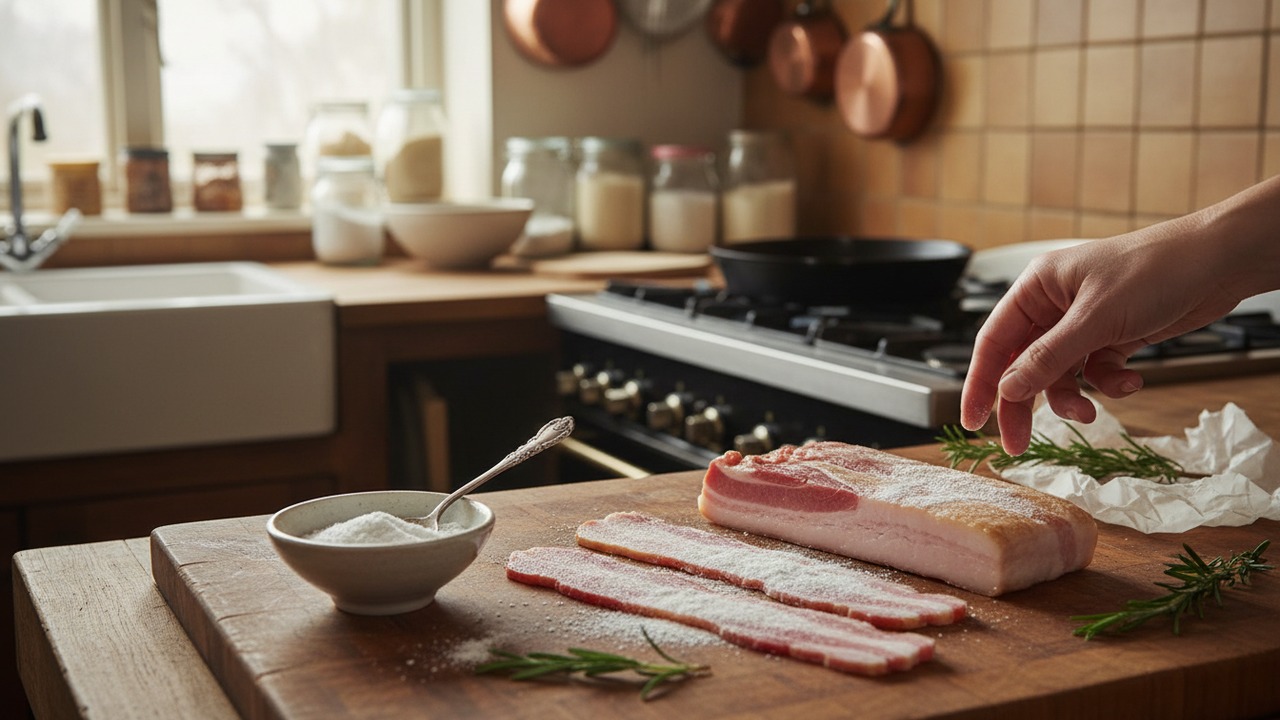
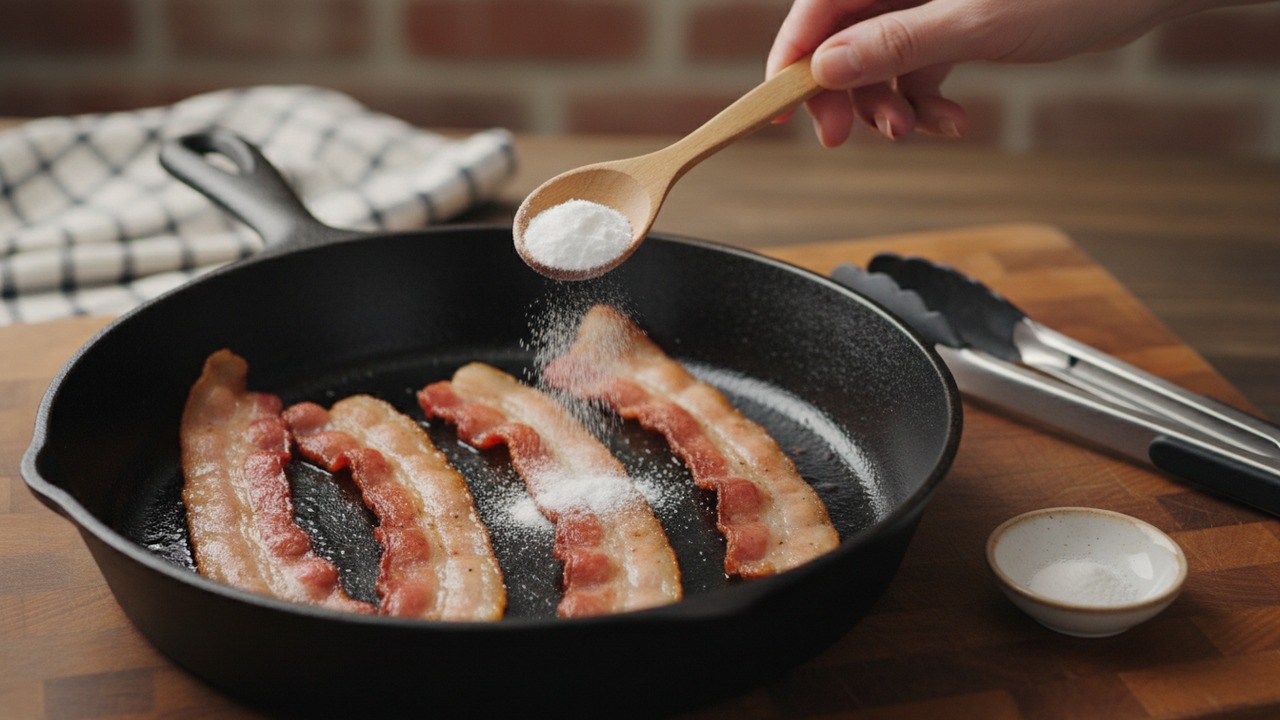
Short answer: yes — but only up to a point. Sprinkling a very small amount of baking soda on bacon can produce a noticeable difference in browning and edge crispness for some cooks, especially when the bacon is thin and the cooking method encourages rapid surface drying (broiling or a very hot pan). The change is usually modest: crisper edges, slightly darker surface color, and a bit less curling.
Where it shows up most is on thin slices and when you’re cooking direct, high heat. Thick-cut bacon, or slabs that start wet from brine or rinsing, tend to hide the effect because the interior fat and water dominate how the strip behaves. Similarly, long, gentle renders in the oven mask small surface tweaks; the baking soda is most obvious during quick, high-temperature browning.
There are clear caveats: the benefit is small for many home cooks, and misuse can produce off-notes or a soapy taste if you use too much. For many people, reliable methods like a low-and-slow oven, careful pan rendering, or even a broiler will give better, more consistent crispness without the risk. Treat baking soda as a light experimental nudge, not a guaranteed upgrade.