Pan-Seared Duck Breast
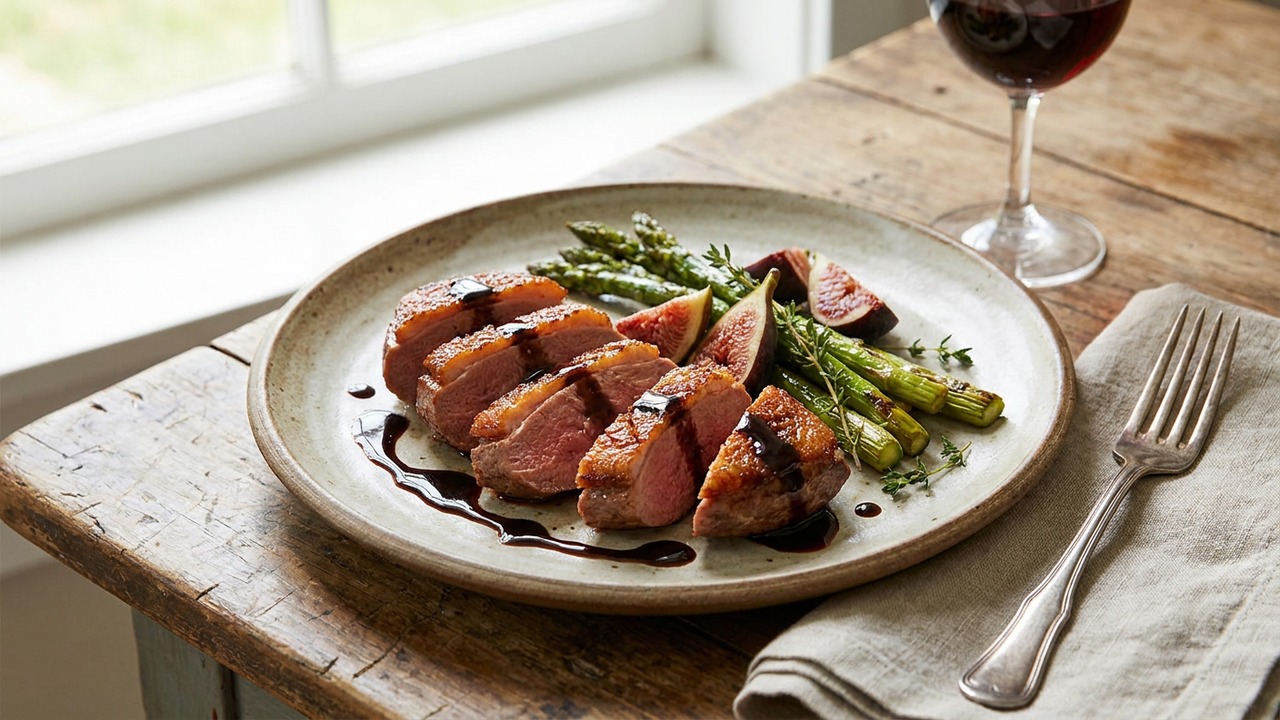
Crispy-skinned pan-seared duck breast with a glossy balsamic pan sauce. Quick to cook on the stovetop, it yields a tender, medium-rare interior and a rich, flavorful sauce that finishes the dish.
Jake Woods's note
"Duck is such an elegant dish, but not difficult to craft a masterpiece dinner."
About This Recipe
This pan-seared duck breast is all about contrast: the skin rendered until glassy and crisp, against a tender, rosy center, finished with a glossy balsamic pan sauce that ties savory, sweet, and herbal notes together. Scoring the skin, cooking slowly at first, and using the rendered fat as the flavor base are the small moves that make a big difference — they produce crackling texture without overcooking the meat. The garlic and thyme aromatics perfume the fat so every bite has an undercurrent of warmth, and whisking cold butter into the reduced stock and vinegar gives the sauce a silky sheen that clings perfectly to sliced medallions.
This version is pragmatic and approachable: it demands attention at the stove for 20 minutes, but no special equipment beyond a heavy skillet and an instant-read thermometer. It’s ideal for a two-person dinner, a simple date-night centerpiece, or whenever you want something that feels composed without fuss. You’ll also end up with a few tablespoons of rendered duck fat that’s worth saving for roasted potatoes or sautéed greens — a small payoff that extends the dish’s value beyond the plate.
Ingredients for Pan-Seared Duck Breast
- 2 breasts Duck breasts (skin-on, boneless)
- 1 tsp Kosher salt
- 1/2 tsp Freshly ground black pepper
- 1 tbsp Olive oil
- 2 cloves Garlic, smashed
- 4 sprigs Fresh thyme
- 2 tbsp Balsamic vinegar
- 1/3 cup Low-sodium chicken stock
- 2 tbsp Unsalted butter, cold and cubed
How to Make Pan-Seared Duck Breast
Step 1: Prepare and season the duck
Trim any excess fat from the edges and pat the duck breasts dry with paper towels. Using a sharp knife, lightly score the skin in a diagonal crosshatch without cutting into the flesh, then season both sides generously with kosher salt and freshly ground black pepper.For this step
- 2 breastsDuck breasts (skin-on, boneless)
- 1 tspKosher salt
- 1/2 tspFreshly ground black pepper
Step 2: Render the fat and sear
Place a large heavy skillet (preferably cast iron) over medium-low heat and add the olive oil. Put the duck breasts skin-side down and cook slowly for 8–10 minutes until much of the fat has rendered and the skin is deep golden and crisp; add the smashed garlic and thyme to the pan during the last 2 minutes to flavor the fat. Flip the breasts and cook meat-side down 2–3 minutes for medium-rare (adjust 1–2 minutes more for medium), then remove to a cutting board to rest for 6–8 minutes.For this step
- 1 tbspOlive oil
- 2 clovesGarlic, smashed
- 4 sprigsFresh thyme
Step 3: Make the balsamic pan sauce
Pour off excess fat from the skillet, leaving about 1 tablespoon and the aromatics, then increase heat to medium-high. Add the balsamic vinegar and scrape up browned bits, then pour in the chicken stock and reduce until slightly syrupy, about 2–3 minutes. Remove from heat and whisk in the cold cubed butter one piece at a time to create a glossy sauce; taste and adjust seasoning if needed.For this step
- 2 tbspBalsamic vinegar
- 1/3 cupLow-sodium chicken stock
- 2 tbspUnsalted butter, cold and cubed
Step 4: Slice the duck
Using a sharp carving or chef's knife, slice the rested duck breasts thinly at a slight angle against the grain to produce tender medallions. Arrange slices on warmed plates to retain heat.Step 5: Serve with sauce
Spoon the warm balsamic pan sauce over the sliced duck and garnish with a sprig of thyme if desired. Serve immediately alongside your choice of sides—roasted vegetables, mashed potatoes, or a simple salad work well.


- Trim any excess fat from the edges and pat the duck breasts dry with paper towels. Using a sharp knife, lightly score the skin in a diagonal crosshatch without cutting into the flesh, then season both sides generously with kosher salt and freshly ground black pepper.
- Place a large heavy skillet (preferably cast iron) over medium-low heat and add the olive oil. Put the duck breasts skin-side down and cook slowly for 8–10 minutes until much of the fat has rendered and the skin is deep golden and crisp; add the smashed garlic and thyme to the pan during the last 2 minutes to flavor the fat. Flip the breasts and cook meat-side down 2–3 minutes for medium-rare (adjust 1–2 minutes more for medium), then remove to a cutting board to rest for 6–8 minutes.
- Pour off excess fat from the skillet, leaving about 1 tablespoon and the aromatics, then increase heat to medium-high. Add the balsamic vinegar and scrape up browned bits, then pour in the chicken stock and reduce until slightly syrupy, about 2–3 minutes. Remove from heat and whisk in the cold cubed butter one piece at a time to create a glossy sauce; taste and adjust seasoning if needed.
- Using a sharp carving or chef's knife, slice the rested duck breasts thinly at a slight angle against the grain to produce tender medallions. Arrange slices on warmed plates to retain heat.
- Spoon the warm balsamic pan sauce over the sliced duck and garnish with a sprig of thyme if desired. Serve immediately alongside your choice of sides—roasted vegetables, mashed potatoes, or a simple salad work well.
Pan-Seared Duck Breast Tips
Score the skin
Light, diagonal crosshatches let fat render evenly and prevent the breast from shrinking; avoid cutting into the meat or score too deeply.
Render slowly on low
Start skin-side down over medium-low heat so the fat melts out without burning; patience produces deep color and crispness rather than a charred exterior.
Use an instant thermometer
For reliably medium-rare aim for 125–130°F (52–54°C) when you flip, allowing carryover to reach about 135°F; this prevents overcooking while the sauce forms.
Whisk in cold butter
Add cubed cold butter off the heat one piece at a time to emulsify the sauce and give it a glossy finish; do not boil after adding butter or it may break.
Reserve the duck fat
Pour leftover rendered fat into a jar once cooled and refrigerate for up to a month; it’s superb for roasting potatoes or frying eggs.
Pan-Seared Duck Breast Variations and Substitutions
Orange-balsamic twist
Add 1 tbsp orange juice and a strip of zest when deglazing for a citrus-accented glaze that pairs beautifully with duck’s richness.
Red-wine pan sauce
Substitute equal parts dry red wine for the balsamic and reduce by half before adding stock for a deeper, more savory sauce.
Dairy-free finish
Skip the butter and finish the reduction with a tablespoon of rendered duck fat and a splash of extra stock for shine and richness without dairy.
Asian-inspired glaze
Replace balsamic with 1½ tbsp soy sauce and 1 tbsp rice vinegar, add a teaspoon of honey and a splash of sesame oil for a savory-sweet umami glaze.
How to Store and Make Pan-Seared Duck Breast Ahead
Store cooked, sliced duck and the pan sauce separately in airtight containers in the refrigerator for up to 2 days. Reheat gently: warm slices briefly in a skillet over low heat or nestle under a low oven (250°F/120°C) until just warmed through; reheat sauce slowly on the stovetop and whisk to reincorporate if it has separated. Avoid microwaving the duck, which can toughen the meat, and do not freeze previously sauced duck if you care about texture — freeze only the meat without sauce if needed.
What to Serve With Pan-Seared Duck Breast
Serve sliced duck fanned on a warmed plate and spoon the glossy balsamic sauce over the top, finishing with a sprig of thyme or a few orange segments for brightness. Pair with creamy mashed potatoes or parsnip purée to soak up the sauce, roasted root vegetables for earthiness, or a simple peppery arugula salad to cut the richness. For drinks, choose a medium-bodied Pinot Noir or a fruit-forward Syrah; brighter whites like Gewürztraminer also stand up to the sauce’s sweet-tangy character.
Pan-Seared Duck Breast FAQs
How can I tell when the duck is done?
Use an instant-read thermometer for best results — 125–130°F (52–54°C) when meat-side down gives medium-rare after resting; expect carryover of about 5–10°F. If you don’t have a thermometer, the breast should feel springy but not hard when pressed.
What if the skin won’t crisp?
If the skin is still soft after rendering, increase heat slightly toward the end and press gently with a spatula to ensure even contact, but watch carefully to avoid burning; remove excess fat first so the skin can crisp in dry heat.
Can I make the pan sauce ahead of time?
Yes — you can make and refrigerate the reduced balsamic stock without the butter for up to 2 days; reheat gently and whisk in cold butter at the last minute to revive gloss and texture.
Do I need to remove all the fat from the skillet before making the sauce?
No — leave about 1 tablespoon with the aromatics to carry flavor into the sauce, then pour off the rest; too much fat will prevent the reduction from thickening properly.
Can I use frozen duck breasts?
Thaw them completely and pat very dry before scoring and seasoning; partial thawing can trap moisture against the skin and prevent proper browning and crisping.
About the author
Jake WoodsHello, I'm Jake. I started this recipe site with the idea that I hated recipe websites that overwhelm you with long stories and ads just to see plain content that's not helpful. My goal is to provide you with quality recipes, simple ideas and a fun cooking experience. There's lots of fun things to cook, and I think as you browse the site you'll find that TopShelf.Recipes is the place for quality recipes on the web.
See all recipes by Jake Woods →Ratings & Reviews
Did you make this recipe?
Be the first to share your experience.
Nutrition Facts
Per serving: 1 breast
Nutrition values are estimated from USDA ingredient data and may vary based on preparation, brands, and portion sizes. Values are provided for informational purposes only.
Keep Reading
Guides & articles for this recipe

Healthy Eating
Gluten-Free Weeknight Grilling Plan
A 7-day gluten-free weeknight grilling plan with quick, family-friendly recipes, prep-ahead timelines, and a printable shopping list that spotlights late-summer produce and pantry staples. Includes clear cross-contamination safety tips and simple swaps to keep dinners fast and crowd-pleasing.

Healthy Eating
Low-Fat Grill Swaps for Big Flavor
A practical guide to trimming fat from grilled meals without losing juiciness or char. Learn yogurt- and citrus-based marinades, lean protein picks, searing and indirect-heat tricks, plus 5 quick low-fat marinades and a simple weeknight plan.

Recipes
DIY Edible Monster Eyes Candy
Make safe, fun edible monster eyes for cupcakes, cookies, and candy trays. Step-by-step recipes show baking-soda balls, chocolate and fondant eyes, wafer-print options, plus assembly, storage, and kid-friendly safety tips.
More from Stovetop
View all Stovetop recipes →
One-Pot Beef Bolognese

Stovetop Dutch-Oven Herb-Crusted Beef Roast with Pan Gravy

Dubai Tacos

Italian-Style Pot Roast with Tomatoes Olives and Fresh Herbs

Labor Day Grilled Lobster Rolls with Charred Scallion Brown Butter & Lemon‑Herb Aioli

Hainanese Chicken Rice

Pad Krapow Pork

Twice-Fried Restaurant Style Crispy Sweet Potato Fries (Stovetop Deep Fry)

Xiao Long Bao Soup Dumplings
Ask me anything about this recipe — substitutions, scaling, techniques, timing.
Powered by AI · 6 questions per 5 minutes, 30 per day