Xiao Long Bao Soup Dumplings
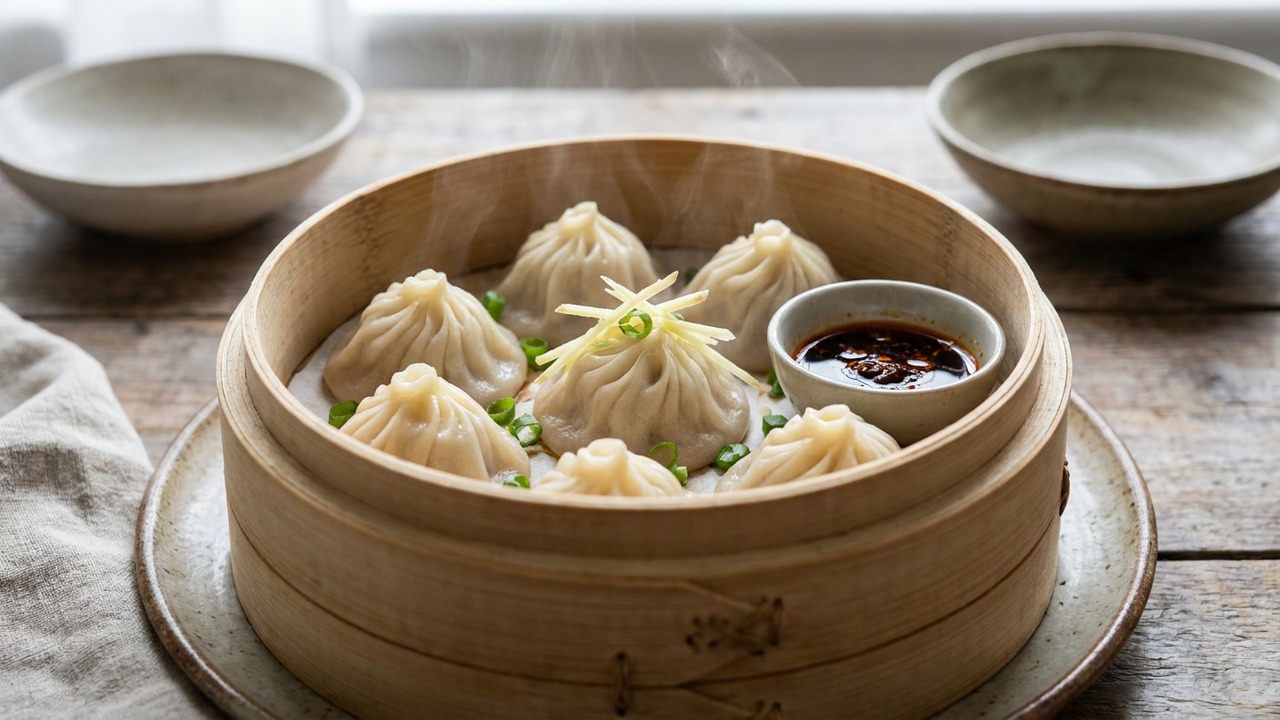
Xiao Long Bao are delicate Shanghai soup dumplings: thin-skinned parcels of seasoned pork that encase a savory, gelatinized broth that melts to a steaming soup when steamed. This stovetop recipe walks through making the aspic, tender hot-water dough, and the sticky pork filling so you can master these dim sum classics at home.
Ingredient Spotlight
Shaoxing wine
Shaoxing wine is a traditional Chinese fermented rice wine from the Shaoxing region, commonly used in Chinese marinades, braises, and stir-fries. It has a deep amber color with a savory, slightly sweet, nutty and umami-rich aroma—more robust and less sweet than Japanese mirin. You can find it in Asian grocery stores or the international aisle of many supermarkets; a good substitute is dry sherry (or dry sherry plus a pinch of sugar) or, if needed, Japanese sake, but avoid using mirin alone because it is much sweeter.
Jake Woods's note
"This recipe rewards patience: the chilled aspic and time spent developing the filling texture are what create authentic soup dumplings. It shines for weekend projects, dinner parties, or when you want to impress with a classic from scratch."
About This Recipe
Xiao Long Bao are a study in contrasts: wafer-thin dough that yields to the gentlest bite, a savory pork filling that is firm yet tender, and a pocket of gelatinized broth that transforms into steaming soup the moment the dumpling is pierced. This recipe focuses on three elements that make or break the experience at home—the clarity and seasoning of the aspic, a pliable hot-water dough that rolls paper-thin without tearing, and a pork mix beaten to a cohesive, springy texture so it holds the soup. I lean on Shaoxing wine, white pepper, and scallion for an authentic backbone, and I keep the seasoning straightforward to let the broth and pork sing.
This is a hands-on project that rewards patience and repetition more than precision instruments. Expect to spend most of the time on chilling the aspic and practicing pleats; the steaming itself is short. If you love rituals and the small satisfactions of craft, mastering these soup dumplings will change how you think about weeknight cooking and weekend gatherings alike—your guests will remember the first wobble of those hot, savory gulps of soup as much as the dumpling that delivered them.
Ingredients for Xiao Long Bao Soup Dumplings
- 2 cups All-purpose flour
- 3/4 cup Boiling water
- 1 lb Ground pork (80/20)
- 3 cups Low-sodium chicken stock
- 3 tsp Unflavored gelatin
- 2 tbsp Fresh ginger, minced
- 1 tbsp Shaoxing wine
- 2 tbsp Scallions, finely chopped
- 1 batch Seasoning mix: light soy sauce (1 tbsp), sesame oil (1 tsp), salt (1 tsp), white pepper (1/4 tsp)
How to Make Xiao Long Bao Soup Dumplings
Step 1: Make and chill the aspic (gelatinized stock)
Whisk the unflavored gelatin into 1/2 cup of the cold chicken stock to bloom, then heat the remaining stock to a simmer and stir in the bloomed gelatin until fully dissolved. Pour the hot stock into a shallow container, cool to room temperature, then chill until firm (at least 2 hours or overnight). Once set, cut the aspic into small 1/4-inch (6 mm) cubes and keep chilled until assembly.For this step
- 3 cupsLow-sodium chicken stock
- 3 tspUnflavored gelatin
Step 2: Make the hot-water dough and rest
Place the flour in a bowl and gradually pour the boiling water while stirring with a fork until shaggy dough forms; when cool enough to handle, knead on a lightly floured surface until smooth (about 6–8 minutes). Cover the dough with plastic wrap or a damp towel and let it rest for 30 minutes to relax the gluten, which makes rolling wrappers easier.For this step
- 2 cupsAll-purpose flour
- 3/4 cupBoiling water
Step 3: Prepare the pork filling and incorporate aspic
Combine the ground pork, minced ginger, Shaoxing wine, chopped scallions and the seasoning mix in a large bowl. Mix vigorously (fold and slap method or beat for 3–5 minutes) until the mixture becomes sticky and cohesive, then gently fold in the chilled aspic cubes so they are evenly distributed; refrigerate the filling for 15–30 minutes to firm slightly for easier wrapping.For this step
- 1 lbGround pork (80/20)
- 2 tbspFresh ginger, minced
- 1 tbspShaoxing wine
- 2 tbspScallions, finely chopped
- 1 batchSeasoning mix: light soy sauce (1 tbsp), sesame oil (1 tsp), salt (1 tsp), white pepper (1/4 tsp)
Step 4: Divide dough, roll wrappers, and assemble dumplings
Divide the rested dough into 24 equal pieces and roll each into a small ball; flatten and roll each ball into a thin round (about 3 inches/7–8 cm) with the center slightly thicker. Place about 1 tablespoon of filling into the center of a wrapper, pleat the edge with 18–22 small folds while rotating the wrapper, and pinch to seal the top tightly, making sure no gaps remain so the soup stays inside.Step 5: Steam the xiao long bao and serve
Line a bamboo or metal steamer with parchment (poke small holes) or cabbage leaves and arrange dumplings with a bit of space between them. Steam over rapidly boiling water, covered, for 8–10 minutes until pork is cooked through and soup is hot; rest 1 minute before opening the lid to avoid condensation dripping on dumplings. Serve hot with black vinegar and julienned ginger or your preferred dipping sauce.


- Whisk the unflavored gelatin into 1/2 cup of the cold chicken stock to bloom, then heat the remaining stock to a simmer and stir in the bloomed gelatin until fully dissolved. Pour the hot stock into a shallow container, cool to room temperature, then chill until firm (at least 2 hours or overnight). Once set, cut the aspic into small 1/4-inch (6 mm) cubes and keep chilled until assembly.
- Place the flour in a bowl and gradually pour the boiling water while stirring with a fork until shaggy dough forms; when cool enough to handle, knead on a lightly floured surface until smooth (about 6–8 minutes). Cover the dough with plastic wrap or a damp towel and let it rest for 30 minutes to relax the gluten, which makes rolling wrappers easier.
- Combine the ground pork, minced ginger, Shaoxing wine, chopped scallions and the seasoning mix in a large bowl. Mix vigorously (fold and slap method or beat for 3–5 minutes) until the mixture becomes sticky and cohesive, then gently fold in the chilled aspic cubes so they are evenly distributed; refrigerate the filling for 15–30 minutes to firm slightly for easier wrapping.
- Divide the rested dough into 24 equal pieces and roll each into a small ball; flatten and roll each ball into a thin round (about 3 inches/7–8 cm) with the center slightly thicker. Place about 1 tablespoon of filling into the center of a wrapper, pleat the edge with 18–22 small folds while rotating the wrapper, and pinch to seal the top tightly, making sure no gaps remain so the soup stays inside.
- Line a bamboo or metal steamer with parchment (poke small holes) or cabbage leaves and arrange dumplings with a bit of space between them. Steam over rapidly boiling water, covered, for 8–10 minutes until pork is cooked through and soup is hot; rest 1 minute before opening the lid to avoid condensation dripping on dumplings. Serve hot with black vinegar and julienned ginger or your preferred dipping sauce.
Xiao Long Bao Soup Dumplings Tips
Bloom gelatin properly
Use cold stock to bloom the gelatin first, then stir it into simmering stock so it dissolves fully and yields a clear, firm aspic when chilled.
Chill the aspic thoroughly
Let the aspic become fully set and very cold before dicing; slightly firm cubes are easiest to distribute without melting into the meat.
Perfect hot-water dough
Work with boiling water to gelatinize some starches—this yields a silky, stretchable dough that relaxes after a 30-minute rest and rolls much thinner without snapping back.
Pleating technique priority
Keep your thumbs in the center while making 18–22 small, overlapping pleats and pinch firmly at the top to prevent leaks; practice on a few wrappers first.
Steam on high heat
Steam over rapidly boiling water so the dumplings cook quickly and evenly; rest one minute after turning off to avoid tearing from sudden condensation.
Xiao Long Bao Soup Dumplings Variations and Substitutions
Pork and Crab
Fold 20–30% lump crabmeat into the pork for a classic Shanghai-style luxury: the sweet crab brightens the broth and pairs beautifully with black vinegar.
Chicken or Turkey Filling
Use ground dark-meat chicken or turkey in place of pork and increase the gelatin in the aspic slightly for the same mouthfeel, while boosting Shaoxing and white pepper for depth.
Mushroom Vegetarian
Make a rich vegetable stock with dried shiitake and kombu, gel it with agar agar (adjust for firm set), and use finely minced, sautéed shiitake and firm tofu as the filling.
Shortcut: Store Wrappers
If you’re short on time, use high-quality store-bought xiao long bao or gyoza wrappers; choose the thinnest available and reduce filling to 3/4 tablespoon to avoid overstuffing.
How to Store and Make Xiao Long Bao Soup Dumplings Ahead
These are best eaten fresh; cooked xiao long bao will lose steam and texture after refrigeration. Store leftover steamed dumplings in an airtight container in the fridge for up to 48 hours, and reheat by steaming for 4–6 minutes until piping hot. For longer storage, freeze unsteamed assembled dumplings on a tray, then transfer to a bag; steam from frozen for 10–12 minutes without thawing.
What to Serve With Xiao Long Bao Soup Dumplings
Serve with traditional black Chinkiang vinegar and a mound of julienned raw ginger; provide small dipping bowls and spoons so diners can catch escaped soup. Pair with light jasmine tea or a crisp lager to cut richness, and offer a simple side like warm scallion pancakes or quick cucumber salad for textural contrast.
Xiao Long Bao Soup Dumplings FAQs
Why did my wrappers tear while filling?
Tearing usually means the dough was rolled too thin at the edges or the filling was overstuffed; keep the center slightly thicker and use about 1 tablespoon of filling so you can pleat without stretching the edges.
My aspic melted before assembly — what went wrong?
If the aspic is soft, your bowl or room may be too warm; return it to the fridge until very firm and keep a chilled work surface or tray nearby while you assemble to minimize melting.
How can I tell when the dumplings are cooked through?
Steam until the wrapper becomes semi-translucent and the filling no longer looks raw—usually 8–10 minutes; the internal broth should be bubbling hot if the aspic fully melted and the meat reached safe temperature.
Can I make the filling ahead?
Yes—prepare the seasoned pork and fold in chilled aspic up to a day ahead, keeping it refrigerated; rest on the coldest shelf and bring out just long enough to fill wrappers so the aspic remains solid.
Is there a quick way to practice pleating?
Practice with a small amount of flour and scrap dough, or make a few test dumplings with water or mashed potato filling—the motion is the point, and muscle memory forms after a dozen pleats.
About the author
Jake WoodsHello, I'm Jake. I started this recipe site with the idea that I hated recipe websites that overwhelm you with long stories and ads just to see plain content that's not helpful. My goal is to provide you with quality recipes, simple ideas and a fun cooking experience. There's lots of fun things to cook, and I think as you browse the site you'll find that TopShelf.Recipes is the place for quality recipes on the web.
See all recipes by Jake Woods →Ratings & Reviews
Did you make this recipe?
Be the first to share your experience.
Nutrition Facts
Per serving: 1 serving
Nutrition values are estimated from USDA ingredient data and may vary based on preparation, brands, and portion sizes. Values are provided for informational purposes only.
Keep Reading
Guides & articles for this recipe

Healthy Eating
Gluten-Free Weeknight Grilling Plan
A 7-day gluten-free weeknight grilling plan with quick, family-friendly recipes, prep-ahead timelines, and a printable shopping list that spotlights late-summer produce and pantry staples. Includes clear cross-contamination safety tips and simple swaps to keep dinners fast and crowd-pleasing.

Healthy Eating
Low-Fat Grill Swaps for Big Flavor
A practical guide to trimming fat from grilled meals without losing juiciness or char. Learn yogurt- and citrus-based marinades, lean protein picks, searing and indirect-heat tricks, plus 5 quick low-fat marinades and a simple weeknight plan.

Recipes
DIY Edible Monster Eyes Candy
Make safe, fun edible monster eyes for cupcakes, cookies, and candy trays. Step-by-step recipes show baking-soda balls, chocolate and fondant eyes, wafer-print options, plus assembly, storage, and kid-friendly safety tips.
More from Stovetop
View all Stovetop recipes →
One-Pot Beef Bolognese

Stovetop Dutch-Oven Herb-Crusted Beef Roast with Pan Gravy

Dubai Tacos

Italian-Style Pot Roast with Tomatoes Olives and Fresh Herbs

Labor Day Grilled Lobster Rolls with Charred Scallion Brown Butter & Lemon‑Herb Aioli

Hainanese Chicken Rice

Pad Krapow Pork

Twice-Fried Restaurant Style Crispy Sweet Potato Fries (Stovetop Deep Fry)

Beef Stew with Dumplings
Ask me anything about this recipe — substitutions, scaling, techniques, timing.
Powered by AI · 6 questions per 5 minutes, 30 per day