One-Pot Beef Bolognese
A reliable, easy one-pot take on classic Bolognese that cooks the pasta right in the sauce for minimal cleanup. Rich, savory ground beef and tomatoes simmer with aromatics until thick and comforting—perfect for busy weeknights.
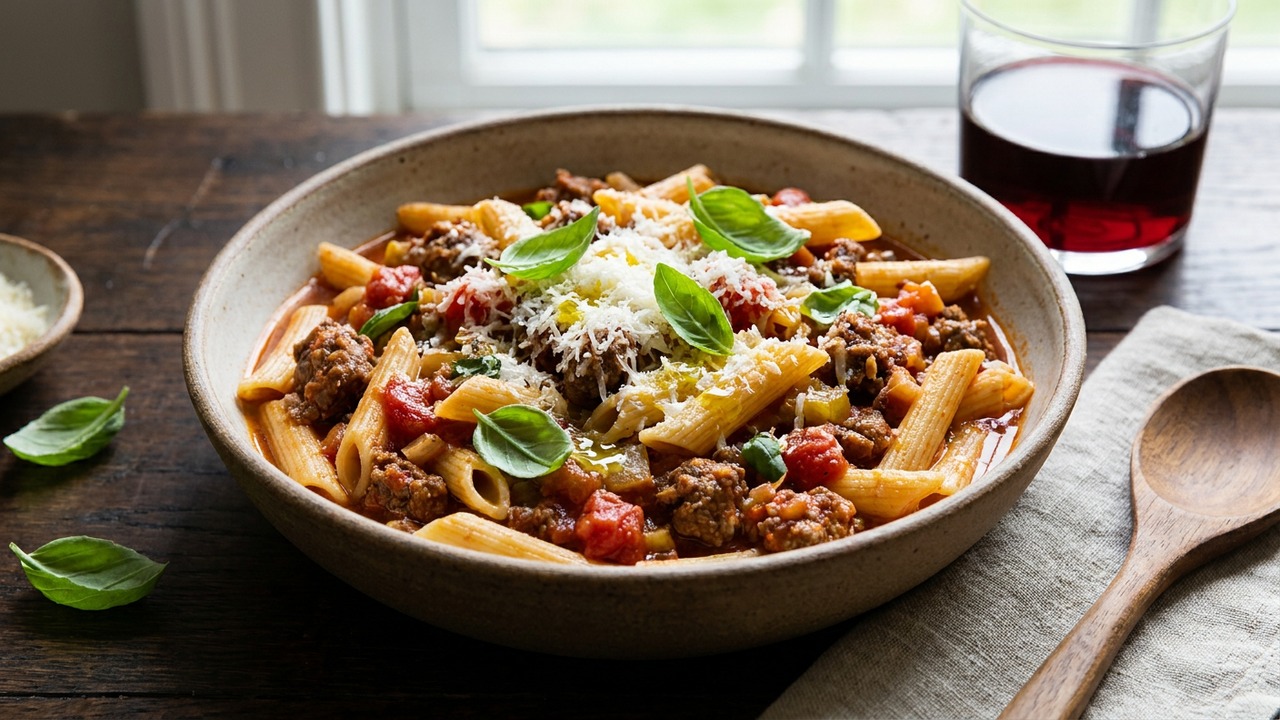
About This Recipe
This one-pot beef Bolognese is a practical shortcut that keeps the spirit of the slow-cooked classic while shaving hours off the clock and saving on cleanup. Ground 80/20 beef gives the sauce a gently unctuous mouthfeel and browned edges that carry savory, roasted notes; a finely diced carrot contributes just enough sweetness to balance the tomatoes without any added sugar. Cooking the pasta directly in the sauce concentrates flavor into the noodles themselves and results in a glossy, clingy finish that feels more cohesive than ladling sauce over boiled pasta.
What makes this version work is small technique choices: taking the time to caramelize the tomato paste, scraping up those fond bits, and using beef broth to control texture so the sauce reduces to the right thickness as the pasta cooks. It’s built for weeknights—home cooks who want deep flavor with minimal fuss—and also scales well for a simple Sunday meal where you want leftovers that improve after a day in the fridge.
Ingredients for One-Pot Beef Bolognese
- 2 tbsp Olive oil
- 1 lb Ground beef (80/20)
- 1 medium Yellow onion, finely chopped
- 1 medium Carrot, finely diced
- 3 cloves Garlic, minced
- 2 tbsp Tomato paste
- 28 oz (can) Crushed tomatoes (canned)
- 2 cups Beef broth
- 12 oz Dry pasta (spaghetti, linguine, or short pasta)
How to Make One-Pot Beef Bolognese
Step 1: Sweat the aromatics
Heat the olive oil in a large deep skillet or Dutch oven over medium heat. Add the chopped onion and carrot and cook, stirring occasionally, until softened and translucent, about 5–6 minutes, then add the minced garlic and cook 30–60 seconds until fragrant.For this step
- 2 tbspOlive oil
- 1 mediumYellow onion, finely chopped
- 1 mediumCarrot, finely diced
- 3 clovesGarlic, minced
Step 2: Brown the beef and build flavor
Increase heat to medium-high and add the ground beef, breaking it up with a spoon; cook until no longer pink and edges are browned, about 6–8 minutes. Stir in the tomato paste and cook 2–3 minutes to caramelize and deepen the flavor.For this step
- 1 lbGround beef (80/20)
- 2 tbspTomato paste
Step 3: Add tomatoes and broth
Pour in the crushed tomatoes and beef broth and scrape the bottom of the pan to release any browned bits. Bring the mixture to a gentle simmer, then reduce heat slightly and cook uncovered for 8–10 minutes to meld flavors and start to thicken.For this step
- 28 oz (can)Crushed tomatoes (canned)
- 2 cupsBeef broth
Step 4: Cook the pasta in the sauce
Add the dry pasta to the pot, pressing it down so it's submerged in the sauce; add a splash more broth or water if needed to cover. Simmer, stirring occasionally to prevent sticking, until the pasta is al dente and the sauce has thickened, about 8–12 minutes depending on pasta shape.For this step
- 12 ozDry pasta (spaghetti, linguine, or short pasta)
Step 5: Finish, season, and serve
Taste and season with salt and pepper as needed, and let the sauce rest off the heat for a couple minutes to thicken further. Serve hot, optionally topped with grated cheese and a drizzle of olive oil.


- Heat the olive oil in a large deep skillet or Dutch oven over medium heat. Add the chopped onion and carrot and cook, stirring occasionally, until softened and translucent, about 5–6 minutes, then add the minced garlic and cook 30–60 seconds until fragrant.
- Increase heat to medium-high and add the ground beef, breaking it up with a spoon; cook until no longer pink and edges are browned, about 6–8 minutes. Stir in the tomato paste and cook 2–3 minutes to caramelize and deepen the flavor.
- Pour in the crushed tomatoes and beef broth and scrape the bottom of the pan to release any browned bits. Bring the mixture to a gentle simmer, then reduce heat slightly and cook uncovered for 8–10 minutes to meld flavors and start to thicken.
- Add the dry pasta to the pot, pressing it down so it's submerged in the sauce; add a splash more broth or water if needed to cover. Simmer, stirring occasionally to prevent sticking, until the pasta is al dente and the sauce has thickened, about 8–12 minutes depending on pasta shape.
- Taste and season with salt and pepper as needed, and let the sauce rest off the heat for a couple minutes to thicken further. Serve hot, optionally topped with grated cheese and a drizzle of olive oil.
One-Pot Beef Bolognese Tips
Caramelize the tomato paste
Cooking the paste 2–3 minutes after adding concentrates its flavor and removes the raw, tinny edge of canned tomatoes.
Brown beef thoroughly
Let the meat develop brown bits rather than steam; it adds savory depth—use medium-high heat and don't overcrowd the pan.
Use the right pasta
Choose a cut that fits your pot (short shapes or broken long pasta work best) so it submerges evenly and cooks in the sauce.
Stir, but not constantly
Stir occasionally to prevent sticking and to allow starch to thicken the sauce, but avoid over-stirring which can make pasta gluey.
Adjust liquid gradually
Keep extra broth or water nearby and add splashes as needed—it's easier to add more than to correct an overly thin sauce.
One-Pot Beef Bolognese Variations and Substitutions
Classic milk finish
Stir in 1/4–1/2 cup whole milk or cream near the end to round acidity and mimic traditional Bolognese richness.
Turkey or chicken swap
Use ground turkey or chicken for a lighter version; increase the carrot slightly for sweetness and don’t overcook to avoid dryness.
Mushroom-boosted umami
Add 8 oz of finely chopped mushrooms when you brown the beef for extra savory complexity and a meatier texture.
Make it vegetarian
Replace beef with a blend of lentils and diced mushrooms, and use vegetable broth; cook a few minutes longer so lentils absorb the flavors.
How to Store and Make One-Pot Beef Bolognese Ahead
Cool the Bolognese to room temperature, then refrigerate in an airtight container for up to 3–4 days, or freeze portions for up to 2 months. To reheat, warm gently in a skillet over low heat with a splash of broth or water to loosen the sauce and revive the pasta’s texture; finish with fresh herbs and grated cheese.
What to Serve With One-Pot Beef Bolognese
Serve with a simple peppery arugula salad dressed with lemon and olive oil or warm, crusty bread to mop up the sauce. Top each bowl with freshly grated Parmesan or Pecorino and a drizzle of good olive oil; pair with a medium-bodied red like Sangiovese or a cold amber ale to match the savory richness.
One-Pot Beef Bolognese FAQs
My pasta stuck together—what went wrong?
Either the pasta wasn't submerged evenly when you added it or you didn't stir enough in the first few minutes; gently loosen clumps with a wooden spoon and add a splash of broth to separate strands.
Can I use leaner ground beef?
Yes, but leaner meat will yield a less silky sauce and can dry out; if using 90/10 or leaner, add an extra tablespoon of olive oil or a splash of milk toward the end.
How do I control sauce thickness?
Simmer longer to thicken or add extra broth/water to loosen; remember the sauce will tighten as it rests off the heat, so pull it from the stove when it’s slightly thinner than desired.
Will long pasta work in this one-pot method?
Yes, but you may need to break spaghetti or linguine in half so it fits and submerges; tuck and press the strands into the sauce so they soften evenly.
Can I make this ahead for meal prep?
Absolutely—this reheats well and flavors meld overnight; portion into containers and reheat with a splash of broth, adding fresh cheese and herbs after warming.
About the author
Jake WoodsHello, I'm Jake. I started this recipe site with the idea that I hated recipe websites that overwhelm you with long stories and ads just to see plain content that's not helpful. My goal is to provide you with quality recipes, simple ideas and a fun cooking experience. There's lots of fun things to cook, and I think as you browse the site you'll find that TopShelf.Recipes is the place for quality recipes on the web.
See all recipes by Jake Woods →Ratings & Reviews
Did you make this recipe?
Be the first to share your experience.
Nutrition Facts
Per serving: about 1¼ cups
Nutrition values are estimated from USDA ingredient data and may vary based on preparation, brands, and portion sizes. Values are provided for informational purposes only.
Keep Reading
Guides & articles for this recipe

Healthy Eating
Gluten-Free Weeknight Grilling Plan
A 7-day gluten-free weeknight grilling plan with quick, family-friendly recipes, prep-ahead timelines, and a printable shopping list that spotlights late-summer produce and pantry staples. Includes clear cross-contamination safety tips and simple swaps to keep dinners fast and crowd-pleasing.

Healthy Eating
Low-Fat Grill Swaps for Big Flavor
A practical guide to trimming fat from grilled meals without losing juiciness or char. Learn yogurt- and citrus-based marinades, lean protein picks, searing and indirect-heat tricks, plus 5 quick low-fat marinades and a simple weeknight plan.

Recipes
DIY Edible Monster Eyes Candy
Make safe, fun edible monster eyes for cupcakes, cookies, and candy trays. Step-by-step recipes show baking-soda balls, chocolate and fondant eyes, wafer-print options, plus assembly, storage, and kid-friendly safety tips.
More from Stovetop
View all Stovetop recipes →
Stovetop Dutch-Oven Herb-Crusted Beef Roast with Pan Gravy

Dubai Tacos

Italian-Style Pot Roast with Tomatoes Olives and Fresh Herbs

Labor Day Grilled Lobster Rolls with Charred Scallion Brown Butter & Lemon‑Herb Aioli

Hainanese Chicken Rice

Pad Krapow Pork

Twice-Fried Restaurant Style Crispy Sweet Potato Fries (Stovetop Deep Fry)

Xiao Long Bao Soup Dumplings

Beef Stew with Dumplings
Ask me anything about this recipe — substitutions, scaling, techniques, timing.
Powered by AI · 6 questions per 5 minutes, 30 per day