Stovetop Dutch-Oven Herb-Crusted Beef Roast with Pan Gravy
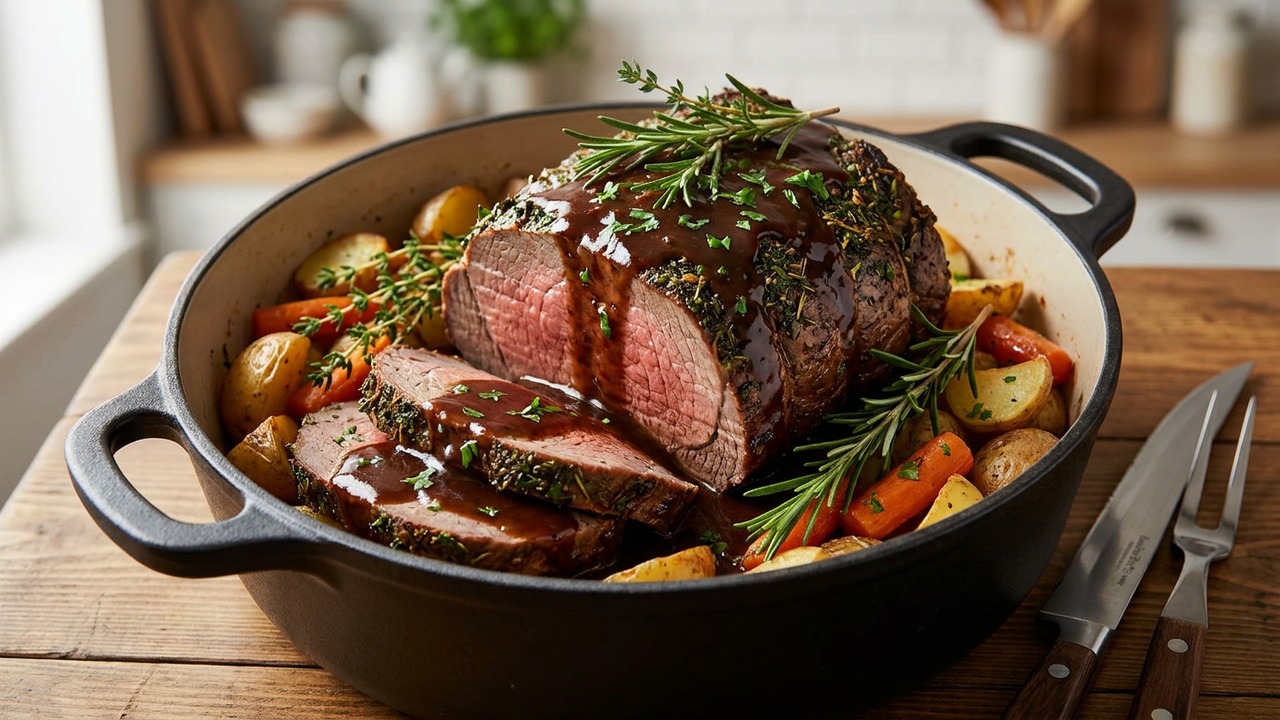
A one-pot stovetop Dutch-oven roast that gives a tender, herb-crusted beef with a glossy pan gravy — ideal for weeknights or small-batch dinners. Sear, braise gently on the stove, then finish with a simple roux-thickened gravy for a classic, comforting plate.
Jake Woods's note
"This roast shines when you want a full-flavored, small-batch main without turning on the oven. Home cooks will love how hands-off the braise is once it’s simmering and how the pan gravy turns simple braising liquid into a silky sauce."
About This Recipe
This stovetop Dutch-oven herb-crusted beef roast is built for cooks who want the comfort of a slow-roasted dinner without heating the whole house or hauling out the oven. A quick, high-heat sear builds deeply browned flavor, then a simple paste of Dijon, garlic, rosemary and thyme is pressed into the meat to form a fragrant crust that intensifies as the roast braises slowly in a shallow bath of beef stock. The long, gentle stovetop simmer melts collagen into glossy gelatin so each slice is moist and fork-tender rather than stringy or dry.
What makes this version work is the combination of technique and restraint: a true sear to develop Maillard flavor, mustard to help the herb paste adhere and brown, and just enough liquid to braise without stewing the meat. Finishing the braising liquid with a quick flour roux yields a silky pan gravy that feels intentional and restaurant-quality. This is an ideal recipe for small households, weeknight dinners that feel special, or anyone who wants a one-pot roast that slices neatly for sandwiches the next day.
Ingredients for Stovetop Dutch-Oven Herb-Crusted Beef Roast with Pan Gravy
- 2 1/2 lb Beef chuck roast (or small roast, well-marbled)
- 1 1/2 tsp Kosher salt
- 1 tsp Freshly ground black pepper
- 2 tbsp Olive oil
- 4 cloves Garlic, minced
- 2 tbsp Fresh rosemary and thyme, chopped
- 1 tbsp Dijon mustard
- 1 medium Yellow onion, halved and sliced
- 2 cups Low-sodium beef stock (or broth)
- 1 tbsp All-purpose flour (for gravy)
How to Make Stovetop Dutch-Oven Herb-Crusted Beef Roast with Pan Gravy
Step 1: Season and sear the roast
Pat the roast dry with paper towels and season all over with kosher salt and freshly ground black pepper. Heat the olive oil in a heavy Dutch oven over medium-high heat until shimmering, then sear the roast, 3–4 minutes per side, until deeply browned on all sides. Transfer the roast to a plate and set aside, leaving browned bits in the pot.For this step
- 2 1/2 lbBeef chuck roast (or small roast, well-marbled)
- 1 1/2 tspKosher salt
- 1 tspFreshly ground black pepper
- 2 tbspOlive oil
Step 2: Make and press on the herb crust
In a small bowl combine the minced garlic, chopped rosemary and thyme, and Dijon mustard into a loose paste. Spread the mixture evenly over the top and sides of the seared roast, then return the roast to the pot and sear the crusted sides briefly (about 30–45 seconds each) to set the paste.For this step
- 4 clovesGarlic, minced
- 2 tbspFresh rosemary and thyme, chopped
- 1 tbspDijon mustard
Step 3: Sauté aromatics and deglaze
Reduce heat to medium, add the sliced onion to the Dutch oven, and sauté in the pan fat until softened and beginning to brown, about 4–5 minutes. Pour in the beef stock and use a wooden spoon to scrape up any browned bits from the bottom of the pot; bring the liquid to a gentle simmer. Nestle the roast back into the liquid (liquid should come about 1/3 to 1/2 way up the roast), cover with the lid, and reduce heat to lowest setting for a gentle braise.For this step
- 1 mediumYellow onion, halved and sliced
- 2 cupsLow-sodium beef stock (or broth)
Step 4: Braise slowly on the stovetop
Let the roast simmer gently, covered, for 75–90 minutes, turning once halfway through, until a fork or thermometer reads 200–205°F (93–96°C) and the meat is fork-tender. Check once during cooking to ensure the liquid is simmering gently and add up to 1/2 cup extra stock or water if it’s evaporating too quickly. Once tender, remove the pot from heat and lift the roast onto a cutting board to rest for 10–15 minutes.Step 5: Make pan gravy
Skim off excess fat from the surface of the braising liquid, then return the pot to medium heat. Sprinkle the all-purpose flour into the hot liquid and whisk briskly to form a smooth, bubbling gravy; simmer 3–5 minutes until it thickens and the raw flour taste cooks out. Taste and season with additional salt and pepper if needed, and strain the gravy for a silky finish if desired.For this step
- 1 tbspAll-purpose flour (for gravy)
Step 6: Slice and serve with gravy
Slice the rested roast against the grain into 1/2-inch slices and arrange on a platter. Spoon warm pan gravy over the meat, garnish with a few reserved fresh herb leaves if you like, and serve immediately with your choice of sides.


- Pat the roast dry with paper towels and season all over with kosher salt and freshly ground black pepper. Heat the olive oil in a heavy Dutch oven over medium-high heat until shimmering, then sear the roast, 3–4 minutes per side, until deeply browned on all sides. Transfer the roast to a plate and set aside, leaving browned bits in the pot.
- In a small bowl combine the minced garlic, chopped rosemary and thyme, and Dijon mustard into a loose paste. Spread the mixture evenly over the top and sides of the seared roast, then return the roast to the pot and sear the crusted sides briefly (about 30–45 seconds each) to set the paste.
- Reduce heat to medium, add the sliced onion to the Dutch oven, and sauté in the pan fat until softened and beginning to brown, about 4–5 minutes. Pour in the beef stock and use a wooden spoon to scrape up any browned bits from the bottom of the pot; bring the liquid to a gentle simmer. Nestle the roast back into the liquid (liquid should come about 1/3 to 1/2 way up the roast), cover with the lid, and reduce heat to lowest setting for a gentle braise.
- Let the roast simmer gently, covered, for 75–90 minutes, turning once halfway through, until a fork or thermometer reads 200–205°F (93–96°C) and the meat is fork-tender. Check once during cooking to ensure the liquid is simmering gently and add up to 1/2 cup extra stock or water if it’s evaporating too quickly. Once tender, remove the pot from heat and lift the roast onto a cutting board to rest for 10–15 minutes.
- Skim off excess fat from the surface of the braising liquid, then return the pot to medium heat. Sprinkle the all-purpose flour into the hot liquid and whisk briskly to form a smooth, bubbling gravy; simmer 3–5 minutes until it thickens and the raw flour taste cooks out. Taste and season with additional salt and pepper if needed, and strain the gravy for a silky finish if desired.
- Slice the rested roast against the grain into 1/2-inch slices and arrange on a platter. Spoon warm pan gravy over the meat, garnish with a few reserved fresh herb leaves if you like, and serve immediately with your choice of sides.
Stovetop Dutch-Oven Herb-Crusted Beef Roast with Pan Gravy Tips
Pat meat bone-dry
Drying the roast thoroughly before salting ensures a better sear and a richer browned crust instead of steaming the surface.
High heat sear
Get the Dutch oven very hot and resist crowding; 3–4 minutes per side should give a deep brown color that builds the gravy's flavor base.
Press the herb paste
Spread the garlic, mustard and herbs while the roast is warm so the paste sticks; a quick re-sear sets the coating and concentrates aromatics.
Maintain a gentle simmer
Keep the heat low so the liquid barely bubbles; vigorous boiling will toughen the meat and evaporate the braising liquid too quickly.
Skim and strain gravy
Remove excess fat before thickening for a cleaner sauce, and pass the finished gravy through a sieve for a silky texture if desired.
Stovetop Dutch-Oven Herb-Crusted Beef Roast with Pan Gravy Variations and Substitutions
Red wine deglaze
Replace 1 cup of the beef stock with a dry red wine (cabernet or merlot) for deeper, slightly tannic flavor; reduce the wine briefly before adding the remainder of the stock.
Mushroom and shallot
Add sliced cremini mushrooms and 2 finely chopped shallots with the onion for an earthier, umami-rich gravy that pairs particularly well with the herb crust.
Gluten-free gravy
Skip the flour and thicken the braising liquid with a cornstarch slurry (1 tablespoon cornstarch mixed with 1 tablespoon cold water) whisked into simmering liquid until glossy.
Lean-cut swap
If using a leaner cut like top round, shorten braise time and monitor closely to avoid drying; add an extra 1/4–1/2 cup stock and consider finishing in a low oven covered to retain moisture.
How to Store and Make Stovetop Dutch-Oven Herb-Crusted Beef Roast with Pan Gravy Ahead
Store leftover sliced roast and gravy separately in airtight containers in the refrigerator for up to 3–4 days; keeping the gravy apart prevents the meat from becoming soggy. To reheat, warm the gravy gently on the stovetop until simmering, then add slices of roast to heat through briefly — avoid prolonged reheating which will dry the meat. For longer storage, freeze portions (meat and gravy) for up to 3 months and thaw overnight in the refrigerator before reheating.
What to Serve With Stovetop Dutch-Oven Herb-Crusted Beef Roast with Pan Gravy
Serve sliced roast over buttery mashed potatoes or creamy polenta to showcase the glossy gravy, or alongside buttered egg noodles and roasted root vegetables for a heartier plate. A simple green vegetable such as sautéed green beans or braised kale adds brightness and cuts the richness. Pair with a full-bodied red wine like Malbec or a Belgian-style brown ale to complement the herb and beef flavors.
Stovetop Dutch-Oven Herb-Crusted Beef Roast with Pan Gravy FAQs
Can I use a different cut of beef?
Yes — well-marbled, tougher cuts like chuck or brisket work best because the braise converts collagen to gelatin; lean cuts can be used but require shorter cooking and careful monitoring to avoid dryness.
How do I know when the roast is done?
For a fork-tender braise, aim for an internal temperature around 200–205°F and test by inserting a fork — it should slide in with little resistance and the meat should pull apart easily.
Why use Dijon mustard in the herb crust?
Dijon acts as a binder for the garlic and herbs, helping them adhere to the roast while also adding a subtle tang that balances the richness once concentrated during searing and braising.
My gravy is lumpy — how can I fix it?
Whisk the hot gravy vigorously over medium heat to break up lumps, or strain it through a fine-mesh sieve; for future batches, whisk the flour into a small amount of cold stock to make a smooth slurry before adding to hot liquid.
Can I finish the roast in the oven instead?
Yes — after searing and adding the stock, cover the pot and transfer to a 325°F oven for the same 75–90 minute range until fork-tender, which can be more consistent if your stovetop heat is hard to set low.
About the author
Jake WoodsHello, I'm Jake. I started this recipe site with the idea that I hated recipe websites that overwhelm you with long stories and ads just to see plain content that's not helpful. My goal is to provide you with quality recipes, simple ideas and a fun cooking experience. There's lots of fun things to cook, and I think as you browse the site you'll find that TopShelf.Recipes is the place for quality recipes on the web.
See all recipes by Jake Woods →Ratings & Reviews
Did you make this recipe?
Be the first to share your experience.
Nutrition Facts
Per serving: 1 serving
Nutrition values are estimated from USDA ingredient data and may vary based on preparation, brands, and portion sizes. Values are provided for informational purposes only.
Keep Reading
Guides & articles for this recipe

Healthy Eating
Gluten-Free Weeknight Grilling Plan
A 7-day gluten-free weeknight grilling plan with quick, family-friendly recipes, prep-ahead timelines, and a printable shopping list that spotlights late-summer produce and pantry staples. Includes clear cross-contamination safety tips and simple swaps to keep dinners fast and crowd-pleasing.

Healthy Eating
Low-Fat Grill Swaps for Big Flavor
A practical guide to trimming fat from grilled meals without losing juiciness or char. Learn yogurt- and citrus-based marinades, lean protein picks, searing and indirect-heat tricks, plus 5 quick low-fat marinades and a simple weeknight plan.

Recipes
DIY Edible Monster Eyes Candy
Make safe, fun edible monster eyes for cupcakes, cookies, and candy trays. Step-by-step recipes show baking-soda balls, chocolate and fondant eyes, wafer-print options, plus assembly, storage, and kid-friendly safety tips.
More from Stovetop
View all Stovetop recipes →
One-Pot Beef Bolognese

Dubai Tacos

Italian-Style Pot Roast with Tomatoes Olives and Fresh Herbs

Labor Day Grilled Lobster Rolls with Charred Scallion Brown Butter & Lemon‑Herb Aioli

Hainanese Chicken Rice

Pad Krapow Pork

Twice-Fried Restaurant Style Crispy Sweet Potato Fries (Stovetop Deep Fry)

Xiao Long Bao Soup Dumplings

Beef Stew with Dumplings
Ask me anything about this recipe — substitutions, scaling, techniques, timing.
Powered by AI · 6 questions per 5 minutes, 30 per day