Hainanese Chicken Rice
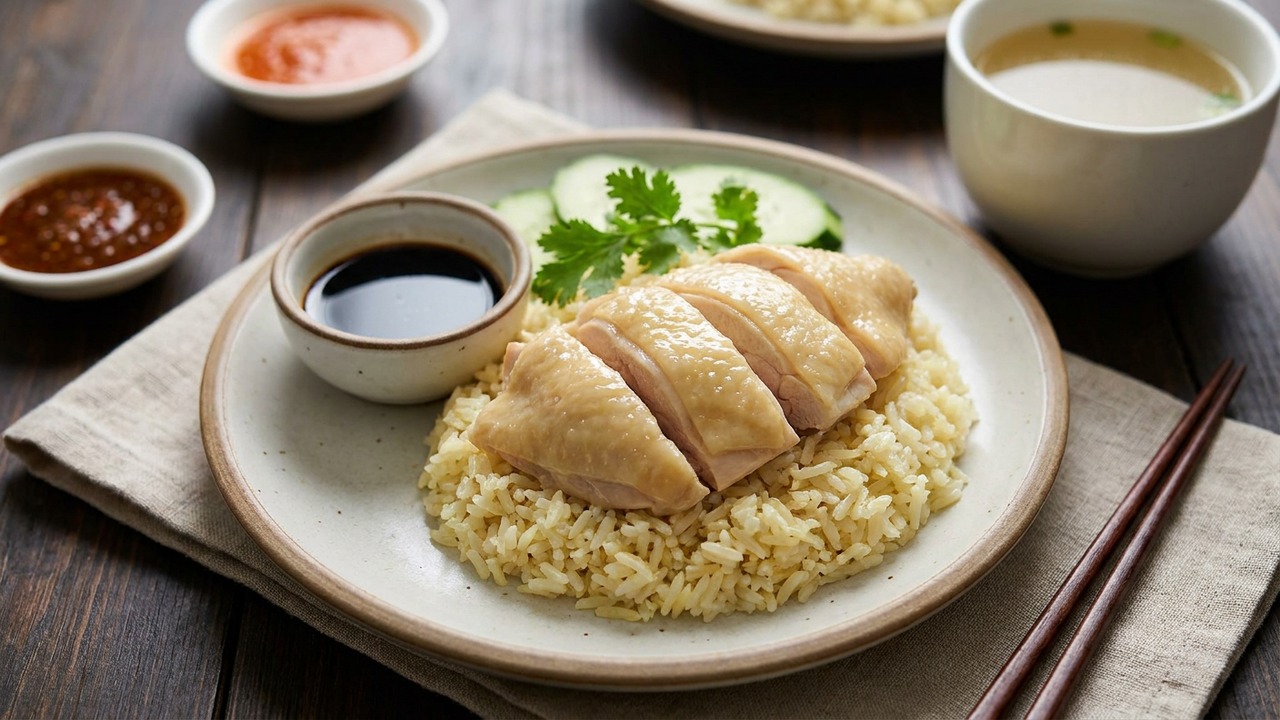
Classic Hainanese Chicken Rice: tender poached chicken served with fragrant garlic-ginger rice and a savory soy dipping sauce. This stovetop method yields silky skin, a flavorful chicken broth for the rice, and a simple assembly perfect for home cooks.
Ingredient Spotlight
Jasmine rice
Aromatic long-grain rice originally from Thailand with a floral, slightly sweet scent and a soft, slightly sticky texture when cooked; it’s a staple in Southeast Asian cuisines. Many U.S. home cooks will recognize plain white rice but jasmine’s perfume and texture are distinctive. Find it in mainstream supermarkets (often labeled Thai jasmine) and Asian markets. Substitute with long-grain white rice or basmati in a pinch, but expect a different aroma and slightly firmer, drier grains.
Ingredient Spotlight
Chicken fat or neutral oil (vegetable/peanut)
Rendered chicken fat (schmaltz) is a traditional fat in Jewish and Eastern European cooking that imparts a rich, savory, poultry-forward flavor; the ingredient list here allows a neutral oil as an alternative. Schmaltz may be unfamiliar to cooks who usually use vegetable oils, but you can render it at home by cooking down chicken skin and fat, or buy it at some specialty/gourmet markets. If you don’t want the chicken flavor, substitute a neutral oil such as vegetable, canola, or peanut oil, or for more richness use butter or duck fat.
Ingredient Spotlight
Sesame oil
A pungent, nutty oil made from toasted sesame seeds commonly used in East Asian and Middle Eastern cuisines as a finishing or flavoring oil rather than a primary cooking fat. It has a strong aromatic profile — a little goes a long way — and is different from neutral cooking oils. Find it in most supermarkets and Asian markets; toasted sesame oil is the usual pantry form, while untoasted (light) sesame oil is less common. Substitute with a small amount of ground toasted sesame seeds plus neutral oil, or use peanut oil for a comparable toasty note if necessary.
(paid link) — as an Amazon Associate we earn from qualifying purchases.
Jake Woods's note
"This recipe focuses on straightforward stovetop techniques that produce restaurant-quality results at home. It shines for a relaxed family dinner or when you want a comforting, aromatic one-pot rice accompaniment to silky poached chicken."
About This Recipe
Hainanese chicken rice is a lesson in restraint: a few excellent moves — gentle poaching, an ice bath, and cooking the rice in the resulting broth — produce a dish that tastes like a carefully plotted shortcut to comfort. In this stovetop version you’ll get silky, almost lacquered skin, meat that stays juicy through a short resting period, and rice that carries the savory aromatics of ginger and garlic without being greasy. The soy finishing sauce and a bright ginger-scallion oil provide contrasting salt and heat so each bite feels balanced rather than one-note.
This recipe works for cooks who want a restaurant-level result without special equipment; a sturdy pot and a thermometer do the heavy lifting. Using a whole bird gives you both the showstopping carved centerpiece and enough broth to flavor the rice (and a pot of soup later). Small details — rubbing the cavity with salt, toasting the rice in chicken fat, and sternly avoiding a rolling boil — are what lift the dish from “good” to reliably delicious every time.
Ingredients for Hainanese Chicken Rice
- 3 1/2 lb Whole chicken (about 3.5 lb / 1.6 kg)
- 10 cups Water (for poaching)
- 1 tbsp Kosher salt
- 1 3-inch piece Fresh ginger (3-inch piece), sliced
- 4 stalks Scallions (green onions)
- 2 cups Jasmine rice
- 4 cloves Garlic, minced
- 3 tbsp Chicken fat or neutral oil (vegetable/peanut)
- 1 tbsp Sesame oil
- 3 tbsp Light soy sauce (for finishing/dipping)
🛒 = paid link — as an Amazon Associate we earn from qualifying purchases.
How to Make Hainanese Chicken Rice
Step 1: Poach the chicken and make the broth
Rinse the chicken and pat dry, then rub the cavity with a little salt. In a large pot, add water, sliced ginger, scallions, and 1 tablespoon kosher salt and bring to a gentle simmer. Submerge the chicken breast-side down, cover, reduce to a very gentle simmer (no rolling boil) and cook about 30 minutes until the thigh registers 160°F (71°C). Turn off the heat and leave the chicken in the hot liquid, covered, for 15–20 minutes to finish cooking through while you prepare the rice.For this step
- 3 1/2 lbWhole chicken (about 3.5 lb / 1.6 kg)
- 10 cupsWater (for poaching)
- 1 tbspKosher salt
- 1 3-inch pieceFresh ginger (3-inch piece), sliced
- 4 stalksScallions (green onions)
Step 2: Prepare fragrant garlic-ginger rice
While the chicken rests, reserve about 2 1/2 cups (600 ml) of the hot poaching liquid and strain it; set aside. Rinse the jasmine rice until the water runs clear, then drain. In a saucepan, heat the chicken fat or oil over medium heat, add the minced garlic and a few slices of the ginger used in the poach and sauté until fragrant (30–60 seconds). Add the drained rice, stir to coat and lightly toast for 1–2 minutes, then pour in the reserved hot broth (about 2 1/2 cups), bring to a simmer, cover, reduce heat to very low and cook 12–15 minutes until liquid is absorbed; remove from heat and let rest, covered, 10 minutes.For this step
- 2 cupsJasmine rice
- 4 clovesGarlic, minced
- 3 tbspChicken fat or neutral oil (vegetable/peanut)
Step 3: Shock and finish the chicken
Prepare an ice bath while the chicken cooks. Once the chicken has finished in the hot liquid, transfer it to the ice bath for 5 minutes to firm the skin and stop cooking (this yields silky, smooth skin). Remove from ice bath, pat dry, rub lightly with sesame oil and a pinch of salt, then let rest 10 minutes before carving to keep juices sealed in.For this step
- 1 tbspSesame oil
Step 4: Make the light soy finishing sauce
In a small bowl, combine the light soy sauce with 1–2 tablespoons of the reserved hot broth and a small splash of sesame oil; warm briefly if you like the sauce hot. For a classic accompaniment, finely chop some of the reserved scallions and ginger and spoon hot oil over them to create a ginger-scallion oil (use the hot broth/oil reserved from earlier) to serve alongside the soy dip.For this step
- 3 tbspLight soy sauce (for finishing/dipping)
Step 5: Carve the chicken
Using a sharp knife, carve the rested chicken into serving pieces (breast slices, thighs, drumsticks, wings). Keep the pieces warm by covering loosely with foil; strain and reserve extra poaching liquid for soup or to thin sauces if desired.Step 6: Plate and serve
Spoon the fragrant rice onto plates, arrange carved chicken on top or to the side, drizzle some finishing soy sauce over the chicken, and serve with cucumber slices and the ginger-scallion oil or extra light soy on the side. Offer extra chopped scallions and reserved broth for sipping—this dish is best enjoyed warm and simply presented.


- Rinse the chicken and pat dry, then rub the cavity with a little salt. In a large pot, add water, sliced ginger, scallions, and 1 tablespoon kosher salt and bring to a gentle simmer. Submerge the chicken breast-side down, cover, reduce to a very gentle simmer (no rolling boil) and cook about 30 minutes until the thigh registers 160°F (71°C). Turn off the heat and leave the chicken in the hot liquid, covered, for 15–20 minutes to finish cooking through while you prepare the rice.
- While the chicken rests, reserve about 2 1/2 cups (600 ml) of the hot poaching liquid and strain it; set aside. Rinse the jasmine rice until the water runs clear, then drain. In a saucepan, heat the chicken fat or oil over medium heat, add the minced garlic and a few slices of the ginger used in the poach and sauté until fragrant (30–60 seconds). Add the drained rice, stir to coat and lightly toast for 1–2 minutes, then pour in the reserved hot broth (about 2 1/2 cups), bring to a simmer, cover, reduce heat to very low and cook 12–15 minutes until liquid is absorbed; remove from heat and let rest, covered, 10 minutes.
- Prepare an ice bath while the chicken cooks. Once the chicken has finished in the hot liquid, transfer it to the ice bath for 5 minutes to firm the skin and stop cooking (this yields silky, smooth skin). Remove from ice bath, pat dry, rub lightly with sesame oil and a pinch of salt, then let rest 10 minutes before carving to keep juices sealed in.
- In a small bowl, combine the light soy sauce with 1–2 tablespoons of the reserved hot broth and a small splash of sesame oil; warm briefly if you like the sauce hot. For a classic accompaniment, finely chop some of the reserved scallions and ginger and spoon hot oil over them to create a ginger-scallion oil (use the hot broth/oil reserved from earlier) to serve alongside the soy dip.
- Using a sharp knife, carve the rested chicken into serving pieces (breast slices, thighs, drumsticks, wings). Keep the pieces warm by covering loosely with foil; strain and reserve extra poaching liquid for soup or to thin sauces if desired.
- Spoon the fragrant rice onto plates, arrange carved chicken on top or to the side, drizzle some finishing soy sauce over the chicken, and serve with cucumber slices and the ginger-scallion oil or extra light soy on the side. Offer extra chopped scallions and reserved broth for sipping—this dish is best enjoyed warm and simply presented.
Hainanese Chicken Rice Tips
Maintain a bare simmer
Keep the poaching liquid at a soft, steady simmer — tiny bubbles, not a boil — to prevent the skin from rupturing and to keep meat tender and even-textured.
Use an ice bath
A five-minute ice bath firms the skin and stops carryover cooking, giving you that silky, intact surface prized in Hainanese chicken.
Reserve and strain broth
Strain and measure the hot poaching liquid for the rice to ensure consistent cooking and to capture all ginger-scallion aromatics without sediment.
Toast rice in fat
Sweating garlic and ginger in chicken fat or neutral oil before adding rice layers flavor and keeps the grains separate once cooked.
Use a thermometer
Pull the chicken when the thigh hits 160°F (71°C) and rest in the hot liquid; this prevents overcooking while ensuring safety after carryover.
Hainanese Chicken Rice Variations and Substitutions
Bone-in pieces only
If you don’t have a whole bird, poach bone-in thighs and breasts; adjust timing (thighs 20–25 minutes, breasts 12–15) and still use the broth for rice.
Vegetarian umami rice
Substitute a rich mushroom broth for the chicken liquid and finish rice in sesame oil with minced garlic and ginger for a satisfying plant-forward version.
Lower-sodium swap
Use low-sodium soy sauce and reduce added salt in the poaching liquid, then season the dipping sauce to taste so you control final saltiness.
Spicy sambal accompaniment
Serve with a homemade sambal oelek or chile-garlic paste mixed with a little lime and sugar for the classic Singaporean chili kick.
How to Store and Make Hainanese Chicken Rice Ahead
Store carved chicken and rice separately in airtight containers in the refrigerator for up to 3 days. Reheat rice with a splash of reserved broth or water in a covered pan over low heat, and warm chicken gently in a skillet or covered oven (300°F/150°C) to avoid drying it out. Freeze leftover broth for up to 3 months for future soups and risottos.
What to Serve With Hainanese Chicken Rice
Serve with thin cucumber slices, extra ginger-scallion oil, and a small bowl of warm strained poaching broth as a palate-cleansing soup. For drinks, lightly chilled jasmine tea or a crisp lager complements the dish’s clean, savory flavors without overwhelming them. Plate simply: rice first, chicken artfully arranged, and sauces in small dipping bowls so diners can customize each bite.
Hainanese Chicken Rice FAQs
How can I tell when the chicken is done without a thermometer?
If you don’t have a thermometer, check by piercing the thigh at the thickest point; the juices should run clear and the meat should feel springy, not rubbery. That said, an instant-read thermometer is the most reliable way to avoid over- or undercooking.
Why can’t I boil the chicken rapidly?
A rolling boil agitates the bird, causing the skin to tear and the meat fibers to toughen; a gentle simmer keeps the texture silky and concentrates flavor in the broth.
Can I cook the rice in a rice cooker with the reserved broth?
Yes — use the same broth-to-rice ratio called for by your rice cooker, but first sauté the garlic and ginger in oil, toss in the rinsed rice, then transfer the mixture and hot broth to the cooker for a hands-off approach.
What should I do with the leftover poaching liquid?
Strain and refrigerate it for up to 3 days or freeze for up to 3 months; it makes an excellent light soup, base for noodle bowls, or a way to thin sauces when reheating the chicken.
Is sesame oil necessary?
Sesame oil is used sparingly here to add a toasty aroma to the finishing sauce and to shine the chicken; if you don’t have it, a small drizzle of neutral oil plus a touch of toasted sesame seed garnish will work in a pinch.
About the author
Jake WoodsHello, I'm Jake. I started this recipe site with the idea that I hated recipe websites that overwhelm you with long stories and ads just to see plain content that's not helpful. My goal is to provide you with quality recipes, simple ideas and a fun cooking experience. There's lots of fun things to cook, and I think as you browse the site you'll find that TopShelf.Recipes is the place for quality recipes on the web.
See all recipes by Jake Woods →Ratings & Reviews
Did you make this recipe?
Be the first to share your experience.
Nutrition Facts
Per serving: 1 serving
Nutrition values are estimated from USDA ingredient data and may vary based on preparation, brands, and portion sizes. Values are provided for informational purposes only.
Keep Reading
Guides & articles for this recipe

Healthy Eating
Gluten-Free Weeknight Grilling Plan
A 7-day gluten-free weeknight grilling plan with quick, family-friendly recipes, prep-ahead timelines, and a printable shopping list that spotlights late-summer produce and pantry staples. Includes clear cross-contamination safety tips and simple swaps to keep dinners fast and crowd-pleasing.

Healthy Eating
Low-Fat Grill Swaps for Big Flavor
A practical guide to trimming fat from grilled meals without losing juiciness or char. Learn yogurt- and citrus-based marinades, lean protein picks, searing and indirect-heat tricks, plus 5 quick low-fat marinades and a simple weeknight plan.

Recipes
DIY Edible Monster Eyes Candy
Make safe, fun edible monster eyes for cupcakes, cookies, and candy trays. Step-by-step recipes show baking-soda balls, chocolate and fondant eyes, wafer-print options, plus assembly, storage, and kid-friendly safety tips.
More from Stovetop
View all Stovetop recipes →
One-Pot Beef Bolognese

Stovetop Dutch-Oven Herb-Crusted Beef Roast with Pan Gravy

Dubai Tacos

Italian-Style Pot Roast with Tomatoes Olives and Fresh Herbs

Labor Day Grilled Lobster Rolls with Charred Scallion Brown Butter & Lemon‑Herb Aioli

Pad Krapow Pork

Twice-Fried Restaurant Style Crispy Sweet Potato Fries (Stovetop Deep Fry)

Xiao Long Bao Soup Dumplings

Beef Stew with Dumplings
Ask me anything about this recipe — substitutions, scaling, techniques, timing.
Powered by AI · 6 questions per 5 minutes, 30 per day