Kinder's Basil Parmesan Chicken Pasta
A creamy stovetop pasta that highlights Kinder's Basil Parmesan seasoning on pan-seared chicken. Tender chicken breasts, blistered cherry tomatoes and spinach come together in a rich cream sauce for a weeknight-friendly pasta everyone will love.
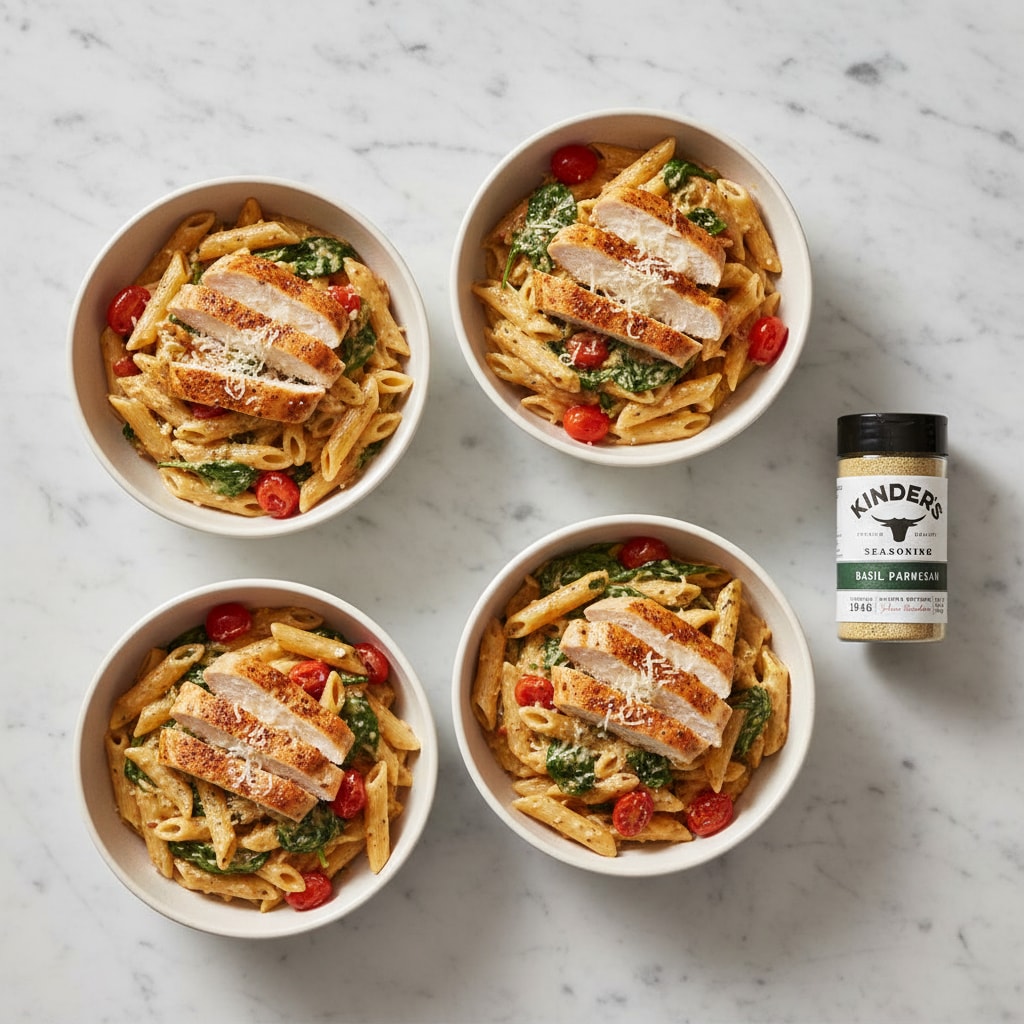
Ingredient Spotlight
Kinder's Basil Parmesan
A branded, pre-grated Parmesan-style seasoning blended with dried basil and other seasonings—a convenience product commonly sold in U.S. grocery stores. It tastes like salty, nutty Parmesan with an added sweet-herbal basil note and a slightly dried, shelf-stable texture rather than fresh cheese. Find it in the pasta/condiments or grated-cheese aisle of supermarkets, or substitute freshly grated Parmigiano-Reggiano (or Pecorino Romano) mixed with finely chopped fresh basil or a pinch of dried basil for a fresher, more authentic flavor.
Jake Woods's note
"This recipe is designed to showcase Kinder's Basil Parmesan as a finishing seasoning and a rub for the chicken—perfect for busy weeknights when you want full flavor with minimal fuss. The dish comes together in one skillet with a quick cream sauce and bright cherry tomatoes."
About This Recipe
This Kinder's Basil Parmesan Chicken Pasta is built around a small but decisive idea: let a bright basil-Parmesan seasoning steer the dish while classic techniques do the heavy lifting. Pan-seared, evenly pounded chicken gives you a brown, savory crust and tender interior; blistered cherry tomatoes add pops of concentrated sweetness that cut through a rich, cream-forward sauce. Baby spinach wilts into the cream to lend color and a silky mouthfeel, and a splash of reserved pasta water is the secret to a glossy, clingy sauce that dresses every penne or fusilli piece.
What makes this version work for weeknights is its forgiving timing and layered seasoning. Rubbing most of the Kinder's seasoning on the chicken and saving a pinch for finishing brightens the plate at the end, and searing the chicken first both builds flavor and frees the skillet to become your sauce pan. It’s family-friendly but confident enough for casual dinner guests, easily scaled or tweaked (thighs, mushrooms, lighter dairy) without losing the core basil-Parmesan profile that gives the dish its identity.
Ingredients for Kinder's Basil Parmesan Chicken Pasta
- 1 1/4 lb Boneless skinless chicken breasts
- 2 tbsp Kinder's Basil Parmesan
- 2 tbsp Olive oil
- 1 tsp Kosher salt
- 12 oz Dry pasta (penne or fusilli)
- 3 cloves Garlic cloves, minced
- 1 1/2 cups Cherry tomatoes, halved
- 1 cup Heavy cream
- 4 cups Baby spinach
- 1/2 cup Grated Parmesan cheese
How to Make Kinder's Basil Parmesan Chicken Pasta
Step 1: Season and sear the chicken
Pat the chicken breasts dry and, if needed, pound to an even 1/2" thickness. In a small bowl combine 1 1/2 tablespoons of Kinder's Basil Parmesan with a pinch of kosher salt and rub evenly over both sides of the chicken; reserve the remaining 1/2 tablespoon of Kinder's Basil Parmesan for finishing. Heat 1 tablespoon olive oil in a large, heavy skillet over medium-high heat and sear the chicken 5–6 minutes per side until golden and an instant-read thermometer reads 165°F (74°C); transfer to a plate and tent with foil to rest.For this step
- 1 1/4 lbBoneless skinless chicken breasts
- 2 tbspKinder's Basil Parmesan
- 1 tspKosher salt
Step 2: Cook the pasta
Bring a large pot of water to a boil and salt it generously with the kosher salt. Cook the pasta according to package directions until al dente, reserve 1 cup (240 ml) of the pasta cooking water, then drain and set aside.For this step
- 12 ozDry pasta (penne or fusilli)
Step 3: Build the pan sauce
Wipe the skillet if it has excess burned bits, then return to medium heat and add the remaining 1 tablespoon olive oil. Add the minced garlic and cook 30–45 seconds until fragrant, then add the halved cherry tomatoes and sauté 4–5 minutes until they soften and begin to blister. Pour in the heavy cream, scrape up any browned bits from the pan, and simmer 2–3 minutes until the sauce thickens slightly.For this step
- 3 clovesGarlic cloves, minced
- 1 1/2 cupsCherry tomatoes, halved
- 1 cupHeavy cream
Step 4: Finish sauce with spinach and cheese
Add the baby spinach to the simmering cream and stir until wilted. Stir in the drained pasta and 1/2 cup of the reserved pasta water; add the grated Parmesan and toss until the sauce coats the pasta, adding more reserved water as needed to reach a smooth, clingy consistency.For this step
- 4 cupsBaby spinach
- 1/2 cupGrated Parmesan cheese
Step 5: Slice chicken and combine
Slice the rested chicken into 1/2" strips and return the pieces to the skillet, nestling them into the pasta and sauce. Cook 1–2 minutes more to warm through and let the flavors meld.Step 6: Serve and garnish
Divide the pasta among 4 bowls (about 1½ cups/350g per serving). Sprinkle the reserved 1/2 tablespoon of Kinder's Basil Parmesan over the servings and add extra grated Parmesan if desired; serve immediately.


- Pat the chicken breasts dry and, if needed, pound to an even 1/2" thickness. In a small bowl combine 1 1/2 tablespoons of Kinder's Basil Parmesan with a pinch of kosher salt and rub evenly over both sides of the chicken; reserve the remaining 1/2 tablespoon of Kinder's Basil Parmesan for finishing. Heat 1 tablespoon olive oil in a large, heavy skillet over medium-high heat and sear the chicken 5–6 minutes per side until golden and an instant-read thermometer reads 165°F (74°C); transfer to a plate and tent with foil to rest.
- Bring a large pot of water to a boil and salt it generously with the kosher salt. Cook the pasta according to package directions until al dente, reserve 1 cup (240 ml) of the pasta cooking water, then drain and set aside.
- Wipe the skillet if it has excess burned bits, then return to medium heat and add the remaining 1 tablespoon olive oil. Add the minced garlic and cook 30–45 seconds until fragrant, then add the halved cherry tomatoes and sauté 4–5 minutes until they soften and begin to blister. Pour in the heavy cream, scrape up any browned bits from the pan, and simmer 2–3 minutes until the sauce thickens slightly.
- Add the baby spinach to the simmering cream and stir until wilted. Stir in the drained pasta and 1/2 cup of the reserved pasta water; add the grated Parmesan and toss until the sauce coats the pasta, adding more reserved water as needed to reach a smooth, clingy consistency.
- Slice the rested chicken into 1/2" strips and return the pieces to the skillet, nestling them into the pasta and sauce. Cook 1–2 minutes more to warm through and let the flavors meld.
- Divide the pasta among 4 bowls (about 1½ cups/350g per serving). Sprinkle the reserved 1/2 tablespoon of Kinder's Basil Parmesan over the servings and add extra grated Parmesan if desired; serve immediately.
Kinder's Basil Parmesan Chicken Pasta Tips
Pound for Even Cooking
Flatten chicken to about 1/2" thickness so both pieces cook through in the same time and develop an even golden crust without drying out.
Use Reserved Pasta Water
Add the starchy cooking water a little at a time to create a silky emulsion that helps the cream and Parmesan cling to the pasta.
Blister Tomatoes Hot
Cook cherry tomatoes on medium-high and don't move them constantly so they blister and caramelize, concentrating their sweetness to balance the cream.
Watch the Garlic
Sauté minced garlic only 30–45 seconds until fragrant—longer at medium-high heat will turn it bitter and darken the sauce.
Finish with Reserved Seasoning
Sprinkling the saved 1/2 tablespoon of Kinder's Basil Parmesan at the end freshens the flavors and gives a final herbaceous lift.
Kinder's Basil Parmesan Chicken Pasta Variations and Substitutions
Swap to Chicken Thighs
Bone‑in or boneless thighs bring more fat and a deeper sear; reduce searing time for boneless thighs and ensure they reach 165°F before resting.
Vegetarian: Mushrooms or Chickpeas
Sauté cremini mushrooms until deeply browned, or roast chickpeas for texture, then use them in place of chicken for a satisfying vegetarian option.
Lightened Cream Sauce
Use half-and-half or a mixture of ¾ cup whole milk plus ¾ cup low-sodium chicken stock thickened with a small slurry of cornstarch to reduce richness while keeping body.
Add Brightness with Citrus
Stir 1–2 teaspoons lemon juice and a little lemon zest into the finished dish to lift the cream and complement the basil-Parmesan notes.
Gluten-Free or Whole-Grain Pasta
Swap in a sturdy gluten-free or whole-grain fusilli/penne and cook to package directions; you may need slightly more pasta water for the sauce to cling.
How to Store and Make Kinder's Basil Parmesan Chicken Pasta Ahead
Store leftovers in an airtight container in the refrigerator for up to 3–4 days. The sauce will thicken as it cools—when reheating gently warm on the stovetop over low heat with a splash of cream or reserved pasta water to restore creaminess. Freezing is not ideal because the heavy cream can separate, but you can freeze the cooked chicken separately and recombine with freshly made sauce later.
What to Serve With Kinder's Basil Parmesan Chicken Pasta
Serve with a crisp green salad dressed in a lemon‑shallot vinaigrette to cut the richness and add brightness. Offer crusty bread or garlic bruschetta for sopping up the sauce, and pair with a light, unoaked Chardonnay or an Italian Pinot Grigio; for non-alcoholic options, sparkling water with a wedge of lemon complements the dish.
Kinder's Basil Parmesan Chicken Pasta FAQs
Can I use bone-in chicken?
You can, but bone‑in pieces require longer cooking and will not cook in 5–6 minutes per side; finish them in a 375°F oven until they reach 165°F and rest before slicing.
Why did my sauce separate or look grainy?
High heat or adding cold cheese can cause the cream to break; lower the heat, add cheese off the heat and whisk in reserved pasta water a little at a time to smooth the sauce.
The pasta seems dry—what now?
Return the pan to low heat and add small amounts of reserved pasta water until the sauce loosens and evenly coats the pasta; the starch helps bind the sauce.
Can I make this ahead for entertaining?
Yes—sear and slice the chicken and make the sauce up to a day ahead, storing them separately; reheat the sauce gently and add the chicken and pasta to warm through just before serving.
How can I reduce the sodium?
Cut back on the kosher salt when cooking and use a lower-sodium Parmesan or reduce the grated amount, leaning on fresh lemon or extra tomatoes for brightness instead of salt.
About the author
Jake WoodsHello, I'm Jake. I started this recipe site with the idea that I hated recipe websites that overwhelm you with long stories and ads just to see plain content that's not helpful. My goal is to provide you with quality recipes, simple ideas and a fun cooking experience. There's lots of fun things to cook, and I think as you browse the site you'll find that TopShelf.Recipes is the place for quality recipes on the web.
See all recipes by Jake Woods →Ratings & Reviews
Did you make this recipe?
Be the first to share your experience.
Nutrition Facts
Per serving: about 1½ cups (350g)
Nutrition values are estimated from USDA ingredient data and may vary based on preparation, brands, and portion sizes. Values are provided for informational purposes only.
Keep Reading
Guides & articles for this recipe

Healthy Eating
Gluten-Free Weeknight Grilling Plan
A 7-day gluten-free weeknight grilling plan with quick, family-friendly recipes, prep-ahead timelines, and a printable shopping list that spotlights late-summer produce and pantry staples. Includes clear cross-contamination safety tips and simple swaps to keep dinners fast and crowd-pleasing.

Healthy Eating
Low-Fat Grill Swaps for Big Flavor
A practical guide to trimming fat from grilled meals without losing juiciness or char. Learn yogurt- and citrus-based marinades, lean protein picks, searing and indirect-heat tricks, plus 5 quick low-fat marinades and a simple weeknight plan.

Recipes
DIY Edible Monster Eyes Candy
Make safe, fun edible monster eyes for cupcakes, cookies, and candy trays. Step-by-step recipes show baking-soda balls, chocolate and fondant eyes, wafer-print options, plus assembly, storage, and kid-friendly safety tips.

Ask me anything about this recipe — substitutions, scaling, techniques, timing.
Powered by AI · 6 questions per 5 minutes, 30 per day