Lemon Orzo Chicken
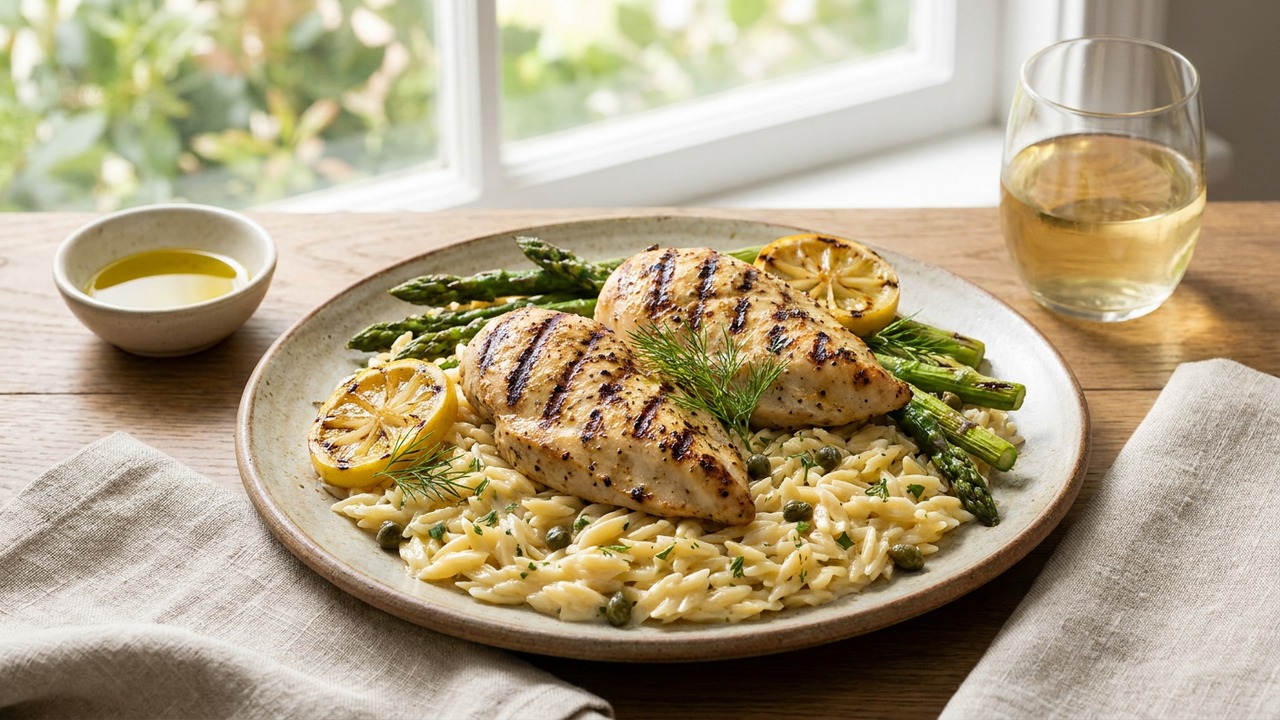
Bright, zesty Lemon Orzo Chicken pairs charred, lemon-marinated grilled chicken with pillowy orzo tossed in butter, lemon and fresh parsley. Quick to prep and perfect for warm nights, this grilled main feels light but satisfying — ideal for weeknight dinners or summer gatherings.
About This Recipe
Lemon Orzo Chicken is the kind of weeknight main that reads bright and effortless but delivers satisfying, layered flavors: lemon-marinated chicken grilled until the edges caramelize, paired with pillowy orzo finished in butter, olive oil and parsley. The marinade’s lemon juice and zest wake up the chicken without masking it, while garlic and oregano give a restrained Mediterranean backbone. Cooking the orzo in low-sodium chicken broth rather than water adds savory weight so the pasta complements — rather than competes with — the grilled meat.
What makes this rendition work are a few small, intentional choices: a short, acid-forward marinade seasons quickly without breaking down the protein, an even medium-high grill temperature encourages browning without drying, and returning the orzo to the hot pot off the flame lets butter and oil coat each grain for a glossy, non-starchy finish. Slice the chicken against the grain and let it rest to retain juices, then finish the plate with parsley, a little grated Parmesan and a pinch of red pepper flakes for contrast. It’s ideal for summer dinners, easy entertaining, or a meal-prep dinner that still feels fresh and composed.
Ingredients for Lemon Orzo Chicken
- 1 1/2 lb boneless skinless chicken breasts
- 1 cup orzo
- 2 cups low-sodium chicken broth
- 3 tbsp lemon juice
- 1 tbsp lemon zest
- 3 tbsp extra-virgin olive oil
- 3 cloves garlic, minced
- 1 tsp dried oregano
- 1 1/2 tsp kosher salt
- 1/2 tsp freshly ground black pepper
- 1 tbsp unsalted butter
- 1/4 cup fresh parsley, chopped
- 1/4 cup grated Parmesan (optional)
- 1/4 tsp red pepper flakes (optional)
How to Make Lemon Orzo Chicken
Step 1: Make the lemon marinade
In a shallow bowl or large zip-top bag whisk together lemon juice, lemon zest, 2 tablespoons olive oil, minced garlic, dried oregano, 1 teaspoon kosher salt and 1/4 teaspoon black pepper. Add the chicken breasts, turning to coat, then refrigerate to marinate at least 15 minutes (or up to 2 hours for more flavor).Step 2: Cook the orzo
Bring the chicken broth to a simmer in a medium saucepan. Add the orzo, stir, and cook uncovered until al dente (about 8–10 minutes), stirring occasionally. Drain any excess liquid, then return orzo to the pan off the heat. Stir in butter, remaining 1 tablespoon olive oil, half the chopped parsley, a pinch of lemon zest, and season to taste with salt and pepper; keep warm.Step 3: Grill the chicken
Preheat grill to medium-high and oil the grates. Remove chicken from marinade and shake off excess. Grill chicken 5–7 minutes per side (depending on thickness) until an instant-read thermometer reads 165°F (74°C) and juices run clear. Transfer to a cutting board and let rest 5 minutes.Step 4: Slice and assemble
Slice the rested chicken against the grain. Serve the chicken over or alongside the lemon orzo, sprinkle with remaining parsley and grated Parmesan if using, and finish with a pinch of red pepper flakes for heat and an extra drizzle of olive oil or a squeeze of lemon, if desired.


- In a shallow bowl or large zip-top bag whisk together lemon juice, lemon zest, 2 tablespoons olive oil, minced garlic, dried oregano, 1 teaspoon kosher salt and 1/4 teaspoon black pepper. Add the chicken breasts, turning to coat, then refrigerate to marinate at least 15 minutes (or up to 2 hours for more flavor).
- Bring the chicken broth to a simmer in a medium saucepan. Add the orzo, stir, and cook uncovered until al dente (about 8–10 minutes), stirring occasionally. Drain any excess liquid, then return orzo to the pan off the heat. Stir in butter, remaining 1 tablespoon olive oil, half the chopped parsley, a pinch of lemon zest, and season to taste with salt and pepper; keep warm.
- Preheat grill to medium-high and oil the grates. Remove chicken from marinade and shake off excess. Grill chicken 5–7 minutes per side (depending on thickness) until an instant-read thermometer reads 165°F (74°C) and juices run clear. Transfer to a cutting board and let rest 5 minutes.
- Slice the rested chicken against the grain. Serve the chicken over or alongside the lemon orzo, sprinkle with remaining parsley and grated Parmesan if using, and finish with a pinch of red pepper flakes for heat and an extra drizzle of olive oil or a squeeze of lemon, if desired.
Lemon Orzo Chicken Tips
Don’t over-marinate
Keep the chicken in the lemon marinade for 15 minutes to 2 hours; beyond that the acid can start to toughen the meat and change its texture.
Even thickness matters
Pound thicker breasts to an even thickness so they cook uniformly on the grill and finish at the same time.
Use broth for orzo
Simmering orzo in low-sodium chicken broth gives the pasta savory depth and prevents the finished dish from tasting flat.
Finish off-heat
Remove the orzo from the burner and stir in butter and olive oil off the heat to keep it glossy and prevent gummy starch release.
Rest before slicing
Let grilled chicken rest 5 minutes under foil so juices redistribute; slice against the grain for maximum tenderness.
Lemon Orzo Chicken Variations and Substitutions
Dairy-free swap
Skip the butter and Parmesan and finish the orzo with an extra tablespoon of olive oil and a squeeze of lemon for richness without dairy.
Use boneless thighs
Substitute boneless skinless chicken thighs for a more forgiving, juicier result; reduce grill time slightly and target 165°F internal temperature.
Herby Greek twist
Add chopped dill and mint to the parsley, use crumbled feta in place of Parmesan, and stir in a few halved cherry tomatoes for brightness.
One-pan stovetop
Sear the marinated chicken in a hot ovenproof skillet, then remove and cook the orzo in the same pan with broth to soak up pan fond before finishing together in the oven.
How to Store and Make Lemon Orzo Chicken Ahead
Store leftover chicken and orzo in separate airtight containers in the refrigerator for up to 3 days to preserve texture. Reheat gently in a skillet with a splash of chicken broth or water and a squeeze of lemon to revive moisture; microwaving is fine but cover and add a teaspoon of liquid to avoid drying. You can freeze cooked chicken for up to 2 months, but orzo’s texture suffers when frozen, so freeze only the chicken if possible.
What to Serve With Lemon Orzo Chicken
Serve alongside a crisp green salad (arugula, cucumber, and thinly sliced red onion) or grilled vegetables like asparagus and zucchini to echo the grill-char. A squeeze of fresh lemon and a drizzle of extra-virgin olive oil at the table brightens everything, and a chilled Sauvignon Blanc or a dry Rosé complements the lemony, herbaceous notes.
Lemon Orzo Chicken FAQs
Can I use chicken thighs instead of breasts?
Yes — boneless skinless thighs are a great substitute and stay juicier on the grill; reduce cooking time slightly and still aim for 165°F internal temperature.
What if I don’t have a grill?
You can grill-mark the chicken on a hot grill pan or sear it in a cast-iron skillet, finishing in a 400°F oven until it reaches 165°F; this gives a similar char and controlled cooking.
How do I prevent orzo from becoming gummy?
Cook orzo uncovered until al dente, drain any excess liquid, then return it to the pan off the heat and stir in fats immediately to coat the grains and stop starch release.
Can I prepare this ahead for a gathering?
Marinate the chicken up to 2 hours ahead and cook the orzo up to a day in advance, keeping them separate; reheat the chicken briefly on the grill and refresh the orzo with a small splash of broth and a warm skillet toss.
Should I add the optional red pepper flakes?
Red pepper flakes add a pleasant background heat that contrasts the lemon; start with 1/4 teaspoon and increase to taste, or leave them out for no heat.
About the author
Jake WoodsHello, I'm Jake. I started this recipe site with the idea that I hated recipe websites that overwhelm you with long stories and ads just to see plain content that's not helpful. My goal is to provide you with quality recipes, simple ideas and a fun cooking experience. There's lots of fun things to cook, and I think as you browse the site you'll find that TopShelf.Recipes is the place for quality recipes on the web.
See all recipes by Jake Woods →Ratings & Reviews
Did you make this recipe?
Be the first to share your experience.
Nutrition Facts
Per serving: 1 serving
Nutrition values are estimated from USDA ingredient data and may vary based on preparation, brands, and portion sizes. Values are provided for informational purposes only.
Keep Reading
Guides & articles for this recipe

Healthy Eating
Gluten-Free Weeknight Grilling Plan
A 7-day gluten-free weeknight grilling plan with quick, family-friendly recipes, prep-ahead timelines, and a printable shopping list that spotlights late-summer produce and pantry staples. Includes clear cross-contamination safety tips and simple swaps to keep dinners fast and crowd-pleasing.

Cocktails & Drinks
Shakerless Cocktails for Backyard Grilling
Easy, tool-free cocktail recipes designed for backyard grilling and outdoor hangs. Find single-serve and batch formulas, quick portable infusions, improvised gear hacks, and simple cocktail pairings for grilled meats and vegetables.

Healthy Eating
Lean Labor Day Grilling Menu
A Labor Day grilling guide that swaps heavy BBQ classics for lighter, flavorful options—think lean proteins, charred vegetables, and low‑sugar sauces. Includes make-ahead meal prep, portioning tips, and a short shopping checklist for healthy, crowd-pleasing cookouts.
More from Grilling
View all Grilling recipes →
Tandoori Yogurt Marinated Grilled Chicken (Tandoori Style on the Grill)

Labor Day Grilled Lobster Rolls with Charred Scallion Brown Butter & Lemon‑Herb Aioli

Bulgogi Smash Burger

Campfire‑Smoked Potato Salad with Mustard‑Bacon Vinaigrette — A Labor Day Grilling Side for Steak

Hanger Steak with Shallot Sauce
Grilled Pineapple Upside-Down Cake

Spicy Grilled Shrimp Skewers with Garlic Lime Marinade

Honey Garlic Grilled Thin-Sliced Chicken Breasts

Coffee and Porcini Dry-Rub Steaks with RUB PRIME STEAK Finish
Ask me anything about this recipe — substitutions, scaling, techniques, timing.
Powered by AI · 6 questions per 5 minutes, 30 per day