Mike's Hot Honey Glazed Grilled Salmon with Citrus
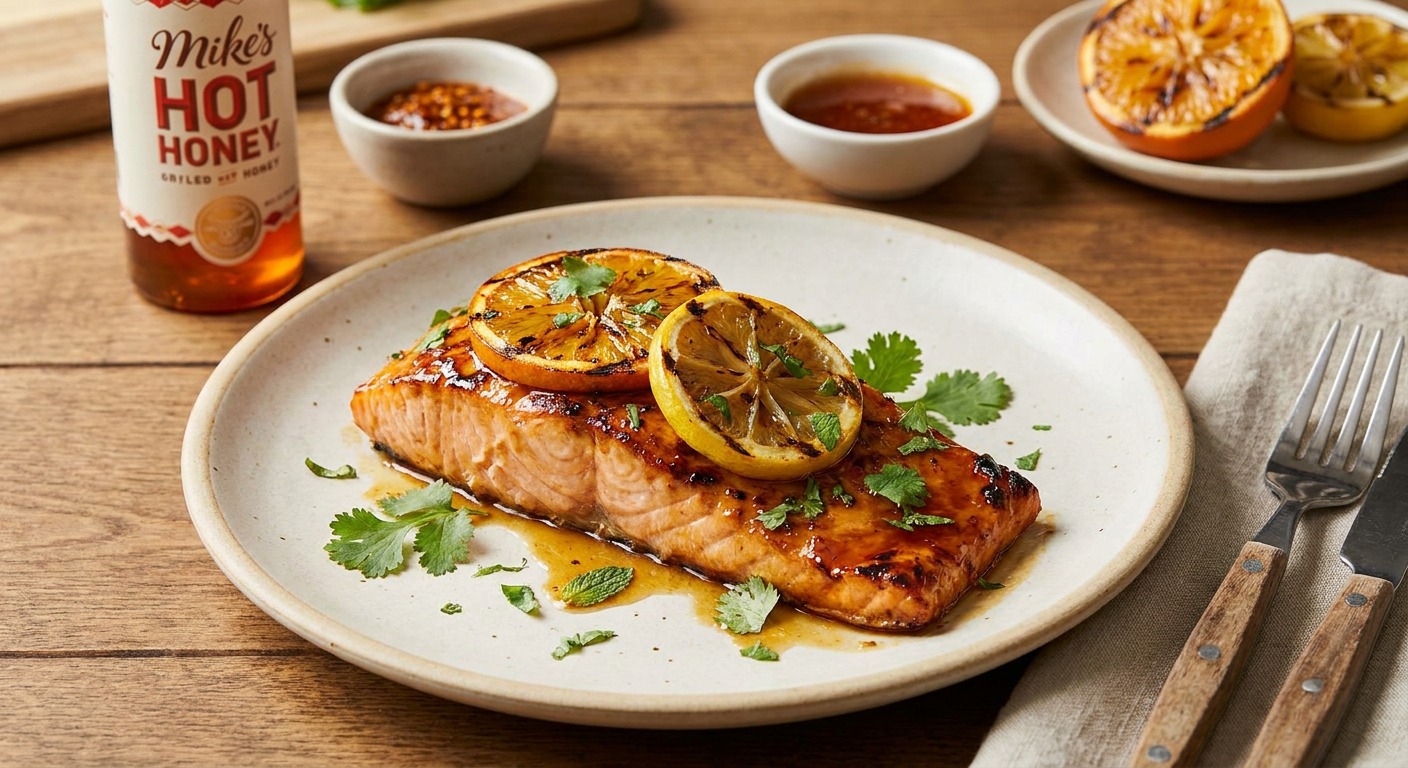
Sweet, spicy and bright, this grilled salmon is finished with a glossy Mike's Hot Honey citrus glaze that caramelizes on the grill. Quick to make and full of contrast — crisped skin, tender flesh, and a honeyed heat — it's perfect for weeknight dinners or summer cookouts.
Ingredient Spotlight
Mike's Hot Honey
A branded, American chili-infused honey (originally popularized in Brooklyn) that combines sweet honey with a warm, lingering heat from chili peppers and sometimes a faint tang. It tastes like pure honey up front with a peppery, spicy finish and is used as a condiment on everything from pizza to fried chicken. You can find it in many grocery stores, specialty food shops, and online, or substitute by stirring honey with a pinch of cayenne or crushed red pepper (or a little sriracha) to taste; for extra depth add a splash of apple-cider vinegar or lemon juice.
(paid link) — as an Amazon Associate we earn from qualifying purchases.
Jake Woods's note
"This recipe highlights Mike's Hot Honey as a sweet-spicy finishing glaze that plays beautifully with fresh citrus. It’s fast enough for a weeknight but impressive enough for guests — aim for just-off-medium doneness for the best texture."
About This Recipe
This Hot Honey Glazed Grilled Salmon is built around a simple and reliable idea: high-heat grilling for crisp skin and just-cooked, glossy flesh, finished with a bright citrus glaze that balances sweet heat with savory depth. Mike's Hot Honey brings a pick-me-up of chili-spiked honey that caramelizes beautifully on the grill; combined with lemon, orange and a splash of soy it becomes more than a glaze—it’s a quick sauce that amplifies the salmon's natural richness without masking it. The contrast between the crunch of the skin and the silky flakes beneath is what makes this preparation sing.
It’s a weeknight-friendly dish that also clears the bar for summer cookouts because the steps are short and the outcome looks impressive. A few technique choices—starting skin-side down, drying the fillets, reserving some glaze off the heat, and pulling the fish at 125–130°F—are what keep the honey from burning and the salmon from overcooking. Make a little extra glaze to toss with a warm grain salad or to spoon over steamed greens; the citrus note in the sauce keeps each bite lively and keeps the dish from feeling heavy.
Ingredients for Mike's Hot Honey Glazed Grilled Salmon with Citrus
- 4 pieces salmon fillets (6–8 oz / 170–225 g each), skin-on
- 1 tbsp olive oil
- 1 tsp kosher salt
- 1/2 tsp freshly ground black pepper
- 1/3 cup Mike's Hot Honey
- 2 tbsp fresh lemon juice
- 2 tbsp fresh orange juice
- 1 tbsp low-sodium soy sauce
- 2 cloves garlic, minced
- 2 tbsp fresh parsley, chopped (optional)
🛒 = paid link — as an Amazon Associate we earn from qualifying purchases.
How to Make Mike's Hot Honey Glazed Grilled Salmon with Citrus
Step 1: Prep and season the salmon
Pat the fillets dry with paper towels. Rub both sides lightly with olive oil and season the skin and flesh evenly with kosher salt and freshly ground black pepper; set aside while the grill heats so the seasoning adheres.For this step
- 4 piecessalmon fillets (6–8 oz / 170–225 g each), skin-on
- 1 tbspolive oil
- 1 tspkosher salt
- 1/2 tspfreshly ground black pepper
Step 2: Preheat and oil the grill
Preheat the grill to medium-high (about 400–425°F / 200–220°C). Clean and oil the grates well to prevent sticking — use a folded paper towel dipped in oil held with tongs to grease the grates.Step 3: Make the citrus hot-honey glaze
In a small bowl whisk together Mike's Hot Honey, fresh lemon juice, fresh orange juice, low-sodium soy sauce and minced garlic until smooth. Reserve about 2 tablespoons of the glaze in a separate dish for finishing so you have a cool spoonable glaze to brush on off the heat.For this step
- 1/3 cupMike's Hot Honey
- 2 tbspfresh lemon juice
- 2 tbspfresh orange juice
- 1 tbsplow-sodium soy sauce
- 2 clovesgarlic, minced
Step 4: Grill skin-side down
Place the salmon skin-side down on the hot, oiled grates and close the lid. Grill undisturbed for 6–8 minutes, depending on thickness, until the flesh is mostly opaque and the skin is crisp and releases easily from the grate.Step 5: Flip, glaze and finish cooking
Carefully flip each fillet and immediately brush the cooked side with the hot-honey citrus glaze. Close the lid and cook 1–3 more minutes, or until the salmon reaches 125–130°F (52–54°C) for medium; brush again with reserved glaze after removing from heat for extra shine and flavor.Step 6: Rest and serve
Let the salmon rest 2 minutes to redistribute juices. Serve skin-side up or off, sprinkle with chopped parsley and an optional extra squeeze of lemon; finish with a pinch of flaky sea salt if desired.For this step
- 2 tbspfresh parsley, chopped (optional)


- Pat the fillets dry with paper towels. Rub both sides lightly with olive oil and season the skin and flesh evenly with kosher salt and freshly ground black pepper; set aside while the grill heats so the seasoning adheres.
- Preheat the grill to medium-high (about 400–425°F / 200–220°C). Clean and oil the grates well to prevent sticking — use a folded paper towel dipped in oil held with tongs to grease the grates.
- In a small bowl whisk together Mike's Hot Honey, fresh lemon juice, fresh orange juice, low-sodium soy sauce and minced garlic until smooth. Reserve about 2 tablespoons of the glaze in a separate dish for finishing so you have a cool spoonable glaze to brush on off the heat.
- Place the salmon skin-side down on the hot, oiled grates and close the lid. Grill undisturbed for 6–8 minutes, depending on thickness, until the flesh is mostly opaque and the skin is crisp and releases easily from the grate.
- Carefully flip each fillet and immediately brush the cooked side with the hot-honey citrus glaze. Close the lid and cook 1–3 more minutes, or until the salmon reaches 125–130°F (52–54°C) for medium; brush again with reserved glaze after removing from heat for extra shine and flavor.
- Let the salmon rest 2 minutes to redistribute juices. Serve skin-side up or off, sprinkle with chopped parsley and an optional extra squeeze of lemon; finish with a pinch of flaky sea salt if desired.
Mike's Hot Honey Glazed Grilled Salmon with Citrus Tips
Pat salmon very dry
Removing surface moisture before oiling helps the skin crisp and prevents steaming on the grill, which improves browning and reduces sticking.
Oil grates, not fish
Greasing the grill with a paper towel and tongs creates a slick surface so the skin releases cleanly, avoiding torn fillets.
Reserve some glaze
Keep 2 tablespoons of the glaze off the heat to brush on after cooking; brushing only hot glaze prevents the sugars from burning on the grill.
Start skin-side down
Cook most of the time skin-side down to protect the flesh; flip only once to finish and apply the glaze, which helps form a glossy caramelized layer.
Watch for caramelization
Because the glaze has honey and citrus, work over medium-high heat and check early—if the sugars darken too fast, move the fillets to a cooler spot or reduce heat.
Mike's Hot Honey Glazed Grilled Salmon with Citrus Variations and Substitutions
Honey Substitute
If you don't have Mike's Hot Honey, whisk regular honey with 1/2 teaspoon crushed red pepper or a teaspoon of gochujang for heat, then proceed with the citrus and soy.
Citrus and Ginger
Swap orange for lime and add 1 teaspoon grated ginger to the glaze for a brighter, slightly spicy Asian-leaning profile.
Soy-Free Option
Use coconut aminos instead of soy sauce to keep the umami without soy; it’s slightly sweeter, so taste before glazing.
Make it Heartier
For thicker steaks like swordfish or tuna, increase initial skin-side (or sear) time and finish in a 400°F oven until the center reaches your desired doneness.
How to Store and Make Mike's Hot Honey Glazed Grilled Salmon with Citrus Ahead
Store leftover salmon in an airtight container in the refrigerator for up to 2 days; the glaze will make the skin lose crispness. Reheat gently in a 275°F oven on a sheet pan for 8–10 minutes or flake cold over salads or grain bowls—avoid the microwave to preserve texture. The glaze itself keeps in the fridge for up to a week and can be warmed to spoon over reheated fish.
What to Serve With Mike's Hot Honey Glazed Grilled Salmon with Citrus
Serve alongside a crisp grain salad (farro or Israeli couscous) tossed with cucumbers and dill, or with charred corn and a lemony herb slaw for summer meals. Offer a bright, acidic wine like a Sauvignon Blanc or an unoaked Chardonnay, or a citrus-forward pale ale to stand up to the honey and citrus. When plating, serve skin-side up for visual drama and sprinkle with flaky sea salt just before serving.
Mike's Hot Honey Glazed Grilled Salmon with Citrus FAQs
Can I use frozen salmon?
Yes—thaw completely in the refrigerator and pat very dry before seasoning to ensure the skin crisps properly and the glaze adheres.
How do I prevent the glaze from burning on the grill?
Because honey sugars burn quickly, brush glaze on only after the initial skin-side cook, use medium-high heat rather than direct very high heat, and reserve some glaze to brush off-heat; move fillets to a cooler zone if they begin to darken too fast.
What if I prefer my salmon well done?
Cook to a higher internal temperature (140–145°F), but expect drier flesh; consider finishing with an extra spoonful of the reserved glaze and a splash of citrus to restore moisture and brightness.
Can I make this under a broiler instead of grilling?
Yes—broil skin-side down on a lightly oiled rack about 6 inches from the heat for 6–8 minutes, flip briefly to brush glaze and broil 1–2 more minutes, watching closely to avoid burning.
Why is the soy sauce included?
A small amount of low-sodium soy adds savory umami and salt balance so the honey and citrus don’t make the glaze cloying; you can reduce or swap it for coconut aminos if needed.
About the author
Jake WoodsHello, I'm Jake. I started this recipe site with the idea that I hated recipe websites that overwhelm you with long stories and ads just to see plain content that's not helpful. My goal is to provide you with quality recipes, simple ideas and a fun cooking experience. There's lots of fun things to cook, and I think as you browse the site you'll find that TopShelf.Recipes is the place for quality recipes on the web.
See all recipes by Jake Woods →Ratings & Reviews
Did you make this recipe?
Be the first to share your experience.
Nutrition Facts
Per serving: 1 serving
Nutrition values are estimated from USDA ingredient data and may vary based on preparation, brands, and portion sizes. Values are provided for informational purposes only.
Keep Reading
Guides & articles for this recipe

Healthy Eating
Gluten-Free Weeknight Grilling Plan
A 7-day gluten-free weeknight grilling plan with quick, family-friendly recipes, prep-ahead timelines, and a printable shopping list that spotlights late-summer produce and pantry staples. Includes clear cross-contamination safety tips and simple swaps to keep dinners fast and crowd-pleasing.

Cocktails & Drinks
Shakerless Cocktails for Backyard Grilling
Easy, tool-free cocktail recipes designed for backyard grilling and outdoor hangs. Find single-serve and batch formulas, quick portable infusions, improvised gear hacks, and simple cocktail pairings for grilled meats and vegetables.

Healthy Eating
Lean Labor Day Grilling Menu
A Labor Day grilling guide that swaps heavy BBQ classics for lighter, flavorful options—think lean proteins, charred vegetables, and low‑sugar sauces. Includes make-ahead meal prep, portioning tips, and a short shopping checklist for healthy, crowd-pleasing cookouts.
More from Grilling
View all Grilling recipes →
Tandoori Yogurt Marinated Grilled Chicken (Tandoori Style on the Grill)

Labor Day Grilled Lobster Rolls with Charred Scallion Brown Butter & Lemon‑Herb Aioli

Bulgogi Smash Burger

Campfire‑Smoked Potato Salad with Mustard‑Bacon Vinaigrette — A Labor Day Grilling Side for Steak

Hanger Steak with Shallot Sauce
Grilled Pineapple Upside-Down Cake

Spicy Grilled Shrimp Skewers with Garlic Lime Marinade

Honey Garlic Grilled Thin-Sliced Chicken Breasts

Coffee and Porcini Dry-Rub Steaks with RUB PRIME STEAK Finish
Ask me anything about this recipe — substitutions, scaling, techniques, timing.
Powered by AI · 6 questions per 5 minutes, 30 per day