Pumpkin & Poblano Masa-Dumpling Caldo
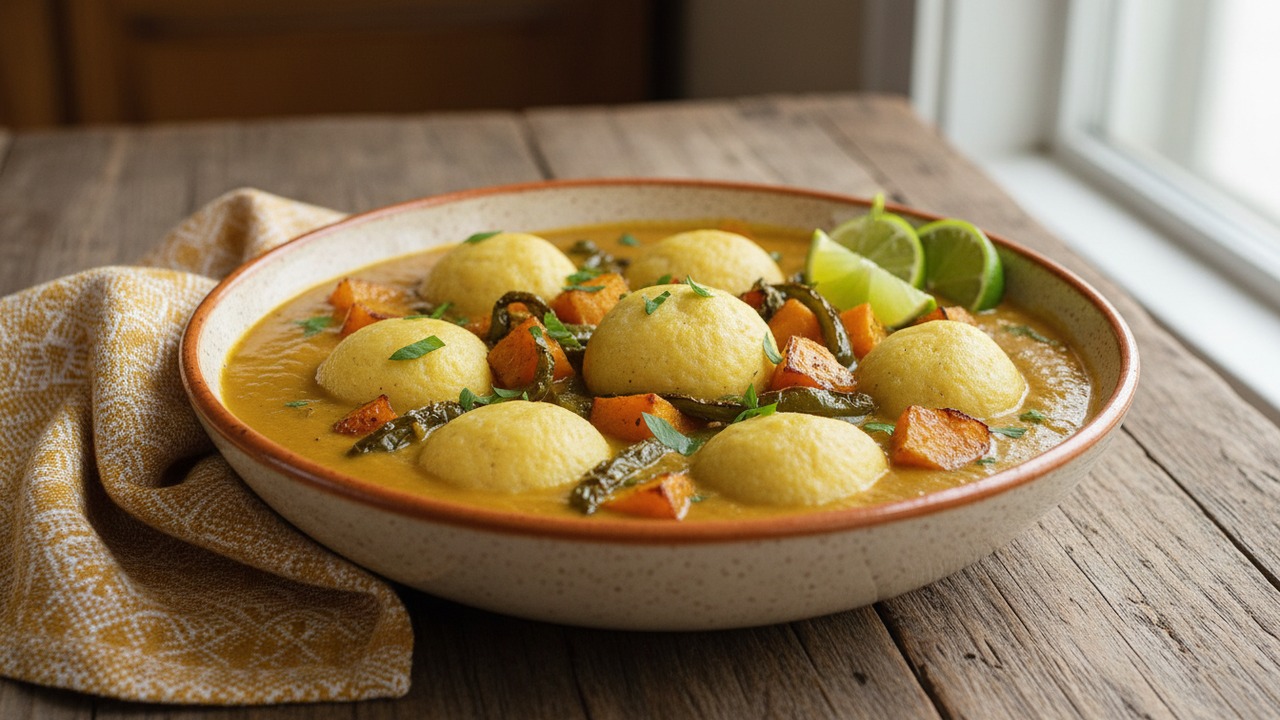
A fall-forward Mexican caldo that pairs roasted pumpkin and charred poblanos with tender masa dumplings. Finished with bright lime and fragrant epazote, this vegetarian, weeknight-friendly soup is warming and easy to make ahead.
Ingredient Spotlight
Poblano peppers
A large, mild Mexican chili with thick walls and an earthy, slightly smoky flavor; often roasted, peeled and used for stuffing (e.g., chiles rellenos). Originating in Mexico, poblanos are usually mild on the Scoville scale but can occasionally have more heat. You can find them at most supermarkets, Latin markets, or farmers’ markets; good substitutes are Anaheim or cubanelle peppers for similar heat and size, or pasilla/ ancho (dried poblano) if you need a deeper, dried flavor.
Ingredient Spotlight
Masa harina
A finely ground corn flour made from nixtamalized (alkali-treated) dried corn used to make tortillas, tamales and corn doughs; a staple of Mexican cuisine. It has a distinct cooked-corn, slightly sweet and earthy aroma and binds differently than regular cornmeal. Find it in the Latin foods aisle of supermarkets, at Hispanic grocery stores, or under brands like Maseca; if unavailable, finely ground cornmeal can be used in a pinch but the texture and binding will be coarser—fresh masa (masa fresca) is the closest true substitute.
Ingredient Spotlight
Fresh epazote, chopped
Epazote is a pungent Mexican herb traditionally added to bean dishes and moles to add a savory, medicinal, slightly citrusy and resinous note. It’s common in Mexican and Central American cooking but unfamiliar to many US cooks because of its assertive aroma and regional use. You can buy it fresh at Latin markets and some larger supermarkets; if you can’t find it, use a small amount of fresh oregano or a blend of cilantro plus a touch of oregano as a mild stand-in (dried epazote is much milder than fresh).
Jake Woods's note
"This caldo is all about simple, rustic fall flavors — sweet roasted pumpkin, smoky charred poblanos and pillowy masa dumplings. It’s perfect for a cozy weeknight and the dumplings can be formed ahead for super-easy assembly."
About This Recipe
This Pumpkin & Poblano Masa-Dumpling Caldo is a cozy, fall-forward take on a Mexican soup that balances soft sweetness, gentle heat and satisfying chew. Roasting the small sugar pumpkin concentrates its sugars and gives the broth a bright, slightly caramelized backdrop while blistering the poblanos adds smoky, vegetal counterpoint; the masa dumplings soak up those flavors and provide the kind of hand-held comfort that spoons simply can’t deliver. A splash of lime and a few snips of epazote at the end lift the dish so it never becomes heavy, keeping each bowl lively rather than cloying.
What makes this version work is attention to the simple contrasts: roast for depth, char for smoke, and careful masa hydration for dumplings that are tender rather than gluey. The recipe is intentionally forgiving — dumplings can be formed ahead or frozen, and the caldo itself is easy to tweak with more broth for a slurpable soup or a touch of cream for richness. It’s perfect for weeknights when you want something homey but not fussy, and it also travels well to potlucks or a make-ahead week of lunches where leftovers taste even better the next day.
Ingredients for Pumpkin & Poblano Masa-Dumpling Caldo
- 1 small (about 2 lb) Small sugar (pie) pumpkin, halved and seeded
- 2 large Poblano peppers
- 2 tbsp Neutral oil (vegetable or canola)
- 1 medium Yellow onion, chopped
- 3 cloves Garlic, minced
- 6 cups Vegetable broth
- 1 1/2 cups Masa harina
- 1 3/4 cups Warm water (to hydrate masa)
- 2 tbsp Fresh epazote, chopped
- 2 each Limes (for juice and wedges)
- 1 tbsp Salt
How to Make Pumpkin & Poblano Masa-Dumpling Caldo
Step 1: Roast the pumpkin and char poblanos
Preheat the oven to 425°F (220°C). Rub the cut pumpkin halves with 1 tablespoon oil and a little salt; place cut side down on a baking sheet and roast 25–30 minutes until very tender. While the pumpkin roasts, char poblanos directly over a gas flame or under a broiler, turning until blistered on all sides; transfer to a bowl, cover to steam 10 minutes, then peel, seed and roughly chop.For this step
- 1 small (about 2 lb)Small sugar (pie) pumpkin, halved and seeded
- 2 largePoblano peppers
- 2 tbspNeutral oil (vegetable or canola)
- 1 tbspSalt
Step 2: Build the caldo
In a large pot, heat the remaining 1 tablespoon oil over medium; add the chopped onion and cook until soft and translucent, about 5–7 minutes. Add the garlic and cook 30–60 seconds until fragrant. Scoop the roasted pumpkin flesh from the skins, add it and the chopped poblanos to the pot, pour in the vegetable broth, bring to a gentle simmer and cook 8–10 minutes to meld flavors; season to taste with salt.For this step
- 1 mediumYellow onion, chopped
- 3 clovesGarlic, minced
- 6 cupsVegetable broth
Step 3: Make the masa dumpling dough
In a medium bowl combine masa harina with warm water and a pinch of salt; mix and knead until a soft, pliable dough forms (like play-dough), about 2–3 minutes — add a tablespoon more water if too dry. Pinch off tablespoon-sized pieces and roll into balls; to make a weeknight shortcut, form the dumplings ahead: refrigerate the shaped dumplings up to 24 hours or freeze them on a sheet tray until solid, then transfer to a bag (see tips).For this step
- 1 1/2 cupsMasa harina
- 1 3/4 cupsWarm water (to hydrate masa)
Step 4: Cook the dumplings in the simmering caldo
Bring the caldo back to a gentle simmer and drop the masa dumplings in, a few at a time so they don’t stick. Simmer uncovered for about 8–10 minutes (12–14 minutes if cooking from frozen) until dumplings are cooked through and tender; they will puff slightly and float when done.Step 5: Finish with epazote
Stir in the chopped fresh epazote and simmer 1 minute to release its aroma. Taste and adjust seasoning — add more salt if needed and a splash of broth or water to reach your desired consistency.For this step
- 2 tbspFresh epazote, chopped
Step 6: Serve with lime and tips for make-ahead
Ladle the caldo into bowls and squeeze fresh lime juice over each serving; pass extra lime wedges at the table. Make-ahead tips: shaped dumplings refrigerate up to 24 hours or freeze on a tray, then add frozen dumplings straight to simmering broth (allow 2–4 extra minutes). This makes the recipe ideal for a fast weeknight dinner.For this step
- 2 eachLimes (for juice and wedges)


- Preheat the oven to 425°F (220°C). Rub the cut pumpkin halves with 1 tablespoon oil and a little salt; place cut side down on a baking sheet and roast 25–30 minutes until very tender. While the pumpkin roasts, char poblanos directly over a gas flame or under a broiler, turning until blistered on all sides; transfer to a bowl, cover to steam 10 minutes, then peel, seed and roughly chop.
- In a large pot, heat the remaining 1 tablespoon oil over medium; add the chopped onion and cook until soft and translucent, about 5–7 minutes. Add the garlic and cook 30–60 seconds until fragrant. Scoop the roasted pumpkin flesh from the skins, add it and the chopped poblanos to the pot, pour in the vegetable broth, bring to a gentle simmer and cook 8–10 minutes to meld flavors; season to taste with salt.
- In a medium bowl combine masa harina with warm water and a pinch of salt; mix and knead until a soft, pliable dough forms (like play-dough), about 2–3 minutes — add a tablespoon more water if too dry. Pinch off tablespoon-sized pieces and roll into balls; to make a weeknight shortcut, form the dumplings ahead: refrigerate the shaped dumplings up to 24 hours or freeze them on a sheet tray until solid, then transfer to a bag (see tips).
- Bring the caldo back to a gentle simmer and drop the masa dumplings in, a few at a time so they don’t stick. Simmer uncovered for about 8–10 minutes (12–14 minutes if cooking from frozen) until dumplings are cooked through and tender; they will puff slightly and float when done.
- Stir in the chopped fresh epazote and simmer 1 minute to release its aroma. Taste and adjust seasoning — add more salt if needed and a splash of broth or water to reach your desired consistency.
- Ladle the caldo into bowls and squeeze fresh lime juice over each serving; pass extra lime wedges at the table. Make-ahead tips: shaped dumplings refrigerate up to 24 hours or freeze on a tray, then add frozen dumplings straight to simmering broth (allow 2–4 extra minutes). This makes the recipe ideal for a fast weeknight dinner.
Pumpkin & Poblano Masa-Dumpling Caldo Tips
Hydrate the masa properly
Warm water wakes the masa harina and yields a pliable dough; if it feels dry, add water a teaspoon at a time until it’s soft like play-dough.
Don’t boil the dumplings
Keep the caldo at a gentle simmer so the dumplings cook through without falling apart or becoming rubbery from violent agitation.
Char poblanos evenly
Rotate peppers over the flame or under the broiler so all sides blister; steam in a covered bowl to loosen skin for easier peeling.
Test one dumpling
Cook a single dumpling first to check texture and seasoning so you can adjust masa softness or soup saltiness before dropping the rest.
Use epazote sparingly
This herb is potent—add most of it at the end, taste, and then decide if you want more to avoid overwhelming the pumpkin’s sweetness.
Pumpkin & Poblano Masa-Dumpling Caldo Variations and Substitutions
Creamy Coconut Twist
Stir 1/2 cup canned coconut milk into the caldo just before serving for a silkier texture and a subtle tropical note that pairs well with pumpkin.
Hominy Posole Style
Add a 15-ounce can of drained hominy with the poblanos for extra body and a posole-like bite that makes the soup heartier.
Spicy Chipotle Kick
Blend one canned chipotle in adobo with a bit of broth and stir it into the pot to introduce smoky heat that complements the roasted pumpkin.
Winter Squash Substitute
If you can’t find a sugar pumpkin, use butternut or kabocha—roast them the same way but reduce roasting time for smaller pieces of squash.
How to Store and Make Pumpkin & Poblano Masa-Dumpling Caldo Ahead
Store leftover caldo with dumplings in an airtight container in the refrigerator for up to 3–4 days; the dumplings will continue to absorb liquid, so the soup will thicken over time. Reheat gently on the stovetop over low heat, adding a splash of broth or water to loosen the consistency. Shaped dumplings can be refrigerated up to 24 hours or frozen on a tray and then transferred to a bag for up to 1 month; add frozen dumplings straight to simmering broth and extend cooking time by a few minutes.
What to Serve With Pumpkin & Poblano Masa-Dumpling Caldo
Serve the caldo with lime wedges and a scattering of toasted pumpkin seeds (pepitas) for crunch; a handful of thinly sliced radishes brightens the bowl visually and texturally. Offer warm corn tortillas or toasted bolillo slices to sop up the broth, and pair with a crisp Mexican lager, a citrusy white wine like Albariño, or a bright agua fresca such as hibiscus to cut the richness.
Pumpkin & Poblano Masa-Dumpling Caldo FAQs
How can I tell when the masa dumplings are done?
They should puff slightly and float to the surface; test one by cutting it in half—there should be no raw masa center and the texture should be tender, not gummy.
Can I use canned pumpkin purée instead of roasting a pumpkin?
Yes, but canned purée lacks the depth of roasted squash; if you use it, sauté the purée briefly with the aromatics to concentrate flavor and reduce some broth to retain body.
What if my masa is too sticky or too dry?
If sticky, knead in a little more masa harina; if dry and crumbly, add warm water a teaspoon at a time until pliable—consistency should resemble firm play-dough.
Is epazote essential, and what can I substitute?
Epazote lends an herbal, slightly medicinal note traditional to Mexican soups, but you can substitute a mix of cilantro and a tiny pinch of dried oregano if you can't find it, knowing the flavor will differ.
Can I make this soup vegan and gluten-free?
Yes—use vegetable broth (the recipe already does) and verify your masa harina label for a gluten-free certification; most masa harinas are naturally gluten-free but can be processed in shared facilities.
About the author
Jake WoodsHello, I'm Jake. I started this recipe site with the idea that I hated recipe websites that overwhelm you with long stories and ads just to see plain content that's not helpful. My goal is to provide you with quality recipes, simple ideas and a fun cooking experience. There's lots of fun things to cook, and I think as you browse the site you'll find that TopShelf.Recipes is the place for quality recipes on the web.
See all recipes by Jake Woods →Ratings & Reviews
Did you make this recipe?
Be the first to share your experience.
Nutrition Facts
Per serving: about 1¾ cups
Nutrition values are estimated from USDA ingredient data and may vary based on preparation, brands, and portion sizes. Values are provided for informational purposes only.
Keep Reading
Guides & articles for this recipe

Healthy Eating
Gluten-Free Weeknight Grilling Plan
A 7-day gluten-free weeknight grilling plan with quick, family-friendly recipes, prep-ahead timelines, and a printable shopping list that spotlights late-summer produce and pantry staples. Includes clear cross-contamination safety tips and simple swaps to keep dinners fast and crowd-pleasing.

Healthy Eating
Low-Fat Grill Swaps for Big Flavor
A practical guide to trimming fat from grilled meals without losing juiciness or char. Learn yogurt- and citrus-based marinades, lean protein picks, searing and indirect-heat tricks, plus 5 quick low-fat marinades and a simple weeknight plan.

Recipes
DIY Edible Monster Eyes Candy
Make safe, fun edible monster eyes for cupcakes, cookies, and candy trays. Step-by-step recipes show baking-soda balls, chocolate and fondant eyes, wafer-print options, plus assembly, storage, and kid-friendly safety tips.
More from Mexican
View all Mexican recipes →
Cheesy Enchilada Casserole

Instant Pot Beef Enchiladas

Smoked Pulled Pork Enchiladas

Vegan Black Bean Enchiladas

Chicken Enchiladas Red Sauce

Green Chile Chicken Enchiladas

Skillet Enchilada Dinner

Breakfast Enchilada Casserole

Air Fryer Crispy Enchiladas
Ask me anything about this recipe — substitutions, scaling, techniques, timing.
Powered by AI · 6 questions per 5 minutes, 30 per day