Texas-Style Smoked Brisket
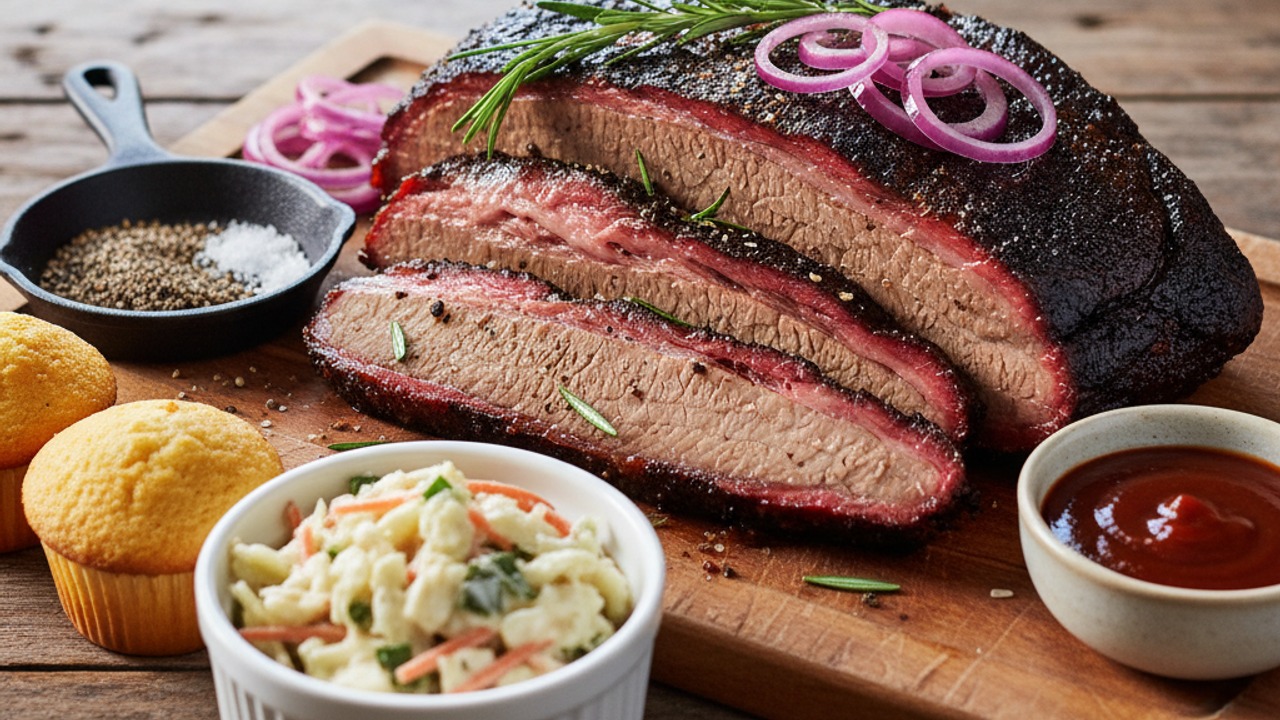
A classic Central Texas approach: a whole packer brisket seasoned simply with kosher salt and coarse black pepper, smoked low and slow over oak until deeply barked and meltingly tender. Patient technique and steady heat produce a beef-forward, smoky crust and luscious slices worth the wait.
About This Recipe
This is a brisket for people who appreciate quiet precision. By letting a single, classic seasoning—kosher salt and coarsely cracked black pepper—do the heavy lifting, the recipe foregrounds the brisket’s innate beef flavor and the rich, nutty smoke of post oak. The goal is a deeply caramelized bark and interior that’s gelatinous and tender without being mushy; that balance comes from trimming to an even thickness, steady 225–250°F heat, and patience through the stall.
The whole packer brisket (flat plus point) rewards a little prep: trimming excess hard fat, squaring the pieces and, when necessary, using twine to even the thickness ensures uniform cooking and makes slicing predictable. The optional mustard binder is strictly to help the salt-and-pepper bark adhere, not to flavor the meat, and wrapping in pink butcher paper at the 165°F mark lets you speed up the finish while keeping bark integrity. This approach is ideal for weekend pitmasters, family gatherings, or anyone who wants a reliably beef-forward Texas centerpiece without chasing complicated rubs or sauces.
Ingredients for Texas-Style Smoked Brisket
- 12 lb Whole packer brisket (flat + point), well trimmed
- 1/3 cup Kosher salt (e.g., Diamond Crystal)
- 1/3 cup Coarse black pepper (freshly cracked)
- 2 tbsp Yellow mustard (light coating as binder; optional)
- 4 chunks Post oak or oak wood chunks
- 2 cups Hot water (for smoker pan)
- 4 strips Butcher twine (for trussing if needed)
How to Make Texas-Style Smoked Brisket
Step 1: Trim and tie the brisket
Trim excess fat to leave a roughly 1/4" fat cap across the flat; remove large hard pieces of fat and silver skin. Square the point to the flat so the meat cooks evenly and, if necessary, use butcher twine to tie the brisket into a uniform thickness. Light scoring of the fat cap is optional to help render fat.For this step
- 12 lbWhole packer brisket (flat + point), well trimmed
- 4 stripsButcher twine (for trussing if needed)
Step 2: Season simply — salt and pepper
Lightly coat the brisket with a thin layer of yellow mustard (or a neutral oil) to help the seasoning adhere. Mix equal parts kosher salt and coarse black pepper and apply generously to all surfaces, pressing the rub into the meat to form an even crust. Let rest at room temperature 30–45 minutes while you bring the smoker up to temp.For this step
- 1/3 cupKosher salt (e.g., Diamond Crystal)
- 1/3 cupCoarse black pepper (freshly cracked)
- 2 tbspYellow mustard (light coating as binder; optional)
Step 3: Prepare the smoker
Set your smoker for indirect heat at a steady 225–250°F (107–121°C). Place a water pan under the grate where the brisket will sit to stabilize temperature and add moisture; fill with 2 cups (475 ml) hot water. Add 3–5 chunks of post oak or oak to the coals or smoker box to generate a clean, steady smoke.For this step
- 4 chunksPost oak or oak wood chunks
- 2 cupsHot water (for smoker pan)
Step 4: Start the low-and-slow smoke
Place the brisket on the smoker fat side up (or fat side toward the heat source on some offset smokers) and insert a probe thermometer into the thickest part of the flat. Smoke undisturbed at 225–250°F (107–121°C). Expect roughly 1 to 1.25 hours per pound as a guideline — total cook time will vary; target internal temperatures guide doneness.Step 5: Manage the stall and optionally spritz
Around 150–165°F (65–74°C) the brisket will enter the 'stall' where temperature plateaus as moisture evaporates. Maintain steady smoke and temperature. If you like, spritz the brisket every 45–60 minutes with a 50/50 mix of beef stock and apple-cider vinegar or water to encourage bark formation, but avoid over-handling the meat.Step 6: Wrap (the Texas crutch) and finish to temperature
When the brisket has a deep, dark bark and the internal temp is roughly 165°F (74°C), wrap tightly in pink butcher paper (preferred) or heavy-duty foil to preserve bark and speed cooking. Return to the smoker and cook until the flat reaches 195–203°F (90–95°C) and probes slide in with little resistance. Total smoking time will often be 8–12+ hours depending on size and smoker consistency.Step 7: Rest the brisket
Remove the wrapped brisket and let it rest at least 60 minutes in a cooler or insulated box wrapped in towels (up to 2 hours). Resting lets the juices redistribute and firms the meat for clean slicing.Step 8: Slice and serve Texas-style
Unwrap and place the brisket fat-side up. Identify the grain of the flat and slice against the grain in 1/4"–1/2" slices. For the point, slice across the grain or pull into chunks. Serve plain or with extra coarse salt and cracked black pepper on the side to preserve the traditional Texas salt-and-pepper profile.


- Trim excess fat to leave a roughly 1/4" fat cap across the flat; remove large hard pieces of fat and silver skin. Square the point to the flat so the meat cooks evenly and, if necessary, use butcher twine to tie the brisket into a uniform thickness. Light scoring of the fat cap is optional to help render fat.
- Lightly coat the brisket with a thin layer of yellow mustard (or a neutral oil) to help the seasoning adhere. Mix equal parts kosher salt and coarse black pepper and apply generously to all surfaces, pressing the rub into the meat to form an even crust. Let rest at room temperature 30–45 minutes while you bring the smoker up to temp.
- Set your smoker for indirect heat at a steady 225–250°F (107–121°C). Place a water pan under the grate where the brisket will sit to stabilize temperature and add moisture; fill with 2 cups (475 ml) hot water. Add 3–5 chunks of post oak or oak to the coals or smoker box to generate a clean, steady smoke.
- Place the brisket on the smoker fat side up (or fat side toward the heat source on some offset smokers) and insert a probe thermometer into the thickest part of the flat. Smoke undisturbed at 225–250°F (107–121°C). Expect roughly 1 to 1.25 hours per pound as a guideline — total cook time will vary; target internal temperatures guide doneness.
- Around 150–165°F (65–74°C) the brisket will enter the 'stall' where temperature plateaus as moisture evaporates. Maintain steady smoke and temperature. If you like, spritz the brisket every 45–60 minutes with a 50/50 mix of beef stock and apple-cider vinegar or water to encourage bark formation, but avoid over-handling the meat.
- When the brisket has a deep, dark bark and the internal temp is roughly 165°F (74°C), wrap tightly in pink butcher paper (preferred) or heavy-duty foil to preserve bark and speed cooking. Return to the smoker and cook until the flat reaches 195–203°F (90–95°C) and probes slide in with little resistance. Total smoking time will often be 8–12+ hours depending on size and smoker consistency.
- Remove the wrapped brisket and let it rest at least 60 minutes in a cooler or insulated box wrapped in towels (up to 2 hours). Resting lets the juices redistribute and firms the meat for clean slicing.
- Unwrap and place the brisket fat-side up. Identify the grain of the flat and slice against the grain in 1/4"–1/2" slices. For the point, slice across the grain or pull into chunks. Serve plain or with extra coarse salt and cracked black pepper on the side to preserve the traditional Texas salt-and-pepper profile.
Texas-Style Smoked Brisket Tips
Trim for Even Thickness
Remove thick, hard fat and square the point to the flat so the meat cooks uniformly and the probe gives a representative read.
Use a Probe Thermometer
Insert the probe into the thickest part of the flat and trust temperature over time-per-pound; feel is useful but internal temp is your guide.
Let Bark Form First
Wait until the brisket has a dark, set bark before wrapping to preserve texture and concentrated smoke flavor when you crutch.
Position Fat Wisely
On vertical/offset smokers place fat toward the heat source, otherwise lay fat cap up to let rendered fat baste the meat during cooking.
Rest in an Insulated Cooler
After the stall and finish, keep the wrapped brisket in a cooler for at least an hour to let juices equalize and make slicing cleaner.
Texas-Style Smoked Brisket Variations and Substitutions
Hickory or Mesquite Swap
Use hickory for a sweeter backbone or mesquite for a bolder, punchier smoke; limit mesquite to avoid bitter over-smoking on a long cook.
Coffee-Pepper Crust
Add 2–3 tablespoons finely ground dark roast coffee to the pepper side of the rub for an earthy bitter edge that complements beef.
Low-Sodium Option
Cut the salt by 25–30% and finish slices with flaky sea salt at the table to let guests season to taste without undercutting bark formation.
Kosher or Halal Substitutes
If beef is unavailable, try a similar method on a large beef-brisket-style cut like beef chuck flat; cook times and fat trim will vary.
How to Store and Make Texas-Style Smoked Brisket Ahead
Cool the sliced brisket to room temperature no longer than two hours, then refrigerate in airtight containers with some reserved jus to keep slices moist; it will keep 3–4 days. For longer storage, freeze in single-serving stacks separated by parchment and vacuum-seal or wrap tightly for up to 3 months. Reheat gently at 250°F wrapped in foil with a splash of beef stock until warmed through to avoid drying the meat.
What to Serve With Texas-Style Smoked Brisket
Serve thin slices of the flat alongside thick, chunked pieces of the point to showcase both textures; offer extra coarse salt and cracked pepper so guests can adjust seasoning. Traditional sides like pickled onions, white bread or bolillos, and a vinegar-based coleslaw cut the richness, while potato salad or smoked baked beans round out a hearty plate. For drinks, an assertive Texas IPA or a full-bodied Zinfandel stands up to the smoke and beef.
Texas-Style Smoked Brisket FAQs
How do I know when the brisket is done?
Target an internal temp of 195–203°F in the thickest part of the flat and look for a probe that slides in with minimal resistance; doneness is about feel and connective tissue breakdown, not just temperature.
Should I spritz during the cook?
Spritzing with a 50/50 mix of beef stock and apple-cider vinegar every 45–60 minutes is optional—use it to promote a darker bark but avoid over-handling the brisket which can slow temperature recovery.
Why wrap in butcher paper instead of foil?
Butcher paper breathes more than foil, preserving bark texture while still speeding the cook; foil will give you a faster finish but can soften the crust more.
Can I smoke at a higher temperature to save time?
Raising the temp shortens cook time but risks a less developed bark and uneven fat rendering; if pressed for time, modest increases to 275°F can work, but monitor closely.
How much fat should I leave on the cap?
Leave about a 1/4-inch fat cap across the flat to baste during the long smoke—trim thicker hard pieces that won't render and could insulate the meat from heat.
About the author
Jake WoodsHello, I'm Jake. I started this recipe site with the idea that I hated recipe websites that overwhelm you with long stories and ads just to see plain content that's not helpful. My goal is to provide you with quality recipes, simple ideas and a fun cooking experience. There's lots of fun things to cook, and I think as you browse the site you'll find that TopShelf.Recipes is the place for quality recipes on the web.
See all recipes by Jake Woods →Ratings & Reviews
Did you make this recipe?
Nutrition Facts
Per serving: 1 serving
Nutrition values are estimated from USDA ingredient data and may vary based on preparation, brands, and portion sizes. Values are provided for informational purposes only.
Keep Reading
Guides & articles for this recipe
Guides
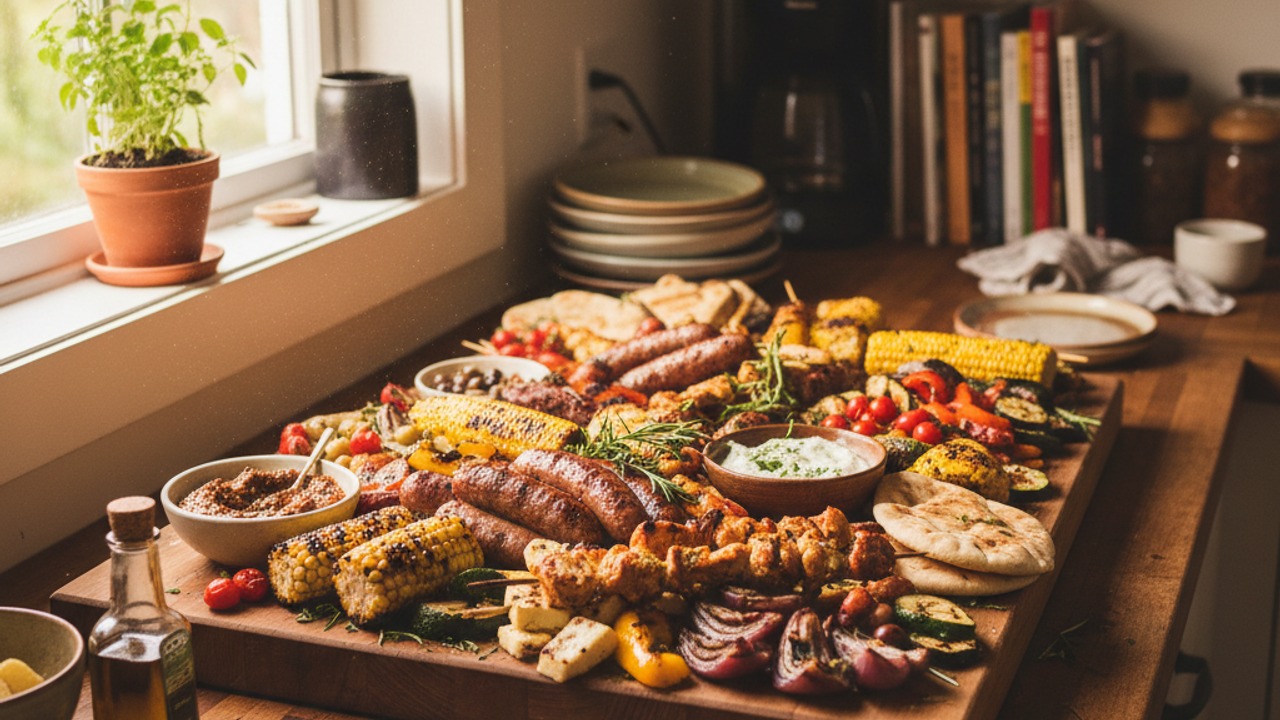
Labour Day Grilled Grazing Boards
Elevate your end-of-summer cookout with 12 charred, smoky grazing-board menus built around grilled fruits, cheeses, quick proteins and portable skewers. Each board includes make-ahead timelines, transport and packing tips for potlucks, and smart pairing ideas to keep your Labour Day spread effortless and crowd-pleasing.
Guides
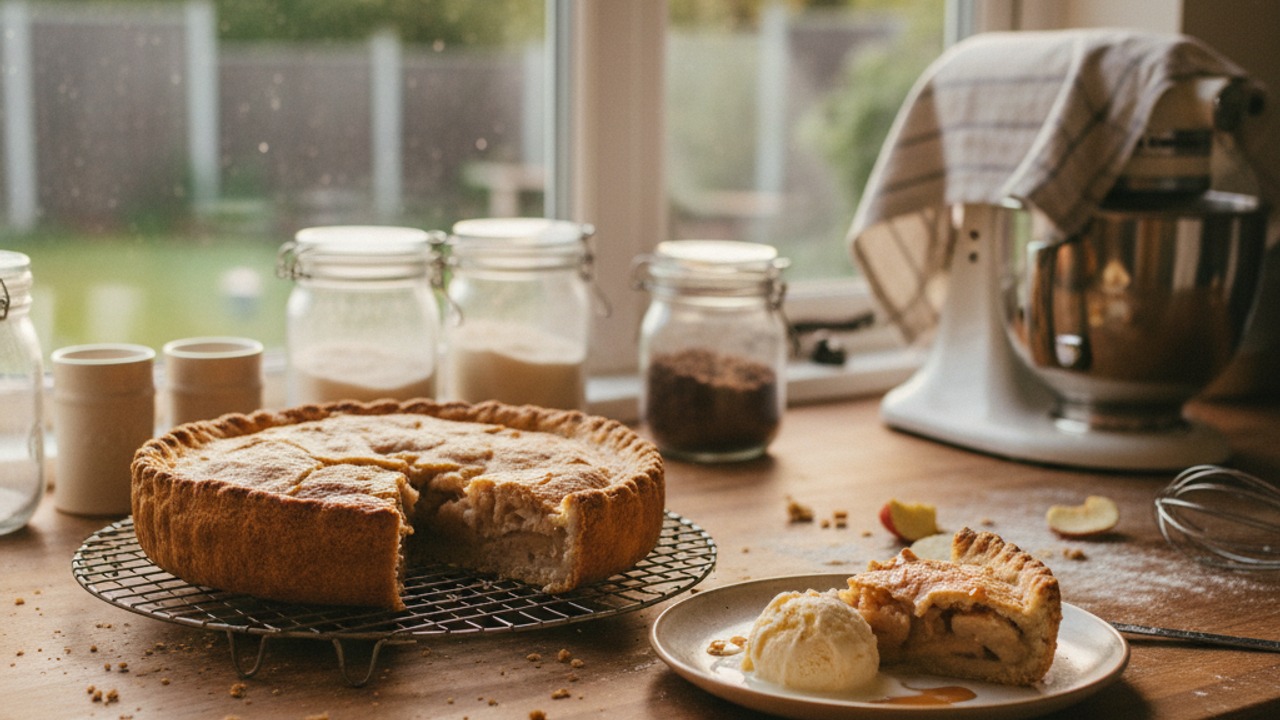
Labour Day Dessert Trends 2026
End your summer with grill-forward, portable desserts built for potlucks, beach cookouts and porch parties. This guide highlights trending techniques—smoke-finished pies, upgraded portable s'mores and boozy fruit bowls—plus 10 recipe ideas and practical host tips for make-ahead assembly, safe transport and kid‑friendly or adult variations.

Guides
Labour Day Self-Serve Drink Station
Plan and stage a stress-free, crowd-pleasing self-serve drink station for Labour Day weekend. This guide covers 14 batchable cocktails, low-ABV spritzes and mocktails, grill-smoked garnish ideas, batching and ice timelines, portable service tips, and pairing suggestions for classic end-of-summer BBQ menus.
More from Grilling
View all Grilling recipes →
Tandoori Yogurt Marinated Grilled Chicken (Tandoori Style on the Grill)

Labor Day Grilled Lobster Rolls with Charred Scallion Brown Butter & Lemon‑Herb Aioli

Bulgogi Smash Burger

Campfire‑Smoked Potato Salad with Mustard‑Bacon Vinaigrette — A Labor Day Grilling Side for Steak

Hanger Steak with Shallot Sauce
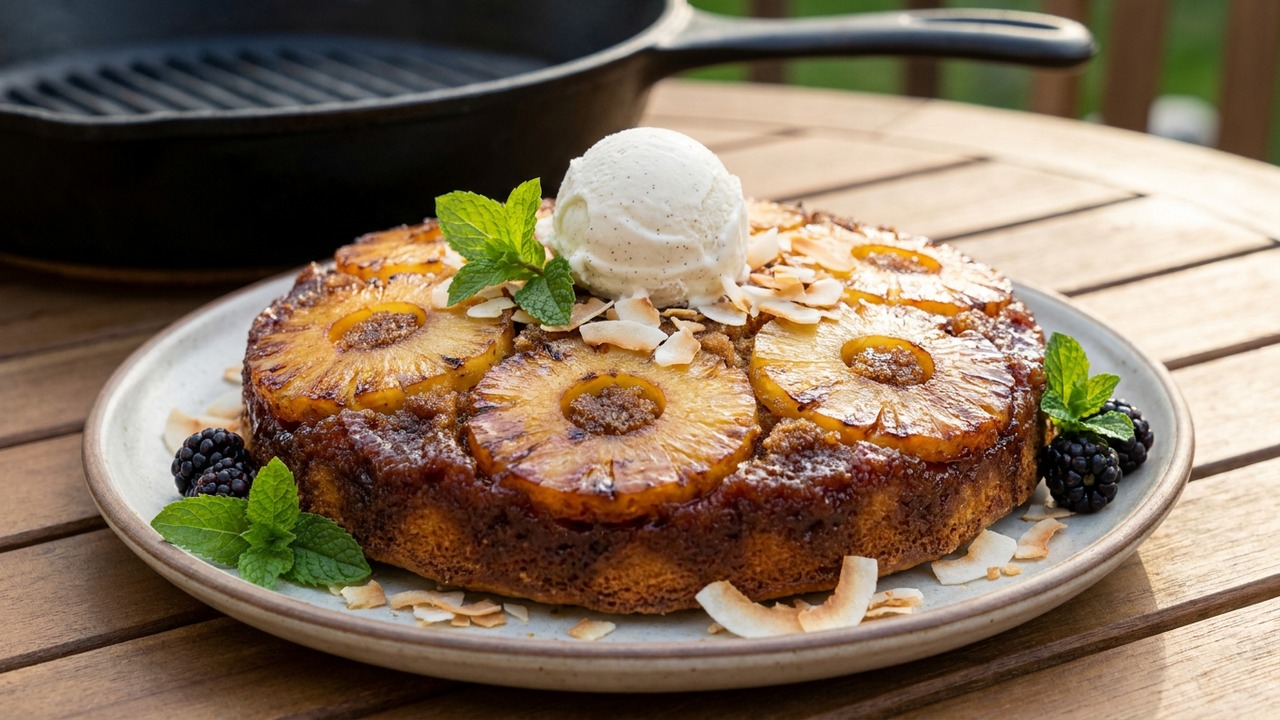
Grilled Pineapple Upside-Down Cake

Spicy Grilled Shrimp Skewers with Garlic Lime Marinade

Honey Garlic Grilled Thin-Sliced Chicken Breasts

Coffee and Porcini Dry-Rub Steaks with RUB PRIME STEAK Finish
Ask me anything about this recipe — substitutions, scaling, techniques, timing.
Powered by AI · 6 questions per 5 minutes, 30 per day