Vietnamese Spring Rolls
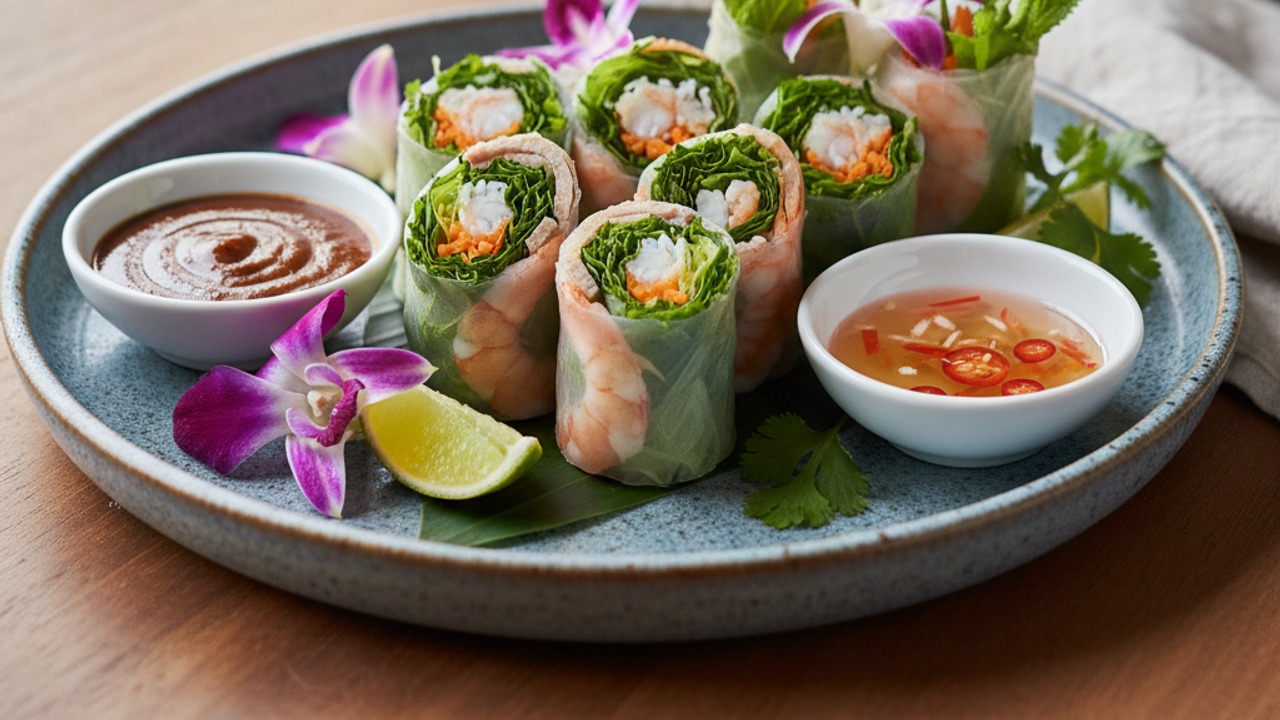
Bright, fresh Vietnamese spring rolls filled with tender shrimp, rice vermicelli, crisp vegetables, and fragrant herbs. Light, gluten-free, and perfect for dipping in classic nuoc cham or a creamy peanut sauce for extra richness.
About This Recipe
This version of Vietnamese spring rolls is built around contrast: tender, briefly poached shrimp and slippery rice vermicelli meet bright, crunchy cucumber and carrots, while mint, cilantro and a little Thai basil cut through the richness. Placing the shrimp on the outside of the roll — and slicing large shrimp lengthwise — makes each bite look as good as it tastes and ensures an immediate hit of sweet seafood before the fresh herbs and crunchy vegetables take over.
These rolls are excellent for a warm-weather appetizer or a relaxed weeknight dinner where guests can graze and dip. They’re naturally gluten-free and scale easily, and the two sauces in the recipe (classic nuoc cham and a creamy peanut option) let you shift the mood from clean and citrusy to indulgent and savory. Little technique choices — using lettuce as a barrier inside the rice paper, rinsing noodles in cold water, and shocking shrimp in ice water — are what keep the textures bright and prevent gummy, overcooked outcomes.
Ingredients for Vietnamese Spring Rolls
- 12 count Rice paper wrappers
- 1 lb Shrimp (peeled, deveined, tails off)
- 6 oz Rice vermicelli noodles
- 1 head Butter lettuce or romaine leaves
- 1 medium Cucumber (seeded, julienned)
- 2 medium Carrots (julienned)
- 1/2 cup Fresh mint leaves (packed)
- 1/2 cup Fresh cilantro (packed)
- 1/4 cup Thai basil (optional)
- 2 count Scallions (thinly sliced)
- 1 cup Bean sprouts (optional)
- 2 count Limes
- 3 tbsp Fish sauce
- 2 tbsp Granulated sugar
- 1/4 cup Water (for nuoc cham)
- 1 clove Garlic (minced)
- 1 tsp Red chili or sriracha (optional)
- 1/4 cup Peanut butter (for optional peanut sauce)
- 2 tbsp Tamari or gluten-free soy sauce (for peanut sauce)
- 2 tbsp Warm water (to thin peanut sauce)
How to Make Vietnamese Spring Rolls
Step 1: Cook the shrimp
Active 12 min · Passive 5 min
Bring a medium pot of water to a gentle boil. Add the shrimp and cook just until opaque and pink, about 2–3 minutes depending on size. Drain and immediately transfer shrimp to a bowl of ice water to stop cooking; chill 3–5 minutes, then drain and pat dry. If large, slice shrimp in half lengthwise; if small, leave whole for assembly.For this step
- 1 lbShrimp (peeled, deveined, tails off)
Step 2: Soak the rice vermicelli
Active 5 min · Passive 6 min
Place the rice vermicelli in a heatproof bowl and cover with very hot (off-the-boil) water. Soak until tender but still slightly firm, 4–6 minutes (follow package directions if different). Drain, rinse under cold water to stop cooking, and toss gently to separate. Set aside in a shallow bowl for assembly.For this step
- 6 ozRice vermicelli noodles
Step 3: Prep the vegetables and herbs
Active 12 min
Wash and thoroughly dry the lettuce and herbs. Julienne the cucumber and carrots, thinly slice the scallions, and trim any brown ends from the bean sprouts. Arrange each component in its own bowl or on a tray for easy assembly so you can grab small handfuls while rolling.For this step
- 1 headButter lettuce or romaine leaves
- 1 mediumCucumber (seeded, julienned)
- 2 mediumCarrots (julienned)
- 1/2 cupFresh mint leaves (packed)
- 1/2 cupFresh cilantro (packed)
- 1/4 cupThai basil (optional)
- 2 countScallions (thinly sliced)
- 1 cupBean sprouts (optional)
Step 4: Make the nuoc cham (classic dipping sauce)
Active 5 min
Juice the 2 limes (reserve a little juice if you want extra for the peanut sauce). In a small bowl whisk together 3 tbsp fish sauce, the lime juice, 2 tbsp granulated sugar, 0.25 cup water, and the minced garlic until the sugar dissolves. Stir in red chili or sriracha to taste. Taste and adjust for a bright balance of salty, sour, sweet and spicy.For this step
- 2 countLimes
- 3 tbspFish sauce
- 2 tbspGranulated sugar
- 1/4 cupWater (for nuoc cham)
- 1 cloveGarlic (minced)
- 1 tspRed chili or sriracha (optional)
Step 5: Make the optional peanut sauce
Active 5 min
In a small bowl whisk 0.25 cup peanut butter with 2 tbsp tamari. Add the warm water 1 tbsp at a time until the sauce reaches a spoonable consistency (use about 1–2 tbsp). Stir in a splash of the reserved lime juice and sriracha or a drop of fish sauce if you like more depth. Keep at room temperature until serving.For this step
- 1/4 cupPeanut butter (for optional peanut sauce)
- 2 tbspTamari or gluten-free soy sauce (for peanut sauce)
- 2 tbspWarm water (to thin peanut sauce)
Step 6: Soften rice paper and assemble the rolls
Active 25 min
Fill a wide shallow bowl with warm (not hot) water. Working one wrapper at a time, dip a rice paper into the water for 5–10 seconds until pliable, then lay it on a clean damp towel or cutting board. Near the bottom third of the wrapper place a lettuce leaf, a small handful of vermicelli, 2–3 shrimp (or shrimp halves), a few cucumber and carrot juliennes, a sprinkle of scallions, a few herb leaves, and a few bean sprouts. Fold the bottom edge up over the filling, fold in the sides, then roll tightly toward the top to seal. Repeat with remaining wrappers and fillings, keeping finished rolls covered with a damp towel.For this step
- 12 countRice paper wrappers
Step 7: Finish and serve
Active 5 min
Transfer rolls to a platter and, if desired, cut each roll in half on the diagonal. Serve immediately with the nuoc cham and optional peanut sauce for dipping. Store any leftover rolls covered with a damp towel and plastic wrap in the refrigerator for up to 24 hours; they’re best the same day.


- Bring a medium pot of water to a gentle boil. Add the shrimp and cook just until opaque and pink, about 2–3 minutes depending on size. Drain and immediately transfer shrimp to a bowl of ice water to stop cooking; chill 3–5 minutes, then drain and pat dry. If large, slice shrimp in half lengthwise; if small, leave whole for assembly.
- Place the rice vermicelli in a heatproof bowl and cover with very hot (off-the-boil) water. Soak until tender but still slightly firm, 4–6 minutes (follow package directions if different). Drain, rinse under cold water to stop cooking, and toss gently to separate. Set aside in a shallow bowl for assembly.
- Wash and thoroughly dry the lettuce and herbs. Julienne the cucumber and carrots, thinly slice the scallions, and trim any brown ends from the bean sprouts. Arrange each component in its own bowl or on a tray for easy assembly so you can grab small handfuls while rolling.
- Juice the 2 limes (reserve a little juice if you want extra for the peanut sauce). In a small bowl whisk together 3 tbsp fish sauce, the lime juice, 2 tbsp granulated sugar, 0.25 cup water, and the minced garlic until the sugar dissolves. Stir in red chili or sriracha to taste. Taste and adjust for a bright balance of salty, sour, sweet and spicy.
- In a small bowl whisk 0.25 cup peanut butter with 2 tbsp tamari. Add the warm water 1 tbsp at a time until the sauce reaches a spoonable consistency (use about 1–2 tbsp). Stir in a splash of the reserved lime juice and sriracha or a drop of fish sauce if you like more depth. Keep at room temperature until serving.
- Fill a wide shallow bowl with warm (not hot) water. Working one wrapper at a time, dip a rice paper into the water for 5–10 seconds until pliable, then lay it on a clean damp towel or cutting board. Near the bottom third of the wrapper place a lettuce leaf, a small handful of vermicelli, 2–3 shrimp (or shrimp halves), a few cucumber and carrot juliennes, a sprinkle of scallions, a few herb leaves, and a few bean sprouts. Fold the bottom edge up over the filling, fold in the sides, then roll tightly toward the top to seal. Repeat with remaining wrappers and fillings, keeping finished rolls covered with a damp towel.
- Transfer rolls to a platter and, if desired, cut each roll in half on the diagonal. Serve immediately with the nuoc cham and optional peanut sauce for dipping. Store any leftover rolls covered with a damp towel and plastic wrap in the refrigerator for up to 24 hours; they’re best the same day.
Vietnamese Spring Rolls Tips
Soak Rice Paper Just Right
Dip wrappers 5–10 seconds in warm (not boiling) water until pliable; if it feels slimy or tears, you left it too long—work quickly and assemble on a damp towel.
Cook Shrimp Gently
Bring water to a gentle boil and cook 2–3 minutes until opaque; immediately plunge into ice water to stop carryover cooking and preserve a snappy texture.
Use Lettuce as Barrier
Place a torn lettuce leaf inside the rice paper beneath the noodles and veg to prevent the wet ingredients from sticking to the wrapper and to make rolling easier.
Keep Herbs Dry
Spin or pat herbs completely dry before assembling; excess moisture causes the rice paper to become gummy and makes rolls collapse.
Prevent Noodle Clumping
Rinse vermicelli under cold water after soaking and toss with a teaspoon of neutral oil to keep strands separate while you assemble.
Vietnamese Spring Rolls Variations and Substitutions
Vegan Tofu & Mushroom
Replace shrimp with thin pan-fried tofu strips and add sautéed shiitake mushrooms; swap fish sauce in the nuoc cham for 3 tbsp tamari plus 1/2 tsp miso dissolved in the lime mixture for umami.
Grilled Pork Filling
Thinly sliced lemongrass-marinated pork shoulder (quickly grilled or pan-seared) gives a classic Bánh Hỏi–adjacent flavor profile that pairs beautifully with the herbs and nuoc cham.
Tropical Mango & Avocado
Add ripe mango and avocado slices with mint and basil for a sweeter, creamier roll that works especially well with the peanut dipping sauce.
Spicy Chili Shrimp
Toss cooked shrimp in a little sriracha and lime before assembling and add thinly sliced jalapeño or bird’s-eye chili for a hotter, more assertive bite.
How to Store and Make Vietnamese Spring Rolls Ahead
Assembled rolls are best eaten the day they’re made; store them in a single layer on a plate covered with a damp towel and plastic wrap in the refrigerator for up to 4–6 hours. Keep dipping sauces in separate airtight containers; the peanut sauce can be refrigerated for up to 4 days. Avoid freezing assembled rolls — rice paper and raw veg deteriorate — but you can freeze cooked shrimp or blanched noodles for future use.
What to Serve With Vietnamese Spring Rolls
Arrange rolls on a large platter with extra herbs, lime wedges, and a small bowl of crushed peanuts for garnish so guests can customize. Serve alongside quick pickled carrots and daikon, iced jasmine tea or a dry Riesling for wine, and a crisp lager or pilsner if you prefer beer.
Vietnamese Spring Rolls FAQs
Why do my rice papers keep tearing?
Tearing usually means the water was too hot or you soaked the wrapper too long; use warm (not boiling) water and dip briefly, laying the wrapper flat on a damp towel before filling rather than tugging on it.
How can I tell when the shrimp are done?
Shrimp are done when they turn opaque and firm with no translucent center, which typically takes 2–3 minutes; shock them in ice water immediately to stop cooking and maintain a tender texture.
Can I make these ahead of time for a party?
You can prep all components (shrimp, noodles, veg, herbs, sauces) several hours ahead and assemble 30–60 minutes before serving; fully assembled rolls are best within 4 hours to avoid drying or sogginess.
What can I use instead of fish sauce in nuoc cham?
For a vegan swap, use tamari or soy sauce with a touch of miso or a pinch of kelp granules to recreate umami—start with 3 tbsp tamari plus 1/2 tsp miso dissolved in the lime-sugar-water base and adjust to taste.
Can I freeze these spring rolls?
No — freezing destroys the rice paper texture and makes vegetables mushy; instead freeze components like cooked shrimp or blanched noodles separately if you want to save time later.
How many rolls should I plan per person?
As an appetizer, plan on 2 rolls per person; for a light meal, 3–4 rolls per person is a good guideline depending on appetite and number of sides.
About the author
Jake WoodsHello, I'm Jake. I started this recipe site with the idea that I hated recipe websites that overwhelm you with long stories and ads just to see plain content that's not helpful. My goal is to provide you with quality recipes, simple ideas and a fun cooking experience. There's lots of fun things to cook, and I think as you browse the site you'll find that TopShelf.Recipes is the place for quality recipes on the web.
See all recipes by Jake Woods →Ratings & Reviews
Did you make this recipe?
Nutrition Facts
Per serving: 1 roll
Nutrition values are estimated from USDA ingredient data and may vary based on preparation, brands, and portion sizes. Values are provided for informational purposes only.
Keep Reading
Guides & articles for this recipe

Healthy Eating
Gluten-Free Weeknight Grilling Plan
A 7-day gluten-free weeknight grilling plan with quick, family-friendly recipes, prep-ahead timelines, and a printable shopping list that spotlights late-summer produce and pantry staples. Includes clear cross-contamination safety tips and simple swaps to keep dinners fast and crowd-pleasing.

Healthy Eating
Low-Fat Grill Swaps for Big Flavor
A practical guide to trimming fat from grilled meals without losing juiciness or char. Learn yogurt- and citrus-based marinades, lean protein picks, searing and indirect-heat tricks, plus 5 quick low-fat marinades and a simple weeknight plan.

Recipes
DIY Edible Monster Eyes Candy
Make safe, fun edible monster eyes for cupcakes, cookies, and candy trays. Step-by-step recipes show baking-soda balls, chocolate and fondant eyes, wafer-print options, plus assembly, storage, and kid-friendly safety tips.
More from Appetizers
View all Appetizers recipes →


Ask me anything about this recipe — substitutions, scaling, techniques, timing.
Powered by AI · 6 questions per 5 minutes, 30 per day