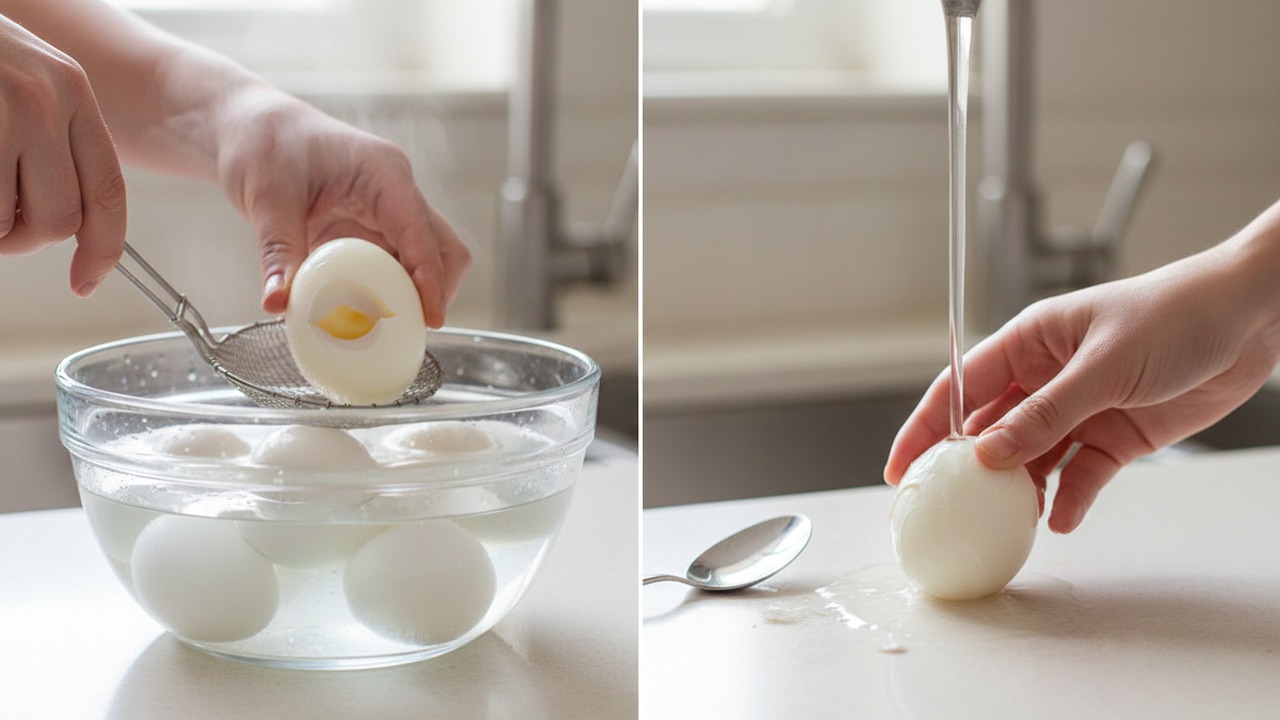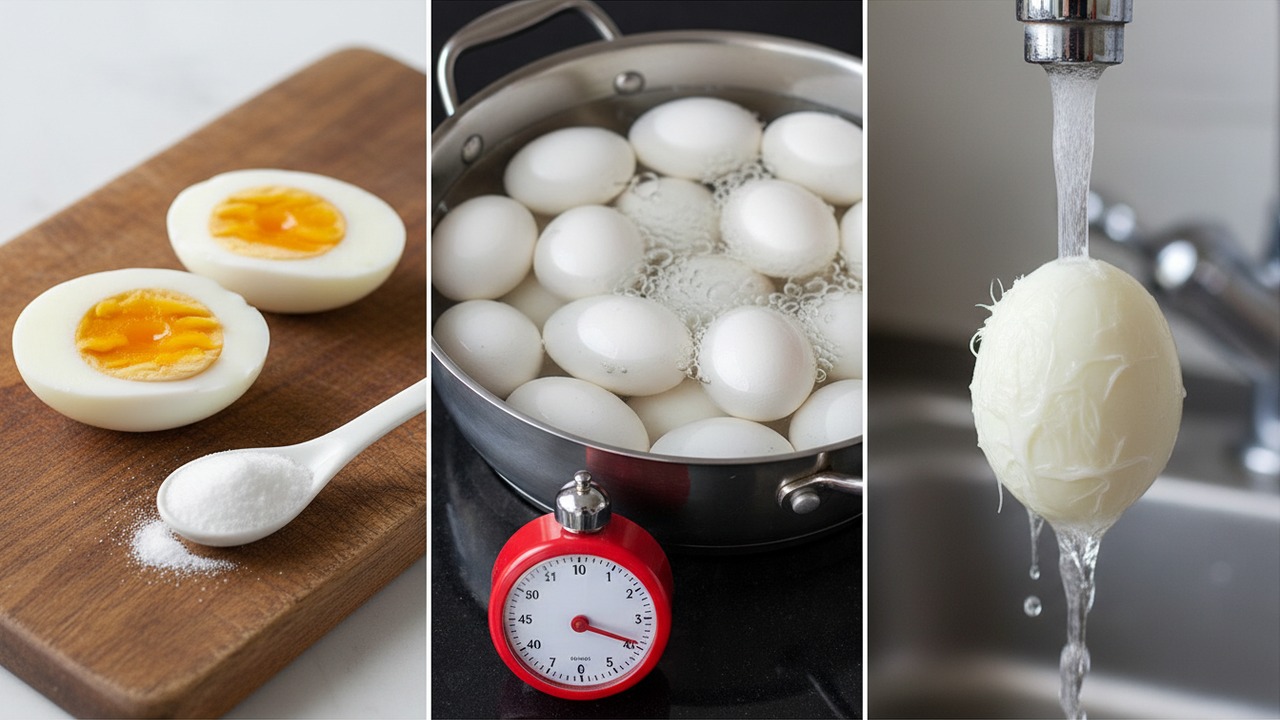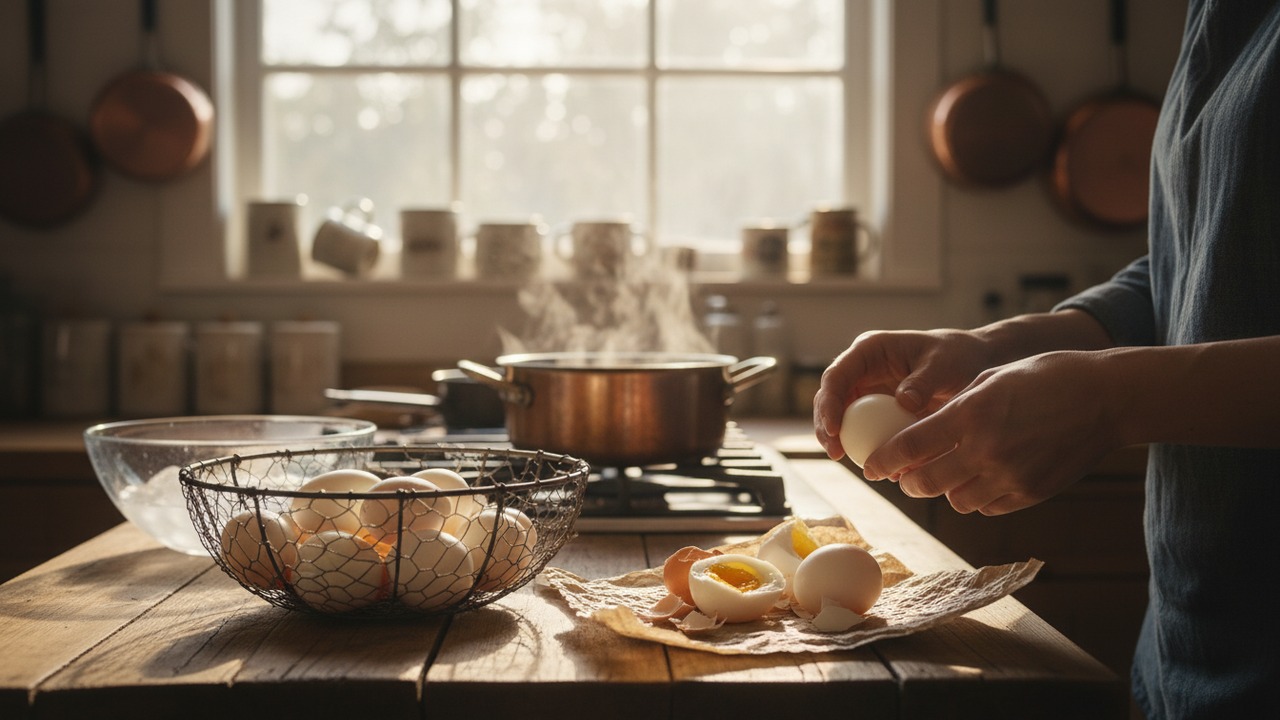
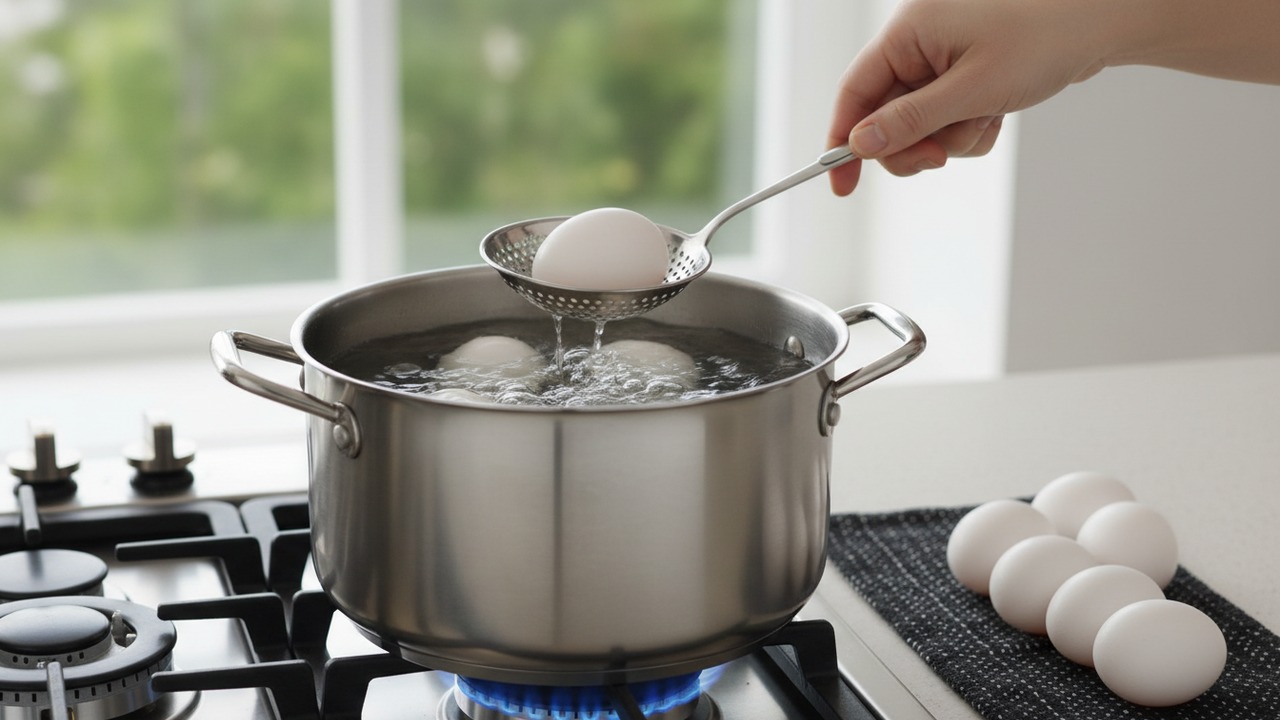
Put a pot on the stove with enough water to cover eggs by about 1 to 2 inches; for a single dozen, a 3–4 quart pot is a convenient size. Bring the water to a strong rolling boil, then reduce the heat just enough so the surface is actively boiling but not sloshing. Use a slotted spoon or a spider to cradle each cold egg and lower it slowly into the water—don’t drop. The right motion is a steady lift of the spoon’s edge to the water line, then a gentle tilt that lets the egg slide off the spoon rather than smacking the bottom.
Timing depends on how you like the yolk. Starting from a vigorous boil, 6–7 minutes gives a jammy, slightly runny center; 8–10 minutes yields a mostly set, creamy yolk useful for slicing; 11–13 minutes produces a fully firm yolk suitable for deviled eggs or salads. Keep in mind stove-to-stove variability and that larger eggs take a little longer.
Pot size, water depth, and single-layer layout all affect heat transfer and cracking risk. Crowding eggs into multiple layers means uneven heating and more collisions, increasing hairline cracks. Shallow water that just covers the shells causes faster heat penetration and occasional cracking; a modest 1–2 inch headspace balances speed with gentleness. A heavier-bottomed pot gives a steadier boil and reduces violent movement that can break shells.