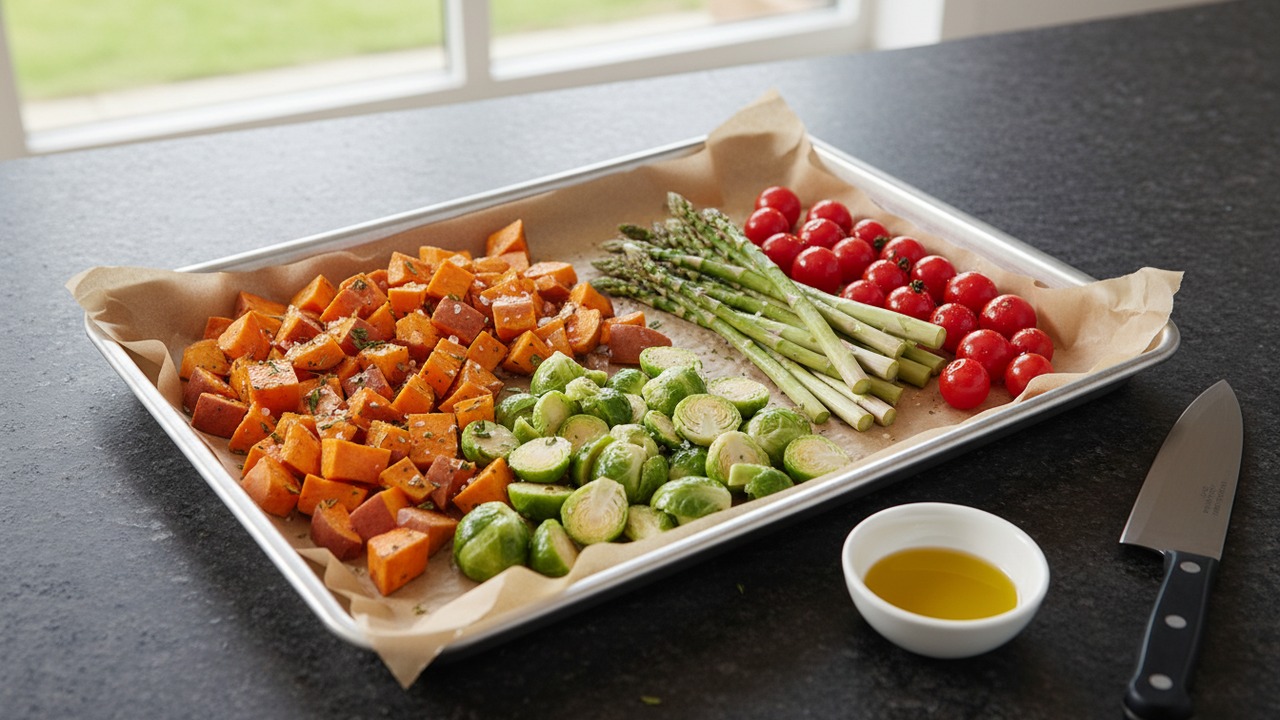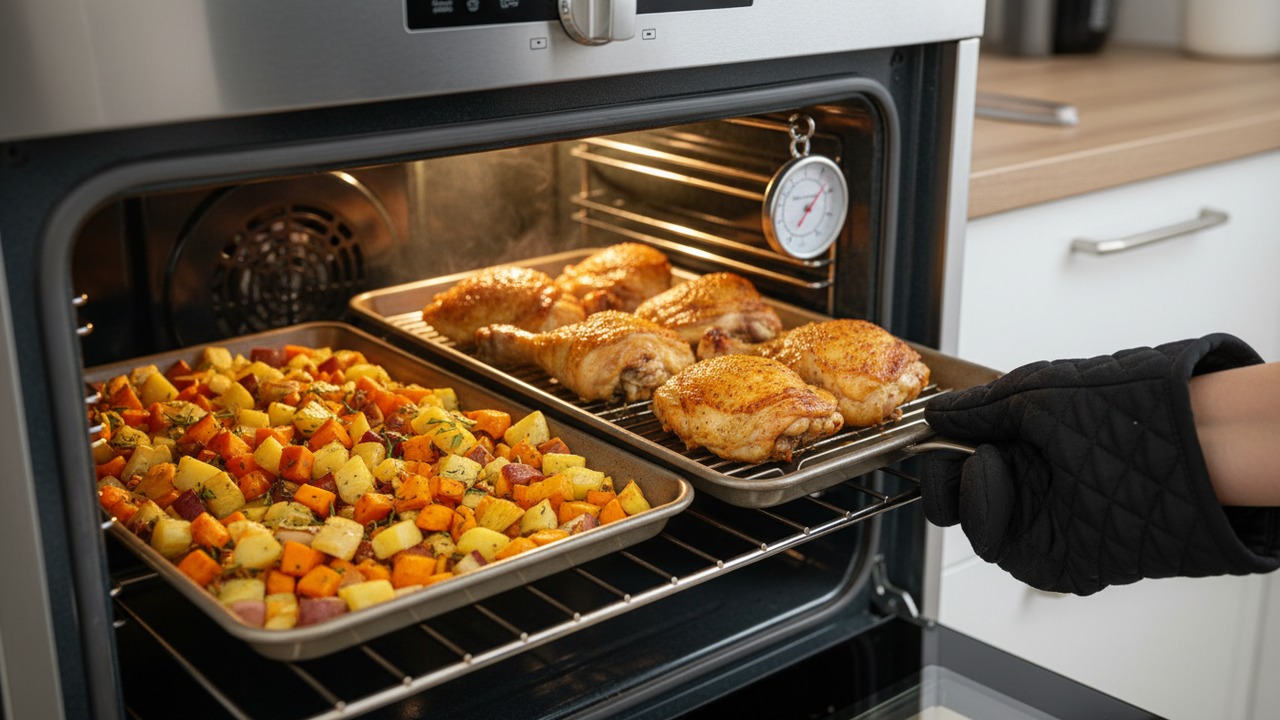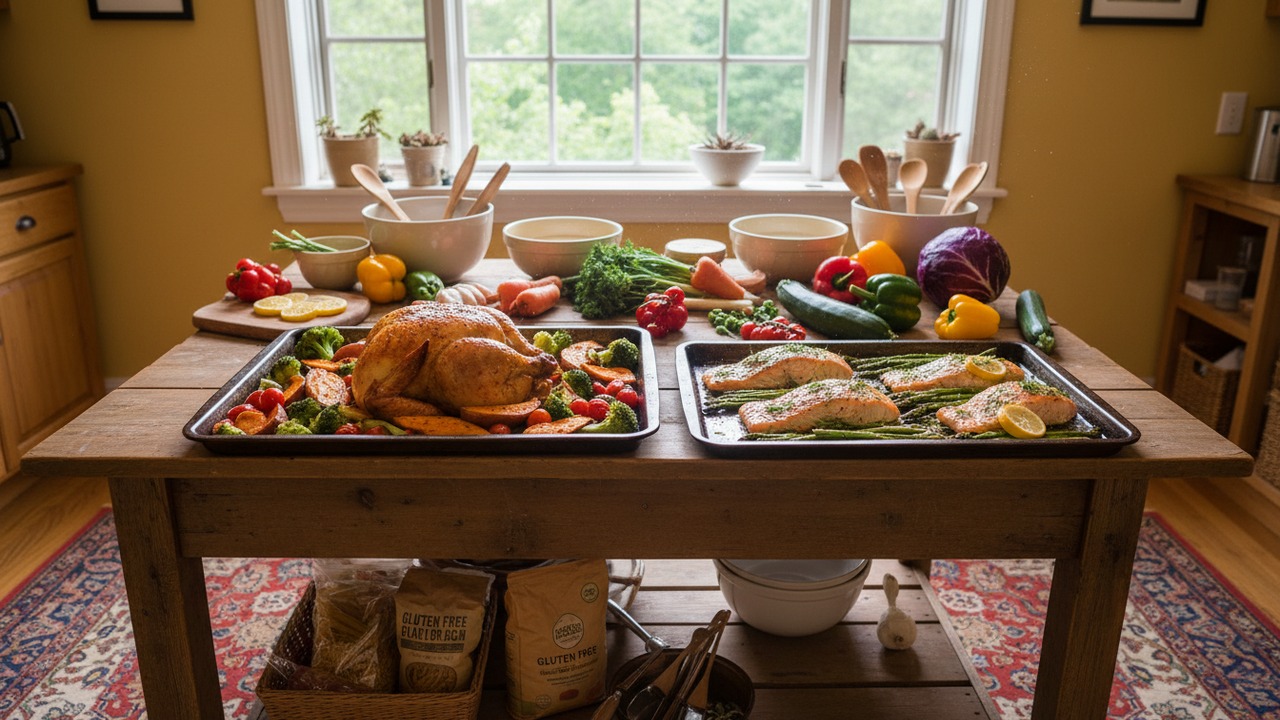
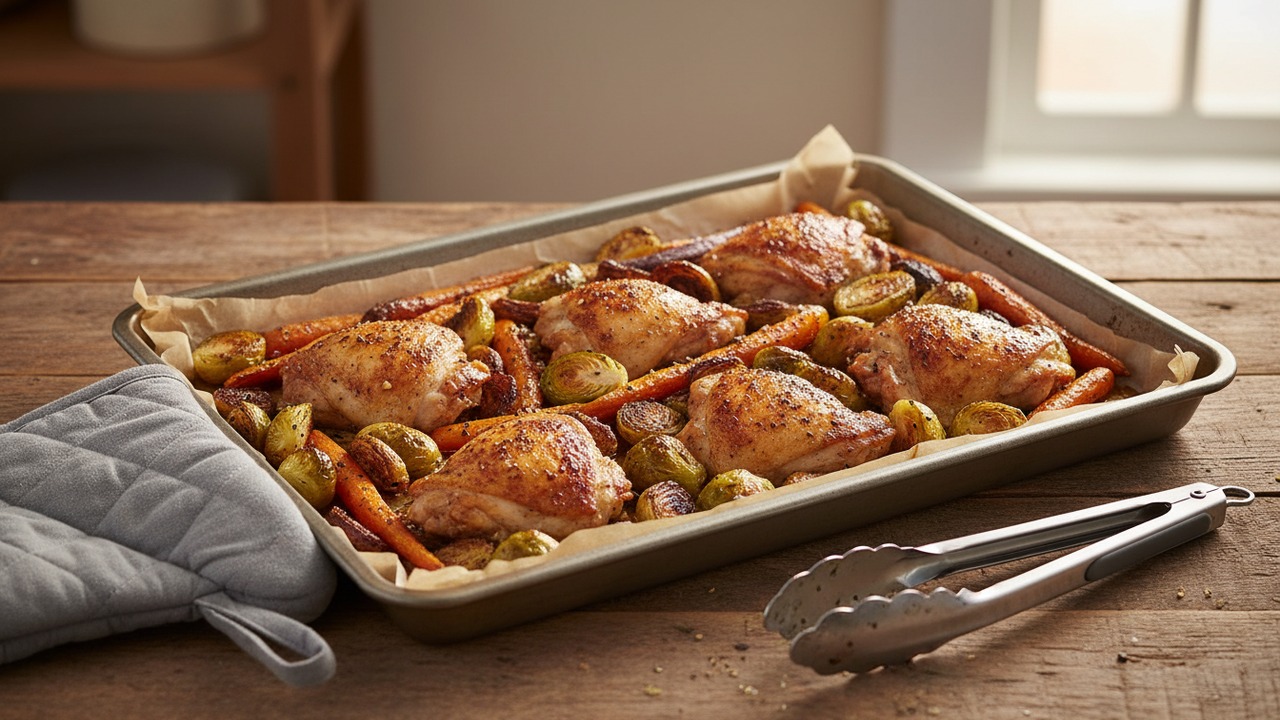
A sheet pan concentrates heat, which encourages caramelization: browned edges from direct contact and dry heat build flavor quickly. That’s the core advantage—high heat turns vegetables sweet and concentrates juices on proteins without long braising or heavy sauces. Because everything roasts in one shallow vessel, you spend less time at the stove and almost no time scrubbing multiple pots. In practice that means more time doing other things while the oven does the heavy lifting.
Essential gear is simple and inexpensive: a sturdy rimmed sheet pan (half-sheet size is the most flexible), a roll of parchment or a piece of heavy-duty foil, and, optionally, an oven-safe cooling rack that sits inside the pan to lift proteins and encourage airflow. Use parchment for most vegetables and proteins to prevent sticking and make cleanup trivial; if you need more browning, skip parchment on one pass or use a light slick of oil instead. A rack is useful when you want the underside of chicken thighs crispy without flipping.
Keep a small selection of pantry staples on hand: a neutral oil, good kosher salt, freshly cracked pepper, smoked paprika, garlic powder, and a gluten-free savory option such as gluten-free tamari or coconut aminos for quick glazes. To minimize cross-contamination, clean pans and tools between uses, store gluten-free condiments separately if you share a kitchen, and read labels on spice mixes and sauces—the easiest meals can be compromised by a hidden wheat-containing ingredient.