Brown Sugar Syrup Grilled Pork
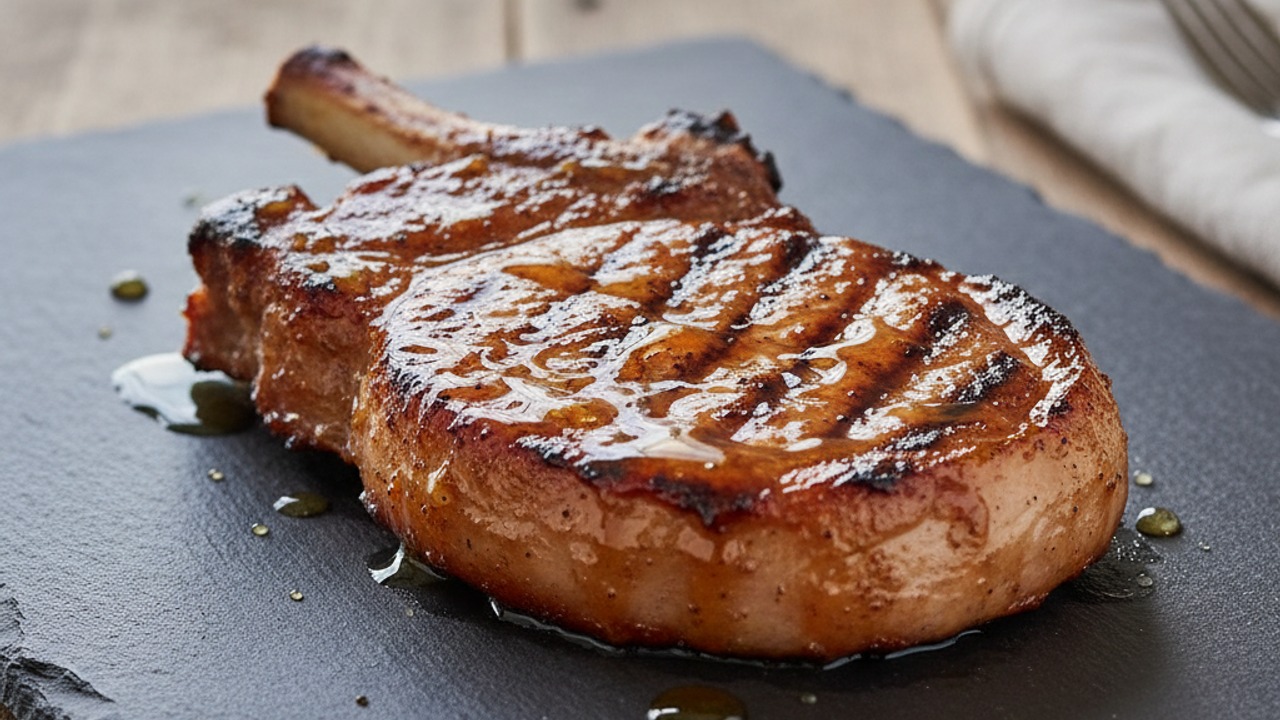
Tender, char-kissed pork chops finished with a glossy, non-gritty brown sugar syrup glaze. The syrup is cooked to fully dissolve the sugar and tempered with vinegar and soy for balanced sweetness and a stable caramelized finish on the grill.
Jake Woods's note
"This method produces a smooth, glossy caramel-style glaze without the grainy texture that can ruin a finishing sauce. It’s perfect for weekend backyard meals when you want a sweet-savory crust that still lets the pork shine."
About This Recipe
This brown sugar syrup grilled pork is built around a deceptively simple idea: turn brown sugar into a stable, glossy glaze that won’t re-crystallize or burn the moment it hits the flames. Bone-in chops get the benefit of slower, juicier cooking and a meatier chew, while the syrup—cooked just long enough to dissolve the sugar and then tempered with apple cider vinegar and a splash of soy—gives you a balanced finish where sweetness is cut by bright acid and savory umami. The method of brushing thin layers of glaze and finishing briefly over direct heat creates that lacquered, char-kissed exterior without turning the sugars gritty or bitter.
This version is for people who want the drama of a caramelized grill finish but don’t want to babysit a pan of burning sugar. It shines at weekend backyard dinners, paired with simple sides that can stand up to the glaze—think acidic slaws, roasted root veg, or a crisp green salad. The technique transfers well: the syrup can be used as a finishing glaze for chicken or even grilled fruit, and making the syrup ahead smooths the timing so you can focus on getting great grill marks and a perfect 145°F finish.
Ingredients for Brown Sugar Syrup Grilled Pork
- 4 pieces Bone-in pork chops (about 1" thick)
- 1 1/2 teaspoons Kosher salt
- 1 teaspoon Freshly ground black pepper
- 3/4 cup Light brown sugar (packed)
- 1/3 cup Water
- 2 tablespoons Apple cider vinegar
- 1 tablespoon Low-sodium soy sauce
- 2 tablespoons Neutral oil (canola or avocado) for grates and light brushing
How to Make Brown Sugar Syrup Grilled Pork
Step 1: Season and rest the pork
Pat the pork chops very dry with paper towels, then season both sides evenly with kosher salt and freshly ground black pepper. Let the chops sit at room temperature for 10–15 minutes while you prepare the syrup and preheat the grill — this helps even cooking.For this step
- 4 piecesBone-in pork chops (about 1" thick)
- 1 1/2 teaspoonsKosher salt
- 1 teaspoonFreshly ground black pepper
Step 2: Make the non-gritty brown sugar syrup
Combine the light brown sugar and water in a small saucepan over medium heat, stirring constantly until the sugar is completely dissolved. Bring to a gentle simmer for 2–3 minutes (do not aggressively boil), then remove from heat and stir in the apple cider vinegar and soy sauce; the acid helps prevent recrystallization and keeps the syrup smooth. Let the syrup cool slightly; it will thicken a bit as it cools — if you see any graininess, return to low heat and stir gently until smooth, then cool.For this step
- 3/4 cupLight brown sugar (packed)
- 1/3 cupWater
- 2 tablespoonsApple cider vinegar
- 1 tablespoonLow-sodium soy sauce
Step 3: Preheat and prepare the grill
Preheat the grill to medium-high (about 400°F / 200°C). Scrape the grates clean and oil them by dipping a folded paper towel in neutral oil and, using tongs, wiping the grates to create a thin, well-distributed coating.For this step
- 2 tablespoonsNeutral oil (canola or avocado) for grates and light brushing
Step 4: Sear the chops to develop crust
Place the pork chops directly over the heat and sear for 3–4 minutes without moving to get good grill marks. Flip and sear the other side 3–4 minutes. After searing, move the chops to a cooler zone (indirect heat) to continue cooking more gently until their internal temperature is about 120–125°F (49–52°C) — this gives you headroom to finish with the glaze without overcooking.Step 5: Brush with syrup and caramelize carefully
Return the chops to direct heat. Brush a thin coat of the brown sugar syrup on the meat, wait 30–45 seconds for it to set, then repeat with a second thin coat; build the glaze in thin layers so it doesn’t pool and crystallize. For the final caramelization, brush one last thin layer and hold the chops over direct heat 20–60 seconds per side until the glaze is glossy and caramelized — watch carefully and move them if flame or smoking indicates burning. Finish cooking until the thickest part reaches 145°F (63°C) as measured with an instant-read thermometer.Step 6: Rest and serve
Transfer the chops to a cutting board and rest 5 minutes so juices redistribute and the glaze firms slightly. Serve each person one chop (1 serving, about 350g) with any reserved warmed syrup spooned over or on the side.


- Pat the pork chops very dry with paper towels, then season both sides evenly with kosher salt and freshly ground black pepper. Let the chops sit at room temperature for 10–15 minutes while you prepare the syrup and preheat the grill — this helps even cooking.
- Combine the light brown sugar and water in a small saucepan over medium heat, stirring constantly until the sugar is completely dissolved. Bring to a gentle simmer for 2–3 minutes (do not aggressively boil), then remove from heat and stir in the apple cider vinegar and soy sauce; the acid helps prevent recrystallization and keeps the syrup smooth. Let the syrup cool slightly; it will thicken a bit as it cools — if you see any graininess, return to low heat and stir gently until smooth, then cool.
- Preheat the grill to medium-high (about 400°F / 200°C). Scrape the grates clean and oil them by dipping a folded paper towel in neutral oil and, using tongs, wiping the grates to create a thin, well-distributed coating.
- Place the pork chops directly over the heat and sear for 3–4 minutes without moving to get good grill marks. Flip and sear the other side 3–4 minutes. After searing, move the chops to a cooler zone (indirect heat) to continue cooking more gently until their internal temperature is about 120–125°F (49–52°C) — this gives you headroom to finish with the glaze without overcooking.
- Return the chops to direct heat. Brush a thin coat of the brown sugar syrup on the meat, wait 30–45 seconds for it to set, then repeat with a second thin coat; build the glaze in thin layers so it doesn’t pool and crystallize. For the final caramelization, brush one last thin layer and hold the chops over direct heat 20–60 seconds per side until the glaze is glossy and caramelized — watch carefully and move them if flame or smoking indicates burning. Finish cooking until the thickest part reaches 145°F (63°C) as measured with an instant-read thermometer.
- Transfer the chops to a cutting board and rest 5 minutes so juices redistribute and the glaze firms slightly. Serve each person one chop (1 serving, about 350g) with any reserved warmed syrup spooned over or on the side.
Brown Sugar Syrup Grilled Pork Tips
Dry the chops thoroughly
Moisture on the surface hinders browning and makes the glaze slide off; patting them very dry is essential for a good sear and adhesion of the syrup.
Build the glaze slowly
Brush only thin coats, letting each one set briefly; multiple thin layers build a glossy finish without pooling or crystallizing on the meat.
Use indirect heat wisely
Sear over direct heat, then move to indirect to bring the internal temp to 120–125°F so the final glaze step won’t overcook the pork.
Monitor sugar closely
When caramelizing the glaze, watch for smoke and move chops away from flames—sugars go from glossy to burnt very quickly.
Temper syrups with acid
The apple cider vinegar in the syrup prevents recrystallization and brightens the sweetness; don’t skip or dramatically reduce it.
Brown Sugar Syrup Grilled Pork Variations and Substitutions
Dark brown sugar swap
Use dark brown sugar for a deeper molasses note; you may want a splash more vinegar to balance the extra richness.
Maple or honey glaze
Replace half the brown sugar with 1/4 cup pure maple syrup or honey and reduce the water slightly for a different sweet profile—watch caramelization closely as these runnier sweeteners brown faster.
Asian-spiced finish
Add 1 teaspoon toasted sesame oil and a pinch of five-spice to the syrup and finish with sliced scallions and sesame seeds for an umami-forward twist.
For leaner meat
Use boneless chops or thick-cut pork loin steaks but reduce searing time and watch internal temperature closely to avoid drying—resting becomes even more important.
Vinegar alternatives
Rice vinegar or sherry vinegar can replace apple cider vinegar one-for-one for a slightly different bright note without affecting syrup stability.
How to Store and Make Brown Sugar Syrup Grilled Pork Ahead
Store leftover chops in an airtight container in the refrigerator for up to 3 days; keep any extra syrup in a separate sealed jar in the fridge for up to 2 weeks. To reheat, warm gently in a 300°F oven or skillet over low heat with a splash of water to loosen the glaze—high heat will burn the sugars and dry the pork.
What to Serve With Brown Sugar Syrup Grilled Pork
Serve the glazed chops with a bright, acidic side like a crunchy apple-cabbage slaw or quick pickled cucumbers to cut through the sweetness. Starchy sides such as buttery mashed potatoes or grilled sweet corn balance the glaze, and a crisp lager, a citrus-forward IPA, or an off-dry Riesling pairs especially well to offset the sugar.
Brown Sugar Syrup Grilled Pork FAQs
Why do I cook the syrup before glazing?
Heat dissolves the sugar and allows you to incorporate vinegar and soy so the syrup is smooth and stable; uncooked sugar will feel grainy and is more likely to recrystallize on cooling.
Can I use dark brown sugar instead of light?
Yes—dark brown sugar gives deeper molasses flavor; you may want slightly more acid (a splash more vinegar) to keep the finish balanced.
What if the glaze starts to burn on the grill?
Move the chops to indirect heat immediately and reduce the time over direct flame; burnished spots can be trimmed, and building the glaze in thinner layers helps prevent scorching.
How thick should the syrup be before glazing?
It should coat the back of a spoon and be pourable but slightly syrupy; it will thicken a bit as it cools, so err on the slightly thinner side so you can brush thin, even coats.
Can I make the syrup ahead of time?
Absolutely—make it up to a week ahead and keep refrigerated; gently rewarm if it becomes too thick, stirring until smooth before brushing onto the chops.
How do I know when the pork is done?
Use an instant-read thermometer—remove the chops from heat at 120–125°F before glazing and finish until they reach 145°F, then rest five minutes for carryover to yield juicy meat.
About the author
Jake WoodsHello, I'm Jake. I started this recipe site with the idea that I hated recipe websites that overwhelm you with long stories and ads just to see plain content that's not helpful. My goal is to provide you with quality recipes, simple ideas and a fun cooking experience. There's lots of fun things to cook, and I think as you browse the site you'll find that TopShelf.Recipes is the place for quality recipes on the web.
See all recipes by Jake Woods →Ratings & Reviews
Did you make this recipe?
Be the first to share your experience.
Nutrition Facts
Per serving: 1 serving (about 350g)
Nutrition values are estimated from USDA ingredient data and may vary based on preparation, brands, and portion sizes. Values are provided for informational purposes only.
Keep Reading
Guides & articles for this recipe

Healthy Eating
Gluten-Free Weeknight Grilling Plan
A 7-day gluten-free weeknight grilling plan with quick, family-friendly recipes, prep-ahead timelines, and a printable shopping list that spotlights late-summer produce and pantry staples. Includes clear cross-contamination safety tips and simple swaps to keep dinners fast and crowd-pleasing.

Cocktails & Drinks
Shakerless Cocktails for Backyard Grilling
Easy, tool-free cocktail recipes designed for backyard grilling and outdoor hangs. Find single-serve and batch formulas, quick portable infusions, improvised gear hacks, and simple cocktail pairings for grilled meats and vegetables.

Healthy Eating
Lean Labor Day Grilling Menu
A Labor Day grilling guide that swaps heavy BBQ classics for lighter, flavorful options—think lean proteins, charred vegetables, and low‑sugar sauces. Includes make-ahead meal prep, portioning tips, and a short shopping checklist for healthy, crowd-pleasing cookouts.
More from Grilling
View all Grilling recipes →
Tandoori Yogurt Marinated Grilled Chicken (Tandoori Style on the Grill)

Labor Day Grilled Lobster Rolls with Charred Scallion Brown Butter & Lemon‑Herb Aioli

Bulgogi Smash Burger

Campfire‑Smoked Potato Salad with Mustard‑Bacon Vinaigrette — A Labor Day Grilling Side for Steak

Hanger Steak with Shallot Sauce
Grilled Pineapple Upside-Down Cake

Spicy Grilled Shrimp Skewers with Garlic Lime Marinade

Honey Garlic Grilled Thin-Sliced Chicken Breasts

Coffee and Porcini Dry-Rub Steaks with RUB PRIME STEAK Finish
Ask me anything about this recipe — substitutions, scaling, techniques, timing.
Powered by AI · 6 questions per 5 minutes, 30 per day