Crispy Tonkatsu Pork Cutlets with Homemade Tonkatsu Sauce
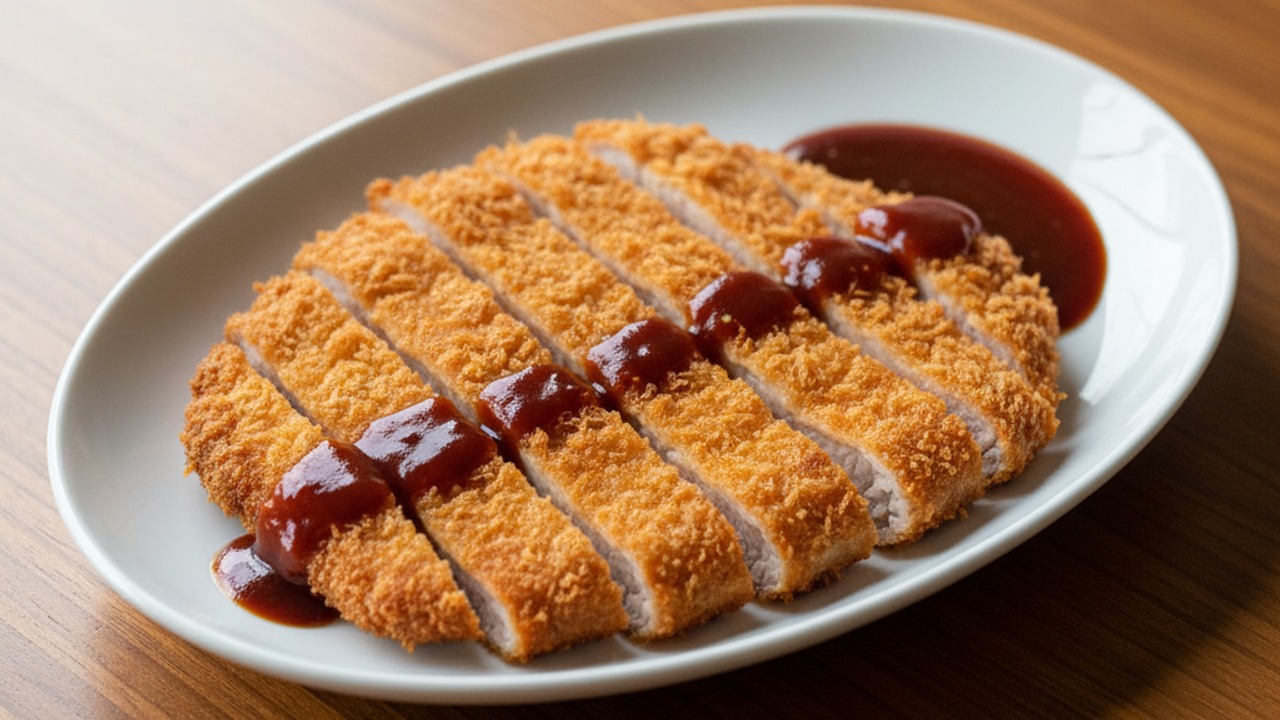
Golden, crunchy tonkatsu pork cutlets fried to a perfect crisp and served with a quick homemade tonkatsu sauce. This stovetop recipe focuses on simple technique for reliably crunchy results and a tangy-sweet sauce that comes together in minutes.
Ingredient Spotlight
Panko breadcrumbs
Panko are Japanese-style breadcrumbs made from crustless white bread baked by electrical current, which creates large, airy flakes that fry up extra-light and very crispy. They have a neutral, slightly bready taste and give a crunchy texture rather than the dense crust you get from regular breadcrumbs. Common in Japanese and other Asian cooking (for tonkatsu, tempura-style coatings), they’re widely sold in mainstream supermarkets and Asian groceries. If you can’t find panko, substitute crushed cornflakes, crushed saltines, or pulse white bread into coarse crumbs and use sparingly to approximate the texture.
(paid link) — as an Amazon Associate we earn from qualifying purchases.
Ingredient Spotlight
Soy sauce (light)
Light soy sauce is a Chinese-style soy sauce that’s thinner, saltier, and more delicate in color and aroma than dark soy sauce; it’s used primarily for seasoning and adding umami without darkening a dish. It originates from East Asian cuisines and has a pronounced salty-savoury flavor rather than the sweet, molasses-like notes of dark soy. You can find it in the Asian/international aisle of supermarkets or at Asian groceries. If unavailable, use regular (all-purpose) soy sauce or tamari but taste and reduce added salt since those may be less salty or differently flavored; avoid substituting dark soy sauce if the recipe relies on the lighter color/consistency.
Kenji Tanaka's note
"Konnichiwa — I love how tonkatsu is both humble and celebratory: a weekday dinner that feels like a treat. Home cooks will appreciate the clear steps to get an extra-crispy crust and a fuss-free sauce that tastes like it came from a shop."
About This Recipe
Crispy tonkatsu is one of those dishes that feels indulgent but is deceptively simple: a paper-thin pork loin, a dry, airy panko crust, and a bright, slightly sweet sauce that cuts through the richness. This stovetop version leans into predictability — pound the chops thin so they cook quickly and stay juicy, press the panko so it forms a uniform shell, and shallow‑fry in a steady bath of oil for an ultra-crisp result without a deep fryer. The homemade tonkatsu sauce here is intentionally straightforward — ketchup for body, Worcestershire for tang and umami, soy for saltiness, and a touch of sugar to balance — and it comes together in minutes while the cutlets rest.
This recipe is for cooks who want reliable crunch on a weeknight or an impressive plate for guests without complex technique. It rewards a little prep (pounding and a 5‑minute rest for the crumbs) and attention to oil temperature, but not special equipment. Serve with shredded cabbage and steamed rice to recreate the classic contrast of textures and flavors; the real magic is the crisp bite followed by tender pork and a hit of sweet-tangy sauce that keeps you reaching for one more strip.
Ingredients for Crispy Tonkatsu Pork Cutlets with Homemade Tonkatsu Sauce
- 4 pieces (about 5–6 oz / 150–175g each) Boneless pork loin chops (about ½–¾ inch thick)
- 1 tsp salt + 1/2 tsp pepper Kosher salt and freshly ground black pepper
- 1/2 cup All-purpose flour
- 2 large Large eggs, beaten
- 1 1/2 cups Panko breadcrumbs
- 1 1/2 cups Neutral oil for shallow frying (vegetable, canola, or peanut)
- 1/4 cup Ketchup
- 2 tablespoons Worcestershire sauce
- 1 tablespoon Soy sauce (light)
- 1 tablespoon Granulated sugar
🛒 = paid link — as an Amazon Associate we earn from qualifying purchases.
How to Make Crispy Tonkatsu Pork Cutlets with Homemade Tonkatsu Sauce
Step 1: Prepare and season the pork
Pat the pork dry with paper towels and lay each chop between two sheets of plastic wrap. Using a meat mallet or the flat side of a heavy pan, gently pound each chop to an even thickness of about ¼–⅓ inch; this ensures quick, even cooking. Season both sides lightly with kosher salt and a little freshly ground black pepper. I always take a moment here — even thickness and simple seasoning are the keys to tender pork under a crisp crust.For this step
- 4 pieces (about 5–6 oz / 150–175g each)Boneless pork loin chops (about ½–¾ inch thick)
- 1 tsp salt + 1/2 tsp pepperKosher salt and freshly ground black pepper
Step 2: Set up dredging station
Place the flour, beaten eggs, and panko each in separate shallow bowls. Dredge each pork cutlet in flour, shaking off excess, dip into the beaten eggs, then press into panko so the crumbs adhere well and create a uniform coating. For extra crunch, press firmly and let the breaded cutlets rest on a rack for 5 minutes to help the coating set. Take care not to overload with panko — a compact, even layer fries best.For this step
- 1/2 cupAll-purpose flour
- 2 largeLarge eggs, beaten
- 1 1/2 cupsPanko breadcrumbs
Step 3: Shallow-fry until golden
Pour oil into a large skillet to reach about ¼ inch (6–8 mm) depth and heat over medium-high until it reaches about 350°F (175–180°C) or a breadcrumb sizzles immediately. Fry 2 cutlets at a time (don’t crowd the pan) for about 3–4 minutes per side, turning once, until deep golden brown and an instant-read thermometer reads 145°F (63°C) at the thickest point. Transfer to a wire rack set over a baking sheet to drain and keep warm while you finish the rest. Maintaining steady oil temperature and not crowding are the secrets to an ultra-crispy crust.For this step
- 1 1/2 cupsNeutral oil for shallow frying (vegetable, canola, or peanut)
Step 4: Make quick tonkatsu sauce
While the cutlets rest, whisk together ketchup, Worcestershire sauce, soy sauce, and sugar in a small bowl until the sugar dissolves and the sauce tastes balanced — tangy, slightly sweet, with umami depth. Taste and adjust: add a little extra Worcestershire for tang or a pinch more sugar if you prefer sweeter. This sauce is intentionally simple but bold, and it’s what transforms the cutlet into classic tonkatsu.For this step
- 1/4 cupKetchup
- 2 tablespoonsWorcestershire sauce
- 1 tablespoonSoy sauce (light)
- 1 tablespoonGranulated sugar
Step 5: Slice and serve
Let the cutlets rest 2–3 minutes, then slice each cutlet into 4–6 strips across the grain and arrange on plates. Spoon the tonkatsu sauce beside or over the cutlets and serve immediately so the crust stays crunchy. In Japan we often serve with shredded cabbage and steamed rice — if you like, add them as sides for a complete meal.


- Pat the pork dry with paper towels and lay each chop between two sheets of plastic wrap. Using a meat mallet or the flat side of a heavy pan, gently pound each chop to an even thickness of about ¼–⅓ inch; this ensures quick, even cooking. Season both sides lightly with kosher salt and a little freshly ground black pepper. I always take a moment here — even thickness and simple seasoning are the keys to tender pork under a crisp crust.
- Place the flour, beaten eggs, and panko each in separate shallow bowls. Dredge each pork cutlet in flour, shaking off excess, dip into the beaten eggs, then press into panko so the crumbs adhere well and create a uniform coating. For extra crunch, press firmly and let the breaded cutlets rest on a rack for 5 minutes to help the coating set. Take care not to overload with panko — a compact, even layer fries best.
- Pour oil into a large skillet to reach about ¼ inch (6–8 mm) depth and heat over medium-high until it reaches about 350°F (175–180°C) or a breadcrumb sizzles immediately. Fry 2 cutlets at a time (don’t crowd the pan) for about 3–4 minutes per side, turning once, until deep golden brown and an instant-read thermometer reads 145°F (63°C) at the thickest point. Transfer to a wire rack set over a baking sheet to drain and keep warm while you finish the rest. Maintaining steady oil temperature and not crowding are the secrets to an ultra-crispy crust.
- While the cutlets rest, whisk together ketchup, Worcestershire sauce, soy sauce, and sugar in a small bowl until the sugar dissolves and the sauce tastes balanced — tangy, slightly sweet, with umami depth. Taste and adjust: add a little extra Worcestershire for tang or a pinch more sugar if you prefer sweeter. This sauce is intentionally simple but bold, and it’s what transforms the cutlet into classic tonkatsu.
- Let the cutlets rest 2–3 minutes, then slice each cutlet into 4–6 strips across the grain and arrange on plates. Spoon the tonkatsu sauce beside or over the cutlets and serve immediately so the crust stays crunchy. In Japan we often serve with shredded cabbage and steamed rice — if you like, add them as sides for a complete meal.
Crispy Tonkatsu Pork Cutlets with Homemade Tonkatsu Sauce Tips
Pound to even thickness
Aim for 1/4–1/3 inch thickness so the pork cooks through in minutes; uneven chops lead to dry edges or undercooked centers.
Set up a station
Line up flour, egg, and panko in separate shallow containers and work quickly so the egg wash doesn't get cold and the crumbs adhere tightly.
Press panko firmly
Press the panko into the egg-coated pork with steady pressure and let the cutlets rest on a rack for 5 minutes to set the crust before frying.
Maintain oil temperature
Keep the oil around 350°F (175–180°C); too cool and the cutlets absorb oil, too hot and the crust burns before the pork finishes.
Drain on a rack
Transfer fried cutlets to a wire rack over a sheet pan to drain — paper towels trap steam and soften the crust.
Crispy Tonkatsu Pork Cutlets with Homemade Tonkatsu Sauce Variations and Substitutions
Chicken katsu swap
Replace pork with boneless, skinless chicken thighs or breasts, pounding and frying the same way; thighs give extra juiciness, breasts need careful timing to avoid drying.
Gluten-free option
Use rice flour for dredging and gluten-free panko or crushed rice crackers to keep the texture light while avoiding gluten.
Air-fryer approach
Lightly spray the breaded cutlets with oil and air-fry at 400°F for 8–10 minutes, flipping once; you’ll get crisp results with less oil but watch for browning.
Miso-tinged sauce
Whisk a teaspoon of white miso into the tonkatsu sauce for a deeper umami note that pairs beautifully with pork.
How to Store and Make Crispy Tonkatsu Pork Cutlets with Homemade Tonkatsu Sauce Ahead
Store cooled cutlets in an airtight container in the refrigerator for up to 3 days; keep the sauce in a separate jar to prevent the crust from softening. Reheat in a 375°F oven on a wire rack for 8–10 minutes to restore crispness — avoid microwaving unless you don’t mind a softened crust. You can freeze breaded, uncooked cutlets on a sheet pan until solid, then transfer to a bag for up to 1 month; cook from frozen adding a few extra minutes per side.
What to Serve With Crispy Tonkatsu Pork Cutlets with Homemade Tonkatsu Sauce
Serve sliced tonkatsu on a mound of finely shredded cabbage dressed lightly with lemon and a drizzle of sesame oil or a simple vinegar-based dressing, alongside steamed Japanese short-grain rice. Add pickled vegetables (fukujinzuke or takuan) and miso soup for a classic meal, and pair with an ice-cold lager or a dry, chilled sake to cut the richness.
Crispy Tonkatsu Pork Cutlets with Homemade Tonkatsu Sauce FAQs
Can I use bone-in pork chops?
Bone-in chops are fine but harder to pound thin and will require longer cooking; trim and pound as evenly as possible and use a thermometer to ensure the meat reaches 145°F (63°C).
How do I tell if the oil is hot enough without a thermometer?
Drop a single breadcrumb into the oil — it should sizzle and float immediately without browning instantly; if it browns too fast the oil is too hot, and if it sinks, it’s too cool.
Why use panko instead of regular breadcrumbs?
Panko flakes are larger and airier, producing a lighter, flakier crust that stays crisper longer than fine breadcrumbs.
My crust gets soggy — what went wrong?
Likely causes are overcrowding the pan (which drops oil temperature), insufficient oil depth, or storing the cutlets on paper towels which trap steam; use a rack and maintain proper heat.
Can I make the sauce ahead of time?
Yes — the tonkatsu sauce keeps in the refrigerator for up to 2 weeks and often tastes better after a few hours as the flavors meld.
About the author
Kenji TanakaKonnichiwa! I'm Chef Kenji Tanaka. After over 30 years in professional Japanese kitchens, I've added to my true passion: writing! I love making authentic, delicious Japanese meals accessible to everyone. My philosophy is simple: great food doesn't have to be complicated. I curate recipes that focus on quality ingredients, traditional techniques made easy, and minimal preparation time. My goal is to guide you in creating quick, comforting, and absolutely authentic Japanese dishes at home, so you can bring a taste of Japan to your table, everyday.
See all recipes by Kenji Tanaka →Ratings & Reviews
Did you make this recipe?
Be the first to share your experience.
Nutrition Facts
Per serving: about 2 cups
Nutrition values are estimated from USDA ingredient data and may vary based on preparation, brands, and portion sizes. Values are provided for informational purposes only.
Keep Reading
Guides & articles for this recipe

Recipes
DIY Edible Monster Eyes Candy
Make safe, fun edible monster eyes for cupcakes, cookies, and candy trays. Step-by-step recipes show baking-soda balls, chocolate and fondant eyes, wafer-print options, plus assembly, storage, and kid-friendly safety tips.

Recipes
No-Bake Funny Halloween Treats: 15 Quick Recipes
15 no-bake, funny Halloween treats that busy hosts can assemble in minutes — kid-friendly sweets, savory bites, and easy cocktails that don’t need an oven. Built for last-minute parties, with pantry-staple shortcuts and quick decoration ideas.

Guides
Nutrition for Youth Athletes
Practical, age- and sport-specific nutrition guidance for kids and teens who play sports. Covers calories, macronutrients, hydration, male/female differences, and easy meals and snacks.
More from Stovetop
View all Stovetop recipes →
South Chicago Packing 100% Pure Tallow Popcorn with Browned Butter and Chili

Beef Ragu One-Pot

Truffle Mac and Cheese

Spaghetti Carbonara (Classic, 20-Minute)

Coffee‑Chile Rubbed Flank Steak Tacos with Charred Pineapple Salsa

Baja Fish Tacos

Low-Sugar Honey Garlic Chicken Breast (Honey-Reduced, High Flavor)

Grilled Ras el Hanout Chicken Thighs with Charred Apricot-Chickpea Tagine

Classic Bacon-Balsamic Brussels Sprouts — Crispy Roast Beef Side
Ask me anything about this recipe — substitutions, scaling, techniques, timing.
Powered by AI · 6 questions per 5 minutes, 30 per day