Deep-Fried Turkey
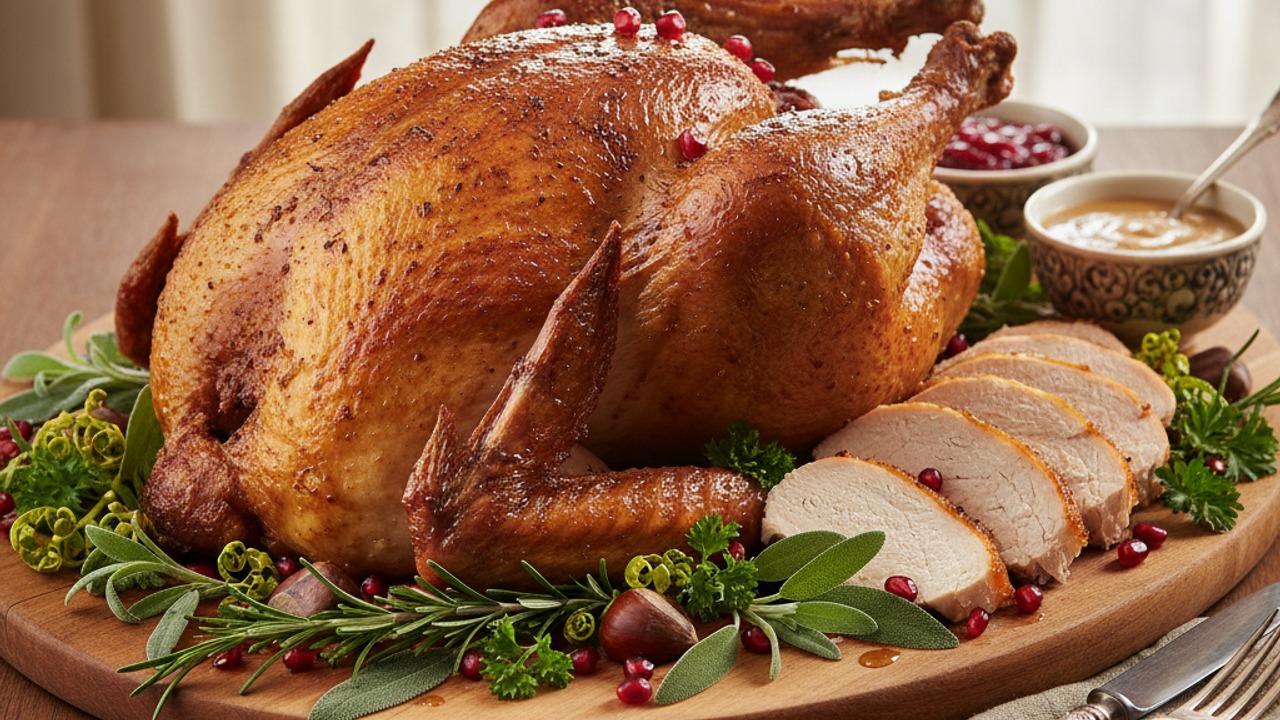
Crispy, golden deep-fried turkey with a seasoned brine and bold Cajun rub for Thanksgiving or any large gathering. This recipe covers safety, brining, and spice guidance so you get moist white meat and succulent dark meat with a crackling skin.
Jake Woods's note
"This method produces reliably juicy meat and an irresistible crispy skin — perfect for a holiday centerpiece. Follow the safety steps closely and allow the brine time to work for the best flavor and texture."
About This Recipe
There are few ways to get skin this shatteringly crisp and meat this impossibly juicy as deep-frying a whole bird. The contrast—the crackle of peanut-scented skin giving way to moist white meat and succulent dark meat—is the whole point of this recipe. The salt-and-brown-sugar brine seasons through the muscle, while a bold Cajun rub tucked under the skin adds pockets of savory heat without burning at high oil temperatures; frying seals those flavors quickly so the breast stays tender and the thighs remain rich.
What makes this version work is attention to three simple mechanics: a cold, long brine; meticulous drying; and a careful displacement test that prevents spills when you add hot oil. It also assumes you’ll be outdoors with proper gear and a reliable probe thermometer—safety is not optional here. Plan for 12–16 hours brining and roughly 3–3½ minutes per pound frying, then rest the bird 20–30 minutes; the result is a centerpiece that’s faster than a roast but yields deeper Maillard color and a texture that will hold up to bold sides and sauces.
Ingredients for Deep-Fried Turkey
- 12 lb Whole turkey (thawed), about 12 lb
- 3/4 cup Kosher salt (for brine)
- 1/2 cup Brown sugar (for brine)
- 1 tbsp Whole black peppercorns
- 6 cloves Garlic cloves (crushed)
- 4 cups Ice (to cool brine)
- 2 gal Cold water (for brine and displacement test)
- 3 tbsp Cajun seasoning (or spice rub)
- 3 1/2 gal Peanut or high-heat vegetable oil (enough to fully cover turkey)
How to Make Deep-Fried Turkey
Step 1: Brine the turkey
In a very large pot, combine 2 gallons cold water with kosher salt, brown sugar, peppercorns and crushed garlic over medium heat just until the salt and sugar dissolve; cool completely. Add ice to bring the brine thoroughly cold, submerge the thawed turkey (breast down) in the brine in a cooler or large container, and refrigerate or hold on ice for 12 hours (12–16 hours recommended) to season and tenderize the meat.For this step
- 12 lbWhole turkey (thawed), about
- 3/4 cupKosher salt (for brine)
- 1/2 cupBrown sugar (for brine)
- 1 tbspWhole black peppercorns
- 6 clovesGarlic cloves (crushed)
- 4 cupsIce (to cool brine)
- 2 galCold water (for brine and displacement test)
Step 2: Rinse, dry, and apply the rub
Remove the turkey from the brine, rinse it thoroughly under cold water to remove excess salt, and pat it completely dry inside and out with paper towels. For extra-crisp skin, refrigerate uncovered for 1–2 hours to dry; then loosen the skin over the breasts and thighs and distribute the Cajun seasoning beneath and over the skin evenly, leaving the cavity open and dry.For this step
- 3 tbspCajun seasoning (or spice rub)
Step 3: Prepare the fryer and oil volume test
Outdoors on a level surface, place your turkey pot on the burner and do a water displacement test: with the turkey in the pot, add cold water until it is just covered, remove the turkey and mark the level — this is the maximum oil fill line. Drain and dry the pot completely, then fill with oil to the mark; heat the oil slowly with a thermometer until it reaches 350°F (175°C). Never leave the fryer unattended.For this step
- 3 1/2 galPeanut or high-heat vegetable oil (enough to fully cover turkey)
Step 4: Lower and fry the turkey safely
Turn the burner to maintain 325–350°F (163–175°C). With protective gear and using a basket or sturdy hook, slowly and carefully lower the turkey into the hot oil; do not drop it. Fry for about 3 to 3.5 minutes per pound (for a 12 lb turkey ≈ 36–42 minutes), monitoring oil temperature and adjusting heat to keep it steady.Step 5: Check internal temperature and drain
Remove the turkey when the breast reaches 165°F (74°C) and the thigh 175°F (80°C) on a probe thermometer; if needed, continue frying until temperatures are reached. Lift the bird and allow excess oil to drain back into the pot for 10–15 minutes on a rack; transfer to a cutting board.Step 6: Rest, carve, and serve
Let the turkey rest for 20–30 minutes to let juices redistribute before carving. Carve and serve immediately — the skin will be very crisp and the meat succulent; have paper towels handy for any residual oil and enjoy with your favorite sides.


- In a very large pot, combine 2 gallons cold water with kosher salt, brown sugar, peppercorns and crushed garlic over medium heat just until the salt and sugar dissolve; cool completely. Add ice to bring the brine thoroughly cold, submerge the thawed turkey (breast down) in the brine in a cooler or large container, and refrigerate or hold on ice for 12 hours (12–16 hours recommended) to season and tenderize the meat.
- Remove the turkey from the brine, rinse it thoroughly under cold water to remove excess salt, and pat it completely dry inside and out with paper towels. For extra-crisp skin, refrigerate uncovered for 1–2 hours to dry; then loosen the skin over the breasts and thighs and distribute the Cajun seasoning beneath and over the skin evenly, leaving the cavity open and dry.
- Outdoors on a level surface, place your turkey pot on the burner and do a water displacement test: with the turkey in the pot, add cold water until it is just covered, remove the turkey and mark the level — this is the maximum oil fill line. Drain and dry the pot completely, then fill with oil to the mark; heat the oil slowly with a thermometer until it reaches 350°F (175°C). Never leave the fryer unattended.
- Turn the burner to maintain 325–350°F (163–175°C). With protective gear and using a basket or sturdy hook, slowly and carefully lower the turkey into the hot oil; do not drop it. Fry for about 3 to 3.5 minutes per pound (for a 12 lb turkey ≈ 36–42 minutes), monitoring oil temperature and adjusting heat to keep it steady.
- Remove the turkey when the breast reaches 165°F (74°C) and the thigh 175°F (80°C) on a probe thermometer; if needed, continue frying until temperatures are reached. Lift the bird and allow excess oil to drain back into the pot for 10–15 minutes on a rack; transfer to a cutting board.
- Let the turkey rest for 20–30 minutes to let juices redistribute before carving. Carve and serve immediately — the skin will be very crisp and the meat succulent; have paper towels handy for any residual oil and enjoy with your favorite sides.
Deep-Fried Turkey Tips
Salt and sugar balance
Use the full 3/4 cup kosher salt and 1/2 cup brown sugar—this ratio seasons through the dark meat without making the breast overly salty after rinsing; always rinse and pat dry thoroughly.
Ice the brine fully
Cool the brine to refrigerator temperature before adding the turkey or the bird will begin to cook and lose texture; add plenty of ice so the internal brine temperature reaches well below 40°F.
Mark your fill line
The water displacement test is the single most important safety step—mark the max oil level with the turkey in the pot so hot oil won't spill when you lower the bird.
Dry skin for crispness
After rinsing, refrigerate the turkey uncovered for 1–2 hours to firm and dry the skin; drier skin crisps into a better crust during frying.
Thermometer discipline
Use a reliable probe to check breast (165°F) and thigh (175°F) temps rather than relying on time alone, and adjust burner output to keep oil in the 325–350°F window.
Deep-Fried Turkey Variations and Substitutions
Citrus-Herb Brine
Replace half the water in the brine with an equal amount of orange juice and add rosemary, thyme and a few lemon slices for a brighter, aromatic profile that pairs well with a honey-mustard sauce.
Smoky Spice Rub
Swap the Cajun rub for smoked paprika, cumin and brown sugar under the skin to add a subtle smoke character without having to use a smoker.
Allergy-Friendly Oil
If peanut oil is a concern, use refined canola or sunflower oil rated for high heat; these have neutral flavors and similarly high smoke points.
Spatchcock for Speed
Butterfly the bird (remove backbone) and fry flattened for more even cooking and a shorter fry time; estimate about 2–2½ minutes per pound for a spatchcocked turkey.
How to Store and Make Deep-Fried Turkey Ahead
Cool carved turkey to room temperature for no more than two hours, wipe away excess oil, and store in shallow airtight containers in the refrigerator for up to 3–4 days, or freeze portions for up to 2 months. To reheat, warm slices in a 300–325°F oven covered with foil and a splash of stock for 12–20 minutes, or reheat in a skillet over medium-low heat to preserve crisp edges.
What to Serve With Deep-Fried Turkey
Because this bird is rich and crispy, pair it with acidic and vegetal sides—bright vinegar slaw, braised greens, or a citrus-y cranberry relish cut through the fat, while buttery mashed sweet potatoes and corn pudding round out the plate. For drinks, a crisp lager, dry rosé, or a highball with lemon and bourbon complement the Cajun seasoning and fried texture.
Deep-Fried Turkey FAQs
Can I skip the brine?
You can, but brining is why the white meat stays juicy with such a quick cook time; if short on time, brine at least 8 hours, but 12–16 gives the best seasoning and tenderness.
Is it safe to fry a partially frozen turkey?
No—any ice or frozen pockets will violently vaporize and cause dangerous oil splatter and boil-overs; the bird must be fully thawed and dry before frying.
Can I fry a stuffed turkey?
Do not deep-fry a traditional stuffing inside the cavity because it prevents the center from reaching a safe temperature; cook stuffing separately or use loose aromatic herbs and citrus in the cavity only.
How many minutes per pound should I plan for?
Use 3–3½ minutes per pound as a guideline for a whole, unspatchcocked turkey at 325–350°F, but always confirm doneness with internal temperatures of 165°F (breast) and 175°F (thigh).
Can I save and reuse the frying oil?
Yes—cool, strain through a fine-mesh sieve and cheesecloth, store in a sealed container in the refrigerator, and reuse for up to a few months for frying; discard if oil smells off or has excessive darkening.
About the author
Jake WoodsHello, I'm Jake. I started this recipe site with the idea that I hated recipe websites that overwhelm you with long stories and ads just to see plain content that's not helpful. My goal is to provide you with quality recipes, simple ideas and a fun cooking experience. There's lots of fun things to cook, and I think as you browse the site you'll find that TopShelf.Recipes is the place for quality recipes on the web.
See all recipes by Jake Woods →Ratings & Reviews
Did you make this recipe?
Be the first to share your experience.
Nutrition Facts
Per serving: about 1 cup
Nutrition values are estimated from USDA ingredient data and may vary based on preparation, brands, and portion sizes. Values are provided for informational purposes only.
Keep Reading
Guides & articles for this recipe

Healthy Eating
Gluten-Free Weeknight Grilling Plan
A 7-day gluten-free weeknight grilling plan with quick, family-friendly recipes, prep-ahead timelines, and a printable shopping list that spotlights late-summer produce and pantry staples. Includes clear cross-contamination safety tips and simple swaps to keep dinners fast and crowd-pleasing.

Cocktails & Drinks
Shakerless Cocktails for Backyard Grilling
Easy, tool-free cocktail recipes designed for backyard grilling and outdoor hangs. Find single-serve and batch formulas, quick portable infusions, improvised gear hacks, and simple cocktail pairings for grilled meats and vegetables.

Healthy Eating
Lean Labor Day Grilling Menu
A Labor Day grilling guide that swaps heavy BBQ classics for lighter, flavorful options—think lean proteins, charred vegetables, and low‑sugar sauces. Includes make-ahead meal prep, portioning tips, and a short shopping checklist for healthy, crowd-pleasing cookouts.
More from Grilling
View all Grilling recipes →
Tandoori Yogurt Marinated Grilled Chicken (Tandoori Style on the Grill)

Labor Day Grilled Lobster Rolls with Charred Scallion Brown Butter & Lemon‑Herb Aioli

Bulgogi Smash Burger

Campfire‑Smoked Potato Salad with Mustard‑Bacon Vinaigrette — A Labor Day Grilling Side for Steak

Hanger Steak with Shallot Sauce
Grilled Pineapple Upside-Down Cake

Spicy Grilled Shrimp Skewers with Garlic Lime Marinade

Honey Garlic Grilled Thin-Sliced Chicken Breasts

Coffee and Porcini Dry-Rub Steaks with RUB PRIME STEAK Finish
Ask me anything about this recipe — substitutions, scaling, techniques, timing.
Powered by AI · 6 questions per 5 minutes, 30 per day