Dry-Aged Style NY Strip
A simple salt-cure (short dry-brine) and high-heat grill technique that mimics the concentrated, beefy flavor of dry-aged NY strip. Quick enough for weeknight grilling but impressive enough for a weekend cookout.
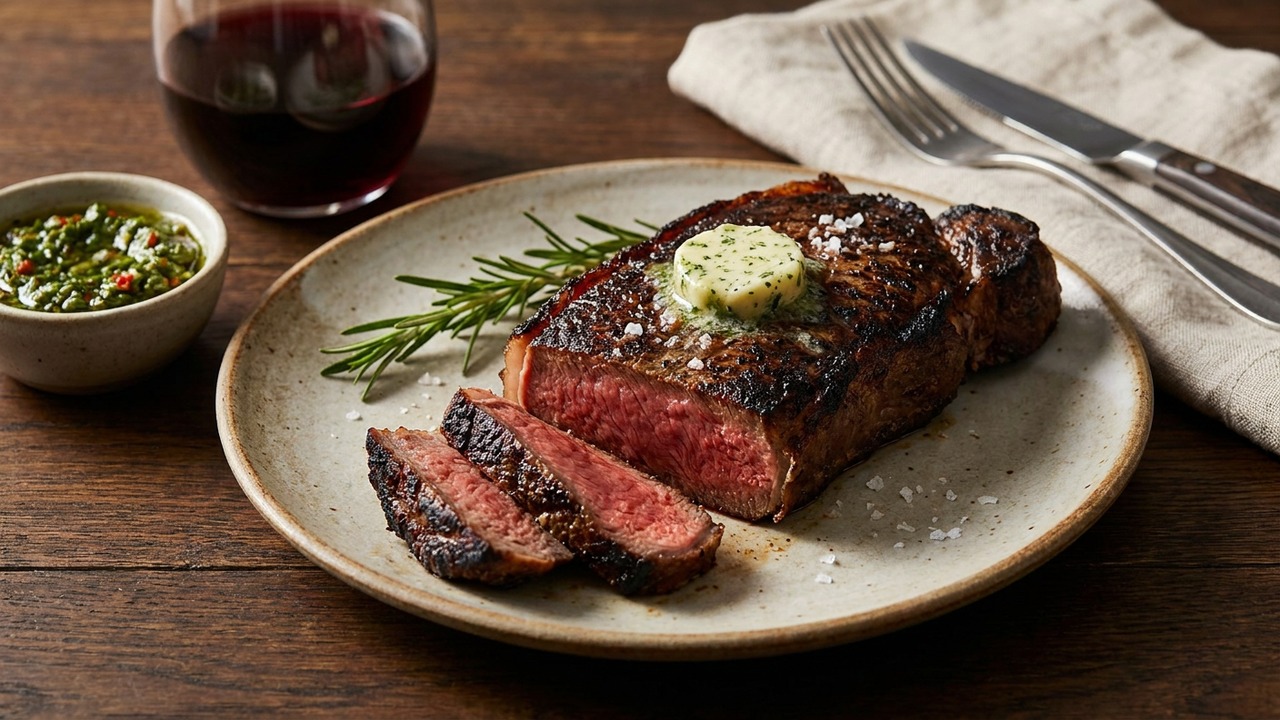
Jake Woods's note
"This method gives you that nutty, concentrated flavor without the long aging process — great for special weeknight dinners or backyard entertaining. Look forward to a deeply flavored steak with a beautiful crust and juicy interior."
About This Recipe
This Dry-Aged Style NY Strip is a cheat that captures the concentrated, nutty beef flavor and satin texture you normally get from weeks in a dry-aging room, but in a couple of hours on the grill. The short salt cure pulls moisture to the surface and then lets it reabsorb, intensifying the meat’s natural sweetness and encouraging a deeply caramelized crust when you scorch it over high heat. The result is a steak with an assertive, beefy aroma, a crisp Maillard exterior, and a juicy, just-rare center that plays beautifully with a quick thyme‑butter finish.
What makes this version work is restraint: measured kosher salt, a careful temperature window, and a final butter baste instead of heavy sauces so the concentrated beef flavor stays central. It’s aimed at cooks who want restaurant-quality results without specialty aging equipment — weeknight or weekend. If you like loud, beef-forward steaks with a textbook sear and a glossy finish, this method gives you that signature dry-aged impression with pantry-friendly ingredients and an easy, repeatable technique.
Ingredients for Dry-Aged Style NY Strip
- 2 steaks New York strip steaks (10–12 oz each), trimmed
- 2 tbsp Coarse kosher salt
- 1 tsp Freshly ground black pepper
- 1/2 tsp Garlic powder (optional)
- 1 tbsp Neutral high-smoke oil (canola or grapeseed)
- 2 tbsp Unsalted butter
- 2 sprigs Fresh thyme sprigs
- 1/2 tsp Flaky sea salt (for finishing)
How to Make Dry-Aged Style NY Strip
Step 1: Dry-brine the steaks
Pat the steaks dry with paper towels. Evenly coat both sides and the edges with the kosher salt (about 1 tsp per 6 oz), sprinkle with black pepper and garlic powder if using, then place on a wire rack set over a sheet pan and refrigerate, uncovered, for 1–2 hours to concentrate flavor and improve crust formation.For this step
- 2 steaksNew York strip steaks (10–12 oz each), trimmed
- 2 tbspCoarse kosher salt
- 1 tspFreshly ground black pepper
- 1/2 tspGarlic powder (optional)
Step 2: Bring to room temperature & prep the grill
Remove steaks from the fridge 30–45 minutes before cooking to allow them to come closer to room temperature. Preheat a gas or charcoal grill for direct high heat (aim for 500°F/260°C or hotter); oil the grates lightly with the neutral oil to prevent sticking.For this step
- 1 tbspNeutral high-smoke oil (canola or grapeseed)
Step 3: Sear over high heat
Place steaks directly over the hottest part of the grill and sear with the lid open for 2.5–4 minutes per side until a deep brown crust forms, rotating 45° halfway through each side for crosshatched marks. Use an instant-read thermometer to monitor internal temperature: remove at about 120–125°F (49–52°C) for medium-rare because they will rise while resting.Step 4: Finish, baste and rest
If steaks are very thick, move them to indirect heat for a few minutes to reach target temp. Transfer steaks to a plate, add butter and thyme, and spoon the melted butter over the steaks as they rest for 5–10 minutes. Finish with a light sprinkle of flaky sea salt to taste just before serving.For this step
- 2 tbspUnsalted butter
- 2 sprigsFresh thyme sprigs
- 1/2 tspFlaky sea salt (for finishing)
Step 5: Slice and serve
Slice the steak against the grain into 1/2-inch slices, arrange on warm plates and serve immediately. Enjoy with simple sides — roasted vegetables or a crisp salad keep the focus on the steak's concentrated, dry-aged-like flavor.


- Pat the steaks dry with paper towels. Evenly coat both sides and the edges with the kosher salt (about 1 tsp per 6 oz), sprinkle with black pepper and garlic powder if using, then place on a wire rack set over a sheet pan and refrigerate, uncovered, for 1–2 hours to concentrate flavor and improve crust formation.
- Remove steaks from the fridge 30–45 minutes before cooking to allow them to come closer to room temperature. Preheat a gas or charcoal grill for direct high heat (aim for 500°F/260°C or hotter); oil the grates lightly with the neutral oil to prevent sticking.
- Place steaks directly over the hottest part of the grill and sear with the lid open for 2.5–4 minutes per side until a deep brown crust forms, rotating 45° halfway through each side for crosshatched marks. Use an instant-read thermometer to monitor internal temperature: remove at about 120–125°F (49–52°C) for medium-rare because they will rise while resting.
- If steaks are very thick, move them to indirect heat for a few minutes to reach target temp. Transfer steaks to a plate, add butter and thyme, and spoon the melted butter over the steaks as they rest for 5–10 minutes. Finish with a light sprinkle of flaky sea salt to taste just before serving.
- Slice the steak against the grain into 1/2-inch slices, arrange on warm plates and serve immediately. Enjoy with simple sides — roasted vegetables or a crisp salad keep the focus on the steak's concentrated, dry-aged-like flavor.
Dry-Aged Style NY Strip Tips
Salt Quantity Matters
Use about 1 teaspoon of kosher salt per 6 ounces of steak to avoid over-salting; coarse grains dissolve and penetrate during the short brine without making the exterior overly salty.
Airflow for Crust
Place steaks on a wire rack over a sheet pan in the fridge so air circulates — this helps the surface dry, which promotes a faster, darker sear.
Thermometer Is Key
Pull the steak at 120–125°F (49–52°C) for medium-rare; carryover will raise it a few degrees while resting and keeps the center tender.
Rotate, Don’t Flip Often
Sear with the lid open and rotate 45° halfway through each side for even crust and attractive crosshatch marks; resist flipping more than once each side.
Butter Baste Off Heat
Finish basting with butter and thyme after you remove the steaks from the grill to avoid flare-ups and to keep the butter from burning.
Dry-Aged Style NY Strip Variations and Substitutions
Thicker-Cut Reverse Sear
For 1.5–2-inch strips, dry-brine up to 24 hours, slow-roast at 250°F to 110–115°F, then finish with a high-heat sear to achieve a more even pink edge-to-edge interior.
Dairy-Free Finish
Skip the butter and baste with a spoonful of high-smoke grapeseed oil mixed with minced thyme and a squeeze of lemon to add richness without dairy.
Anchovy Herb Butter
Mix softened butter with a minced anchovy, parsley, and lemon zest and use as a finishing compound butter for an umami lift that mimics dry-aged funk.
Skillet Method Substitute
If you don’t have a grill, sear in a screaming-hot cast-iron skillet for 2.5–4 minutes per side and finish in a 400°F oven until the same internal temp is reached.
How to Store and Make Dry-Aged Style NY Strip Ahead
Store leftover sliced steak in an airtight container in the refrigerator for up to 3 days; tuck a paper towel in to absorb excess moisture and keep slices from getting soggy. Reheat gently in a low oven (250–275°F) on a wire rack until warmed through, or quickly sear slices in a hot skillet with a little oil, avoiding prolonged cooking that will overcook the center. You can dry-brine the steaks up to 24 hours ahead for a stronger effect, but avoid brining beyond 48 hours unless you reduce the salt.
What to Serve With Dry-Aged Style NY Strip
Serve thin slices fanned on a warm platter with the thyme-butter spooned over the top and a light finishing sprinkle of flaky sea salt. Keep sides simple and textural: roasted fingerlings tossed in rosemary, charred broccolini or a crisp iceberg wedge salad with a sharp vinaigrette; a bold Cabernet or Malbec stands up well to the concentrated beef flavor. For presentation, slice against the grain into half-inch pieces and arrange so each guest can take a mix of crust and center in every bite.
Dry-Aged Style NY Strip FAQs
Why do you salt the steak before grilling?
The short dry-brine concentrates flavor by drawing out and then reabsorbing moisture, and it dries the surface slightly which promotes a better Maillard crust when seared at high heat.
Can I dry-brine longer than 2 hours?
Yes — 4–24 hours will intensify the effect and more closely mimic dry-aging; if you go beyond 24 hours, reduce the initial salt slightly to prevent over-salting and always keep the steak uncovered in the fridge.
What internal temperature should I aim for?
For medium-rare, remove the steak around 120–125°F (49–52°C); for medium, aim for 130–135°F (54–57°C) before resting, remembering carryover will add a few degrees.
Can I baste with butter on the grill?
Avoid heavy butter basting directly over high flames because it will burn and cause flare-ups; instead, add butter and thyme once the steak is off the heat and spoon melted butter over the meat while it rests.
My grill has hot spots—how do I get an even sear?
Identify the hottest zone and sear there for the majority of time, rotating 45° for crosshatch; if edges need more time, move the steak briefly to a slightly cooler area or use indirect heat to finish without charring.
About the author
Jake WoodsHello, I'm Jake. I started this recipe site with the idea that I hated recipe websites that overwhelm you with long stories and ads just to see plain content that's not helpful. My goal is to provide you with quality recipes, simple ideas and a fun cooking experience. There's lots of fun things to cook, and I think as you browse the site you'll find that TopShelf.Recipes is the place for quality recipes on the web.
See all recipes by Jake Woods →Ratings & Reviews
Did you make this recipe?
Be the first to share your experience.
Nutrition Facts
Per serving: 1 steak
Nutrition values are estimated from USDA ingredient data and may vary based on preparation, brands, and portion sizes. Values are provided for informational purposes only.
Keep Reading
Guides & articles for this recipe

Healthy Eating
Gluten-Free Weeknight Grilling Plan
A 7-day gluten-free weeknight grilling plan with quick, family-friendly recipes, prep-ahead timelines, and a printable shopping list that spotlights late-summer produce and pantry staples. Includes clear cross-contamination safety tips and simple swaps to keep dinners fast and crowd-pleasing.

Cocktails & Drinks
Shakerless Cocktails for Backyard Grilling
Easy, tool-free cocktail recipes designed for backyard grilling and outdoor hangs. Find single-serve and batch formulas, quick portable infusions, improvised gear hacks, and simple cocktail pairings for grilled meats and vegetables.

Healthy Eating
Lean Labor Day Grilling Menu
A Labor Day grilling guide that swaps heavy BBQ classics for lighter, flavorful options—think lean proteins, charred vegetables, and low‑sugar sauces. Includes make-ahead meal prep, portioning tips, and a short shopping checklist for healthy, crowd-pleasing cookouts.
More from Grilling
View all Grilling recipes →
Tandoori Yogurt Marinated Grilled Chicken (Tandoori Style on the Grill)

Labor Day Grilled Lobster Rolls with Charred Scallion Brown Butter & Lemon‑Herb Aioli

Bulgogi Smash Burger

Campfire‑Smoked Potato Salad with Mustard‑Bacon Vinaigrette — A Labor Day Grilling Side for Steak

Hanger Steak with Shallot Sauce
Grilled Pineapple Upside-Down Cake

Spicy Grilled Shrimp Skewers with Garlic Lime Marinade

Honey Garlic Grilled Thin-Sliced Chicken Breasts

Coffee and Porcini Dry-Rub Steaks with RUB PRIME STEAK Finish
Ask me anything about this recipe — substitutions, scaling, techniques, timing.
Powered by AI · 6 questions per 5 minutes, 30 per day