Enchiladas Verdes
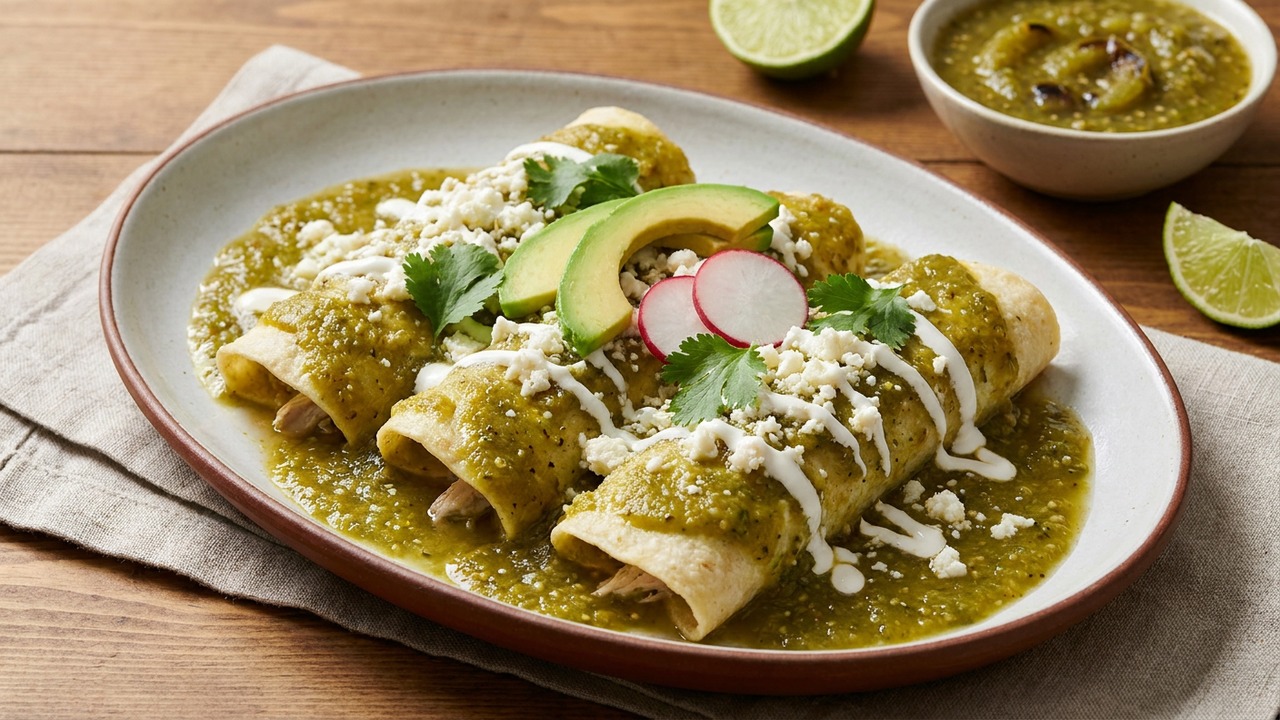
Enchiladas Verdes made with roasted tomatillos and fresh chiles deliver bright, tangy sauce and authentic Mexican flavor. This stovetop method chars the tomatillos for depth, blends a vibrant green salsa, and finishes the enchiladas in a skillet for a fast, home-friendly meal.
Ingredient Spotlight
Tomatillos, husked
Tomatillos are small, green, paper‑husked fruits central to Mexican cooking (think salsa verde). They have a bright, tart, slightly citrusy and herbal flavor that’s more acidic than a regular tomato. Look for them in the produce aisle or Latin markets (sometimes sold canned or frozen), and if you can’t find them use green tomatoes with a generous squeeze of lime or a jarred tomatillo salsa as a substitute.
Ingredient Spotlight
Fresh serrano chiles (or jalapeños for milder heat)
Serrano chiles are thin, bright green Mexican chiles that are noticeably hotter than jalapeños and bring a sharp, fresh, grassy‑citrus heat to dishes. Many home cooks know jalapeños but serranos may be less familiar; they’re sold in produce sections and Latin markets. Substitute with jalapeños for milder heat (or Thai bird’s eye chiles for more heat), and remove seeds/veins to reduce spiciness.
Ingredient Spotlight
Queso fresco, crumbled
Queso fresco is a mild, crumbly Mexican fresh cheese with a clean milky tang and soft texture used as a topping for tacos, soups, and salads. It’s less salty and creamier than aged cheeses like cotija. Find it in the dairy case at Hispanic markets and many supermarkets; good substitutes are queso blanco, mild crumbled feta, or ricotta salata (adjust for saltiness).
Jake Woods's note
"This recipe shines for weeknight dinners and casual gatherings when you want bold, fresh flavors without turning on the oven. Home cooks will appreciate the quick stovetop roast technique that builds smoky depth in the salsa."
About This Recipe
Enchiladas verdes are a study in contrasts: bright, acidic tomatillo salsa lifted by fresh cilantro and green chiles, folded around tender shredded chicken and finished with crumbly queso fresco. Charring the tomatillos, chiles and onion on the stovetop builds the deeper, slightly smoky notes that keep this version from tasting flat or overly sharp, while a short simmer concentrates the salsa so it clings to the tortillas instead of sliding off. Warming the tortillas briefly in oil softens them and creates a pliable envelope that holds the filling without becoming gummy.
This recipe is designed for weekday dinner speed without sacrificing authenticity—use rotisserie or poached chicken to cut active time—and for cooks who want control over heat and texture. The skillet finish (rather than baking) keeps things fast and allows you to judge when the tortillas are just tender and the salsa still lively. Serve immediately for the best contrast between the tangy, vibrant salsa and the creamy, salty cheese; leftovers are convenient, but the first bite—hot, tangy and a little smoky—really shows what makes enchiladas verdes sing.
Ingredients for Enchiladas Verdes
- 1 1/4 lb Tomatillos, husked
- 2 count Fresh serrano chiles (or jalapeños for milder heat)
- 3 cloves Garlic cloves, unpeeled
- 1/2 medium White onion, halved
- 1/2 cup Fresh cilantro, chopped
- 1 teaspoon Kosher salt
- 3 cups Cooked shredded chicken (rotisserie or poached)
- 12 count Corn tortillas (6-inch)
- 1/4 cup Vegetable oil (for warming tortillas)
- 1 cup Queso fresco, crumbled
How to Make Enchiladas Verdes
Step 1: Char the tomatillos, chiles, onion and garlic
Heat a dry heavy skillet or cast-iron over medium-high heat. Place husked tomatillos, serranos, halved onion (cut side down) and unpeeled garlic directly in the pan and char, turning occasionally, until blistered and deeply browned in spots (8–12 minutes). Remove garlic when browned and set aside to cool briefly before peeling.For this step
- 1 1/4 lbTomatillos, husked
- 2 countFresh serrano chiles (or jalapeños for milder heat)
- 3 clovesGarlic cloves, unpeeled
- 1/2 mediumWhite onion, halved
Step 2: Blend the salsa verde and simmer
Transfer the charred tomatillos, chiles, peeled garlic, and onion to a blender along with chopped cilantro and salt; add 1/4 cup (60 ml) water and blend to a bright, slightly chunky sauce. Pour the salsa into a medium saucepan and simmer over medium-low for 6–8 minutes to concentrate flavors and thicken slightly; taste and adjust salt or chile heat as needed.For this step
- 1/2 cupFresh cilantro, chopped
- 1 teaspoonKosher salt
Step 3: Warm and soften the tortillas; combine filling
Pour the vegetable oil into a large skillet and heat over medium until shimmering. Quickly warm each corn tortilla 10–15 seconds per side until pliable, drain on paper towels, and stack wrapped in a clean kitchen towel to keep warm. Toss the shredded chicken with about 1 cup of the warm salsa to moisten and season the filling.For this step
- 3 cupsCooked shredded chicken (rotisserie or poached)
- 12 countCorn tortillas (6-inch)
- 1/4 cupVegetable oil (for warming tortillas)
Step 4: Assemble and finish the enchiladas in the skillet
Spread a thin layer of salsa across the bottom of a large skillet and arrange filled tortillas seam-side down in a single layer; ladle more salsa over the tops so each enchilada is well coated. Cover and simmer gently for 5–7 minutes until heated through and the flavors meld; scatter crumbled queso fresco over the enchiladas before serving.For this step
- 1 cupQueso fresco, crumbled
Step 5: Serve and garnish
Serve hot garnished with extra chopped cilantro and additional crumbled queso if desired; lime wedges are an excellent optional accompaniment. These enchiladas are best eaten immediately while tortillas are soft and the salsa is bright and tangy.


- Heat a dry heavy skillet or cast-iron over medium-high heat. Place husked tomatillos, serranos, halved onion (cut side down) and unpeeled garlic directly in the pan and char, turning occasionally, until blistered and deeply browned in spots (8–12 minutes). Remove garlic when browned and set aside to cool briefly before peeling.
- Transfer the charred tomatillos, chiles, peeled garlic, and onion to a blender along with chopped cilantro and salt; add 1/4 cup (60 ml) water and blend to a bright, slightly chunky sauce. Pour the salsa into a medium saucepan and simmer over medium-low for 6–8 minutes to concentrate flavors and thicken slightly; taste and adjust salt or chile heat as needed.
- Pour the vegetable oil into a large skillet and heat over medium until shimmering. Quickly warm each corn tortilla 10–15 seconds per side until pliable, drain on paper towels, and stack wrapped in a clean kitchen towel to keep warm. Toss the shredded chicken with about 1 cup of the warm salsa to moisten and season the filling.
- Spread a thin layer of salsa across the bottom of a large skillet and arrange filled tortillas seam-side down in a single layer; ladle more salsa over the tops so each enchilada is well coated. Cover and simmer gently for 5–7 minutes until heated through and the flavors meld; scatter crumbled queso fresco over the enchiladas before serving.
- Serve hot garnished with extra chopped cilantro and additional crumbled queso if desired; lime wedges are an excellent optional accompaniment. These enchiladas are best eaten immediately while tortillas are soft and the salsa is bright and tangy.
Enchiladas Verdes Tips
Char for depth
Let the tomatillos and chiles blister and brown in a dry pan; the smoky spots add savory complexity and tame raw acidity.
Peel garlic after charring
Roasted garlic slips out of its skin easily once slightly cooled and becomes mellow, lending richness without harshness.
Warm tortillas properly
Heat each tortilla briefly in hot oil so it becomes pliable—drain and stack in a towel to retain steam and prevent cracking or tearing.
Simmer to concentrate
Cook the blended salsa 6–8 minutes to reduce excess water and mellow sharpness so it clings to the filling.
Adjust chile heat
Seed your serranos or swap to jalapeños for milder heat, or reserve one charred chile to blend in gradually and taste as you go.
Prevent sogginess
Spread a thin layer of salsa on the skillet before arranging enchiladas to create a barrier and avoid a soggy bottom.
Enchiladas Verdes Variations and Substitutions
Vegetarian Black Bean
Replace shredded chicken with a seasoned black bean and roasted poblano filling; add a spoonful of crema or mashed avocado for creaminess.
Pork Carnitas Filling
Use shredded roasted pork (carnitas) tossed with the salsa for a richer, more indulgent filling that pairs well with pickled red onion.
Cheese-Focused
Swap queso fresco for crumbled panela or shredded Oaxaca/Monterey Jack for a meltier texture while maintaining the tangy finish.
Low-Fat Option
Use a light spray of oil to warm tortillas, lean shredded chicken, and top with chopped cilantro and a squeeze of lime instead of extra cheese.
How to Store and Make Enchiladas Verdes Ahead
Store leftover enchiladas covered in the refrigerator for up to 3 days. For best texture, keep the salsa and tortillas/enchiladas separate if you plan to store the components—reassemble before serving. Reheat gently in a covered skillet with a splash of water or chicken stock over low heat, or warm in a 350°F oven until heated through; avoid the microwave if possible to prevent rubbery tortillas.
What to Serve With Enchiladas Verdes
Serve with a simple cabbage slaw or quick pickled red onions to add crunchy contrast, plus lime wedges for brightness. Traditional sides like Mexican rice and refried beans work well, while a cold cerveza, a tangy margarita with blanco tequila, or a hibiscus agua fresca (agua de jamaica) complement the salsa’s acidity.
Enchiladas Verdes FAQs
Can I make the salsa ahead of time?
Yes—salsa verde can be made a day ahead and refrigerated; bring it to a gentle simmer before assembling to refresh its brightness and loosen any thickened spots.
How can I reduce the spice level?
Remove seeds and membranes from the serranos or substitute jalapeños; you can also blend in only one chile and add more gradually after tasting.
My tortillas fall apart—how do I keep them intact?
Warm tortillas briefly in hot oil or on a griddle until pliable, then drain and stack in a towel; this steaming step prevents cracking and makes them easier to roll and seal seam-side down.
Can I freeze these enchiladas?
You can freeze assembled enchiladas for up to 2 months in an airtight container, but expect slight textural changes—reheat from frozen in a covered oven at 350°F until warmed through to help preserve texture.
What if my salsa is too watery or too acidic?
Simmer it longer to reduce excess water and concentrate flavor; if too acidic, add a small pinch of sugar or a drizzle of olive oil to round the edges, then re-taste and adjust salt.
About the author
Jake WoodsHello, I'm Jake. I started this recipe site with the idea that I hated recipe websites that overwhelm you with long stories and ads just to see plain content that's not helpful. My goal is to provide you with quality recipes, simple ideas and a fun cooking experience. There's lots of fun things to cook, and I think as you browse the site you'll find that TopShelf.Recipes is the place for quality recipes on the web.
See all recipes by Jake Woods →Ratings & Reviews
Did you make this recipe?
Be the first to share your experience.
Nutrition Facts
Per serving: 1 serving
Nutrition values are estimated from USDA ingredient data and may vary based on preparation, brands, and portion sizes. Values are provided for informational purposes only.
Keep Reading
Guides & articles for this recipe

Tips & Techniques
The Ultimate Guide to Blanching
A practical, technique-forward guide to blanching—what it does, why it matters, and when to use it from vegetables to stone fruit like peaches. Includes timing guidelines, troubleshooting cues, and recipe starting points for preserving, peeling, and finishing.

Healthy Eating
Gluten-Free Weeknight Grilling Plan
A 7-day gluten-free weeknight grilling plan with quick, family-friendly recipes, prep-ahead timelines, and a printable shopping list that spotlights late-summer produce and pantry staples. Includes clear cross-contamination safety tips and simple swaps to keep dinners fast and crowd-pleasing.

Healthy Eating
Low-Fat Grill Swaps for Big Flavor
A practical guide to trimming fat from grilled meals without losing juiciness or char. Learn yogurt- and citrus-based marinades, lean protein picks, searing and indirect-heat tricks, plus 5 quick low-fat marinades and a simple weeknight plan.
More from Mexican
View all Mexican recipes →
Cheesy Enchilada Casserole

Instant Pot Beef Enchiladas

Smoked Pulled Pork Enchiladas

Vegan Black Bean Enchiladas

Chicken Enchiladas Red Sauce

Green Chile Chicken Enchiladas

Skillet Enchilada Dinner

Breakfast Enchilada Casserole

Air Fryer Crispy Enchiladas
Ask me anything about this recipe — substitutions, scaling, techniques, timing.
Powered by AI · 6 questions per 5 minutes, 30 per day