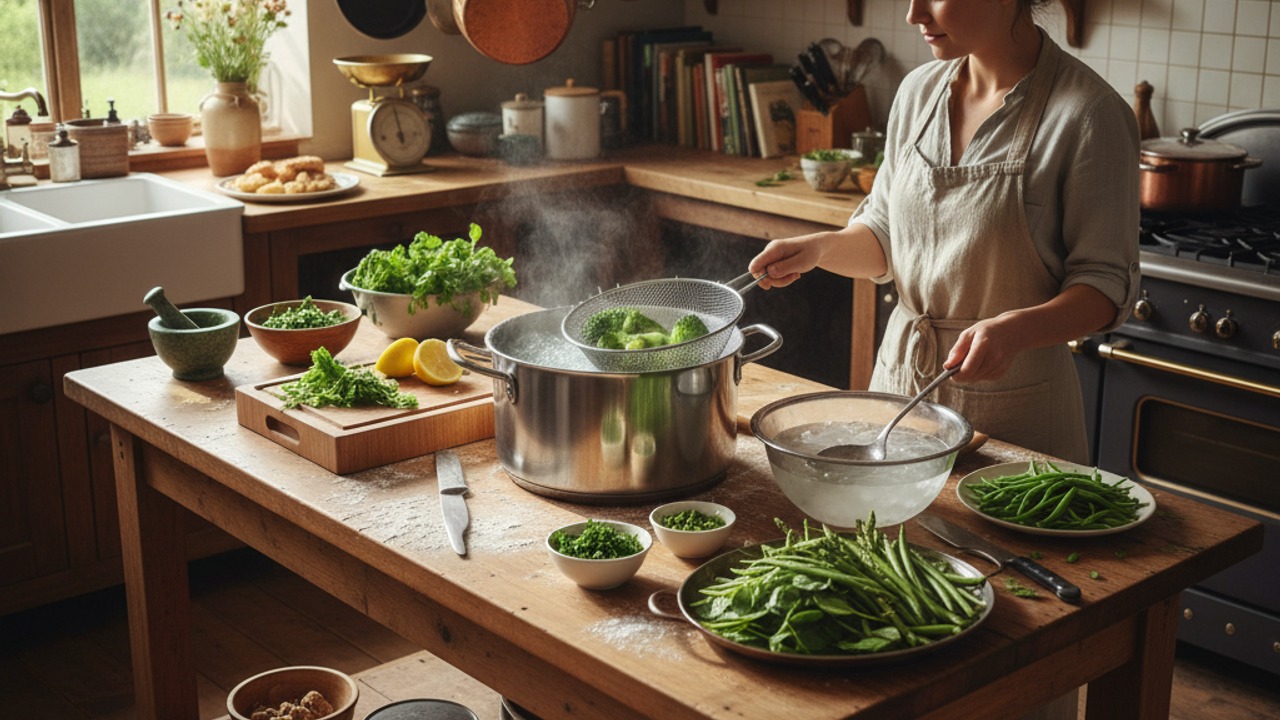

Blanching succeeds because it intervenes in two linked processes at once: enzymatic activity that causes browning and softening, and the physical state of plant cell walls. Heat inactivates peroxidases and polyphenol oxidases—enzymes that, given time, turn bright greens dull and make fruit brown—so a short dip in near-boiling water buys you time to preserve color and flavor. At the same time, heat slightly relaxes pectic substances in the outer cell layers, which can either firm a vegetable’s bite or loosen a fruit’s skin depending on intensity.
Those two effects explain the trade-offs you’ll see: over-blanching leaches water-soluble flavor and turns crisp vegetables limp because prolonged heat ruptures more cells, while under-blanching leaves enzymes active and skins stubborn. That matters when you’re preparing produce for freezing, sautéing, or preserving whole fruit; timing and the follow-up ice bath are the control points that determine whether blanching protects texture or ruins it.


