Grilled Banana-Leaf Cochinita Pibil (Charred-Orange Pork) with Pickled Red Onions
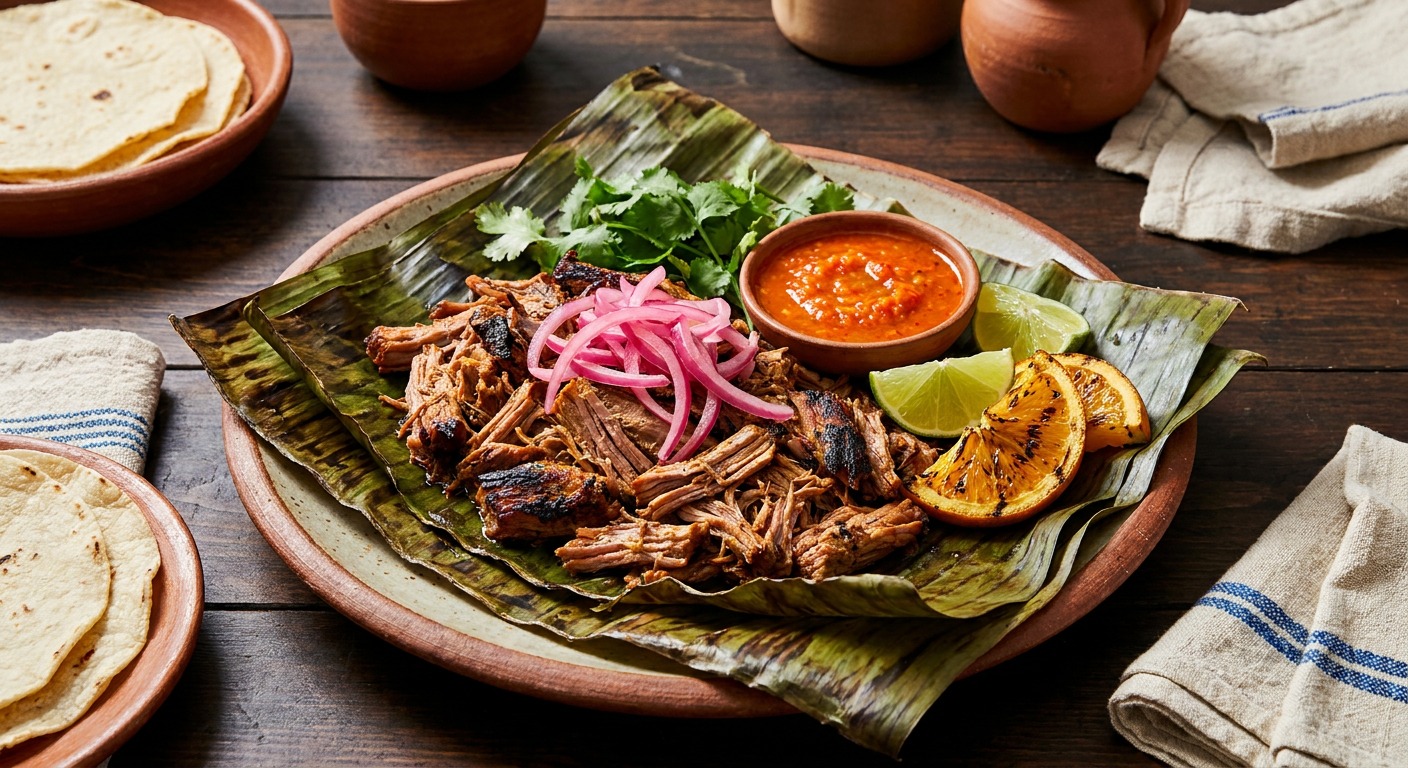
A hands-on take on Yucatán cochinita pibil: achiote-and-ancho-marinated pork slow-grilled in banana leaves until meltingly tender, finished with bright pickled red onions and a fiery habanero-lime salsa. Use charcoal or a gas-grill method to get the classic char and gentle smoke.
Ingredient Spotlight
Achiote paste
Achiote paste (annatto paste) is a bright-red seasoning paste common in Mexican (especially Yucatán) and Central American cooking made from ground annatto seeds mixed with spices, garlic and oil. It gives a earthy, slightly peppery, mildly sweet and nutty flavor and vivid red-orange color rather than a strong heat. Find it at Latin markets, well-stocked supermarkets, or online; if you can’t, substitute a blend of toasted annatto or smoked paprika + a touch of turmeric and cumin (or annatto powder steeped in oil) to mimic color and approximate flavor.
Ingredient Spotlight
Dried ancho chilies (seeded, toasted & rehydrated)
Ancho chiles are dried poblano peppers widely used in Mexican cuisine; when toasted and rehydrated they yield a mild, fruity, slightly sweet and smoky flavor with raisin/plum and chocolate-like notes rather than much heat. You’ll find them at Latin markets, many supermarkets, or online; good substitutes are pasilla or a mix of mild guajillo and a pinch of cocoa or smoked paprika to approximate the depth and sweetness.
Ingredient Spotlight
Banana leaves (cleaned and softened)
Banana leaves are large tropical leaves used across Latin American, Caribbean and Southeast Asian cuisines for wrapping and steaming foods (tamales, fish, pasteles), imparting a subtle grassy, vegetal aroma and keeping food moist. They’re sold fresh or frozen at Latin/Asian/Caribbean markets and some grocery stores; if unavailable, use corn husks (for tamales), parchment paper, or heavy-duty foil as practical wrappers—briefly passing leaves over a flame or steaming them makes them pliable.
Jake Woods's note
"This version brings the rustic, citrus-and-achiote flavors of Yucatán home while using a grill instead of a buried pit. It’s a great centerpiece for weekend gatherings—make the pork a day ahead and everything comes together easily."
About This Recipe
Cochinita pibil is the slow-braised pork of the Yucatán—this grilled, banana-leaf version keeps the classic flavors but adds a charred-orange brightness and an outdoor-smoked edge. Achiote paste and rehydrated ancho chilies give the pork a deep, earthy-red backbone while the citrus blend lifts and tenderizes; wrapped tight in banana leaves the meat essentially steams in its own intensely flavored juices until it falls apart. The pickled red onions cut through the fat with crisp acidity, and the habanero–lime salsa hits the finishing notes of heat and herbal brightness.
This recipe is built for weekend grill time: the two-zone approach and a low 225–275°F range replicate the traditional pit without needing elaborate equipment, and the banana leaves protect the meat while letting it pick up smoke and char. Key moves—scoring the shoulder, massaging in the achiote–ancho paste, saving and stirring a little cooking liquid back into the shredded pork, and briefly crisping portions under a hot broiler—are what make the textured contrasts sing. If you want an authentic balance of tender, tangy, smoky and fiery, this version delivers and scales well for a casual taco spread.
Ingredients for Grilled Banana-Leaf Cochinita Pibil (Charred-Orange Pork) with Pickled Red Onions
- 4 lb Pork shoulder (bone-in or boneless), trimmed of excess fat
- 3 tbsp Achiote paste
- 3 whole Dried ancho chilies (seeded, toasted & rehydrated)
- 1 cup Bitter-orange substitute (fresh orange juice + lime juice + white vinegar) — total
- 6 cloves Garlic cloves, smashed
- 2 tsp Salt & freshly ground black pepper (for marinade and seasoning)
- 4 large leaves Banana leaves (cleaned and softened)
- 1 large Red onion + pickling brine (½ cup white vinegar, ½ cup water, 1 tbsp sugar, 1 tsp salt) — 1 large red onion
- 1 habanero Habanero, fresh cilantro & lime (for salsa) — about 1 habanero, ¼ cup chopped cilantro, juice of 1 lime
- 12 count Corn tortillas (for serving)
How to Make Grilled Banana-Leaf Cochinita Pibil (Charred-Orange Pork) with Pickled Red Onions
Step 1: Make the achiote–ancho marinade and marinate the pork
Toast ancho chilies briefly in a dry skillet until fragrant, remove stems and seeds, then soak in hot water 15 minutes. In a blender, combine rehydrated ancho chilies, achiote paste, citrus blend (use a mix of fresh orange juice, juice of 2 limes and 2 Tbsp white vinegar to equal about 1 cup), garlic, and salt & pepper; blend to a smooth sauce, adding a splash of the chile soaking liquid if needed. Score the pork and rub the marinade all over, pressing it into crevices; place in a container, cover, and refrigerate for 8–12 hours (overnight is ideal).For this step
- 4 lbPork shoulder (bone-in or boneless), trimmed of excess fat
- 3 tbspAchiote paste
- 3 wholeDried ancho chilies (seeded, toasted & rehydrated)
- 1 cupBitter-orange substitute (fresh orange juice + lime juice + white vinegar) — total
- 6 clovesGarlic cloves, smashed
- 2 tspSalt & freshly ground black pepper (for marinade and seasoning)
Step 2: Quick-pickle the red onions
Thinly slice the red onion into rings. Combine ½ cup white vinegar, ½ cup water, 1 tbsp sugar and 1 tsp salt in a small pan and heat just to dissolve sugar and salt; pour over the onions in a jar or bowl, press down, and let cool to room temperature. Refrigerate at least 30 minutes (can be made up to 3 days ahead).For this step
- 1 largeRed onion + pickling brine (½ cup white vinegar, ½ cup water, 1 tbsp sugar, 1 tsp salt) — 1 large red onion
Step 3: Make the bright habanero–lime salsa
Char the habanero over a flame or in a hot skillet until blistered if you want a smoky edge (optional). Finely chop the charred or raw habanero (remove seeds to tame heat), mix with chopped cilantro, juice of 1 lime and a pinch of salt. Taste and adjust lime/salt—this should be bright, not oily. Keep refrigerated until serving.For this step
- 1 habaneroHabanero, fresh cilantro & lime (for salsa) — about 1 habanero, ¼ cup chopped cilantro, juice of 1 lime
Step 4: Prepare banana leaves and slow-grill the pork
Soften banana leaves by passing them briefly over a flame, dipping in hot water, or warming on a skillet so they become pliable (wipe clean). Double-wrap the marinated pork tightly in banana leaves, then wrap in heavy-duty foil to seal moisture. For charcoal/pit: build a two-zone fire with coals pushed to the sides, place the wrapped pork on the cool center grate, cover, and maintain 225–275°F (107–135°C) with indirect heat for about 3–5 hours. For gas grill: turn off center burners and run side burners low (or use one side for indirect heat); place packet over the unlit zone, add a few soaked wood chips or a small wood chunk on a foil tray for smoke, and maintain the same temp. Cook until the pork reaches 195–203°F (90–95°C) and pulls apart easily.For this step
- 4 large leavesBanana leaves (cleaned and softened)
Step 5: Rest and shred
Remove the pork packet from the grill and let rest, still wrapped, for 20–30 minutes to redistribute juices. Unwrap carefully (steam will be hot), transfer pork to a tray, reserve the cooking juices, and shred with forks. Stir a few tablespoons of the strained juices back into the shredded meat to keep it moist. If you like crispy edges, spread shredded meat on a hot skillet or under the broiler for a few minutes to caramelize.Step 6: Warm tortillas and assemble tacos
Warm corn tortillas on a hot dry skillet or directly over low flame until pliable. Build tacos with a generous mound of shredded pork, a spoonful of pickled red onions, a drizzle of habanero–lime salsa, and extra cilantro if desired. Serve immediately with lime wedges.For this step
- 12 countCorn tortillas (for serving)


- Toast ancho chilies briefly in a dry skillet until fragrant, remove stems and seeds, then soak in hot water 15 minutes. In a blender, combine rehydrated ancho chilies, achiote paste, citrus blend (use a mix of fresh orange juice, juice of 2 limes and 2 Tbsp white vinegar to equal about 1 cup), garlic, and salt & pepper; blend to a smooth sauce, adding a splash of the chile soaking liquid if needed. Score the pork and rub the marinade all over, pressing it into crevices; place in a container, cover, and refrigerate for 8–12 hours (overnight is ideal).
- Thinly slice the red onion into rings. Combine ½ cup white vinegar, ½ cup water, 1 tbsp sugar and 1 tsp salt in a small pan and heat just to dissolve sugar and salt; pour over the onions in a jar or bowl, press down, and let cool to room temperature. Refrigerate at least 30 minutes (can be made up to 3 days ahead).
- Char the habanero over a flame or in a hot skillet until blistered if you want a smoky edge (optional). Finely chop the charred or raw habanero (remove seeds to tame heat), mix with chopped cilantro, juice of 1 lime and a pinch of salt. Taste and adjust lime/salt—this should be bright, not oily. Keep refrigerated until serving.
- Soften banana leaves by passing them briefly over a flame, dipping in hot water, or warming on a skillet so they become pliable (wipe clean). Double-wrap the marinated pork tightly in banana leaves, then wrap in heavy-duty foil to seal moisture. For charcoal/pit: build a two-zone fire with coals pushed to the sides, place the wrapped pork on the cool center grate, cover, and maintain 225–275°F (107–135°C) with indirect heat for about 3–5 hours. For gas grill: turn off center burners and run side burners low (or use one side for indirect heat); place packet over the unlit zone, add a few soaked wood chips or a small wood chunk on a foil tray for smoke, and maintain the same temp. Cook until the pork reaches 195–203°F (90–95°C) and pulls apart easily.
- Remove the pork packet from the grill and let rest, still wrapped, for 20–30 minutes to redistribute juices. Unwrap carefully (steam will be hot), transfer pork to a tray, reserve the cooking juices, and shred with forks. Stir a few tablespoons of the strained juices back into the shredded meat to keep it moist. If you like crispy edges, spread shredded meat on a hot skillet or under the broiler for a few minutes to caramelize.
- Warm corn tortillas on a hot dry skillet or directly over low flame until pliable. Build tacos with a generous mound of shredded pork, a spoonful of pickled red onions, a drizzle of habanero–lime salsa, and extra cilantro if desired. Serve immediately with lime wedges.
Grilled Banana-Leaf Cochinita Pibil (Charred-Orange Pork) with Pickled Red Onions Tips
Soften banana leaves gently
Heat leaves briefly over a flame or dip in hot water until pliable; tearing or cold leaves will crack and let flavorful steam escape.
Score the shoulder deeply
Make ½-inch-deep cuts across the fat and muscle to allow the marinade to penetrate; press the achiote–ancho paste into these slits for maximum flavor.
Control grill temperature
Use a two-zone fire and a probe thermometer to hold 225–275°F; short bursts of higher heat will dry the meat and lengthen cook time.
Reserve and reincorporate juices
Strain the cooking liquid and stir a few tablespoons back into the shredded pork to keep it silky; reduce any excess into a glaze for saucier tacos.
Crisp for texture
After shredding, spread meat on a hot skillet or under the broiler for 3–5 minutes to develop caramelized edges that contrast the soft interior.
Grilled Banana-Leaf Cochinita Pibil (Charred-Orange Pork) with Pickled Red Onions Variations and Substitutions
Authentic bitter orange
If you can find it, replace the citrus blend with freshly squeezed naranja agria (bitter orange) juice for a more authentic floral-tart profile.
Chipotle-smoked twist
Swap one ancho for a rehydrated chipotle to introduce a smoky, slightly fruity depth that plays well with the achiote.
Vegetarian jackfruit
Substitute young canned jackfruit, marinated and slow-roasted in the same achiote–ancho sauce, then shred—finish with the same pickles and salsa for a plant-based taco.
Milder heat option
Remove seeds and membranes from the habanero or substitute a jalapeño for a gentler bright heat that still complements the citrus.
How to Store and Make Grilled Banana-Leaf Cochinita Pibil (Charred-Orange Pork) with Pickled Red Onions Ahead
Store leftover shredded pork in an airtight container in the refrigerator for up to 4 days or freeze for up to 3 months. Keep any reserved cooking juices separate and add back when reheating to prevent dryness. Reheat gently in a covered skillet over low heat with a splash of juices or in a 300°F oven until warmed through, then optionally crisp before serving.
What to Serve With Grilled Banana-Leaf Cochinita Pibil (Charred-Orange Pork) with Pickled Red Onions
Serve family-style with warm corn tortillas, lime wedges, extra chopped cilantro, and bowls of pickled red onions and habanero–lime salsa for assembly at the table. Offer sides like black refried beans, grilled pineapple or esquites (street-corn salad) and beverage pairings such as an icy Mexican lager, smoky mezcal neat, or a tart lime margarita to balance the pork's richness.
Grilled Banana-Leaf Cochinita Pibil (Charred-Orange Pork) with Pickled Red Onions FAQs
Can I use pork loin instead of shoulder?
You can, but pork shoulder is preferred because its collagen melts into gelatin during long, slow cooking, giving the cochinita its silky texture; loin will be leaner and can dry out, so reduce cooking time and watch internal temperature closely.
How do I soften banana leaves if I don't have a stove flame?
Warm them in a large pot of hot water for a minute or two or lay them on a hot griddle until pliable; always wipe away excess moisture and trim any torn edges before wrapping.
What if I don’t have bitter orange?
The recipe’s citrus blend (fresh orange juice, lime juice, and a touch of white vinegar) mimics bitter orange well; use freshly squeezed juices for the best acid balance rather than bottled orange juice.
How do I know when the pork is done and shreddable?
Target an internal temperature of 195–203°F (90–95°C) and test with forks—the meat should pull apart easily and feel soft rather than springy; at lower temps it will be tough and require more time.
Can I make this entirely in the oven?
Yes—wrap the banana-leaf–wrapped shoulder in foil and roast in a 250–275°F oven for roughly 4–6 hours until it reaches 195–203°F; adding a small tray of soaked wood chips in the oven won’t produce much smoke, so consider finishing on a hot grill for char.
How do I tame the habanero’s heat?
Remove the seeds and inner membranes before chopping and start with half the pepper, adding more to taste; balance the heat with extra lime juice or a spoonful of the pickling brine if it becomes too fiery.
About the author
Jake WoodsHello, I'm Jake. I started this recipe site with the idea that I hated recipe websites that overwhelm you with long stories and ads just to see plain content that's not helpful. My goal is to provide you with quality recipes, simple ideas and a fun cooking experience. There's lots of fun things to cook, and I think as you browse the site you'll find that TopShelf.Recipes is the place for quality recipes on the web.
See all recipes by Jake Woods →Ratings & Reviews
Did you make this recipe?
Be the first to share your experience.
Nutrition Facts
Per serving: 4 oz shoulder
Nutrition values are estimated from USDA ingredient data and may vary based on preparation, brands, and portion sizes. Values are provided for informational purposes only.
Keep Reading
Guides & articles for this recipe

Healthy Eating
Gluten-Free Weeknight Grilling Plan
A 7-day gluten-free weeknight grilling plan with quick, family-friendly recipes, prep-ahead timelines, and a printable shopping list that spotlights late-summer produce and pantry staples. Includes clear cross-contamination safety tips and simple swaps to keep dinners fast and crowd-pleasing.

Healthy Eating
Low-Fat Grill Swaps for Big Flavor
A practical guide to trimming fat from grilled meals without losing juiciness or char. Learn yogurt- and citrus-based marinades, lean protein picks, searing and indirect-heat tricks, plus 5 quick low-fat marinades and a simple weeknight plan.

Recipes
DIY Edible Monster Eyes Candy
Make safe, fun edible monster eyes for cupcakes, cookies, and candy trays. Step-by-step recipes show baking-soda balls, chocolate and fondant eyes, wafer-print options, plus assembly, storage, and kid-friendly safety tips.
More from Mexican
View all Mexican recipes →
Cheesy Enchilada Casserole

Instant Pot Beef Enchiladas

Smoked Pulled Pork Enchiladas

Vegan Black Bean Enchiladas

Chicken Enchiladas Red Sauce

Green Chile Chicken Enchiladas

Skillet Enchilada Dinner

Breakfast Enchilada Casserole

Air Fryer Crispy Enchiladas
Ask me anything about this recipe — substitutions, scaling, techniques, timing.
Powered by AI · 6 questions per 5 minutes, 30 per day