Grilled Beer-Braised Bratwurst with Caramelized Onions
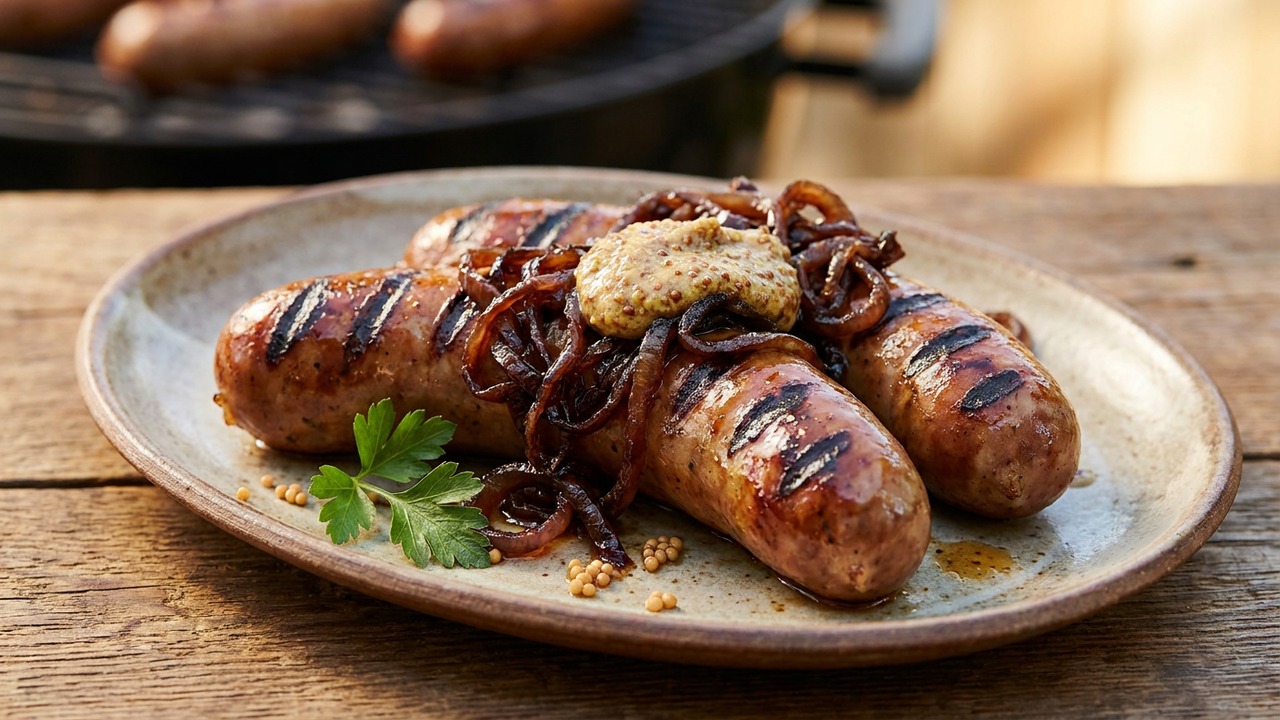
Juicy bratwurst gently braised in beer to infuse flavor and finish with charred grill marks for crisp, smoky skin. Topped with deeply caramelized onions and a tangy mustard, this method gives reliable, restaurant-style beer-brats at home.
Ingredient Spotlight
Bratwurst (fresh, uncooked)
A traditional German fresh sausage typically made from pork (sometimes mixed with veal or beef) and seasoned with spices like nutmeg, marjoram, or caraway. It has a coarse, juicy texture and a mild, savory flavor that grills or pan-sears well; because it’s fresh it must be fully cooked before eating. Find it at supermarkets, butcher shops, or German delis, and substitute with another fresh mild sausage (Italian sweet sausage or breakfast sausage) if unavailable.
Ingredient Spotlight
Coarse-grain mustard (or Dijon)
Coarse-grain (whole-grain) mustard is a European-style mustard with visible mustard seeds and a textured, tangy bite; Dijon is the smooth, sharp French variant made from brown mustard seeds and white wine or vinegar. Both add acidity and pungency rather than just heat, and the choice affects texture—coarse for pops of seed, Dijon for a silky emulsion. Look for them in the condiment aisle or specialty grocers; you can substitute stone-ground mustard for a similar texture or mix Dijon with a bit of whole seeds to mimic coarse-grain.
Ingredient Spotlight
Buns (kaiser or brat-style)
Kaiser rolls are Austrian/German crusty round rolls with a distinctive star pattern, while brat-style buns are soft, slightly sweet rolls sized for sausages; both are chosen to hold grilled sausages without sogging. They provide a sturdier, more traditional vessel than a standard hot dog bun and may be found in bakery sections, artisanal bakeries, or German markets. Substitute with sturdy hot dog rolls, potato rolls, or brioche buns if kaiser or brat-style options aren’t available.
Jake Woods's note
"This technique—beer braise first, then high-heat grill finish—keeps brats plump and juicy while delivering the classic charred exterior. Perfect for backyard cookouts or an elevated weeknight dinner."
About This Recipe
There’s a reason beer-braised brats are a staple at festivals and backyard grills: the two-step cooking gives you the best of both worlds — deeply seasoned, juicy sausage and a scorch of smoky, blistered skin. In this version, a gentle simmer in lager or pale ale infuses the meat while finishing on a hot grill locks in those juices and adds the char you expect from a restaurant brat. The caramelized onions, sweetened with a touch of brown sugar and finished with a splash of the braising liquid, bring a jammy contrast that cuts through the richness.
This method is forgiving for home cooks who want consistent results. Keep the simmer calm to avoid split casings, use an instant-read probe to hit a safe final temperature, and save the braising liquid — reduced into a glaze it gives a glossy, savory finish. Choose firm buns and a coarse mustard for texture, or swap in kraut and pickles for an acid lift. It’s a 50-minute recipe that plays well at weeknight dinners, casual cookouts, or any time you want elevated comfort food without fuss.
Ingredients for Grilled Beer-Braised Bratwurst with Caramelized Onions
- 4 links Bratwurst (fresh, uncooked)
- 12 fl oz Lager or pale ale beer
- 1 tsp Kosher salt
- 2 large Yellow onion, thinly sliced
- 2 tbsp Unsalted butter
- 1 tbsp Light brown sugar
- 1 tbsp Olive oil (for grill and brushing)
- 2 tbsp Coarse-grain mustard (or Dijon)
- 4 buns Buns (kaiser or brat-style)
How to Make Grilled Beer-Braised Bratwurst with Caramelized Onions
Step 1: Beer-braise the brats
Place brats in a wide saucepan or skillet that has a lid and pour in the beer with 1 tsp kosher salt so the liquid comes about halfway up the sausages. Bring to a gentle simmer over medium heat, cover, and let simmer 10–12 minutes until the internal temperature reads about 150°F (66°C). Do not boil—keep the surface calm to avoid splitting the skins. Remove brats to a plate and reserve the braising liquid for optional glazing or deglazing.For this step
- 4 linksBratwurst (fresh, uncooked)
- 12 fl ozLager or pale ale beer
- 1 tspKosher salt
Step 2: Caramelize the onions
While the brats simmer, melt the butter in a large skillet over medium-low heat and add the thinly sliced onions with a pinch of salt. Cook slowly, stirring every few minutes, then stir in the brown sugar after 8–10 minutes to encourage deep color; continue cooking 12–18 more minutes until the onions are jammy and golden-brown. If the pan gets too dry or sticks, splash in 2–3 tablespoons of the reserved braising liquid and scrape up any browned bits.For this step
- 2 largeYellow onion, thinly sliced
- 2 tbspUnsalted butter
- 1 tbspLight brown sugar
Step 3: Preheat grill and prepare brats
Heat a gas or charcoal grill to medium-high (about 400°F / 200°C) and oil the grates lightly with olive oil on a folded paper towel. Brush the brats lightly with oil and place them over direct heat, turning every 1–2 minutes to build even char and reach a final internal temperature of 160–165°F (71–74°C), about 5–8 minutes. For extra flavor, brush reduced braising liquid on the brats during the last couple minutes of grilling to create a glossy glaze.For this step
- 1 tbspOlive oil (for grill and brushing)
Step 4: Toast buns and assemble
Split and toast buns cut-side down on the grill for 30–60 seconds until golden and slightly crisp. Nestle each grilled brat in a toasted bun, spoon generous caramelized onions over the top, and finish with a smear of coarse-grain mustard. Let brats rest 2–3 minutes after grilling if you like a juicier bite, then serve immediately.For this step
- 2 tbspCoarse-grain mustard (or Dijon)
- 4 bunsBuns (kaiser or brat-style)
Step 5: Serve and optional tips
Serve with classic sides like potato salad, beer mustard, or pickles. Leftover braising liquid can be reduced on the stove into a pan sauce or used to braise more sausages; store brats and onions separately in the fridge for up to 3 days.


- Place brats in a wide saucepan or skillet that has a lid and pour in the beer with 1 tsp kosher salt so the liquid comes about halfway up the sausages. Bring to a gentle simmer over medium heat, cover, and let simmer 10–12 minutes until the internal temperature reads about 150°F (66°C). Do not boil—keep the surface calm to avoid splitting the skins. Remove brats to a plate and reserve the braising liquid for optional glazing or deglazing.
- While the brats simmer, melt the butter in a large skillet over medium-low heat and add the thinly sliced onions with a pinch of salt. Cook slowly, stirring every few minutes, then stir in the brown sugar after 8–10 minutes to encourage deep color; continue cooking 12–18 more minutes until the onions are jammy and golden-brown. If the pan gets too dry or sticks, splash in 2–3 tablespoons of the reserved braising liquid and scrape up any browned bits.
- Heat a gas or charcoal grill to medium-high (about 400°F / 200°C) and oil the grates lightly with olive oil on a folded paper towel. Brush the brats lightly with oil and place them over direct heat, turning every 1–2 minutes to build even char and reach a final internal temperature of 160–165°F (71–74°C), about 5–8 minutes. For extra flavor, brush reduced braising liquid on the brats during the last couple minutes of grilling to create a glossy glaze.
- Split and toast buns cut-side down on the grill for 30–60 seconds until golden and slightly crisp. Nestle each grilled brat in a toasted bun, spoon generous caramelized onions over the top, and finish with a smear of coarse-grain mustard. Let brats rest 2–3 minutes after grilling if you like a juicier bite, then serve immediately.
- Serve with classic sides like potato salad, beer mustard, or pickles. Leftover braising liquid can be reduced on the stove into a pan sauce or used to braise more sausages; store brats and onions separately in the fridge for up to 3 days.
Grilled Beer-Braised Bratwurst with Caramelized Onions Tips
Simmer, don’t boil
Keep the liquid at a gentle simmer so the casings don’t burst and the sausages stay plump and juicy instead of drying out.
Use a probe thermometer
Measure internal temperature after braising (around 150°F) and again after grilling (160–165°F) to ensure safety without overcooking.
Slice onions uniformly
Cut the onions into even, thin slices so they caramelize at the same rate and you don’t end up with burnt edges and raw centers.
Reserve braising liquid
Reduce the saved liquid into a glossy glaze or use a few tablespoons to deglaze the onion pan for extra savory depth.
Oil the grates safely
Oil a folded paper towel and run it over heated grates with tongs to prevent sticking and promote clean char lines without flare-ups.
Rest briefly before serving
Let brats rest 2–3 minutes after grilling to redistribute juices, which gives a juicier bite when you first sink your teeth in.
Grilled Beer-Braised Bratwurst with Caramelized Onions Variations and Substitutions
Non-alcoholic or cider
Use non-alcoholic beer or apple cider for the braise to maintain sweetness and acidity while keeping the dish alcohol-free.
Spicy brat twist
Swap in beer-and-cheddar or jalapeño-studded sausages and add sliced pickled jalapeños to the onions for heat that complements the sweet caramel.
Veg-forward option
Replace brats with thick, smoked tofu or seitan links braised the same way and finished on the grill for a vegetarian take with similar texture.
German-style finish
Top with sauerkraut, a drizzle of beer mustard, and swap kaiser rolls for sturdy pretzel buns to lean fully into German flavors.
How to Store and Make Grilled Beer-Braised Bratwurst with Caramelized Onions Ahead
Store grilled brats and caramelized onions separately in airtight containers in the refrigerator for up to 3 days. Reheat sausages gently in a skillet with a splash of water or reserved braising liquid over low heat, then finish briefly on a hot pan or grill to restore crisp skin; avoid microwaving, which makes the casing rubbery. Onions reheat nicely in a low skillet and can be frozen in a freezer-safe container for up to 2 months.
What to Serve With Grilled Beer-Braised Bratwurst with Caramelized Onions
Serve with classic sides like German potato salad, crunchy dill pickles, or a crisp cabbage slaw to cut the richness. For drinks, a clean pilsner or a lightly hopped pale ale echoes the braise; if you prefer wine, a bright Riesling or Grüner Veltliner pairs well. Plate simply: toasted buns, a smear of coarse mustard on the side, and a generous heap of onions on top so guests can dress their own.
Grilled Beer-Braised Bratwurst with Caramelized Onions FAQs
Can I braise the brats ahead of time?
Yes — you can braise them, cool, and refrigerate for up to 24 hours; reheat and finish on the grill just before serving to regain the seared skin and fresh char.
What if my brats split during cooking?
Splitting usually means the braise was too vigorous or the grill too hot; keep the simmer gentle and the grill at medium-high, turning frequently. Small splits are harmless but reduce juiciness, so try to avoid them.
Which beers work best?
Use a clean lager or pale ale for subtle malt and hop balance; darker, roasty beers will add more bitterness and coffee notes, which can overwhelm the sausage.
How do I make a glaze from the braising liquid?
Simmer the reserved liquid in a small saucepan until reduced by half to a syrupy consistency, then whisk in a pat of butter for sheen and brush on during the last minute of grilling.
Can I cook everything on the grill instead?
Yes — you can par-cook sausages in foil on the grill with beer at low heat, then expose to direct heat for charring; however, stovetop braising gives finer control and easier reduction for a glaze.
About the author
Jake WoodsHello, I'm Jake. I started this recipe site with the idea that I hated recipe websites that overwhelm you with long stories and ads just to see plain content that's not helpful. My goal is to provide you with quality recipes, simple ideas and a fun cooking experience. There's lots of fun things to cook, and I think as you browse the site you'll find that TopShelf.Recipes is the place for quality recipes on the web.
See all recipes by Jake Woods →Ratings & Reviews
Did you make this recipe?
Be the first to share your experience.
Nutrition Facts
Per serving: 1½ links
Nutrition values are estimated from USDA ingredient data and may vary based on preparation, brands, and portion sizes. Values are provided for informational purposes only.
Keep Reading
Guides & articles for this recipe
Guides
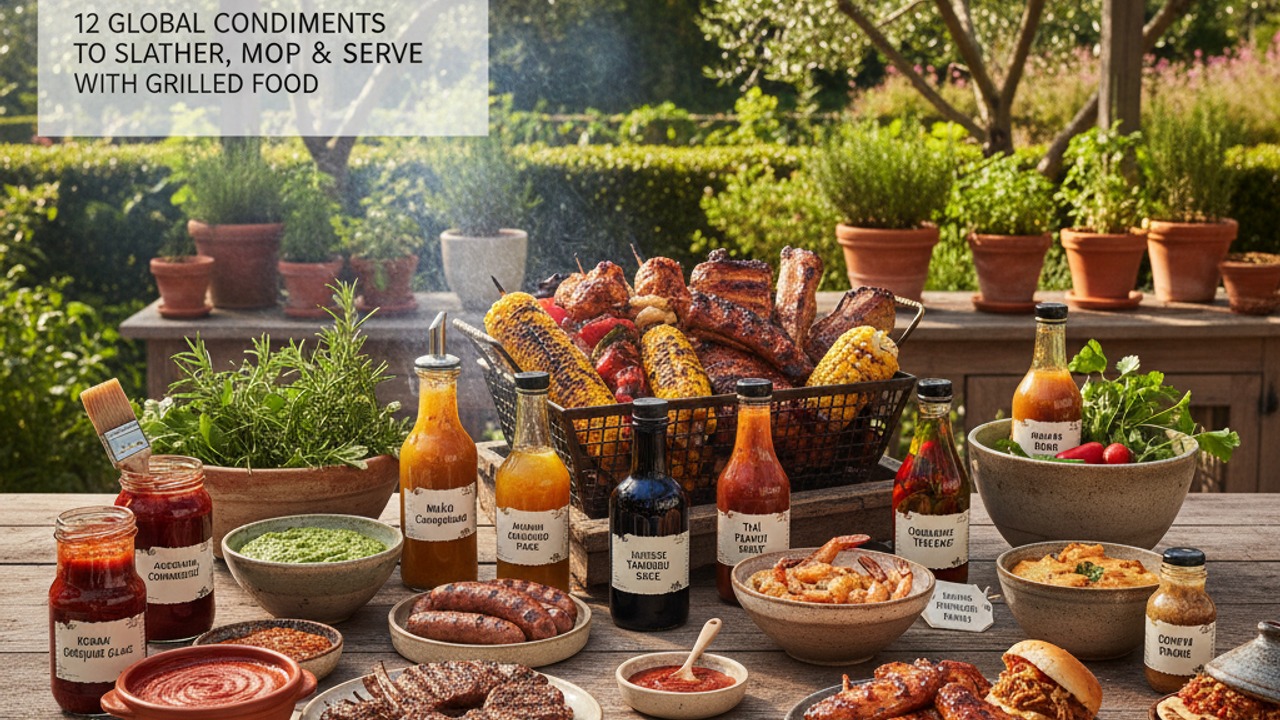
Trending Backyard Sauces for 2026: 12 Global Condiments to Slather, Mop & Serve with Grilled Food
A trend-forward guide to the 12 must-have global sauces for backyard grilling in 2026. Profiles, flavor notes, pantry shortcuts, grill pairings and smart make-ahead and scaling tips to feed a crowd without sweating the details.

Healthy Eating
Gluten-Free Weeknight Grilling Plan
A 7-day gluten-free weeknight grilling plan with quick, family-friendly recipes, prep-ahead timelines, and a printable shopping list that spotlights late-summer produce and pantry staples. Includes clear cross-contamination safety tips and simple swaps to keep dinners fast and crowd-pleasing.

Cocktails & Drinks
Shakerless Cocktails for Backyard Grilling
Easy, tool-free cocktail recipes designed for backyard grilling and outdoor hangs. Find single-serve and batch formulas, quick portable infusions, improvised gear hacks, and simple cocktail pairings for grilled meats and vegetables.
More from Grilling
View all Grilling recipes →
Perfect Juicy Grilled Chicken Breasts (No Drying, 15 Minute Method)

Quinoa and Black Bean Salad

Maple Mustard Glazed Grilled Chicken Thighs (Sweet Savory Weeknight BBQ)

Small Grill Alternatives to Beer-Can Whole Chicken: Spatchcock and Two-Zone Roast on the Grill

Labor Day Grilled Lobster Rolls with Charred Scallion Brown Butter & Lemon‑Herb Aioli

Spicy Grilled Shrimp Skewers with Garlic Lime Marinade

Bulgogi Smash Burger

Campfire‑Smoked Potato Salad with Mustard‑Bacon Vinaigrette — A Labor Day Grilling Side for Steak

Hanger Steak with Shallot Sauce
Ask me anything about this recipe — substitutions, scaling, techniques, timing.
Powered by AI · 6 questions per 5 minutes, 30 per day