Grilled Carbonara with Pancetta & Charred Lemon
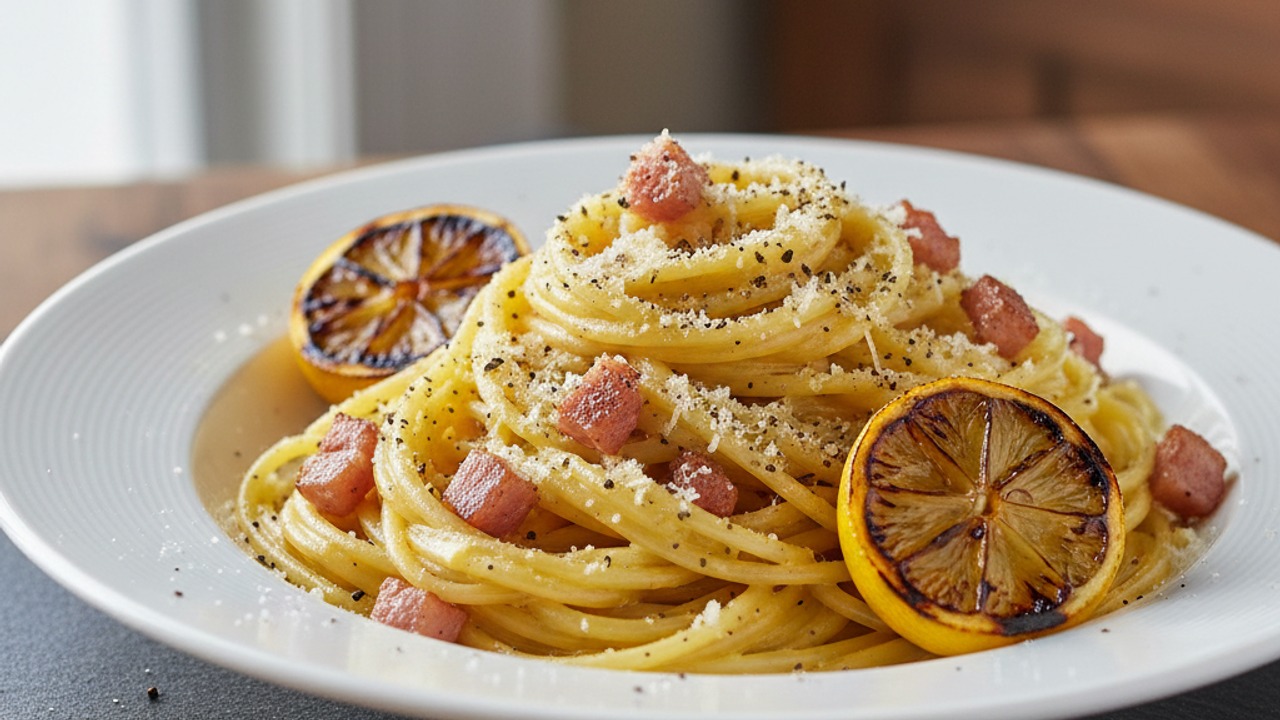
A weeknight grilled twist on classic carbonara—pancetta crisped over the grill for smoky depth and charred lemon to brighten the silky egg-Pecorino emulsion. Finish the sauce off-heat with reserved starchy pasta water for a creamy, scramble-free result that comes together fast and impressive.
Ingredient Spotlight
Pecorino Romano
Pecorino Romano is a hard, salty Italian cheese made from sheep's milk, traditionally from Lazio and Sardinia. It tastes sharp, tangy, and quite salty with a firm, granular texture that grates finely over pasta. It’s a classic component of Roman dishes like carbonara and cacio e pepe. You can find it at supermarkets or Italian delis; Parmigiano-Reggiano or Grana Padano can substitute in a pinch, though they are milder and less briny.
Ingredient Spotlight
Pancetta
Pancetta is Italian cured pork belly that’s salt-cured and typically unsmoked, sold sliced or in cubes (lardons). It offers rich, fatty, savory pork flavor similar to bacon but without the smoky notes, and it renders flavorful fat for sauces. Commonly used in Italian cuisine, it’s widely available at grocery deli counters and specialty markets. The traditional carbonara choice is guanciale (cured pork cheek); unsmoked bacon may be used as a last-resort substitute but will alter the flavor profile.
Jake Woods's note
"This version of carbonara shines when you want classic comfort with a grilled, dinner-ready edge—smoky pancetta and a squeeze of charred lemon lift every bite. Perfect for a quick, impressive weeknight meal."
About This Recipe
This Grilled Carbonara leans into two simple gestures that change classic carbonara from a stove-top comfort food into a slightly smoky, weeknight showstopper: crisping diced pancetta directly on a hot griddle and charring lemon alongside it. The rendered, slightly smoky pork fat becomes the base that carries the egg-and-Pecorino emulsion, so each strand of pasta ends up glossy and savory while the pancetta provides crunchy, salty punctuation. A squeeze of charred lemon brightens the whole plate with citrusy smoke rather than sharp acidity, which keeps the balance gentle and sophisticated.
What makes this version reliable at home is technique more than ingredients: tempering the cold cheese-egg mix with a few spoonfuls of hot pasta water and finishing the sauce off-heat prevents scrambling and yields a silky coating. The extra yolk here is intentional — it boosts richness and stability without making the sauce heavy. Because most of the work happens in a single skillet or grill pan, it’s perfect for cooks who want something fast enough for a weeknight but special-feeling enough for guests.
Ingredients for Grilled Carbonara with Pancetta & Charred Lemon
- 3 large Large eggs (plus 1 extra yolk)
- 1 cup Pecorino Romano, finely grated
- 1 large Lemon (large) — zested and halved
- 1 tablespoon Extra-virgin olive oil
- 8 ounces Pancetta (sliced into 1/4–1/2" lardons or thick strips)
- 12 ounces Spaghetti (or long pasta of choice)
- 1 tablespoon Kosher salt (for pasta water)
- 2 teaspoons Freshly ground black pepper
How to Make Grilled Carbonara with Pancetta & Charred Lemon
Step 1: Prep the emulsion, zest and halve lemon
In a medium bowl whisk the 3 large eggs plus 1 extra yolk until smooth. Stir in the grated Pecorino Romano and a generous pinch of black pepper to form a thick cheese-egg mixture; set in the fridge. Zest the lemon and halve it; reserve lemon zest and put the halves aside for the grill. Bring a large pot of water to a rolling boil (you’ll salt it in step 3).For this step
- 3 largeLarge eggs (plus 1 extra yolk)
- 1 cupPecorino Romano, finely grated
- 1 largeLemon (large) — zested and halved
Step 2: Grill the pancetta until crisp and char the lemon
Preheat grill to medium-high (about 400–450°F / 200–230°C). Toss pancetta lardons with 1 tbsp olive oil to prevent sticking. Arrange pancetta on a cast-iron griddle, grill pan, or foil tray so pieces won’t drop through the grates; place lemon halves cut-side down beside them. Grill pancetta 6–8 minutes, turning every 1–2 minutes until deeply browned and crisp; total time depends on thickness. Char lemon 2–4 minutes cut-side down until blackened spots appear. Transfer pancetta and any rendered fat to a large heatproof skillet or wide bowl; reserve charred lemons and any juices separately.For this step
- 1 tablespoonExtra-virgin olive oil
- 8 ouncesPancetta (sliced into 1/4–1/2" lardons or thick strips)
Step 3: Cook pasta to just before al dente and reserve water
Salt the boiling water with 1 tablespoon kosher salt and cook the spaghetti to 1–2 minutes before package al dente (it will finish in the sauce). Before draining, reserve 1½–2 cups (360–480 ml) of starchy pasta water. Drain the pasta quickly—do not rinse—and return it to the empty pot or place into the skillet with the pancetta and rendered fat while still hot.For this step
- 12 ouncesSpaghetti (or long pasta of choice)
- 1 tablespoonKosher salt (for pasta water)
Step 4: Finish the carbonara off-heat to form a silky sauce
This is crucial: keep everything off direct heat to avoid scrambled eggs. Temper the chilled egg-Pecorino mixture by whisking in 2–3 tablespoons hot pasta water until loosened. Working quickly, add the tempered mixture to the hot pasta and toss vigorously with tongs or two forks, adding more reserved water, a splash at a time, until the sauce is glossy and coats the pasta (about ½–1 cup total). Stir in the grilled pancetta and crack in fresh black pepper to taste.For this step
- 2 teaspoonsFreshly ground black pepper
Step 5: Brighten with charred lemon and adjust seasoning
Squeeze the charred lemon halves over the pasta—start with half a lemon and add more to taste; the char adds smoky brightness without too much acidity. Taste and adjust with extra Pecorino, black pepper, or a tablespoon more pasta water if the sauce needs loosening. If you prefer a deeper meld, set the skillet briefly over the coolest part of the stove for 15–30 seconds while stirring, but avoid direct high heat.Step 6: Plate and tips for a smoky, one-pan finish
Divide the pasta into four portions (about 1½ cups / 350g each). Top with reserved crisp pancetta pieces and a final grating of Pecorino and black pepper. For a stronger grill-smoke note, cover the skillet and let rest 1–2 minutes so the pasta absorbs a bit of smoky fat. Serve immediately; leftovers reheat gently with a splash of water in a skillet. Tip: use a large cast-iron skillet to grill the pancetta then finish the pasta right in that pan for an efficient one-pan, smoky dinner-ready finish.


- In a medium bowl whisk the 3 large eggs plus 1 extra yolk until smooth. Stir in the grated Pecorino Romano and a generous pinch of black pepper to form a thick cheese-egg mixture; set in the fridge. Zest the lemon and halve it; reserve lemon zest and put the halves aside for the grill. Bring a large pot of water to a rolling boil (you’ll salt it in step 3).
- Preheat grill to medium-high (about 400–450°F / 200–230°C). Toss pancetta lardons with 1 tbsp olive oil to prevent sticking. Arrange pancetta on a cast-iron griddle, grill pan, or foil tray so pieces won’t drop through the grates; place lemon halves cut-side down beside them. Grill pancetta 6–8 minutes, turning every 1–2 minutes until deeply browned and crisp; total time depends on thickness. Char lemon 2–4 minutes cut-side down until blackened spots appear. Transfer pancetta and any rendered fat to a large heatproof skillet or wide bowl; reserve charred lemons and any juices separately.
- Salt the boiling water with 1 tablespoon kosher salt and cook the spaghetti to 1–2 minutes before package al dente (it will finish in the sauce). Before draining, reserve 1½–2 cups (360–480 ml) of starchy pasta water. Drain the pasta quickly—do not rinse—and return it to the empty pot or place into the skillet with the pancetta and rendered fat while still hot.
- This is crucial: keep everything off direct heat to avoid scrambled eggs. Temper the chilled egg-Pecorino mixture by whisking in 2–3 tablespoons hot pasta water until loosened. Working quickly, add the tempered mixture to the hot pasta and toss vigorously with tongs or two forks, adding more reserved water, a splash at a time, until the sauce is glossy and coats the pasta (about ½–1 cup total). Stir in the grilled pancetta and crack in fresh black pepper to taste.
- Squeeze the charred lemon halves over the pasta—start with half a lemon and add more to taste; the char adds smoky brightness without too much acidity. Taste and adjust with extra Pecorino, black pepper, or a tablespoon more pasta water if the sauce needs loosening. If you prefer a deeper meld, set the skillet briefly over the coolest part of the stove for 15–30 seconds while stirring, but avoid direct high heat.
- Divide the pasta into four portions (about 1½ cups / 350g each). Top with reserved crisp pancetta pieces and a final grating of Pecorino and black pepper. For a stronger grill-smoke note, cover the skillet and let rest 1–2 minutes so the pasta absorbs a bit of smoky fat. Serve immediately; leftovers reheat gently with a splash of water in a skillet. Tip: use a large cast-iron skillet to grill the pancetta then finish the pasta right in that pan for an efficient one-pan, smoky dinner-ready finish.
Grilled Carbonara with Pancetta & Charred Lemon Tips
Temper the eggs carefully
Whisk 2–3 tablespoons of hot pasta water into the chilled egg-Pecorino mixture before adding to the pasta to raise its temperature gradually and prevent scrambling.
Reserve starchy water
Keep 1½–2 cups of pasta water on hand; add it a little at a time until the sauce loosens to a glossy, clingy texture—you rarely need the full amount.
Control grill flare-ups
Use a cast-iron griddle or foil tray for pancetta to avoid flames and to capture rendered fat, which you’ll use to flavor the pasta directly in the skillet.
Char lemon for depth
Press lemon cut-side down and let it sit until blackened spots appear; the charred surface adds smoky aromatics without making the citrus taste bitter.
Timing the pasta
Cook spaghetti 1–2 minutes shy of al dente so it finishes in the sauce and absorbs some rendered fat and lemon juice for better flavor integration.
Grilled Carbonara with Pancetta & Charred Lemon Variations and Substitutions
Swap guanciale for authenticity
Use guanciale instead of pancetta for a richer, porkier flavor and crisper edges; render it on the grill the same way but watch for faster browning.
Smoky vegetarian version
Sear thick-cut smoked tofu cubes or king oyster mushroom 'bacon' on the grill and finish with a tablespoon of rendered butter and a pinch of smoked paprika to mimic smoky pork fat.
Parmesan and Pecorino blend
If Pecorino is too sharp, blend half Pecorino with half Parmigiano-Reggiano for a mellower, creamier sauce while keeping the salty backbone.
Gluten-free pasta swap
Use a high-quality brown-rice or legume-based long pasta and follow the same just-before-al-dente timing; you may need slightly less pasta water to reach the right texture.
How to Store and Make Grilled Carbonara with Pancetta & Charred Lemon Ahead
Store leftovers in an airtight container in the refrigerator for up to 2 days; the sauce will thicken as it cools. Reheat gently in a skillet over low heat with a splash of reserved pasta water (or milk) while stirring to re-emulsify the sauce—avoid high heat or microwaving, which can separate the eggs.
What to Serve With Grilled Carbonara with Pancetta & Charred Lemon
Serve with a simple peppery arugula salad dressed with extra-virgin olive oil and a small squeeze of fresh lemon to echo the charred fruit, and offer grilled ciabatta to sop up any residual sauce. For wine, choose a bright Italian white like Vermentino or a lighter red such as Barbera to stand up to the salty cheese and smoky pancetta.
Grilled Carbonara with Pancetta & Charred Lemon FAQs
Can I use bacon instead of pancetta?
Yes—streaky bacon works in a pinch but will bring more smoky, cured flavor; reduce additional char-smoke to avoid overpowering the Pecorino and watch for quicker burning because bacon often has a higher sugar content.
Why add an extra egg yolk?
The extra yolk increases emulsifying fats and lecithin, giving the sauce extra silkiness and stability so it coats the pasta without becoming heavy or breaking.
How do I avoid scrambled eggs in the sauce?
Always take the pasta off direct heat, temper the chilled egg-cheese mixture with hot pasta water, and toss vigorously; working quickly and adding water in small amounts prevents curdling.
Can I char the lemon without a grill?
Yes—place halved lemons cut-side down in a very hot cast-iron skillet or under the broiler for a minute or two until dark spots form, then press to release the juices.
How much pasta water should I add?
Start with 2–3 tablespoons to loosen the egg mixture, then add the reserved water a splash at a time until the sauce is glossy; most cooks use about ½–1 cup in total depending on pasta type and desired sauciness.
About the author
Jake WoodsHello, I'm Jake. I started this recipe site with the idea that I hated recipe websites that overwhelm you with long stories and ads just to see plain content that's not helpful. My goal is to provide you with quality recipes, simple ideas and a fun cooking experience. There's lots of fun things to cook, and I think as you browse the site you'll find that TopShelf.Recipes is the place for quality recipes on the web.
See all recipes by Jake Woods →Ratings & Reviews
Did you make this recipe?
Be the first to share your experience.
Nutrition Facts
Per serving: about 2 cups
Nutrition values are estimated from USDA ingredient data and may vary based on preparation, brands, and portion sizes. Values are provided for informational purposes only.
Keep Reading
Guides & articles for this recipe

Healthy Eating
Gluten-Free Weeknight Grilling Plan
A 7-day gluten-free weeknight grilling plan with quick, family-friendly recipes, prep-ahead timelines, and a printable shopping list that spotlights late-summer produce and pantry staples. Includes clear cross-contamination safety tips and simple swaps to keep dinners fast and crowd-pleasing.

Cocktails & Drinks
Shakerless Cocktails for Backyard Grilling
Easy, tool-free cocktail recipes designed for backyard grilling and outdoor hangs. Find single-serve and batch formulas, quick portable infusions, improvised gear hacks, and simple cocktail pairings for grilled meats and vegetables.

Healthy Eating
Lean Labor Day Grilling Menu
A Labor Day grilling guide that swaps heavy BBQ classics for lighter, flavorful options—think lean proteins, charred vegetables, and low‑sugar sauces. Includes make-ahead meal prep, portioning tips, and a short shopping checklist for healthy, crowd-pleasing cookouts.
More from Grilling
View all Grilling recipes →
Tandoori Yogurt Marinated Grilled Chicken (Tandoori Style on the Grill)

Labor Day Grilled Lobster Rolls with Charred Scallion Brown Butter & Lemon‑Herb Aioli

Bulgogi Smash Burger

Campfire‑Smoked Potato Salad with Mustard‑Bacon Vinaigrette — A Labor Day Grilling Side for Steak

Hanger Steak with Shallot Sauce
Grilled Pineapple Upside-Down Cake

Spicy Grilled Shrimp Skewers with Garlic Lime Marinade

Honey Garlic Grilled Thin-Sliced Chicken Breasts

Coffee and Porcini Dry-Rub Steaks with RUB PRIME STEAK Finish
Ask me anything about this recipe — substitutions, scaling, techniques, timing.
Powered by AI · 6 questions per 5 minutes, 30 per day