Grilled Char Siu BBQ Pork
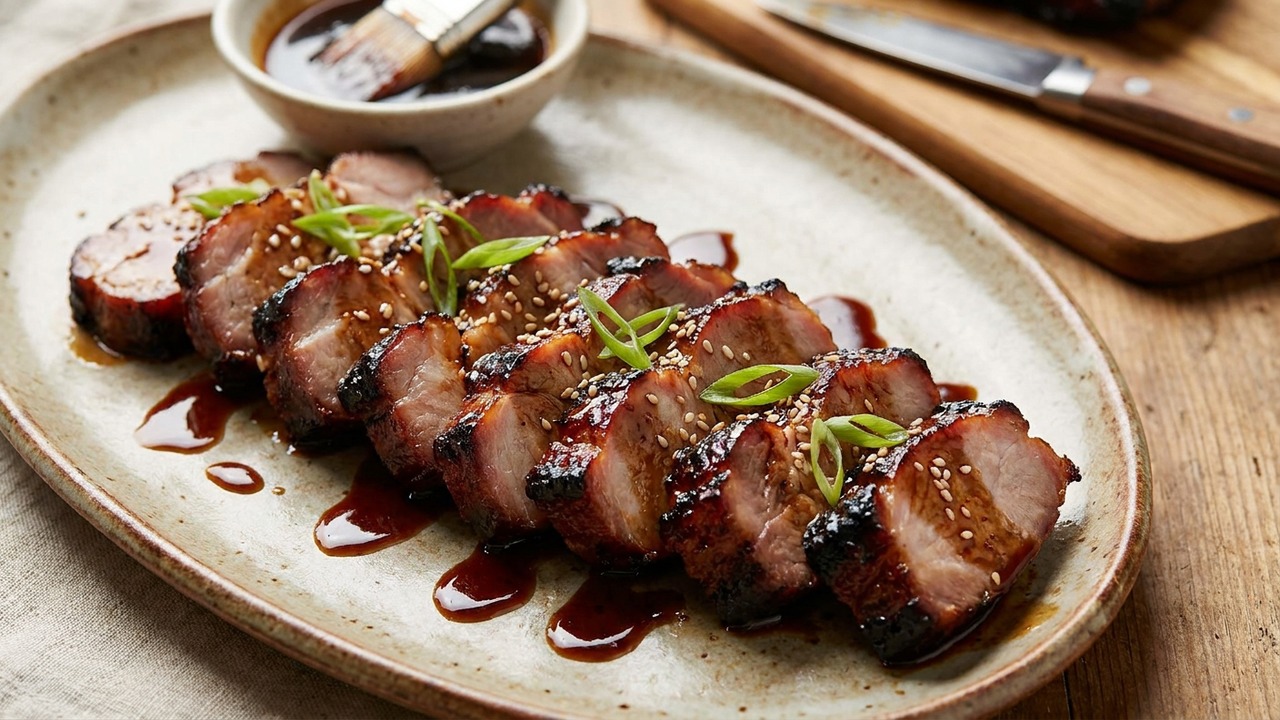
A home-style take on Cantonese char siu with a sticky-sweet hoisin and honey glaze, finished over a hot grill for authentic charred edges. Bright five-spice and Shaoxing wine give the pork its signature savory-sweet depth—perfect for Lunar New Year mains or any backyard barbecue.
Ingredient Spotlight
Hoisin sauce
A thick, dark, sweet–savory Chinese condiment (common in Cantonese cooking) made from fermented soybeans, sugar, vinegar and spices. It tastes sweet, salty and umami with garlicky and slightly tangy notes, and is used as a glaze, dip or stir‑fry sauce. Find it in Asian markets or the international aisle of supermarkets; as a quick substitute mix soy sauce with honey or brown sugar, a splash of rice vinegar, a little sesame oil and a pinch of Chinese five‑spice or garlic, or use plum sauce + soy.
Ingredient Spotlight
Shaoxing wine (or dry sherry)
Shaoxing wine is a traditional Chinese rice wine from the Shaoxing region used for cooking; it adds depth, nuttiness and a slightly sweet, fermented aroma to dishes. It’s used much like cooking sherry to deglaze, tenderize and build umami flavors. Available at Asian groceries or online; a good substitute is dry sherry (as noted), or mirin/Chinese rice wine if you prefer sweeter notes — for a nonalcoholic option use low‑sodium chicken broth + a splash of rice vinegar and a pinch of sugar.
(paid link) — as an Amazon Associate we earn from qualifying purchases.
Ingredient Spotlight
Chinese five-spice powder
A spice blend (typically star anise, cloves, cinnamon, Szechuan peppercorn and fennel or anise seed) common in Chinese cooking that delivers warm, sweet, licorice‑like and slightly numbing peppery notes. It’s used to season meats and braises and lends a distinctive aromatic profile rather than a single dominant flavor. You can find it in spice sections and Asian markets; substitute by blending equal parts ground star anise, cinnamon, cloves and fennel (add a pinch of ground Szechuan pepper if available), or use a small pinch of allspice + cinnamon + cloves in a pinch.
(paid link) — as an Amazon Associate we earn from qualifying purchases.
Jake Woods's note
"This char siu recipe balances an easy marinade with grilling techniques that yield restaurant-style char and a glossy glaze. It shines as a festive centerpiece or sliced over rice and greens for weeknight dinners."
About This Recipe
This grilled char siu is my attempt to translate the lacquered, slightly smoky pork you find in Cantonese barbecue shops into something you can make on a backyard grill without specialty ingredients. The marinade leans on hoisin and Shaoxing wine for savory sweetness, with brown sugar and honey building the sticky gloss; Chinese five-spice and plenty of garlic give that warm, aromatic backbone. Using pork shoulder (or butt) brings the right amount of fat and connective tissue so the interior stays succulent while the exterior caramelizes into those sought-after charred edges.
What makes this version work is the two-step approach: long marinade for deep flavor, then a focused direct-heat sear to develop color before finishing over indirect heat so the glaze doesn’t burn. Reserving and reducing a portion of the marinade transforms it into a safe, intensely flavored basting sauce that layers flavor as you grill. It’s a flexible recipe — bright enough for Lunar New Year, relaxed enough for a weekend barbecue, and forgiving for cooks who want authentic char siu character without red food dye or complicated equipment.
Ingredients for Grilled Char Siu BBQ Pork
How to Make Grilled Char Siu BBQ Pork
Step 1: Make the char siu marinade and marinate the pork
Whisk together hoisin, light soy sauce, Shaoxing wine, honey, brown sugar, Chinese five-spice and minced garlic in a large bowl until smooth. Place the trimmed pork shoulder in the bowl (or a resealable bag), coat thoroughly with the marinade, cover, and refrigerate for at least 4 hours or overnight for best flavor.For this step
- 2 lbBoneless pork shoulder (or pork butt), trimmed
- 1/2 cupHoisin sauce
- 3 tbspLight soy sauce
- 2 tbspShaoxing wine (or dry sherry)
- 3 tbspHoney
- 2 tbspPacked brown sugar
- 1 tspChinese five-spice powder
- 4 clovesGarlic, minced
Step 2: Preheat and set up the grill
Remove the pork from the refrigerator 20–30 minutes before grilling to take the chill off. Preheat a gas or charcoal grill to medium-high (about 400°F/200°C) and oil the grates; set up a cooler indirect-heat zone for finishing thicker pieces.Step 3: Reserve and reduce marinade for glaze
Before placing the pork on the grill, pour off and reserve about 1/4 cup of the marinade; discard the rest that contacted raw pork. Bring the reserved marinade to a simmer in a small saucepan and cook 3–4 minutes until slightly thickened to use as a safe basting glaze.Step 4: Sear the pork over direct heat, basting
Sear the pork over direct medium-high heat 3–4 minutes per side until you see good caramelization and charred edges. Begin brushing with the reduced glaze after the first flip and continue to baste frequently to build a sticky, lacquered surface.Step 5: Finish over indirect heat until cooked through
Move the pork to the indirect side of the grill and close the lid, cooking until the internal temperature reaches about 150°F (65°C), roughly 8–15 more minutes depending on thickness. Continue to baste once or twice during this phase to deepen color and shine.Step 6: Rest, slice and serve
Transfer the pork to a cutting board and let rest 10 minutes so juices redistribute and the glaze firms up. Slice thinly against the grain and serve with steamed rice, scallions, or in bao for a festive main.


- Whisk together hoisin, light soy sauce, Shaoxing wine, honey, brown sugar, Chinese five-spice and minced garlic in a large bowl until smooth. Place the trimmed pork shoulder in the bowl (or a resealable bag), coat thoroughly with the marinade, cover, and refrigerate for at least 4 hours or overnight for best flavor.
- Remove the pork from the refrigerator 20–30 minutes before grilling to take the chill off. Preheat a gas or charcoal grill to medium-high (about 400°F/200°C) and oil the grates; set up a cooler indirect-heat zone for finishing thicker pieces.
- Before placing the pork on the grill, pour off and reserve about 1/4 cup of the marinade; discard the rest that contacted raw pork. Bring the reserved marinade to a simmer in a small saucepan and cook 3–4 minutes until slightly thickened to use as a safe basting glaze.
- Sear the pork over direct medium-high heat 3–4 minutes per side until you see good caramelization and charred edges. Begin brushing with the reduced glaze after the first flip and continue to baste frequently to build a sticky, lacquered surface.
- Move the pork to the indirect side of the grill and close the lid, cooking until the internal temperature reaches about 150°F (65°C), roughly 8–15 more minutes depending on thickness. Continue to baste once or twice during this phase to deepen color and shine.
- Transfer the pork to a cutting board and let rest 10 minutes so juices redistribute and the glaze firms up. Slice thinly against the grain and serve with steamed rice, scallions, or in bao for a festive main.
Grilled Char Siu BBQ Pork Tips
Trim for even cooking
Cut the shoulder into uniform pieces so they sear and finish at the same time, avoiding thin shreds that will overcook when glazing.
Marinate overnight
Although 4 hours works, marinating overnight lets the Shaoxing and five-spice penetrate and mellows the pork’s texture for juicier slices.
Reserve then reduce
Always set aside a small portion of uncooked marinade before it touches raw pork, then simmer it until thick to make a safe, concentrated glaze.
Sear then finish indirectly
Start over direct high heat to get caramelization, then move to indirect heat to bring the interior up without charring the sugars.
Rest and slice thin
Let the pork rest 8–10 minutes so juices redistribute, and slice thinly against the grain for tender bites that soak up sauce.
Grilled Char Siu BBQ Pork Variations and Substitutions
Classic red char siu
For the traditional bright color, stir in a tablespoon of red fermented bean curd or a few drops of red food coloring to the marinade; the flavor is slightly funkier with the bean curd.
Oven or broiler method
If you don’t have a grill, roast at 375°F until nearly done, then broil at high to caramelize while brushing with the reduced glaze for the same lacquered finish.
Pork belly version
Use pork belly for an extra-rich, unctuous result — reduce the searing time and watch carefully since belly renders more fat and chars faster.
Gluten-free swap
Replace light soy sauce with tamari or a gluten-free soy alternative and check hoisin labels, or make a hoisin-like paste from fermented soybean paste, honey, and a splash of tamari.
How to Store and Make Grilled Char Siu BBQ Pork Ahead
Keep leftovers in an airtight container in the refrigerator for up to 4 days. To reheat without drying, warm slices gently in a low oven (275°F/135°C) under foil or briefly in a skillet with a splash of water and a lid to steam, then flash the surface on high heat to re-glaze. You can freeze cooked slices for up to 2 months; thaw overnight in the fridge before reheating.
What to Serve With Grilled Char Siu BBQ Pork
Serve sliced char siu over jasmine rice with quick-pickled cucumbers and scallion oil for contrast, or tuck into steamed bao with hoisin mayo and crunchy slaw. For greens, blanched bok choy or Chinese broccoli tossed with oyster sauce complement the rich pork, and pair with a bright lager, jasmine tea, or an off-dry Riesling to balance the sweetness.
Grilled Char Siu BBQ Pork FAQs
Can I use pork loin instead of shoulder?
Yes, but pork loin is much leaner and will cook faster and can dry out; reduce searing time and watch internal temperature closely, pulling it a few degrees earlier.
Why do I simmer the reserved marinade?
Simmering concentrates flavor and kills bacteria from any accidental contact, turning it into a safe, sticky glaze you can baste on repeatedly.
Is 150°F (65°C) the right final temperature?
150°F gives a tender, slightly rosy result in a fatty shoulder; if you prefer less pink, go to 155–160°F, but be careful not to overcook which will toughen leaner cuts.
My glaze burned on the grill — how can I prevent that?
Move the pork to indirect heat sooner, baste in thinner layers, and reduce the grill temperature slightly; sugar in the glaze burns quickly on very high heat.
How long can I marinate the pork?
Overnight (8–12 hours) is ideal; you can marinate up to 24 hours but prolonged acid contact from Shaoxing can begin to change texture if left much longer.
About the author
Jake WoodsHello, I'm Jake. I started this recipe site with the idea that I hated recipe websites that overwhelm you with long stories and ads just to see plain content that's not helpful. My goal is to provide you with quality recipes, simple ideas and a fun cooking experience. There's lots of fun things to cook, and I think as you browse the site you'll find that TopShelf.Recipes is the place for quality recipes on the web.
See all recipes by Jake Woods →Ratings & Reviews
Did you make this recipe?
Be the first to share your experience.
Nutrition Facts
Per serving: 1 serving
Nutrition values are estimated from USDA ingredient data and may vary based on preparation, brands, and portion sizes. Values are provided for informational purposes only.
Keep Reading
Guides & articles for this recipe

Healthy Eating
Gluten-Free Weeknight Grilling Plan
A 7-day gluten-free weeknight grilling plan with quick, family-friendly recipes, prep-ahead timelines, and a printable shopping list that spotlights late-summer produce and pantry staples. Includes clear cross-contamination safety tips and simple swaps to keep dinners fast and crowd-pleasing.

Cocktails & Drinks
Shakerless Cocktails for Backyard Grilling
Easy, tool-free cocktail recipes designed for backyard grilling and outdoor hangs. Find single-serve and batch formulas, quick portable infusions, improvised gear hacks, and simple cocktail pairings for grilled meats and vegetables.

Healthy Eating
Lean Labor Day Grilling Menu
A Labor Day grilling guide that swaps heavy BBQ classics for lighter, flavorful options—think lean proteins, charred vegetables, and low‑sugar sauces. Includes make-ahead meal prep, portioning tips, and a short shopping checklist for healthy, crowd-pleasing cookouts.
More from Grilling
View all Grilling recipes →
Tandoori Yogurt Marinated Grilled Chicken (Tandoori Style on the Grill)

Labor Day Grilled Lobster Rolls with Charred Scallion Brown Butter & Lemon‑Herb Aioli

Bulgogi Smash Burger

Campfire‑Smoked Potato Salad with Mustard‑Bacon Vinaigrette — A Labor Day Grilling Side for Steak

Hanger Steak with Shallot Sauce
Grilled Pineapple Upside-Down Cake

Spicy Grilled Shrimp Skewers with Garlic Lime Marinade

Honey Garlic Grilled Thin-Sliced Chicken Breasts

Coffee and Porcini Dry-Rub Steaks with RUB PRIME STEAK Finish
Ask me anything about this recipe — substitutions, scaling, techniques, timing.
Powered by AI · 6 questions per 5 minutes, 30 per day