Grilled Ribeye with Kinder's Organic Buttery Garlic Salt Steak Rub
Simple, flavor-forward grilled ribeyes seasoned with Kinder's Organic Buttery Garlic Salt for an unmistakably rich, garlicky finish. This quick grilling method gives a caramelized crust and juicy interior—perfect for backyard dinners or any time you want a steakhouse-style result at home.
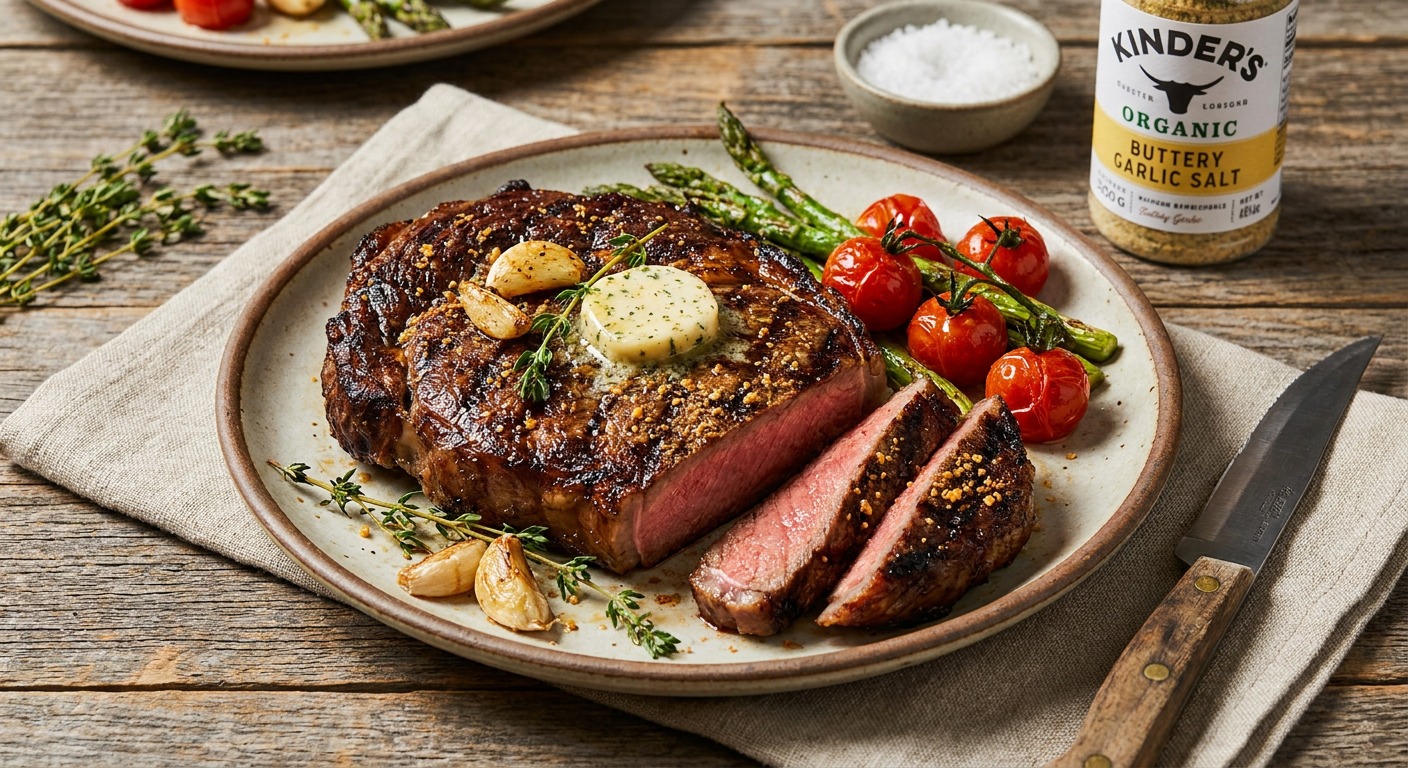
Ingredient Spotlight
Kinder's Organic Buttery Garlic Salt
A branded seasoned salt (U.S. product) that blends salt with garlic and buttery flavor notes to create an all-in-one savory finishing/cooking seasoning. It tastes like garlicky, slightly rich butter-flavored salt rather than fresh butter or raw garlic, and because it’s a seasoned salt it contributes both flavor and sodium. You can find it in grocery stores, natural-food markets, or online; substitute with kosher salt mixed with garlic powder plus a small amount of melted butter or butter-flavored powder, or use garlic salt together with a pat of butter or a garlic compound butter.
(paid link) — as an Amazon Associate we earn from qualifying purchases.
Jake Woods's note
"This recipe leans on Kinder's Organic Buttery Garlic Salt to deliver big, buttery-garlic flavor with almost no fuss—ideal for weeknight grilling or weekend cookouts. Letting the steaks come to room temp and resting them after cooking are the simple steps that make the result reliably juicy."
About This Recipe
A ribeye is an indulgent canvas: generous marbling melts into the meat as it hits high heat, producing that addictive interplay of caramelized crust and juicy interior. This version leans into that natural richness rather than masking it — Kinder's Organic Buttery Garlic Salt brings an immediate hit of browned-butter savor and bright garlic without the fuss of making compound butter, so you get deep, savory layers from a single seasoning step. The result is a steak that tastes unapologetically luxurious: crunchy, charred edges give way to a tender, medium-rare center, while the finishing butter and rosemary add a gentle herbaceous lift.
It’s built for cooks who want steakhouse results without a long ingredient list or complicated technique: short prep, high heat, and reliable resting time. Use this method for weeknight splurges, casual backyard dinners, or when you need an impressive main with minimal hands-on time. Because the seasoning is already buttery and garlicky, focus on heat control and timing — that’s what turns a good ribeye into a memorable one.
Ingredients for Grilled Ribeye with Kinder's Organic Buttery Garlic Salt Steak Rub
How to Make Grilled Ribeye with Kinder's Organic Buttery Garlic Salt Steak Rub
Step 1: Bring to room temperature and season
Remove the ribeyes from the refrigerator 30–40 minutes before grilling so they come to room temperature. Pat steaks dry with paper towels, brush both sides lightly with neutral oil, then season generously on both sides with Kinder's Organic Buttery Garlic Salt and a little freshly ground black pepper.For this step
- 4 steaks (10 oz / 280 g each)Ribeye steaks
- 2 tbspKinder's Organic Buttery Garlic Salt
- 2 tbspNeutral oil (avocado or canola)
- 1 tspFreshly ground black pepper
Step 2: Preheat and prepare the grill
Preheat your gas or charcoal grill to high (about 450–500°F / 230–260°C) and clean the grates. Oil the grates lightly with a folded paper towel dipped in oil held with tongs to prevent sticking.Step 3: Sear and cook to temperature
Place steaks on the hottest part of the grill and sear 3–5 minutes per side (for a 1–1¼-inch steak) without moving to develop a crust. Use an instant-read thermometer: pull at 125–130°F (52–54°C) for medium-rare, 135°F (57°C) for medium. Adjust time for steak thickness and desired doneness.Step 4: Finish with butter and rest
When steaks are within 5°F of desired temp, remove them to a clean board, top each with ½ tablespoon unsalted butter and a rosemary sprig so the butter melts into the meat. Tent loosely with foil and rest 5–10 minutes to redistribute juices—this also brings the steaks to final temperature.For this step
- 2 tbspUnsalted butter
- 4 sprigsFresh rosemary sprigs
Step 5: Slice and serve
Slice ribeyes against the grain (if trimming or sharing) and spoon any resting juices over the meat. Serve immediately while warm—these steaks pair beautifully with grilled vegetables, a simple salad, or roasted potatoes.


- Remove the ribeyes from the refrigerator 30–40 minutes before grilling so they come to room temperature. Pat steaks dry with paper towels, brush both sides lightly with neutral oil, then season generously on both sides with Kinder's Organic Buttery Garlic Salt and a little freshly ground black pepper.
- Preheat your gas or charcoal grill to high (about 450–500°F / 230–260°C) and clean the grates. Oil the grates lightly with a folded paper towel dipped in oil held with tongs to prevent sticking.
- Place steaks on the hottest part of the grill and sear 3–5 minutes per side (for a 1–1¼-inch steak) without moving to develop a crust. Use an instant-read thermometer: pull at 125–130°F (52–54°C) for medium-rare, 135°F (57°C) for medium. Adjust time for steak thickness and desired doneness.
- When steaks are within 5°F of desired temp, remove them to a clean board, top each with ½ tablespoon unsalted butter and a rosemary sprig so the butter melts into the meat. Tent loosely with foil and rest 5–10 minutes to redistribute juices—this also brings the steaks to final temperature.
- Slice ribeyes against the grain (if trimming or sharing) and spoon any resting juices over the meat. Serve immediately while warm—these steaks pair beautifully with grilled vegetables, a simple salad, or roasted potatoes.
Grilled Ribeye with Kinder's Organic Buttery Garlic Salt Steak Rub Tips
Bring to room temperature
Letting steaks sit 30–40 minutes ensures even cooking so the center reaches doneness at the same time as the crust develops.
Pat steaks very dry
Blot with paper towels before oiling; surface moisture prevents a proper sear and encourages steaming instead of browning.
Grate a meat thermometer
Use an instant-read thermometer inserted into the thickest part to avoid guessing—pull steaks 5°F below target as they rest to reach perfect doneness.
Control flare-ups
Trim excessive external fat and move steaks off direct flames if they flare; keep a cooler zone on the grill to finish without burning the crust.
Finish with aromatics
Placing a rosemary sprig and butter on the hot steaks while they rest infuses immediate herbal oil that melts into the meat for extra flavor.
Grilled Ribeye with Kinder's Organic Buttery Garlic Salt Steak Rub Variations and Substitutions
Reverse-sear for thick cuts
For 1.5–2 inch ribeyes, slow-roast at 275°F until about 10–15°F below target, then sear 60–90 seconds per side on high heat for an even cook and superior crust.
Cast-iron stovetop method
If you don’t have a grill, heat a heavy cast-iron skillet until smoking, sear steaks 2–4 minutes per side, then finish in a 400°F oven for even doneness.
Herb-citrus twist
Swap rosemary for a thyme and lemon zest finish, and stir a teaspoon of lemon juice into the finishing butter to brighten the rich flavors.
Dairy-free option
Omit the finishing butter and use a drizzle of high-quality olive oil and a charred rosemary sprig; the buttery garlic salt still provides richness.
How to Store and Make Grilled Ribeye with Kinder's Organic Buttery Garlic Salt Steak Rub Ahead
Store leftover sliced ribeye in an airtight container in the refrigerator for up to 3–4 days, keeping any buttered herb sprigs separate. For longer storage, freeze wrapped tightly or vacuum-sealed for up to 2 months and thaw overnight in the fridge. To reheat, warm gently in a 250–275°F oven until just warmed through, then quickly sear in a hot skillet for 30–60 seconds per side to refresh the crust; avoid microwaving which toughens the meat.
What to Serve With Grilled Ribeye with Kinder's Organic Buttery Garlic Salt Steak Rub
Serve with boldly flavored companions that can stand up to the steak: charred asparagus, roasted garlic mashed potatoes, or a smoky romesco. A peppery arugula salad with shaved Parmesan and a lemon vinaigrette cuts the richness and adds freshness. For drinks, choose a full-bodied red like Cabernet Sauvignon or Malbec, or a robust porter if you prefer beer.
Grilled Ribeye with Kinder's Organic Buttery Garlic Salt Steak Rub FAQs
Do I need to add extra salt in addition to Kinder's seasoning?
Kinder's Organic Buttery Garlic Salt already contains salt and buttery flavors, so season sparingly at first and taste; you may only need a light dusting of additional kosher salt if you prefer a stronger salt finish.
How do I adapt timing for thicker or thinner steaks?
Sear times are a guide: for steaks thinner than 1 inch, reduce sear time to 2–3 minutes per side; for steaks thicker than 1¼ inches, increase searing and consider a short finish in indirect heat or the oven to avoid over-charring while reaching temperature.
Can I grill bone-in ribeye the same way?
Yes—bone-in steaks take slightly longer due to the bone acting as a heat sink; use an instant-read thermometer and plan for an extra 2–4 minutes depending on thickness.
Why rest the steak and how long should I wait?
Resting lets juices redistribute so they don’t run out when you slice; 5–10 minutes under loose foil is ideal for 1–1¼ inch ribeyes and brings the internal temp up a few degrees.
My grill keeps flaring up—what should I do?
Trim large external fat caps to reduce fat drips, keep a two-zone fire so you can move steaks off direct flames, and use tongs instead of a fork to avoid piercing the meat and releasing juices.
About the author
Jake WoodsHello, I'm Jake. I started this recipe site with the idea that I hated recipe websites that overwhelm you with long stories and ads just to see plain content that's not helpful. My goal is to provide you with quality recipes, simple ideas and a fun cooking experience. There's lots of fun things to cook, and I think as you browse the site you'll find that TopShelf.Recipes is the place for quality recipes on the web.
See all recipes by Jake Woods →Ratings & Reviews
Did you make this recipe?
Be the first to share your experience.
Nutrition Facts
Per serving: 1 steak
Nutrition values are estimated from USDA ingredient data and may vary based on preparation, brands, and portion sizes. Values are provided for informational purposes only.
Keep Reading
Guides & articles for this recipe

Healthy Eating
Gluten-Free Weeknight Grilling Plan
A 7-day gluten-free weeknight grilling plan with quick, family-friendly recipes, prep-ahead timelines, and a printable shopping list that spotlights late-summer produce and pantry staples. Includes clear cross-contamination safety tips and simple swaps to keep dinners fast and crowd-pleasing.

Cocktails & Drinks
Shakerless Cocktails for Backyard Grilling
Easy, tool-free cocktail recipes designed for backyard grilling and outdoor hangs. Find single-serve and batch formulas, quick portable infusions, improvised gear hacks, and simple cocktail pairings for grilled meats and vegetables.

Healthy Eating
Lean Labor Day Grilling Menu
A Labor Day grilling guide that swaps heavy BBQ classics for lighter, flavorful options—think lean proteins, charred vegetables, and low‑sugar sauces. Includes make-ahead meal prep, portioning tips, and a short shopping checklist for healthy, crowd-pleasing cookouts.
More from Grilling
View all Grilling recipes →
Tandoori Yogurt Marinated Grilled Chicken (Tandoori Style on the Grill)

Labor Day Grilled Lobster Rolls with Charred Scallion Brown Butter & Lemon‑Herb Aioli

Bulgogi Smash Burger

Campfire‑Smoked Potato Salad with Mustard‑Bacon Vinaigrette — A Labor Day Grilling Side for Steak

Hanger Steak with Shallot Sauce
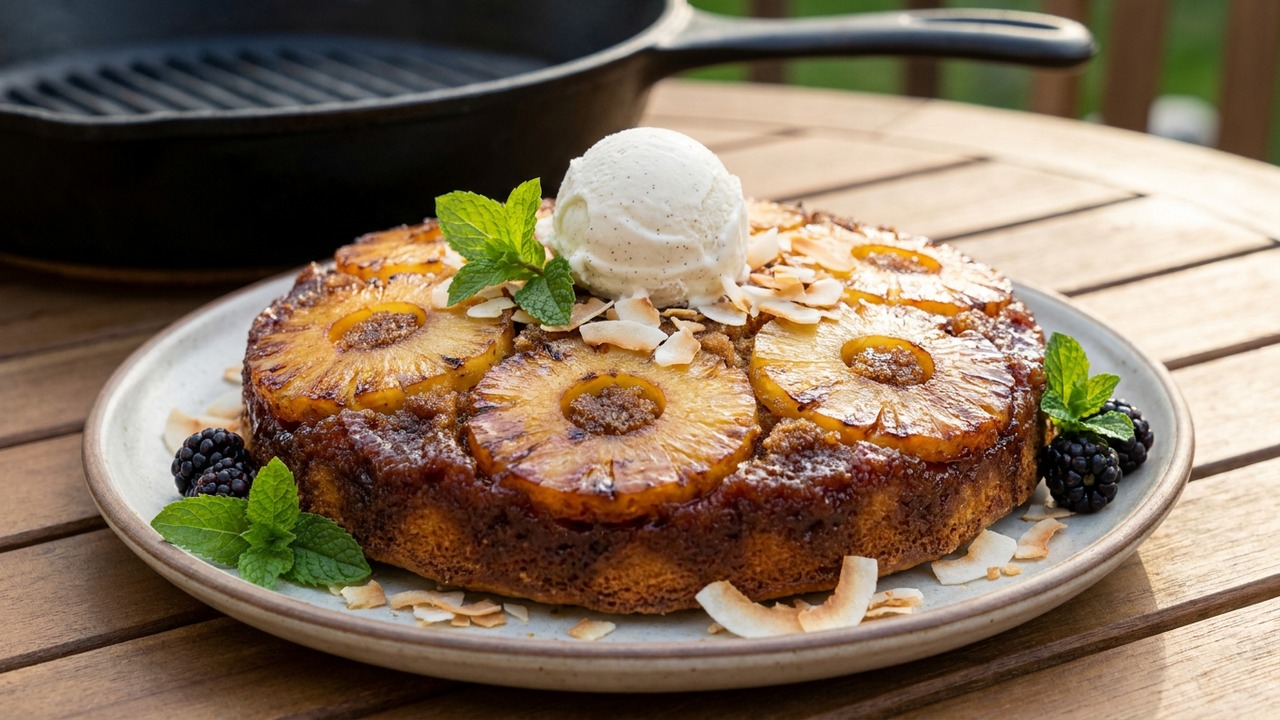
Grilled Pineapple Upside-Down Cake

Spicy Grilled Shrimp Skewers with Garlic Lime Marinade

Honey Garlic Grilled Thin-Sliced Chicken Breasts

Coffee and Porcini Dry-Rub Steaks with RUB PRIME STEAK Finish
Ask me anything about this recipe — substitutions, scaling, techniques, timing.
Powered by AI · 6 questions per 5 minutes, 30 per day