Gyudon Beef Bowl
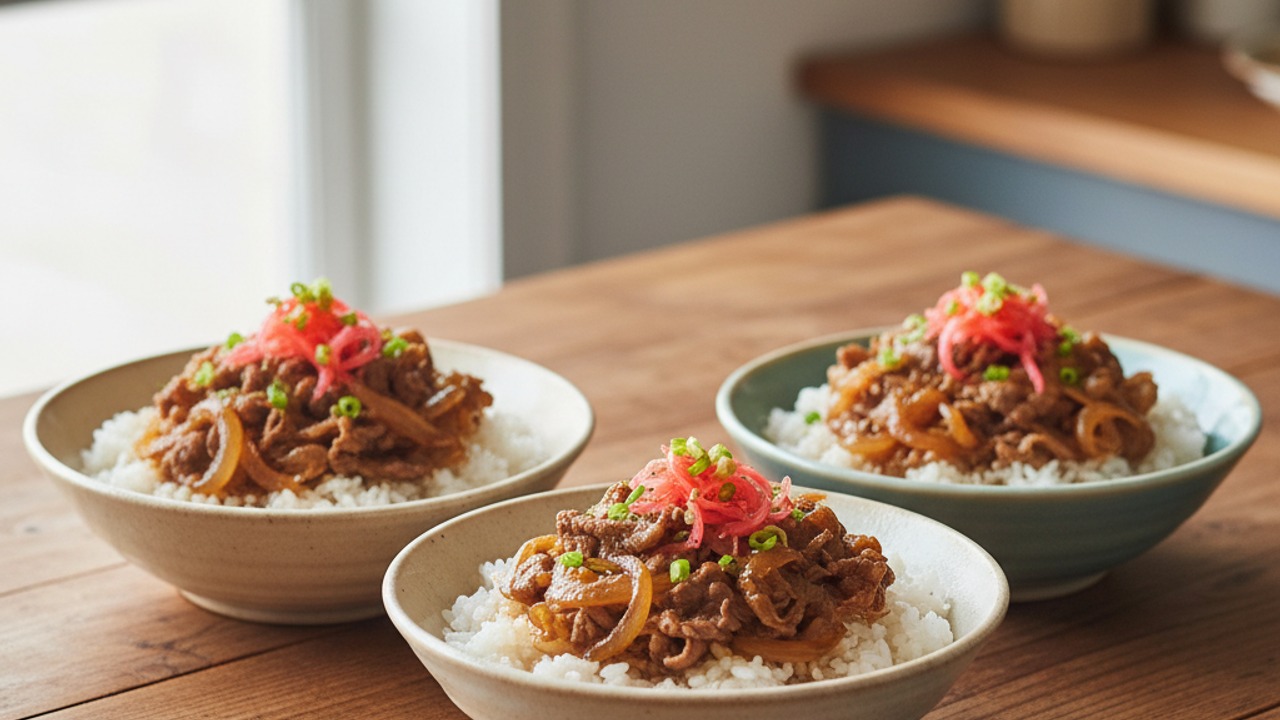
Gyudon is a quick, comforting Japanese beef-and-onion bowl served over steaming rice — perfect for a weeknight dinner. This authentic stovetop version uses a simple dashi-soy simmer that makes an umami-rich, fast meal you can pull together in 25 minutes.
Ingredient Spotlight
Dashi stock (homemade or instant)
Dashi is a fundamental Japanese umami stock usually made from kombu (dried kelp) and katsuobushi (dried bonito flakes) or from dried shiitake for a vegetarian version; it has a light, savory-seaweed/smoky aroma rather than a heavy meatiness. It’s the base for many Japanese soups, simmered dishes, and sauces. Find instant granules or ready-made dashi in Asian markets or the international aisle; as a substitute, use low-sodium chicken or vegetable broth boosted with a small piece of kombu or a pinch of bonito/kombu powder, or mushroom stock for a vegetarian option.
Ingredient Spotlight
Mirin
Mirin is a sweet Japanese rice wine used in cooking that adds mild sweetness, acidity, and a glossy finish to sauces and glazes; it has a lightly sweet, fermented aroma. It’s common in Japanese cuisine but less familiar in general U.S. pantries. Purchase it at Asian groceries or many supermarkets; as a substitute, mix 1 tablespoon sake (or dry white wine) with about 1 teaspoon sugar, or use 1 tablespoon sweet cooking wine or low-sodium rice wine vinegar with a pinch of sugar if needed.
Ingredient Spotlight
Beni shoga (pickled red ginger) for garnish
Beni shoga are thin, bright-red strips of pickled ginger made with umezu or vinegar and often red shiso that provide a sharp, tangy, slightly salty bite used as a garnish for gyudon, okonomiyaki, and other Japanese dishes. The flavor is more assertive and vinegary than the pale sushi gari most Americans know. Look for it in Japanese market jars or the refrigerated pickle section; if unavailable, use regular pickled ginger (gari) or make a quick substitute by thinly slicing fresh ginger and marinating it briefly in rice vinegar with a little sugar (note the color and exact flavor will differ).
Kenji Tanaka's note
"Konnichiwa — I love Gyudon because it’s deeply satisfying yet effortless. This recipe brings out the sweet-savory balance of classic home-style Gyudon so you can enjoy an authentic Japanese comfort meal any night of the week."
About This Recipe
Gyudon—the humble Japanese beef bowl—is all about concentrated comfort: paper-thin ribbons of beef simmered briefly with sweet onion in a fragrant dashi-soy tare, spooned hot over steaming short-grain rice. This stovetop version leans on pantry staples (instant dashi works fine) and a quick technique—very thin beef, a single gentle simmer, and a short resting period—to coax out umami without turning the meat chewy. The mirin and sake add rounded sweetness and depth while granulated sugar helps the sauce gloss the beef and soak into the rice below.
This recipe is tailor-made for weeknights and cooks who want authentic flavor without fuss. The finishing pops of beni shoga and scallion cut through the richness and refresh each bite; if you like, crown each bowl with an onsen-style egg for silky richness. Follow the few timing tricks here and you’ll have a restaurant-style gyudon in about 25 minutes—fast, forgiving, and endlessly satisfying.
Ingredients for Gyudon Beef Bowl
- 3 cups Cooked short-grain rice (hot)
- 12 oz Thinly sliced beef (ribeye or chuck), about 2–3 mm thick
- 1 large Yellow onion, thinly sliced
- 1 1/2 cups Dashi stock (homemade or instant)
- 3 tbsp Soy sauce
- 2 tbsp Mirin
- 2 tbsp Sake
- 1 tbsp Granulated sugar
- 2 tbsp Beni shoga (pickled red ginger) for garnish
- 2 stalks Scallions, thinly sliced (optional)
How to Make Gyudon Beef Bowl
Step 1: Prep and slice
Thinly slice the onion and separate the beef slices so they’ll cook quickly. If your beef is not pre-sliced, briefly chill in the freezer for 10–15 minutes until slightly firm, then slice as thin as possible — that’s the secret to tender, fast-cooking meat.For this step
- 12 ozThinly sliced beef (ribeye or chuck), about 2–3 mm thick
- 1 largeYellow onion, thinly sliced
Step 2: Make the simmer sauce
In a wide skillet or shallow saucepan over medium heat, combine the dashi, soy sauce, mirin, sake, and sugar. Bring the mixture to a gentle simmer, stirring so the sugar dissolves and the flavors meld — this is your Gyudon tare (sauce).For this step
- 1 1/2 cupsDashi stock (homemade or instant)
- 3 tbspSoy sauce
- 2 tbspMirin
- 2 tbspSake
- 1 tbspGranulated sugar
Step 3: Cook the onions
Add the sliced onion to the simmering sauce and cook until the onion is translucent and soft, about 4–5 minutes. Keep the heat at a gentle simmer so the onion becomes sweet without breaking down completely.Step 4: Add the beef and finish in the sauce
Lay the thin beef slices into the pan in a single layer, pushing them gently into the sauce so they soak up flavor; they will cook in 1–2 minutes. Stir briefly until the beef is just cooked through — avoid overcooking so the meat stays tender — then turn off the heat and let the flavors rest for a minute.Step 5: Assemble the bowls
Divide hot cooked rice among 3 bowls (about 1½ cups / 350g per serving). Spoon the beef and onion over the rice with plenty of sauce, then top each bowl with a scatter of beni shoga and sliced scallions to brighten the dish.For this step
- 3 cupsCooked short-grain rice (hot)
- 2 tbspBeni shoga (pickled red ginger) for garnish
- 2 stalksScallions, thinly sliced (optional)
Step 6: Serve and store tips
Serve immediately while hot — Gyudon tastes best fresh. Leftovers keep in the fridge up to 2 days; reheat gently on the stovetop with a splash of water or dashi so the sauce loosens and the beef stays tender.


- Thinly slice the onion and separate the beef slices so they’ll cook quickly. If your beef is not pre-sliced, briefly chill in the freezer for 10–15 minutes until slightly firm, then slice as thin as possible — that’s the secret to tender, fast-cooking meat.
- In a wide skillet or shallow saucepan over medium heat, combine the dashi, soy sauce, mirin, sake, and sugar. Bring the mixture to a gentle simmer, stirring so the sugar dissolves and the flavors meld — this is your Gyudon tare (sauce).
- Add the sliced onion to the simmering sauce and cook until the onion is translucent and soft, about 4–5 minutes. Keep the heat at a gentle simmer so the onion becomes sweet without breaking down completely.
- Lay the thin beef slices into the pan in a single layer, pushing them gently into the sauce so they soak up flavor; they will cook in 1–2 minutes. Stir briefly until the beef is just cooked through — avoid overcooking so the meat stays tender — then turn off the heat and let the flavors rest for a minute.
- Divide hot cooked rice among 3 bowls (about 1½ cups / 350g per serving). Spoon the beef and onion over the rice with plenty of sauce, then top each bowl with a scatter of beni shoga and sliced scallions to brighten the dish.
- Serve immediately while hot — Gyudon tastes best fresh. Leftovers keep in the fridge up to 2 days; reheat gently on the stovetop with a splash of water or dashi so the sauce loosens and the beef stays tender.
Gyudon Beef Bowl Tips
Chill beef briefly
Pop chunkier steaks in the freezer for 10–15 minutes until firm to slice paper-thin; thinner slices are the key to tenderness and fast cooking.
Layer meat in batches
Lay slices in a single overlapping layer so each piece hits the sauce and hot pan evenly; overcrowding steams instead of sears and can make texture dull.
Keep a gentle simmer
Maintain low-medium heat when simmering onions and sauce so the onions sweeten without falling apart and the tare reduces without burning.
Finish off-rest
Turn off the heat and let the cooked beef sit in the warm sauce for a minute so flavors settle and the meat stays juicier.
Loosen before serving
If the sauce thickens too much, stir in a splash of dashi or water to keep it glossy and able to soak into the rice.
Gyudon Beef Bowl Variations and Substitutions
Mushroom 'Gyudon' (Vegetarian)
Replace beef with a mix of shiitake and oyster mushrooms and use kombu-dashi with soy and mirin for an earthy, umami-rich vegetarian bowl.
Chicken Gyudon
Use thinly sliced boneless chicken thigh instead of beef and increase the simmer time slightly until cooked through; the tare works equally well with poultry.
Spicy Tare Twist
Add 1 tsp gochujang or ½–1 tsp chili paste to the simmer sauce for a Korean-inspired heat lift that plays nicely against the sweet mirin.
Lower-Sodium Swap
Use low-sodium soy sauce and boost umami with a small splash of fish sauce or a few drops of mushroom soy to keep depth without excess salt.
How to Store and Make Gyudon Beef Bowl Ahead
Store leftover beef and sauce in an airtight container in the refrigerator for up to 2 days; keep rice separate if possible to avoid sogginess. Reheat gently on the stovetop over low heat with a splash of dashi or water, or microwave covered with a damp paper towel to restore moisture; avoid prolonged high heat which will toughen the beef.
What to Serve With Gyudon Beef Bowl
Serve with a simple miso soup and a small plate of pickles (tsukemono) to add crunch and acidity that contrasts the rich beef. Offer chilled Japanese beer or sencha green tea; for plating, mound rice in a shallow bowl, spoon beef and sauce generously, and finish with beni shoga and an onsen egg or toasted sesame seeds for extra texture.
Gyudon Beef Bowl FAQs
Can I use store-bought thin beef slices?
Yes—pre-sliced sukiyaki or yakiniku beef is perfect and saves prep time; just separate the slices before adding so they cook evenly.
What if I don’t have dashi?
Use instant dashi granules dissolved in water for convenience, or substitute low-sodium chicken stock plus a small piece of kombu if you want some sea-like umami.
Why did my beef turn out tough?
Overcooking is the usual culprit—very thin slices need only 1–2 minutes in hot sauce; also slicing against the grain and starting with well-marbled or thin-cut meat helps tenderness.
Can I make the sauce ahead?
Yes, the tare can be made and chilled up to 3 days ahead; warm it gently and add the onions and beef when ready to finish so flavors stay bright.
How can I thicken the sauce?
Gently reduce the sauce a little longer over medium heat, or whisk in a slurry of 1 tsp cornstarch and 1 tbsp water and simmer for a minute until glossy; use sparingly so the sauce still soaks into the rice.
About the author
Kenji TanakaKonnichiwa! I'm Chef Kenji Tanaka. After over 30 years in professional Japanese kitchens, I've added to my true passion: writing! I love making authentic, delicious Japanese meals accessible to everyone. My philosophy is simple: great food doesn't have to be complicated. I curate recipes that focus on quality ingredients, traditional techniques made easy, and minimal preparation time. My goal is to guide you in creating quick, comforting, and absolutely authentic Japanese dishes at home, so you can bring a taste of Japan to your table, everyday.
See all recipes by Kenji Tanaka →Ratings & Reviews
Did you make this recipe?
Be the first to share your experience.
Nutrition Facts
Per serving: 1 bowl
Nutrition values are estimated from USDA ingredient data and may vary based on preparation, brands, and portion sizes. Values are provided for informational purposes only.
Keep Reading
Guides & articles for this recipe

Recipes
DIY Edible Monster Eyes Candy
Make safe, fun edible monster eyes for cupcakes, cookies, and candy trays. Step-by-step recipes show baking-soda balls, chocolate and fondant eyes, wafer-print options, plus assembly, storage, and kid-friendly safety tips.

Recipes
No-Bake Funny Halloween Treats: 15 Quick Recipes
15 no-bake, funny Halloween treats that busy hosts can assemble in minutes — kid-friendly sweets, savory bites, and easy cocktails that don’t need an oven. Built for last-minute parties, with pantry-staple shortcuts and quick decoration ideas.

Guides
Nutrition for Youth Athletes
Practical, age- and sport-specific nutrition guidance for kids and teens who play sports. Covers calories, macronutrients, hydration, male/female differences, and easy meals and snacks.
More from Stovetop
View all Stovetop recipes →
South Chicago Packing 100% Pure Tallow Popcorn with Browned Butter and Chili

Beef Ragu One-Pot

Truffle Mac and Cheese

Spaghetti Carbonara (Classic, 20-Minute)

Coffee‑Chile Rubbed Flank Steak Tacos with Charred Pineapple Salsa

Baja Fish Tacos

Low-Sugar Honey Garlic Chicken Breast (Honey-Reduced, High Flavor)

Grilled Ras el Hanout Chicken Thighs with Charred Apricot-Chickpea Tagine

Classic Bacon-Balsamic Brussels Sprouts — Crispy Roast Beef Side
Ask me anything about this recipe — substitutions, scaling, techniques, timing.
Powered by AI · 6 questions per 5 minutes, 30 per day