Korean BBQ Meatballs
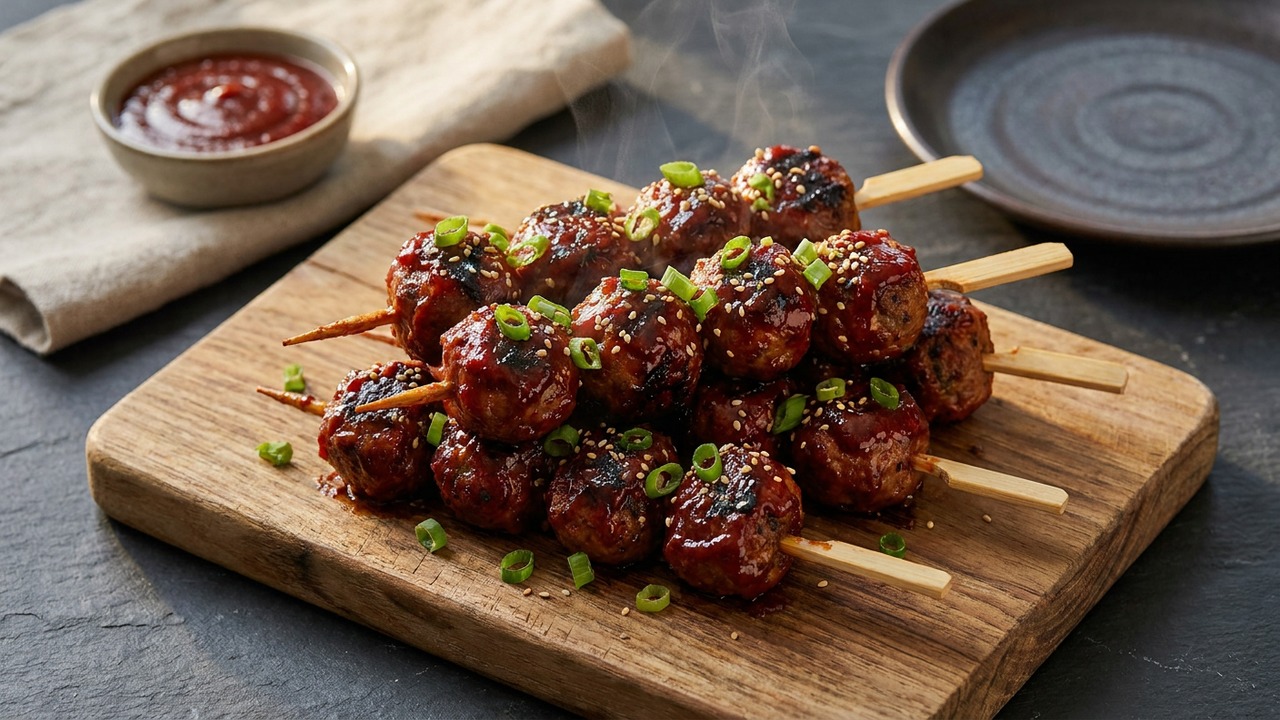
Bite-sized grilled meatballs glazed with a sticky gochujang BBQ sauce and bright green onions — a party-ready handheld that marries spicy-sweet Korean flavors with classic grilling char. Serve on skewers for an easy appetizer or a fun main at backyard gatherings.
Ingredient Spotlight
Panko breadcrumbs
Panko are Japanese-style breadcrumbs made from crustless white bread that’s processed into light, flaky crumbs. They give a much crisper, airier texture than regular breadcrumbs and are widely used for frying and for crunchy toppings. Find them in the Asian or baking aisle of most supermarkets and at Asian markets; substitute with crushed cornflakes, crushed crackers, or regular breadcrumbs (expect a denser result).
(paid link) — as an Amazon Associate we earn from qualifying purchases.
Ingredient Spotlight
Gochujang (Korean red chili paste)
Gochujang is a fermented Korean paste made from red chili powder, glutinous rice, fermented soybeans, and salt, delivering a complex sweet-spicy-umami flavor and a sticky, thick texture. It is foundational in Korean cuisine for marinades, sauces, and stews and has a pronounced savory-sweet heat rather than pure chile heat. You can find it in the Asian foods aisle or Korean markets; a quick substitute is a blend of miso or soybean paste + chili paste (sambal oelek or gochugaru) + a sweetener (honey or brown sugar) and a splash of soy sauce to mimic the sweet-fermented umami.
Jake Woods's note
"These meatballs bring the gochujang trend to a party-friendly skewer — they crisp on the outside with a tender, flavorful interior. Perfect for summer cookouts or game-day serving, they’re quick to make and easy to scale."
About This Recipe
These Korean BBQ Meatballs take the familiar crowd-pleasing shape of a party meatball and reframe it with distinctly Korean flavors: sticky, umami-rich gochujang balanced with sesame and brown sugar, bright scallions threaded right into the mix, and panko for a tender interior. The quick glaze approach—brushing on the gochujang mixture toward the end of grilling—creates that lacquered, slightly charred finish you want without burning the chili paste, so each bite delivers a smoky edge, a little heat, and a glossy hit of sweet-salty richness.
This version works because the ingredients are dialed to keep the meatballs juicy and portable: 80/20 beef or a beef-pork blend for fat and flavor, an egg and panko to bind without density, and just enough scallion and sesame oil to give each meatball a hint of green and nuttiness. Skewering them makes them perfect finger food, but they're equally at home spooned over steamed rice or tucked into buttered buns for an easy backyard main. They’re ideal for hosts who want bold flavor with minimal fuss and for home cooks who appreciate when a glaze is applied with purpose, not slathered on recklessly.
Ingredients for Korean BBQ Meatballs
- 1 1/2 lb Ground beef (80/20) or beef/pork blend
- 1/2 cup Panko breadcrumbs
- 1 large Large egg
- 2 tbsp Soy sauce
- 1 tbsp Sesame oil
- 2 cloves Garlic, minced
- 3 stalks Green onions (scallions), thinly sliced
- 1 tbsp Brown sugar
- 1/3 cup Gochujang (Korean red chili paste)
🛒 = paid link — as an Amazon Associate we earn from qualifying purchases.
How to Make Korean BBQ Meatballs
Step 1: Combine the meatball mixture
In a large bowl, gently combine ground beef, panko, egg, soy sauce, sesame oil, minced garlic, sliced green onions, and brown sugar until just combined — avoid overmixing to keep meatballs tender. Season lightly with salt and pepper if desired and let the mixture rest 5 minutes so the breadcrumbs hydrate.For this step
- 1 1/2 lbGround beef (80/20) or beef/pork blend
- 1/2 cupPanko breadcrumbs
- 1 largeLarge egg
- 2 tbspSoy sauce
- 1 tbspSesame oil
- 2 clovesGarlic, minced
- 3 stalksGreen onions (scallions), thinly sliced
- 1 tbspBrown sugar
Step 2: Shape and chill
Form the mixture into 1-inch meatballs (about 20–24 meatballs total) using a scoop or your hands, keeping them uniform for even cooking. Arrange on a tray and chill in the refrigerator for 10 minutes to help them hold their shape while grilling.Step 3: Preheat grill and prepare skewers
Preheat your grill to medium-high (about 375–425°F / 190–220°C). If using wooden skewers, soak them in water for 20 minutes before threading 3–4 meatballs per skewer so they don’t burn; metal skewers need no soaking.Step 4: Make the gochujang glaze
Whisk together gochujang with 1 tablespoon soy sauce and 1–2 tablespoons water to reach a brushable consistency; taste and add a pinch of brown sugar or a dash of sesame oil for balance if desired. Keep the glaze nearby for basting as the meatballs cook.For this step
- 1/3 cupGochujang (Korean red chili paste)
Step 5: Grill, baste and finish
Grill skewered meatballs 3–4 minutes per side until nicely charred and cooked through (internal temperature about 160°F / 71°C), brushing the glaze on during the last 3–4 minutes of cooking so it caramelizes without burning. Transfer to a platter, sprinkle with extra sliced green onions, and serve hot as handheld appetizers or over rice for a main.


- In a large bowl, gently combine ground beef, panko, egg, soy sauce, sesame oil, minced garlic, sliced green onions, and brown sugar until just combined — avoid overmixing to keep meatballs tender. Season lightly with salt and pepper if desired and let the mixture rest 5 minutes so the breadcrumbs hydrate.
- Form the mixture into 1-inch meatballs (about 20–24 meatballs total) using a scoop or your hands, keeping them uniform for even cooking. Arrange on a tray and chill in the refrigerator for 10 minutes to help them hold their shape while grilling.
- Preheat your grill to medium-high (about 375–425°F / 190–220°C). If using wooden skewers, soak them in water for 20 minutes before threading 3–4 meatballs per skewer so they don’t burn; metal skewers need no soaking.
- Whisk together gochujang with 1 tablespoon soy sauce and 1–2 tablespoons water to reach a brushable consistency; taste and add a pinch of brown sugar or a dash of sesame oil for balance if desired. Keep the glaze nearby for basting as the meatballs cook.
- Grill skewered meatballs 3–4 minutes per side until nicely charred and cooked through (internal temperature about 160°F / 71°C), brushing the glaze on during the last 3–4 minutes of cooking so it caramelizes without burning. Transfer to a platter, sprinkle with extra sliced green onions, and serve hot as handheld appetizers or over rice for a main.
Korean BBQ Meatballs Tips
Don’t Overwork the Meat
Mix only until ingredients are evenly combined—overmixing tightens proteins and yields dense, tough meatballs.
Hydrate the Panko
Let the mixed meatball blend rest for 5 minutes so the panko absorbs moisture; that ensures a tender interior and prevents crumbling.
Chill Before Grilling
A short 10-minute chill firms the meatballs so they hold together on skewers and develop a better crust on the grill.
Baste Late for Caramelization
Apply the gochujang glaze during the last 3–4 minutes of cooking so sugars caramelize without burning the paste.
Check Internal Temperature
Use an instant-read thermometer and pull meatballs at about 160°F (71°C) for beef/pork blends to ensure safety while keeping them juicy.
Korean BBQ Meatballs Variations and Substitutions
Turkey or Chicken Substitute
Use ground dark meat turkey or chicken for a leaner option and add an extra tablespoon of sesame oil to compensate for lower fat.
Vegetarian 'Meat'balls
Make with a firm mashed chickpea and tofu mix or store-bought plant-based ground, increase panko for binding, and lower grill time to avoid drying out.
Honey-Gochujang Glaze
Swap brown sugar for honey (or use a 50/50 mix) to give the glaze more shine and a floral counterpoint to the chili heat.
Add Asian Herbs
Fold in minced cilantro or Thai basil with the scallions for an herbal brightness that complements the gochujang lacquer.
How to Store and Make Korean BBQ Meatballs Ahead
Cool leftover meatballs completely, then store in an airtight container in the refrigerator for up to 3 days. For longer storage, freeze cooked meatballs on a tray until solid, then transfer to a freezer bag for up to 3 months. Reheat gently in a 325°F oven covered with foil for 10–15 minutes or simmer briefly in a skillet with a splash of water and extra glaze to revive moisture.
What to Serve With Korean BBQ Meatballs
Serve skewers on a platter sprinkled with extra sliced scallions and toasted sesame seeds, and offer small bowls of pickled cucumbers or a quick kimchi to cut through the richness. For a heartier meal, plate the meatballs over steamed jasmine rice or buttery soft gochujang-slathered buns with shredded cabbage slaw. Pair with crisp lagers or a citrusy Riesling to balance the spicy-sweet glaze.
Korean BBQ Meatballs FAQs
Can I make the meatballs ahead of time?
Yes—shape and chill the meatballs up to a day ahead; keep covered in the fridge and grill them just before serving for best texture and flavor.
My glaze burns easily on the grill—what should I do?
Brush glaze only during the last few minutes of cooking and use indirect heat or a cooler side of the grill to avoid direct flames; you can also finish glazing briefly under a broiler if char is needed.
Is there a non-grill method that works?
Absolutely—sear the meatballs in a hot skillet to develop color, then finish in a 400°F oven for 8–10 minutes, glazing in the final minutes to caramelize.
How do I reduce the heat from gochujang?
Stir a spoonful of honey or brown sugar and a splash of rice vinegar into the glaze to mellow heat and add acidity, or use less gochujang and compensate with a touch of tomato paste for body.
Can I use leaner beef than 80/20?
You can, but expect drier meatballs; if using leaner beef, add a tablespoon of oil or increase the egg/panko slightly to maintain moisture.
About the author
Jake WoodsHello, I'm Jake. I started this recipe site with the idea that I hated recipe websites that overwhelm you with long stories and ads just to see plain content that's not helpful. My goal is to provide you with quality recipes, simple ideas and a fun cooking experience. There's lots of fun things to cook, and I think as you browse the site you'll find that TopShelf.Recipes is the place for quality recipes on the web.
See all recipes by Jake Woods →Ratings & Reviews
Did you make this recipe?
Be the first to share your experience.
Nutrition Facts
Per serving: about ¾ cup
Nutrition values are estimated from USDA ingredient data and may vary based on preparation, brands, and portion sizes. Values are provided for informational purposes only.
Keep Reading
Guides & articles for this recipe

Healthy Eating
Gluten-Free Weeknight Grilling Plan
A 7-day gluten-free weeknight grilling plan with quick, family-friendly recipes, prep-ahead timelines, and a printable shopping list that spotlights late-summer produce and pantry staples. Includes clear cross-contamination safety tips and simple swaps to keep dinners fast and crowd-pleasing.

Cocktails & Drinks
Shakerless Cocktails for Backyard Grilling
Easy, tool-free cocktail recipes designed for backyard grilling and outdoor hangs. Find single-serve and batch formulas, quick portable infusions, improvised gear hacks, and simple cocktail pairings for grilled meats and vegetables.

Healthy Eating
Lean Labor Day Grilling Menu
A Labor Day grilling guide that swaps heavy BBQ classics for lighter, flavorful options—think lean proteins, charred vegetables, and low‑sugar sauces. Includes make-ahead meal prep, portioning tips, and a short shopping checklist for healthy, crowd-pleasing cookouts.
More from Grilling
View all Grilling recipes →
Tandoori Yogurt Marinated Grilled Chicken (Tandoori Style on the Grill)

Labor Day Grilled Lobster Rolls with Charred Scallion Brown Butter & Lemon‑Herb Aioli

Bulgogi Smash Burger

Campfire‑Smoked Potato Salad with Mustard‑Bacon Vinaigrette — A Labor Day Grilling Side for Steak

Hanger Steak with Shallot Sauce
Grilled Pineapple Upside-Down Cake

Spicy Grilled Shrimp Skewers with Garlic Lime Marinade

Honey Garlic Grilled Thin-Sliced Chicken Breasts

Coffee and Porcini Dry-Rub Steaks with RUB PRIME STEAK Finish
Ask me anything about this recipe — substitutions, scaling, techniques, timing.
Powered by AI · 6 questions per 5 minutes, 30 per day