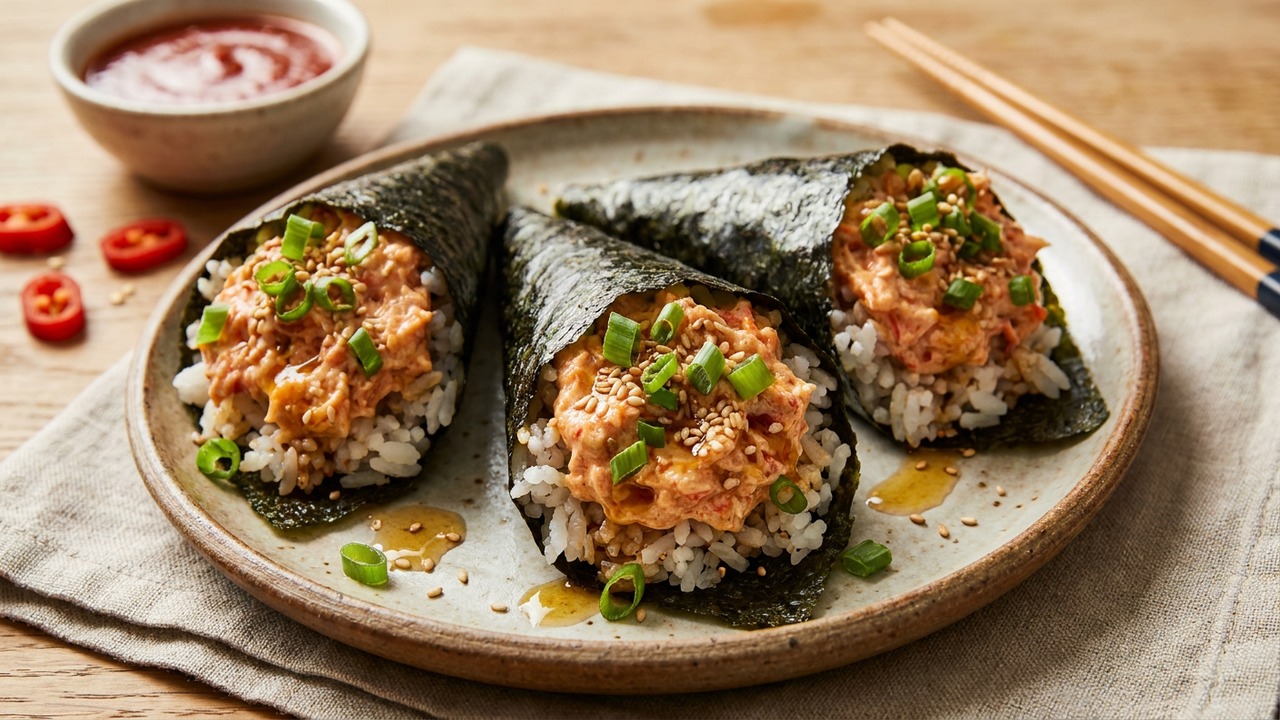
Korean-Style Spicy Crab Rolls
Crisp nori hand rolls filled with seasoned sushi rice and a spicy, creamy gochujang-crab mixture for a shareable Korean-inspired snack. Bright scallions and toasted sesame oil lift the savory crab, making these an addictive, textural bite for parties or weeknight appetizers.
Ingredient Spotlight
Gochujang (Korean chili paste)
A thick, fermented red-chili paste from Korea made from chili powder, glutinous rice, fermented soy, and salt; it delivers a complex sweet-spicy-umami flavor with a mildly pungent, fermented aroma. It’s a staple in Korean cooking (bibimbap, stews, marinades) and is sold in tubs at Asian markets and many supermarkets or online. For a substitute, mix a bit of miso or red miso with sambal oelek or sriracha plus a touch of sugar and rice vinegar to mimic the sweet, salty, and spicy balance.
(paid link) — as an Amazon Associate we earn from qualifying purchases.
Ingredient Spotlight
Short-grain sushi rice (uncooked)
Short-grain sushi rice is a Japanese-style rice that cooks up very sticky and slightly sweet thanks to a higher amylopectin (starch) content, which helps it hold together for sushi and rice balls. It has a distinct tender, plump texture and subtle rice aroma, different from long-grain or jasmine rice. You can find it labeled as 'sushi rice' or ‘short-grain’ at supermarkets and Asian groceries; a good substitute is Calrose or any labeled short- or medium-grain rice (avoid long-grain varieties).
Ingredient Spotlight
Toasted nori half-sheets
Nori are thin roasted sheets of edible seaweed (laver) used to wrap sushi and add a briny, umami sea flavor; half-sheets are simply standard sheets cut for individual rolls or hand rolls. They have a delicate toasted ocean scent and crisp texture until moistened by rice. Buy them in packs at Asian markets, grocery stores, or online; substitutes include full nori sheets trimmed to size, roasted seaweed snacks, or a light sprinkle of furikake if you need the seaweed flavor but not the wrap.
Jake Woods's note
"These hand rolls are great for casual gatherings because guests can assemble their own, and they deliver big flavor with minimal fuss. Use fresh lump crab or quality canned crab for the best texture."
About This Recipe
These Korean-Style Spicy Crab Rolls are a meeting point between sushi technique and bold Korean pantry flavors — crisp toasted nori, slightly vinegared sushi rice, and a lush, gochujang-mayo crab salad that delivers heat, creaminess and a hint of toasty sesame. The contrast is the dish's appeal: the snap of the nori, the pillowy bite of seasoned rice, and the savory-sweet-spicy crab that tastes like it was born for sharing. Scallions add freshness and lift, while a touch of toasted sesame oil ties the flavors to a familiar Korean aroma without overwhelming the delicate crab.
What makes this version work is purpose: using sushi rice keeps each bite cohesive but light, while patting the crab dry and folding in Japanese mayo (Kewpie if you can find it) makes the filling silky instead of soupy. The recipe is forgiving — good-quality canned crab stands in for lump crab without losing the spirit — and it scales well for parties, weeknight snacks or a hands-on DIY dinner. Assemble at the last minute so the nori stays crisp, offer extra gochujang-mayo for dunking, and you have an addictive, textural snack that plays well with both casual beer nights and more polished entertaining.
Ingredients for Korean-Style Spicy Crab Rolls
- 1 cup Short-grain sushi rice (uncooked)
- 3 tablespoons Rice vinegar
- 1 tablespoon Granulated sugar
- 1 teaspoon Fine sea salt
- 8 half-sheets Toasted nori half-sheets
- 8 ounces Cooked lump crab meat (or good-quality canned crab, drained)
- 2 tablespoons Gochujang (Korean chili paste)
- 3 tablespoons Mayonnaise (Japanese/Kewpie preferred)
- 1 teaspoon Toasted sesame oil
- 2 stalks Scallions (green onions), thinly sliced
🛒 = paid link — as an Amazon Associate we earn from qualifying purchases.
How to Make Korean-Style Spicy Crab Rolls
Step 1: Rinse and cook the rice
Rinse the short-grain rice under cold water until the water runs mostly clear to remove excess starch. Cook rice with the appropriate amount of water in a rice cooker or pot (about 1:1.1–1.2 rice-to-water ratio for sushi rice); once cooked, let rest covered 10 minutes.For this step
- 1 cupShort-grain sushi rice (uncooked)
Step 2: Season the cooked rice
While the rice is still warm, gently fold in the rice vinegar, sugar and fine sea salt until evenly distributed; use a cutting motion with a rice paddle or spatula to avoid crushing the grains. Spread the rice in a shallow bowl to cool to near room temperature before assembling.For this step
- 3 tablespoonsRice vinegar
- 1 tablespoonGranulated sugar
- 1 teaspoonFine sea salt
Step 3: Prepare the crab
Drain any excess liquid from the crab and gently pick through to remove shells; flake larger lumps into bite-sized pieces. Pat the crab lightly with paper towels to remove excess moisture so the filling stays creamy rather than watery.For this step
- 8 ouncesCooked lump crab meat (or good-quality canned crab, drained)
Step 4: Make the spicy crab filling
In a bowl, combine the flaked crab with gochujang, mayonnaise, toasted sesame oil and most of the sliced scallions; taste and adjust heat by adding more gochujang if desired. Mix gently until the crab is coated but still slightly chunky; refrigerate 5–10 minutes to let flavors meld if time allows.For this step
- 2 tablespoonsGochujang (Korean chili paste)
- 3 tablespoonsMayonnaise (Japanese/Kewpie preferred)
- 1 teaspoonToasted sesame oil
- 2 stalksScallions (green onions), thinly sliced
Step 5: Assemble the hand rolls and serve
Place a nori half-sheet shiny-side down, spread a thin layer of seasoned rice at the left edge (about 2–3 tablespoons), then spoon the crab mixture on top and sprinkle with the remaining scallions. Roll into a cone or cylinder so the filling is secure; serve immediately so the nori remains crisp. Offer extra gochujang mayo or soy sauce for dipping if you like.For this step
- 8 half-sheetsToasted nori half-sheets


- Rinse the short-grain rice under cold water until the water runs mostly clear to remove excess starch. Cook rice with the appropriate amount of water in a rice cooker or pot (about 1:1.1–1.2 rice-to-water ratio for sushi rice); once cooked, let rest covered 10 minutes.
- While the rice is still warm, gently fold in the rice vinegar, sugar and fine sea salt until evenly distributed; use a cutting motion with a rice paddle or spatula to avoid crushing the grains. Spread the rice in a shallow bowl to cool to near room temperature before assembling.
- Drain any excess liquid from the crab and gently pick through to remove shells; flake larger lumps into bite-sized pieces. Pat the crab lightly with paper towels to remove excess moisture so the filling stays creamy rather than watery.
- In a bowl, combine the flaked crab with gochujang, mayonnaise, toasted sesame oil and most of the sliced scallions; taste and adjust heat by adding more gochujang if desired. Mix gently until the crab is coated but still slightly chunky; refrigerate 5–10 minutes to let flavors meld if time allows.
- Place a nori half-sheet shiny-side down, spread a thin layer of seasoned rice at the left edge (about 2–3 tablespoons), then spoon the crab mixture on top and sprinkle with the remaining scallions. Roll into a cone or cylinder so the filling is secure; serve immediately so the nori remains crisp. Offer extra gochujang mayo or soy sauce for dipping if you like.
Korean-Style Spicy Crab Rolls Tips
Dry the Crab Thoroughly
Pat the crab gently with paper towels and let it drain on a paper-lined plate for 5–10 minutes so the filling stays creamy rather than watery.
Keep Nori Crisp
Store sheets in an airtight container and assemble rolls just before eating; to re-crisp slightly softened nori, flash it 10–20 seconds in a 275°F oven or on a dry skillet.
Cool Rice Properly
Spread the seasoned rice in a shallow bowl and use a cutting motion with a paddle while fanning if possible to cool quickly without mashing the grains.
Titrate the Heat
Start with the recipe amount of gochujang and taste — add more in small increments because brands vary widely in heat and sweetness.
Mayo Matters
Kewpieadds umami and silkiness; if using regular mayonnaise, stir in 1/2 teaspoon rice vinegar and a pinch of sugar to mimic that tangier profile.
Korean-Style Spicy Crab Rolls Variations and Substitutions
Spicy Tuna Hand Rolls
Swap the crab for finely chopped sushi-grade tuna mixed with the same gochujang-mayo for a robust, sashimi-style hand roll.
Vegetarian 'Crab' Rolls
Use shredded king oyster mushrooms or canned hearts of palm tossed with gochujang-mayo and a dash of soy for a flaky, plant-based texture.
Kimchi Crunch Edition
Fold in 2–3 tablespoons of finely chopped, well-drained kimchi for extra tang and crunch, and reduce gochujang if the kimchi is very spicy.
Tempura Shrimp Variation
Replace crab with bite-sized tempura shrimp and a smear of sriracha-mayo for a hot-and-crispy contrast to the cool rice.
How to Store and Make Korean-Style Spicy Crab Rolls Ahead
Assembled hand rolls are best eaten immediately because nori will lose its snap; do not store assembled rolls. Keep the crab filling in an airtight container in the refrigerator for up to 48 hours and cool the sushi rice quickly, then store it covered for the same timeframe — reheat rice gently with steam or a microwave wrapped in a damp towel. Never leave cooked rice or seafood at room temperature for more than two hours.
What to Serve With Korean-Style Spicy Crab Rolls
Serve the rolls on a long board with small bowls of extra gochujang-mayo, soy sauce and pickled ginger; garnish with toasted sesame seeds and extra scallions. Complement with bright, crunchy sides like quick cucumber salad, blanched edamame, or a small kimchi platter, and pair with cold lager, chilled sake, or a neutral soju to balance the spice.
Korean-Style Spicy Crab Rolls FAQs
Can I use canned crab instead of lump crab?
Yes — choose a good-quality canned lump or claw meat, drain very well and pat dry; the texture and flavor are slightly different but still excellent when dressed with gochujang-mayo.
How do I prevent the nori from getting soggy?
Assemble right before serving and keep rice to a thin layer at the edge; also make sure the crab is well drained and avoid overfilling each roll.
Is Kewpie mayo necessary?
Kewpie gives a richer, tangier finish, but you can substitute regular mayonnaise with 1/2 teaspoon rice vinegar and a pinch of sugar to mimic the profile.
Can I make these ahead of time?
Prepare the rice and crab filling up to 24–48 hours in advance and refrigerate separately, but assemble the rolls just before serving for best texture.
Is it safe to use raw crab or seafood?
Use fully cooked crab or canned crab for this recipe; if you choose other raw seafoods, only use sushi-grade fish and follow strict cold-chain and handling practices to minimize risk.
About the author
Jake WoodsHello, I'm Jake. I started this recipe site with the idea that I hated recipe websites that overwhelm you with long stories and ads just to see plain content that's not helpful. My goal is to provide you with quality recipes, simple ideas and a fun cooking experience. There's lots of fun things to cook, and I think as you browse the site you'll find that TopShelf.Recipes is the place for quality recipes on the web.
See all recipes by Jake Woods →Ratings & Reviews
Did you make this recipe?
Be the first to share your experience.
Nutrition Facts
Per serving: 1 roll (290g)
Nutrition values are estimated from USDA ingredient data and may vary based on preparation, brands, and portion sizes. Values are provided for informational purposes only.
Keep Reading
Guides & articles for this recipe

Healthy Eating
Gluten-Free Weeknight Grilling Plan
A 7-day gluten-free weeknight grilling plan with quick, family-friendly recipes, prep-ahead timelines, and a printable shopping list that spotlights late-summer produce and pantry staples. Includes clear cross-contamination safety tips and simple swaps to keep dinners fast and crowd-pleasing.

Healthy Eating
Low-Fat Grill Swaps for Big Flavor
A practical guide to trimming fat from grilled meals without losing juiciness or char. Learn yogurt- and citrus-based marinades, lean protein picks, searing and indirect-heat tricks, plus 5 quick low-fat marinades and a simple weeknight plan.

Recipes
DIY Edible Monster Eyes Candy
Make safe, fun edible monster eyes for cupcakes, cookies, and candy trays. Step-by-step recipes show baking-soda balls, chocolate and fondant eyes, wafer-print options, plus assembly, storage, and kid-friendly safety tips.
More from Snacks
View all Snacks recipes →
Easy Peanut Butter Bars

Holiday Cranberry Maple Chex Mix

Labor Day Grilled Lobster Rolls with Charred Scallion Brown Butter & Lemon‑Herb Aioli

Snake River Farms Beef Tallow Crispy Air Fryer Chicken Wings

Strawberry Yogurt Bark

Buffalo Chicken Dip

Snake River Farms Beef Tallow Popcorn with Parmesan and Herbs

Truffle Parmesan Butter Board with Crispy Breadcrumbs

S'mores Popcorn
Ask me anything about this recipe — substitutions, scaling, techniques, timing.
Powered by AI · 6 questions per 5 minutes, 30 per day