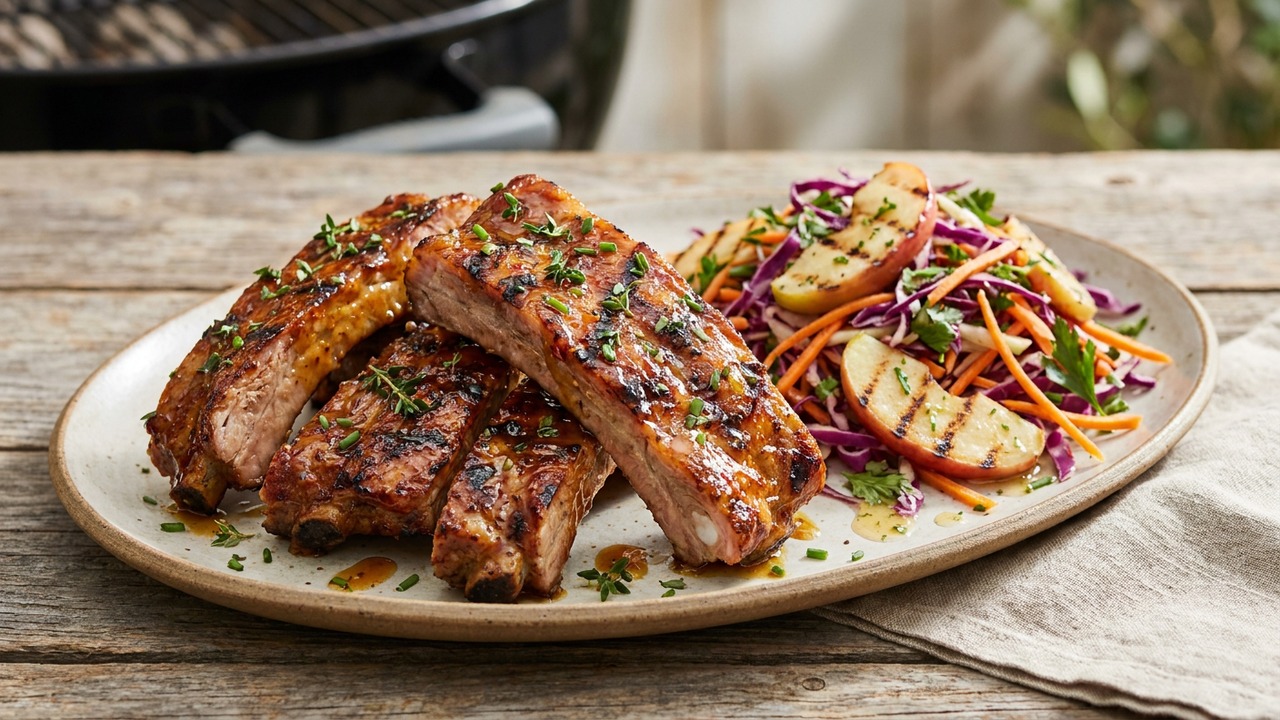
Maple-Mustard Glazed Spare Ribs with Charred Apple Slaw (Grilled)
Tender spare ribs slow-grilled and finished with a shiny maple-mustard glaze, paired with a bright charred-apple slaw for contrast. The seasonal apple + maple pairing brings a sweet-savory balance that elevates the classic BBQ profile without relying on a heavy bottled sauce.
Jake Woods's note
"This dish shines at weekend cookouts or a cozy autumn dinner when apples and maple are at their best. Home cooks will love the simple glaze and the crisp, charred-apple slaw that keeps each bite lively."
About This Recipe
This recipe is all about balance: meaty spare ribs cooked low and slow until they give under a gentle press, finished with a glossy maple-mustard glaze that brings sweetness, tang and a touch of heat without burying the pork. The spare ribs’ higher fat content than baby backs makes them ideal for this treatment — the slow render gives a succulent interior while the maple glaze seals in flavor and adds a caramelized sheen. Charred apples and crisp red cabbage cut through the richness with clean acidity and a faint smoke that ties the plate together.
I designed this version for home grillers who want a classic BBQ note without relying on bottled sauces. The glaze is simple but precise: maple for body, Dijon for brightness, cider vinegar for lift; applied late to avoid bitter burn. The charred-apple slaw is more than garnish — it provides texture and seasonal sweetness that echoes the maple, making the dish feel thoughtful and balanced for backyard dinners, casual dinner parties, or a weekend family meal when you want something slightly elevated but not fussy.
Ingredients for Maple-Mustard Glazed Spare Ribs with Charred Apple Slaw (Grilled)
- 3 lb Pork spare ribs (trimmed, membrane removed)
- 3 tbsp Dry rub (kosher salt, black pepper, brown sugar, smoked paprika)
- 1/2 cup Pure maple syrup
- 2 tbsp Dijon mustard
- 3 tbsp Apple cider vinegar
- 2 medium Firm apples (Honeycrisp or Gala), halved and cored for charring
- 3 cups Red cabbage, thinly sliced
- 2 tbsp Extra-virgin olive oil
How to Make Maple-Mustard Glazed Spare Ribs with Charred Apple Slaw (Grilled)
Step 1: Trim, prep and rub the ribs
Remove the membrane from the back of the spare ribs and trim any excess fat. Pat the ribs dry and massage the dry rub evenly over both sides; let rest at room temperature for 20 minutes or refrigerate and bring back to room temp before grilling.For this step
- 3 lbPork spare ribs (trimmed, membrane removed)
- 3 tbspDry rub (kosher salt, black pepper, brown sugar, smoked paprika)
Step 2: Set up the grill for indirect low-and-slow heat
Preheat a gas or charcoal grill for two-zone cooking: target 250–275°F (120–135°C) in the indirect zone. Place the ribs bone-side down on the indirect side, cover, and cook low and slow for about 2 to 2¼ hours until tender but not falling apart.Step 3: Make the maple-mustard glaze and finish the ribs
While ribs cook, whisk together maple syrup, Dijon mustard and apple cider vinegar in a small saucepan and warm briefly until smooth; reduce a minute to slightly thicken. During the last 15–20 minutes of cooking, brush the glaze on the ribs a couple of times, moving them over direct medium heat for 2–3 minutes per side at the end to caramelize—watch closely to prevent burning.For this step
- 1/2 cupPure maple syrup
- 2 tbspDijon mustard
- 3 tbspApple cider vinegar
Step 4: Char apples and toss the slaw
Brush apple halves lightly with a bit of olive oil and sear apple-side down on the hot grill until char marks form and the flesh softens slightly, about 2–3 minutes per side. Thinly slice the charred apples, toss with the sliced red cabbage, remaining olive oil and a splash of apple cider vinegar (season to taste) for a crisp, slightly smoky slaw.For this step
- 2 mediumFirm apples (Honeycrisp or Gala), halved and cored for charring
- 3 cupsRed cabbage, thinly sliced
- 2 tbspExtra-virgin olive oil
Step 5: Rest and slice the ribs
Transfer glazed ribs to a cutting board and let rest for 10 minutes to let juices redistribute and the glaze set. Slice between the bones into individual ribs or sections and arrange on a platter.Step 6: Plate and serve
Serve warm ribs alongside the charred-apple slaw, spooning any reserved glaze over the meat. Garnish with extra apple slices or finely chopped herbs if desired and enjoy immediately.


- Remove the membrane from the back of the spare ribs and trim any excess fat. Pat the ribs dry and massage the dry rub evenly over both sides; let rest at room temperature for 20 minutes or refrigerate and bring back to room temp before grilling.
- Preheat a gas or charcoal grill for two-zone cooking: target 250–275°F (120–135°C) in the indirect zone. Place the ribs bone-side down on the indirect side, cover, and cook low and slow for about 2 to 2¼ hours until tender but not falling apart.
- While ribs cook, whisk together maple syrup, Dijon mustard and apple cider vinegar in a small saucepan and warm briefly until smooth; reduce a minute to slightly thicken. During the last 15–20 minutes of cooking, brush the glaze on the ribs a couple of times, moving them over direct medium heat for 2–3 minutes per side at the end to caramelize—watch closely to prevent burning.
- Brush apple halves lightly with a bit of olive oil and sear apple-side down on the hot grill until char marks form and the flesh softens slightly, about 2–3 minutes per side. Thinly slice the charred apples, toss with the sliced red cabbage, remaining olive oil and a splash of apple cider vinegar (season to taste) for a crisp, slightly smoky slaw.
- Transfer glazed ribs to a cutting board and let rest for 10 minutes to let juices redistribute and the glaze set. Slice between the bones into individual ribs or sections and arrange on a platter.
- Serve warm ribs alongside the charred-apple slaw, spooning any reserved glaze over the meat. Garnish with extra apple slices or finely chopped herbs if desired and enjoy immediately.
Maple-Mustard Glazed Spare Ribs with Charred Apple Slaw (Grilled) Tips
Remove the membrane
Sliding a butter knife under the silver skin and using a paper towel to grip and pull will let the rub and glaze penetrate and prevent the ribs from curling as they cook.
Two-zone grilling
Maintain a cooler indirect zone at 250–275°F for the long cook and a hot direct zone for final caramelization; move the ribs only for a few minutes over direct heat to avoid burning the maple glaze.
Glaze late and thin
Brush on thin coats of the maple-mustard glaze during the last 15–20 minutes so sugars caramelize without scorching; multiple light layers give better shine than one heavy slather.
Mind the flare-ups
Trim excessive fat and keep a drip pan under the ribs when using charcoal to reduce flames that can char the glaze; have tongs ready to move ribs briefly if flames spike.
Char apples properly
Oil the cut apple halves lightly and sear them on high heat until you see brown-black marks and the flesh softens slightly, which concentrates sweetness and adds a smoky counterpoint to the slaw.
Maple-Mustard Glazed Spare Ribs with Charred Apple Slaw (Grilled) Variations and Substitutions
Baby Back Ribs
Use baby back ribs for a leaner, quicker-cooking option; reduce the indirect cook time to about 1.5–2 hours and watch for tenderness sooner.
Apple Cider Reduction
Cook down 1/2 cup apple cider until syrupy and add to the glaze for deeper apple flavor without extra sweetness, which pairs especially well with tart apples like Granny Smith.
Vegan Smoke Twist
Swap ribs for thick king oyster mushroom 'steaks' brushed with the glaze and grilled until charred; serve with the same charred-apple slaw for a plant-forward alternative.
Mustard Heat Boost
Stir in 1–2 teaspoons whole-grain mustard or a touch of hot honey to the glaze if you want more texture and a spicier finish.
Oven-Finished Option
If you don’t have a grill, roast at 275°F in a foil tent until tender, then broil briefly after glazing to caramelize, watching closely to prevent burning.
How to Store and Make Maple-Mustard Glazed Spare Ribs with Charred Apple Slaw (Grilled) Ahead
Store ribs and slaw separately in airtight containers in the refrigerator for up to 3–4 days; keeping them separate preserves the slaw’s crunch. Reheat ribs gently in a 300°F oven wrapped in foil with a splash of water or reserved glaze to keep them moist, or finish on a hot grill for a few minutes to renew the crust; do not microwave if you want to preserve texture. Dress any leftover slaw just before serving if you prefer it crisper, or keep the dressing on the side for up to 24 hours.
What to Serve With Maple-Mustard Glazed Spare Ribs with Charred Apple Slaw (Grilled)
Serve the ribs sliced between bones with a mound of charred-apple slaw on the side and additional warm glaze for spooning. Complement the meal with buttery cornbread or roasted sweet potatoes and a bright-pickled condiment like quick-pickled red onions to cut fat. For drinks, a crisp hard apple cider, a citrus-forward IPA, or an unoaked Burgundy/Gamay will harmonize with the maple and apple notes.
Maple-Mustard Glazed Spare Ribs with Charred Apple Slaw (Grilled) FAQs
How do I know when the ribs are done?
Ribs are ready when the meat has shrunk back from the bone and a gentle probe or toothpick slides between bones with little resistance; you’re aiming for tender and moist, not falling-apart. If you use a thermometer, target about 195–203°F for fully rendered, tender spare ribs.
Can I wrap ribs in foil during cooking?
Yes — wrapping (the 'Texas crutch') after 1.5–2 hours can speed cooking and soften them, but it will reduce the bark. Unwrap for the last 15–20 minutes to glaze and re-establish a crust.
My glaze is burning on the grill; what went wrong?
Maple syrup has a low burn point, so avoid prolonged exposure to direct high heat and apply glaze late. Use thin coats and finish over medium direct heat only briefly while watching closely to prevent bitter charring.
Can I make the slaw ahead of time?
You can char the apples and slice the cabbage a few hours ahead, but toss them with oil and vinegar no more than an hour before serving to keep the cabbage crisp; alternatively, store the components separately and combine at the last minute.
What apples work best for this recipe?
Firm, crisp apples like Honeycrisp or Gala hold up to grilling and develop great caramelized flavor, while a tart Granny Smith adds bright contrast; avoid very soft apples that will collapse when charred.
About the author
Jake WoodsHello, I'm Jake. I started this recipe site with the idea that I hated recipe websites that overwhelm you with long stories and ads just to see plain content that's not helpful. My goal is to provide you with quality recipes, simple ideas and a fun cooking experience. There's lots of fun things to cook, and I think as you browse the site you'll find that TopShelf.Recipes is the place for quality recipes on the web.
See all recipes by Jake Woods →Ratings & Reviews
Did you make this recipe?
Be the first to share your experience.
Nutrition Facts
Per serving: 12 oz rib
Nutrition values are estimated from USDA ingredient data and may vary based on preparation, brands, and portion sizes. Values are provided for informational purposes only.
Keep Reading
Guides & articles for this recipe
Tips & Techniques
Ultra-Tender Pork Spare Ribs: Tips & Techniques for Fall-Off-the-Bone Success
Master the craft of ultra-tender pork spare ribs with practical, no-nonsense techniques for selecting, prepping, smoking, and finishing. This guide focuses on what matters—temperature control, testing for doneness, wrapping choices, and common fixes—so your next rack comes out juicy, tender, and perfectly sauced.

Healthy Eating
Gluten-Free Weeknight Grilling Plan
A 7-day gluten-free weeknight grilling plan with quick, family-friendly recipes, prep-ahead timelines, and a printable shopping list that spotlights late-summer produce and pantry staples. Includes clear cross-contamination safety tips and simple swaps to keep dinners fast and crowd-pleasing.

Cocktails & Drinks
Shakerless Cocktails for Backyard Grilling
Easy, tool-free cocktail recipes designed for backyard grilling and outdoor hangs. Find single-serve and batch formulas, quick portable infusions, improvised gear hacks, and simple cocktail pairings for grilled meats and vegetables.
More from Grilling
View all Grilling recipes →
Tandoori Yogurt Marinated Grilled Chicken (Tandoori Style on the Grill)

Labor Day Grilled Lobster Rolls with Charred Scallion Brown Butter & Lemon‑Herb Aioli

Bulgogi Smash Burger

Campfire‑Smoked Potato Salad with Mustard‑Bacon Vinaigrette — A Labor Day Grilling Side for Steak

Hanger Steak with Shallot Sauce
Grilled Pineapple Upside-Down Cake

Spicy Grilled Shrimp Skewers with Garlic Lime Marinade

Honey Garlic Grilled Thin-Sliced Chicken Breasts

Coffee and Porcini Dry-Rub Steaks with RUB PRIME STEAK Finish
Ask me anything about this recipe — substitutions, scaling, techniques, timing.
Powered by AI · 6 questions per 5 minutes, 30 per day