Miso Soup with Tofu
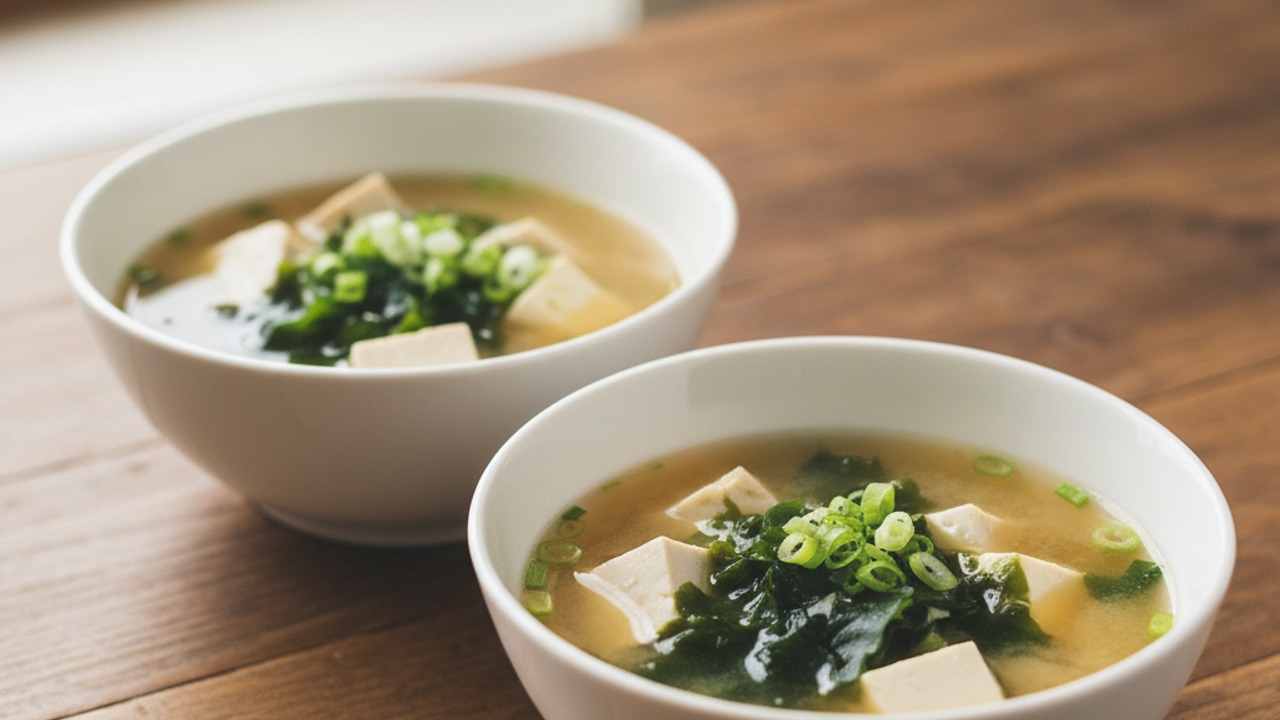
A simple, authentic miso soup with silken tofu and wakame, built on an easy kombu dashi you can make from pantry staples. Clear instructions for beginners show how to coax maximum umami without boiling the miso — perfect for weeknight dinners or a comforting Japanese-style breakfast.
Ingredient Spotlight
Kombu (dried kelp)
A large, dried sheet of kelp used in Japanese cooking to make dashi stock; it’s rich in glutamates and provides a deep, savory umami and a mild marine/mineral aroma. Originating in Japan, kombu is a pantry staple in East Asian cuisines for soups and broths. Find it at Asian groceries, well-stocked supermarkets, or online; for a substitute, use dried shiitake mushrooms (for umami) or kelp/seaweed granules, though the flavor won’t be identical.
Ingredient Spotlight
Bonito flakes (katsuobushi)
Thin, papery flakes of smoked, fermented skipjack tuna (katsuo) shaved from a hard-aged block; central to Japanese dashi, they add a pronounced smoky, savory, fishy umami. Katsuobushi is a traditional ingredient in Japan and is commonly sold in Asian markets and many supermarkets. If avoiding fish or you can’t find it, substitute with a combination of kombu plus dried shiitake for a vegetarian dashi, or use a small amount of fish sauce or anchovy for a non-vegetarian umami boost.
Ingredient Spotlight
Dried wakame
A mild, rehydrating brown/green seaweed used in miso soup and salads that becomes tender with a subtle briny/umami flavor and slippery texture. Wakame is used widely in Japanese and Korean cuisines and is sold dried in Asian markets, health-food stores, and many supermarkets. Substitute with other dried seaweeds such as arame or hijiki, or—if you only need a leafy texture—use fresh spinach or blanched chard, keeping in mind they lack the oceanic flavor.
Kenji Tanaka's note
"Konnichiwa — this is the miso soup I teach beginners: fast, forgiving, and deeply comforting. Use good-quality miso from the pantry and a simple kombu dashi for authentic flavor without fuss."
About This Recipe
This miso soup is deliberately simple so the sea flavors can do the talking: a quiet kombu dashi gives you a clean, mineral-rich foundation, wakame adds a silky kelp note, and silken tofu supplies a soft, custardy contrast. Using white or mixed miso keeps the soup bright and slightly sweet, while the optional bonito adds a smoky, savory backbone if you want a more traditionally layered dashi. The secret to depth here is time and temperature—letting kombu steep cold before gentle heating extracts mature umami without bitterness.
The recipe is written for real kitchens and busy evenings: it uses pantry staples, tolerates small substitutions, and focuses on one technical rule that makes all the difference—never boil after adding miso. That step preserves aromatics and beneficial enzymes, and keeps tofu tender. If you’re new to Japanese cooking, treat this as a primer—once you’ve mastered the balance of dashi, miso, and tofu, you can riff confidently with mushrooms, greens, or different miso varieties to suit mood and season.
Ingredients for Miso Soup with Tofu
- 6 cups Cold water
- 1 piece Kombu (dried kelp), 4-inch piece
- 1/2 cup Bonito flakes (katsuobushi), optional for non-vegetarian dashi
- 1 tbsp Dried wakame
- 3 tbsp Miso paste (white or mixed), preferably refrigerated
- 7 oz Silken tofu, medium-firm, cut into 1/2-inch cubes
- 2 stalks Scallions (green parts), thinly sliced
How to Make Miso Soup with Tofu
Step 1: Make a simple kombu dashi
Place the kombu in a medium saucepan with the cold water and let it sit 15–30 minutes if you have time; this extracts umami gently. Slowly heat over medium-low until just before simmering (small bubbles at edges), remove the kombu. For a traditional fish dashi, add the bonito flakes, briefly bring to a simmer for 30 seconds, turn off heat and steep 3–5 minutes, then strain; omit bonito for a vegetarian version.For this step
- 6 cupsCold water
- 1 pieceKombu (dried kelp), 4-inch piece
- 1/2 cupBonito flakes (katsuobushi), optional for non-vegetarian dashi
Step 2: Rehydrate wakame in the broth
Return the strained dashi to the saucepan over low heat and add the dried wakame; it will rehydrate and expand in 1–2 minutes. Keep the heat low — you want the soup hot but not boiling to preserve delicate flavors.For this step
- 1 tbspDried wakame
Step 3: Warm the tofu gently
Add the cubed silken tofu to the warm dashi and let it heat through for 1–2 minutes, stirring very gently to avoid breaking the pieces. Maintain a low simmer — boiling will make the tofu tougher and will degrade the miso later.For this step
- 7 ozSilken tofu, medium-firm, cut into 1/2-inch cubes
Step 4: Dissolve the miso without boiling
Scoop about 1/2 cup of hot dashi into a small bowl or ladle, whisk the miso into it until smooth, then stir the dissolved miso back into the pot. Heat only gently after adding miso — never boil the soup once miso is added, or the delicate flavors and probiotics will be damaged.For this step
- 3 tbspMiso paste (white or mixed), preferably refrigerated
Step 5: Finish and serve
Taste and adjust: add a little more miso (by dissolving extra tablespoon in a ladle) if you prefer a stronger flavor. Ladle into bowls, sprinkle sliced scallions on top, and serve immediately; miso soup is best fresh and not reheated to preserve aroma and umami.For this step
- 2 stalksScallions (green parts), thinly sliced


- Place the kombu in a medium saucepan with the cold water and let it sit 15–30 minutes if you have time; this extracts umami gently. Slowly heat over medium-low until just before simmering (small bubbles at edges), remove the kombu. For a traditional fish dashi, add the bonito flakes, briefly bring to a simmer for 30 seconds, turn off heat and steep 3–5 minutes, then strain; omit bonito for a vegetarian version.
- Return the strained dashi to the saucepan over low heat and add the dried wakame; it will rehydrate and expand in 1–2 minutes. Keep the heat low — you want the soup hot but not boiling to preserve delicate flavors.
- Add the cubed silken tofu to the warm dashi and let it heat through for 1–2 minutes, stirring very gently to avoid breaking the pieces. Maintain a low simmer — boiling will make the tofu tougher and will degrade the miso later.
- Scoop about 1/2 cup of hot dashi into a small bowl or ladle, whisk the miso into it until smooth, then stir the dissolved miso back into the pot. Heat only gently after adding miso — never boil the soup once miso is added, or the delicate flavors and probiotics will be damaged.
- Taste and adjust: add a little more miso (by dissolving extra tablespoon in a ladle) if you prefer a stronger flavor. Ladle into bowls, sprinkle sliced scallions on top, and serve immediately; miso soup is best fresh and not reheated to preserve aroma and umami.
Miso Soup with Tofu Tips
Gentle Kombu Warming
Start the kombu in cold water and heat slowly until just under a simmer; removing it at that moment prevents a bitter, slimy finish.
Whisk Miso Separately
Dissolve miso in a ladleful of hot dashi before adding to the pot to ensure smooth distribution and avoid clumping.
Silken Tofu Handling
Cut tofu while cold and add it to the warm (not boiling) broth, stirring very gently with the back of a spoon to keep cubes intact.
Wakame Rehydration Timing
Add dried wakame to low heat so it rehydrates quickly without turning floppy; it doubles or triples in size, so don’t overmeasure.
Adjusting Miso Strength
Start with less miso and add more dissolved in a ladle until the balance pleases you—miso intensity varies by brand and age.
Miso Soup with Tofu Variations and Substitutions
Vegetarian/Veegan Dashi
Omit bonito and increase kombu steep time slightly; for extra savory umami, add a few dried shiitake caps during the kombu soak and remove before finishing.
Heartier Tofu Mix
Use medium-firm tofu or a half-and-half mix of silken and firm tofu for more bite and to stand up to stir-ins like mushrooms or spinach.
Miso & Mushroom Soup
Sauté thinly sliced shiitake or cremini briefly in a separate pan, then add to the dashi before the miso for an earthy, meaty depth.
Spicy Ginger Twist
Stir in a little grated fresh ginger with the dashi for warmth, or finish each bowl with a few drops of chili oil for a modern kick.
How to Store and Make Miso Soup with Tofu Ahead
Miso soup is best eaten fresh; if you must store leftovers, keep the broth and tofu refrigerated in an airtight container for up to 2 days. Do not reboil after adding miso—reheat gently over low heat and add a fresh spoonful of miso if the flavor has dulled. Wakame will continue to hydrate and soften in storage, so expect a change in texture.
What to Serve With Miso Soup with Tofu
Serve miso soup as the warm opening to a meal with steamed rice, a small pickled vegetable (tsukemono), and a simple protein like grilled mackerel or teriyaki salmon for dinner. For breakfast or a light meal, pair with a bowl of rice topped with a soft-cooked egg and a side of sliced cucumbers; green tea or genmaicha complements the soup’s umami profile.
Miso Soup with Tofu FAQs
Can I use instant dashi granules instead of kombu and bonito?
Yes—instant dashi is a convenient substitute and will still produce a flavorful broth; start with a lighter concentration and taste before adding miso to avoid over-salting.
Why shouldn’t I boil the soup after adding miso?
Boiling degrades miso’s volatile aromatics and can flatten the flavor; it also harms heat-sensitive probiotics that some miso contains, so keep the soup below a simmer.
How do I prevent the tofu from breaking apart?
Use a gentle hand: cut tofu while chilled, add it late in the cooking process, and stir very slowly with a wide spoon or ladle; avoid vigorous boiling that agitates the cubes.
My wakame gets too soft—how can I fix that?
Measure wakame sparingly since it expands a lot and add it at the last minute to minimize over-softening; if using rehydrated wakame from a jar, give it a quick rinse and add right before serving.
Can I use red (aka) miso instead of white (shiro) miso?
You can, but red miso is saltier and more assertive; use less initially and adjust to taste, or blend a little red with white miso to keep the broth balanced.
About the author
Kenji TanakaKonnichiwa! I'm Chef Kenji Tanaka. After over 30 years in professional Japanese kitchens, I've added to my true passion: writing! I love making authentic, delicious Japanese meals accessible to everyone. My philosophy is simple: great food doesn't have to be complicated. I curate recipes that focus on quality ingredients, traditional techniques made easy, and minimal preparation time. My goal is to guide you in creating quick, comforting, and absolutely authentic Japanese dishes at home, so you can bring a taste of Japan to your table, everyday.
See all recipes by Kenji Tanaka →Ratings & Reviews
Did you make this recipe?
Be the first to share your experience.
Nutrition Facts
Per serving: about 2¼ cups
Nutrition values are estimated from USDA ingredient data and may vary based on preparation, brands, and portion sizes. Values are provided for informational purposes only.
Keep Reading
Guides & articles for this recipe

Recipes
DIY Edible Monster Eyes Candy
Make safe, fun edible monster eyes for cupcakes, cookies, and candy trays. Step-by-step recipes show baking-soda balls, chocolate and fondant eyes, wafer-print options, plus assembly, storage, and kid-friendly safety tips.

Recipes
No-Bake Funny Halloween Treats: 15 Quick Recipes
15 no-bake, funny Halloween treats that busy hosts can assemble in minutes — kid-friendly sweets, savory bites, and easy cocktails that don’t need an oven. Built for last-minute parties, with pantry-staple shortcuts and quick decoration ideas.

Guides
Nutrition for Youth Athletes
Practical, age- and sport-specific nutrition guidance for kids and teens who play sports. Covers calories, macronutrients, hydration, male/female differences, and easy meals and snacks.
More from Stovetop
View all Stovetop recipes →
South Chicago Packing 100% Pure Tallow Popcorn with Browned Butter and Chili

Beef Ragu One-Pot

Truffle Mac and Cheese

Spaghetti Carbonara (Classic, 20-Minute)

Coffee‑Chile Rubbed Flank Steak Tacos with Charred Pineapple Salsa

Baja Fish Tacos

Low-Sugar Honey Garlic Chicken Breast (Honey-Reduced, High Flavor)

Grilled Ras el Hanout Chicken Thighs with Charred Apricot-Chickpea Tagine

Classic Bacon-Balsamic Brussels Sprouts — Crispy Roast Beef Side
Ask me anything about this recipe — substitutions, scaling, techniques, timing.
Powered by AI · 6 questions per 5 minutes, 30 per day