Okonomiyaki Pancake
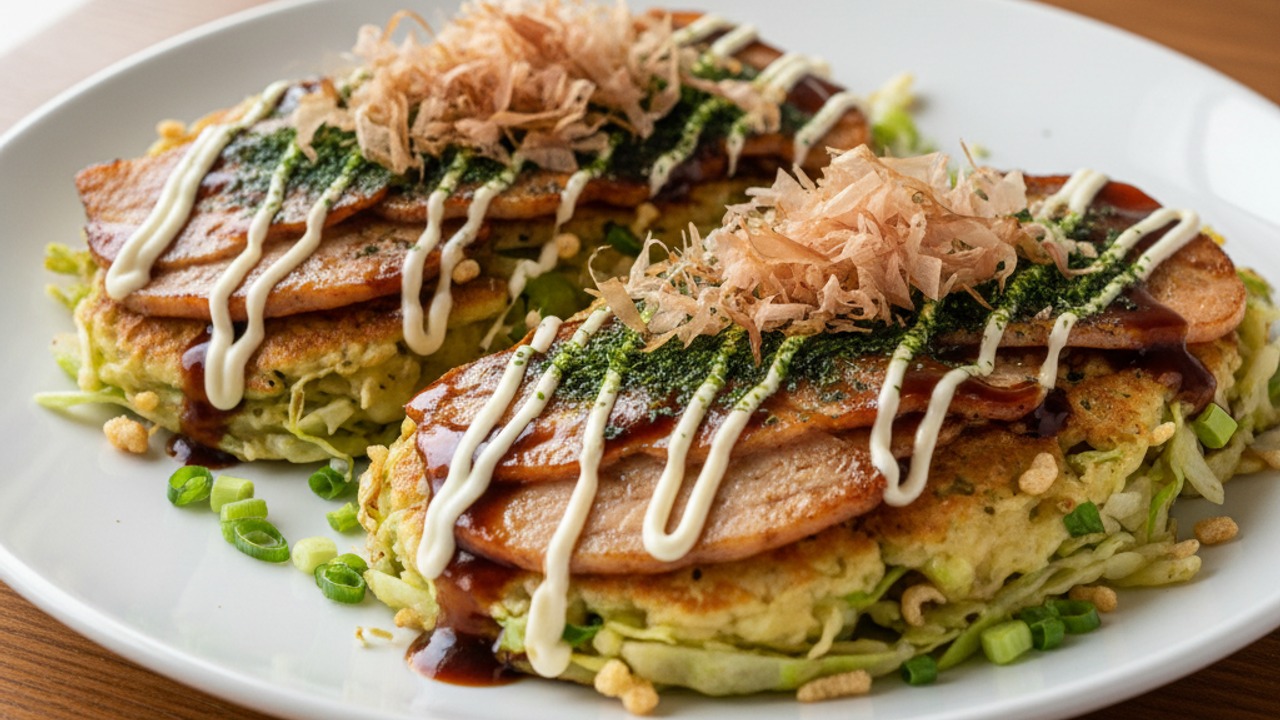
A classic Osaka-style okonomiyaki — a savory Japanese pancake loaded with shredded cabbage, tenkasu, and thin pork belly, finished with tangy okonomiyaki sauce, Kewpie mayo, aonori and katsuobushi. This stovetop recipe shows the authentic Osaka mixing method and a quick homemade sauce so you can recreate street-food flavor at home.
Kenji Tanaka's note
"Konnichiwa — I grew up eating okonomiyaki on the streets of Osaka, and this version brings that energy to your kitchen with a straightforward batter-and-fold technique. Home cooks will love how the simple homemade sauce and a few authentic touches (tenkasu, Kewpie mayo) turn everyday ingredients into something fun and deeply satisfying."
About This Recipe
This Osaka-style okonomiyaki is all about balance: a loose, dashi-laced batter that lightly coats heaps of shredded cabbage, the snap of green onion, and pockets of tenkasu that puff and hollow during cooking to give each bite an airy chew. Laying thin pork belly on top as it cooks lets the fat render onto the pancake, crisping the meat and seasoning the surface so every forkful pairs savory pork with tender, almost steamed cabbage. The quick homemade sauce here replicates that street-food tang and umami without needing a bottle, while Kewpie mayo and dancing katsuobushi add the glossy, creamy, and smoky finish you expect from a true Osaka griddle.
This version works for cooks who want authenticity without a teppan: the stovetop method focuses on heat control and batter hydration rather than complicated flip choreography. It’s forgiving enough for weeknight dinners but impressive for a casual dinner-party course — serve hot from the pan so the edges are crisp and the center remains soft, and let guests add extra sauce or aonori to taste.
Ingredients for Okonomiyaki Pancake
- 1 cup All-purpose flour
- 1 cup Dashi stock (or water with dashi powder)
- 1 large Large egg
- 3 cups Shredded cabbage and thinly sliced green onion
- 1/3 cup Tenkasu (tempura scraps)
- 2 tbsp Neutral oil (vegetable or light sesame) for cooking
- 6 oz Thinly sliced pork belly
- 4 tbsp Okonomiyaki sauce (store-bought or homemade)
- 2 tbsp Japanese mayonnaise (Kewpie recommended)
- 2 tbsp (combined) Aonori and katsuobushi (dried seaweed and bonito flakes) for topping
How to Make Okonomiyaki Pancake
Step 1: Make the batter (Osaka-style)
In a large bowl whisk together the flour, dashi and the egg until just combined; a few small lumps are fine. Osaka okonomiyaki uses a looser batter than some regional styles — this helps coat the cabbage rather than forming a dense dough, so keep the batter light.For this step
- 1 cupAll-purpose flour
- 1 cupDashi stock (or water with dashi powder)
- 1 largeLarge egg
Step 2: Fold in cabbage, green onion and tenkasu
Add the shredded cabbage, sliced green onion and tenkasu to the batter and fold gently until everything is evenly coated — do not overmix. Let the mixture rest 5 minutes while you heat the pan; the tenkasu will absorb moisture and give the pancake its classic airy texture.For this step
- 3 cupsShredded cabbage and thinly sliced green onion
- 1/3 cupTenkasu (tempura scraps)
Step 3: Shape and cook on a hot griddle or skillet
Heat a large skillet or griddle over medium heat and brush with about 1 tbsp oil. For two pancakes, divide the mixture into two portions and pour each into a 7–8 inch (18–20 cm) circle, spreading gently to about 1/2–3/4 inch thick. Arrange the pork belly slices on top and cook undisturbed 4–5 minutes until the bottom is golden and the edges begin to set — use two spatulas to lift and check if needed.For this step
- 2 tbspNeutral oil (vegetable or light sesame) for cooking
- 6 ozThinly sliced pork belly
Step 4: Flip, press gently, and finish cooking
Carefully flip each pancake using two spatulas; press lightly to make good contact with the pan and cook 4–5 more minutes on medium-low. If the pork is thin and the pancake is browning too quickly, cover briefly (30–60 seconds) to help cook through without burning. The Osaka method favors a slightly thinner pancake cooked through steadily rather than a raw center.Step 5: Sauce, mayo and toppings — quick sauce guide
Transfer the hot okonomiyaki to plates and brush generously with okonomiyaki sauce. If you don’t have bottled sauce, whisk 3 tbsp ketchup + 2 tbsp Worcestershire sauce + 1 tsp soy sauce + 1 tsp sugar (and 1 tsp mirin if available) until smooth — adjust to taste. Drizzle Japanese mayonnaise in a clean zigzag, then finish with a sprinkle of aonori and a generous handful of katsuobushi so the flakes dance. This recipe makes 2 large pancakes; serve 1 pancake per person (1 pancake, about 350g).For this step
- 4 tbspOkonomiyaki sauce (store-bought or homemade)
- 2 tbspJapanese mayonnaise (Kewpie recommended)
- 2 tbsp (combined)Aonori and katsuobushi (dried seaweed and bonito flakes) for topping


- In a large bowl whisk together the flour, dashi and the egg until just combined; a few small lumps are fine. Osaka okonomiyaki uses a looser batter than some regional styles — this helps coat the cabbage rather than forming a dense dough, so keep the batter light.
- Add the shredded cabbage, sliced green onion and tenkasu to the batter and fold gently until everything is evenly coated — do not overmix. Let the mixture rest 5 minutes while you heat the pan; the tenkasu will absorb moisture and give the pancake its classic airy texture.
- Heat a large skillet or griddle over medium heat and brush with about 1 tbsp oil. For two pancakes, divide the mixture into two portions and pour each into a 7–8 inch (18–20 cm) circle, spreading gently to about 1/2–3/4 inch thick. Arrange the pork belly slices on top and cook undisturbed 4–5 minutes until the bottom is golden and the edges begin to set — use two spatulas to lift and check if needed.
- Carefully flip each pancake using two spatulas; press lightly to make good contact with the pan and cook 4–5 more minutes on medium-low. If the pork is thin and the pancake is browning too quickly, cover briefly (30–60 seconds) to help cook through without burning. The Osaka method favors a slightly thinner pancake cooked through steadily rather than a raw center.
- Transfer the hot okonomiyaki to plates and brush generously with okonomiyaki sauce. If you don’t have bottled sauce, whisk 3 tbsp ketchup + 2 tbsp Worcestershire sauce + 1 tsp soy sauce + 1 tsp sugar (and 1 tsp mirin if available) until smooth — adjust to taste. Drizzle Japanese mayonnaise in a clean zigzag, then finish with a sprinkle of aonori and a generous handful of katsuobushi so the flakes dance. This recipe makes 2 large pancakes; serve 1 pancake per person (1 pancake, about 350g).
Okonomiyaki Pancake Tips
Control batter looseness
Aim for a pourable batter that just coats the cabbage; too thick and the pancake becomes dense, too thin and it won’t hold shape.
Rest for absorption
Let the mixed batter sit 5 minutes so tenkasu swells and cabbage releases only a little water, which prevents a soggy center during cooking.
Medium-low finish
After browning the first side, lower to medium-low and cover briefly if needed to cook through without burning the surface.
Flip with two spatulas
Use two wide spatulas to support the pancake when turning to avoid tearing and to keep the pork slices aligned on top.
Restore crispness when reheating
Reheat in a skillet or under a broiler for a minute to revive the browned edges instead of microwaving, which softens textures.
Okonomiyaki Pancake Variations and Substitutions
Vegetarian Okonomiyaki
Omit pork and stir thinly sliced shiitake or oyster mushrooms into the batter; replace dashi with kombu dashi to keep the umami base vegetarian.
Seafood Osaka Style
Fold chopped cooked shrimp or small octopus pieces into the batter and top with a few extra pieces when frying for a coastal twist that still crisps nicely.
Gluten-Free Version
Swap all-purpose flour for a 1:1 rice flour blend and use gluten-free Worcestershire in the sauce; the texture will be slightly more tender but still very satisfying.
Kimchi & Cheese Twist
Stir finely chopped, well-drained kimchi into the batter and sprinkle grated mochi or cheddar into the center before flipping for a spicy, melty filling.
How to Store and Make Okonomiyaki Pancake Ahead
Store leftover okonomiyaki in an airtight container in the fridge for up to 48 hours, keeping sauces and delicate toppings separate. To reheat, warm gently in a skillet over medium until heated through and the edges re-crisp; you can also finish under a hot broiler for 1–2 minutes. Cooked pancakes can be frozen wrapped tightly for up to one month — thaw in the fridge and reheat in a skillet.
What to Serve With Okonomiyaki Pancake
Serve each pancake hot on a large plate with extra okonomiyaki sauce and Kewpie on the side for self-dressing, plus a small mound of beni shoga (pickled red ginger) to cut the richness. Pair with a crisp Japanese lager or a highball to balance the savory flavors, or a cold barley tea for a non-alcoholic option; a simple shredded cabbage salad with sesame dressing makes a refreshing contrast.
Okonomiyaki Pancake FAQs
Why does my okonomiyaki turn out soggy in the middle?
If the batter is too dense or the heat too high, the exterior will brown before the center cooks; use a looser batter, spread to about 1/2–3/4 inch thick, and finish on medium-low with a brief cover if needed.
Can I prepare the batter ahead of time?
You can mix the dry batter (flour + dashi + egg) a few hours ahead and store covered in the fridge, but add cabbage and tenkasu just before cooking to avoid excess water release and loss of tenkasu crunch.
What can I use if I don't have tenkasu?
Substitute extra-crispy panko quickly toasted in oil or crushed tempura batter bits from a store-bought mix; they won’t be identical but will contribute pleasant pockets of crunch.
Do I have to put pork on top?
Placing pork on top is traditional in Osaka-style to allow the fat to render down onto the pancake and crisp the meat, but you can also tuck it underneath or mix smaller pork pieces into the batter for even distribution.
How do I adjust the quick sauce?
Taste and tweak the ketchup-to-Worcestershire ratio for sweetness and tang; add a teaspoon of mirin or a pinch more sugar if you prefer sweeter, or a little soy for deeper umami.
About the author
Kenji TanakaKonnichiwa! I'm Chef Kenji Tanaka. After over 30 years in professional Japanese kitchens, I've added to my true passion: writing! I love making authentic, delicious Japanese meals accessible to everyone. My philosophy is simple: great food doesn't have to be complicated. I curate recipes that focus on quality ingredients, traditional techniques made easy, and minimal preparation time. My goal is to guide you in creating quick, comforting, and absolutely authentic Japanese dishes at home, so you can bring a taste of Japan to your table, everyday.
See all recipes by Kenji Tanaka →Ratings & Reviews
Did you make this recipe?
Be the first to share your experience.
Nutrition Facts
Per serving: 2 pancakes
Nutrition values are estimated from USDA ingredient data and may vary based on preparation, brands, and portion sizes. Values are provided for informational purposes only.
Keep Reading
Guides & articles for this recipe

Recipes
DIY Edible Monster Eyes Candy
Make safe, fun edible monster eyes for cupcakes, cookies, and candy trays. Step-by-step recipes show baking-soda balls, chocolate and fondant eyes, wafer-print options, plus assembly, storage, and kid-friendly safety tips.

Recipes
No-Bake Funny Halloween Treats: 15 Quick Recipes
15 no-bake, funny Halloween treats that busy hosts can assemble in minutes — kid-friendly sweets, savory bites, and easy cocktails that don’t need an oven. Built for last-minute parties, with pantry-staple shortcuts and quick decoration ideas.

Guides
Nutrition for Youth Athletes
Practical, age- and sport-specific nutrition guidance for kids and teens who play sports. Covers calories, macronutrients, hydration, male/female differences, and easy meals and snacks.
More from Stovetop
View all Stovetop recipes →
South Chicago Packing 100% Pure Tallow Popcorn with Browned Butter and Chili

Beef Ragu One-Pot

Truffle Mac and Cheese

Spaghetti Carbonara (Classic, 20-Minute)

Coffee‑Chile Rubbed Flank Steak Tacos with Charred Pineapple Salsa

Baja Fish Tacos

Low-Sugar Honey Garlic Chicken Breast (Honey-Reduced, High Flavor)

Grilled Ras el Hanout Chicken Thighs with Charred Apricot-Chickpea Tagine

Classic Bacon-Balsamic Brussels Sprouts — Crispy Roast Beef Side
Ask me anything about this recipe — substitutions, scaling, techniques, timing.
Powered by AI · 6 questions per 5 minutes, 30 per day