Pesto Genovese with Pasta (Classic Basil Pesto, No Fancy Tools)
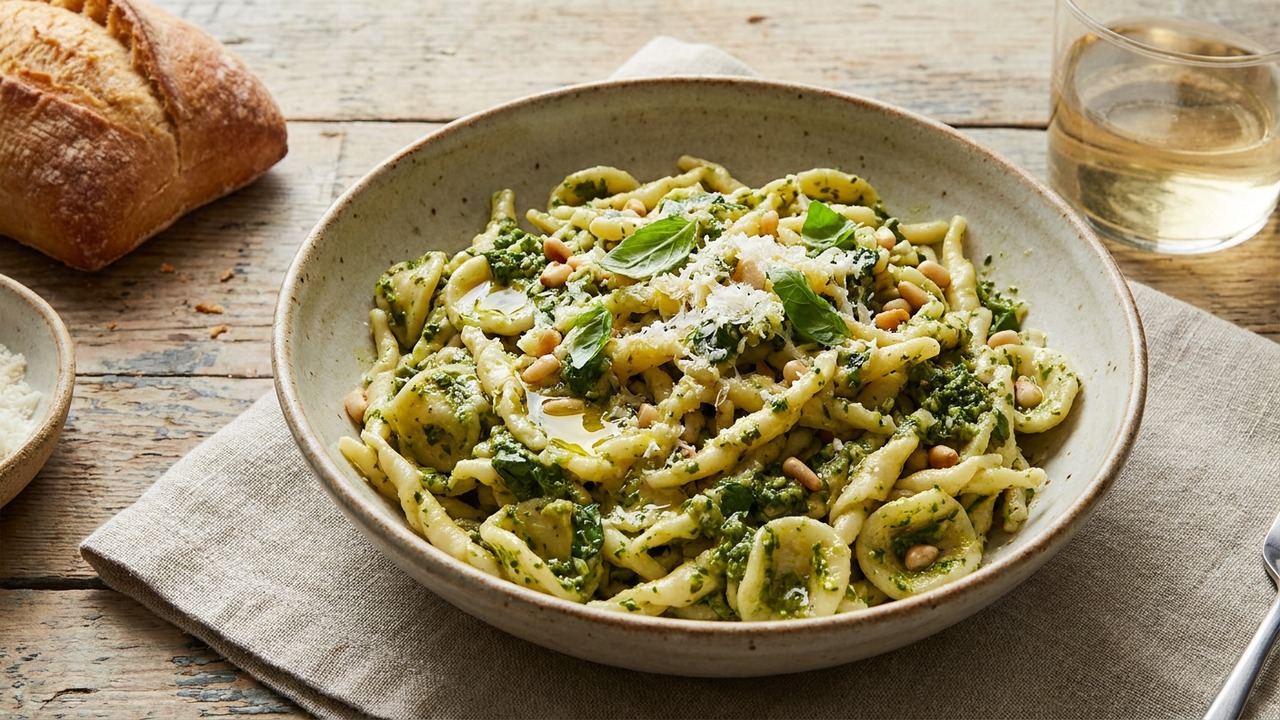
A bright, classic Pesto Genovese made the traditional way—without a mortar or a food processor. Finely chopped basil, toasted pine nuts and Parmigiano are emulsified by hand with olive oil, then tossed with hot pasta for a fresh spring or summer dinner.
About This Recipe
This Pesto Genovese is all about bright basil flavor and a peppery, nutty finish—made the old-fashioned way without a mortar, pestle, or food processor. Finely chopping the basil, garlic, and toasted pine nuts by hand gives the sauce a slightly rustic texture: a little more tooth than the perfectly smooth puree you’d get from a machine, but with an equally glossy finish when you whisk in good olive oil and plenty of Parmigiano-Reggiano. It’s the kind of sauce that sings in late spring and summer when basil is at its peak and needs only a hot strand of pasta to show off its herbal perfume.
What makes this version work is technique more than toys: bone-dry basil leaves, patient chopping to release essential oils, and an emulsion built slowly so the oil and cheese marry instead of separating. The reserved starchy pasta water is the secret binder—use it sparingly until the sauce coats each noodle. This recipe is for home cooks who want control over texture and flavor, and for anyone who wants a quick, elevated weeknight meal or an effortless dish to bring to a casual dinner al fresco.
Ingredients for Pesto Genovese with Pasta (Classic Basil Pesto, No Fancy Tools)
- 2 cups Fresh basil leaves, packed
- 2 cloves Garlic cloves, peeled
- 1/3 cup Pine nuts, lightly toasted
- 1/2 cup Parmigiano-Reggiano, finely grated
- 1/2 cup Extra-virgin olive oil
- 1 tsp Kosher or coarse sea salt
- 12 oz Dried pasta (linguine or trenette)
How to Make Pesto Genovese with Pasta (Classic Basil Pesto, No Fancy Tools)
Step 1: Prepare the basil
Rinse the basil leaves gently and spin or pat them very dry—excess water thins the pesto. Strip the leaves from thick stems and stack them for easier chopping, then do a quick rough chop to reduce volume before the fine chopping step.For this step
- 2 cupsFresh basil leaves, packed
Step 2: Chop and emulsify the pesto
On a sturdy cutting board, finely chop the basil with the garlic and toasted pine nuts by rocking your knife; keep scraping the pile together and continue until the mixture is a coarse paste. Transfer to a bowl, stir in the grated Parmigiano, then slowly drizzle in the olive oil while whisking or stirring vigorously with a fork to form a glossy emulsion; season to taste with a little salt.For this step
- 2 clovesGarlic cloves, peeled
- 1/3 cupPine nuts, lightly toasted
- 1/2 cupParmigiano-Reggiano, finely grated
- 1/2 cupExtra-virgin olive oil
Step 3: Cook the pasta
Bring a large pot of water to a rolling boil, add the salt, and cook the pasta until just al dente (follow package timing, usually 8–10 minutes). Reserve about 1 cup (240 ml) of the starchy cooking water before draining the pasta.For this step
- 1 tspKosher or coarse sea salt
- 12 ozDried pasta (linguine or trenette)
Step 4: Toss and finish
Off the heat, return the drained pasta to the pot or a warm serving pan and add the pesto; toss vigorously, adding reserved pasta water a few tablespoons at a time until the sauce coats the pasta silky and loosened to your liking. Taste and adjust salt, then serve immediately with an extra sprinkle of Parmigiano and a light drizzle of olive oil.


- Rinse the basil leaves gently and spin or pat them very dry—excess water thins the pesto. Strip the leaves from thick stems and stack them for easier chopping, then do a quick rough chop to reduce volume before the fine chopping step.
- On a sturdy cutting board, finely chop the basil with the garlic and toasted pine nuts by rocking your knife; keep scraping the pile together and continue until the mixture is a coarse paste. Transfer to a bowl, stir in the grated Parmigiano, then slowly drizzle in the olive oil while whisking or stirring vigorously with a fork to form a glossy emulsion; season to taste with a little salt.
- Bring a large pot of water to a rolling boil, add the salt, and cook the pasta until just al dente (follow package timing, usually 8–10 minutes). Reserve about 1 cup (240 ml) of the starchy cooking water before draining the pasta.
- Off the heat, return the drained pasta to the pot or a warm serving pan and add the pesto; toss vigorously, adding reserved pasta water a few tablespoons at a time until the sauce coats the pasta silky and loosened to your liking. Taste and adjust salt, then serve immediately with an extra sprinkle of Parmigiano and a light drizzle of olive oil.
Pesto Genovese with Pasta (Classic Basil Pesto, No Fancy Tools) Tips
Completely dry basil
Pat or spin the leaves until there's no visible moisture; even a little water will thin and dull the pesto.
Toast nuts gently
Warm pine nuts in a dry skillet until fragrant and golden—watch closely, they go from toasted to burnt in seconds.
Use a sharp knife
A sharp chef's knife shears basil and pine nuts cleanly for a glossy paste instead of bruising them into a mush.
Emulsify slowly
Whisk the oil in a thin stream to create a stable emulsion with the cheese; hurried additions can cause the sauce to separate.
Save starchy water
Add reserved pasta water a tablespoon at a time off the heat until the pesto loosens and clings to the pasta.
Pesto Genovese with Pasta (Classic Basil Pesto, No Fancy Tools) Variations and Substitutions
Walnut or almond swap
Replace pine nuts with toasted walnuts or almonds for a more affordable, slightly earthier pesto that still emulsifies well.
Lemon-forward pesto
Stir in a teaspoon or two of lemon zest and a squeeze of juice at the end for extra brightness and to cut richness.
Herb mix
Mix half basil and half flat-leaf parsley or arugula to extend volume and introduce peppery or grassy notes while keeping the basil backbone.
Vegan pesto
Use toasted cashews, nutritional yeast in place of Parmigiano, and increase the salt slightly for umami; olive oil binds the sauce the same way.
Anchovy-boosted
Mince one anchovy with the garlic during chopping for a savory depth that dissolves into the pesto without tasting fishy.
How to Store and Make Pesto Genovese with Pasta (Classic Basil Pesto, No Fancy Tools) Ahead
Store leftover pesto in an airtight container in the refrigerator for up to 3–4 days; press a thin film of olive oil on the surface to minimize browning. For longer storage, freeze pesto in an ice-cube tray and transfer the cubes to a bag—portions thaw quickly and are convenient for single servings. Reheat by tossing frozen or chilled pesto with hot pasta and a splash of reserved cooking water rather than microwaving, which can dull the fresh basil flavor.
What to Serve With Pesto Genovese with Pasta (Classic Basil Pesto, No Fancy Tools)
Serve the pesto-tossed pasta simply with an extra grate of Parmigiano, a drizzle of good olive oil, and a few torn basil leaves for color. Pair with a crisp green salad dressed with lemon and olive oil, and consider roasted seasonal vegetables or grilled shrimp for protein. For wine, look for a zesty Vermentino or Sauvignon Blanc to complement the herbiness, or a light-bodied Italian red like Chianti for a more rustic pairing.
Pesto Genovese with Pasta (Classic Basil Pesto, No Fancy Tools) FAQs
Can I make pesto in advance?
Yes—make it up to two days ahead and keep it refrigerated with a thin layer of olive oil on top, or freeze in portions for several months.
Why is my pesto bitter?
Bitterness can come from bruised basil (too much handling), over-toasted nuts, or poor-quality olive oil; use fresh leaves, lightly toast nuts, and taste your oil beforehand.
Can I use a food processor instead?
Absolutely—if you prefer a smoother texture, pulse the ingredients briefly, but avoid overprocessing which can warm and dull the basil’s fresh flavor.
How much salt should I add?
Start with the teaspoon in the recipe and adjust after tossing with pasta, since the reserved cooking water and Parmigiano add additional saltiness.
Why is my pesto oily or separated?
That happens when oil is added too quickly or the emulsion lacks a binder; whisk the oil in slowly and use cheese and starchy pasta water to help the sauce hold together.
What nuts can substitute for pine nuts?
Toasted walnuts, almonds, or cashews all work well; walnuts give a deeper, slightly bitter note, almonds are milder, and cashews make a creamier, vegan-friendly option.
About the author
Jake WoodsHello, I'm Jake. I started this recipe site with the idea that I hated recipe websites that overwhelm you with long stories and ads just to see plain content that's not helpful. My goal is to provide you with quality recipes, simple ideas and a fun cooking experience. There's lots of fun things to cook, and I think as you browse the site you'll find that TopShelf.Recipes is the place for quality recipes on the web.
See all recipes by Jake Woods →Ratings & Reviews
Did you make this recipe?
Be the first to share your experience.
Nutrition Facts
Per serving: 1 serving
Nutrition values are estimated from USDA ingredient data and may vary based on preparation, brands, and portion sizes. Values are provided for informational purposes only.
Keep Reading
Guides & articles for this recipe

Recipes
Top 10 Halloween Recipes
Ten easy, showy Halloween recipes to feed a crowd or level up trick-or-treat night. From spooky appetizers to eerie desserts and a punch that stains the rim, these picks balance dramatic presentation with home-kitchen simplicity.

Healthy Eating
Gluten-Free Weeknight Grilling Plan
A 7-day gluten-free weeknight grilling plan with quick, family-friendly recipes, prep-ahead timelines, and a printable shopping list that spotlights late-summer produce and pantry staples. Includes clear cross-contamination safety tips and simple swaps to keep dinners fast and crowd-pleasing.

Healthy Eating
Low-Fat Grill Swaps for Big Flavor
A practical guide to trimming fat from grilled meals without losing juiciness or char. Learn yogurt- and citrus-based marinades, lean protein picks, searing and indirect-heat tricks, plus 5 quick low-fat marinades and a simple weeknight plan.
More from Stovetop
View all Stovetop recipes →
Frank's Red Hot Buffalo Street Corn Dip

Classic Marinara Sauce from Scratch

Rotisserie Chicken and Wild Rice Soup

Korean Ground Beef Bowl

Plant-Based Jackfruit Carnitas Tacos with Avocado Crema (Stovetop)

Classic Chicken Noodle Soup from Scratch

Mushroom Garlic Butter Pasta

One-Pot Beef Bolognese

Grilled S'mores Skewers with Spiced Chocolate
Ask me anything about this recipe — substitutions, scaling, techniques, timing.
Powered by AI · 6 questions per 5 minutes, 30 per day